

Vitiligo is a common, non-contagious skin condition that causes loss of pigment in patches. Living with vitiligo is more than a cosmetic issue — it affects skin health, sun sensitivity, and often emotional wellbeing. The good news: with thoughtful daily care, sensible sun protection, and targeted strategies for camouflage and flare management, you can protect your skin, reduce irritation, and feel more confident. This guide walks you through everything practical and compassionate — from gentle cleansing to scalp care, managing flares, when to see a dermatologist, and where to find emotional support.
Understanding Vitiligo and Its Impact
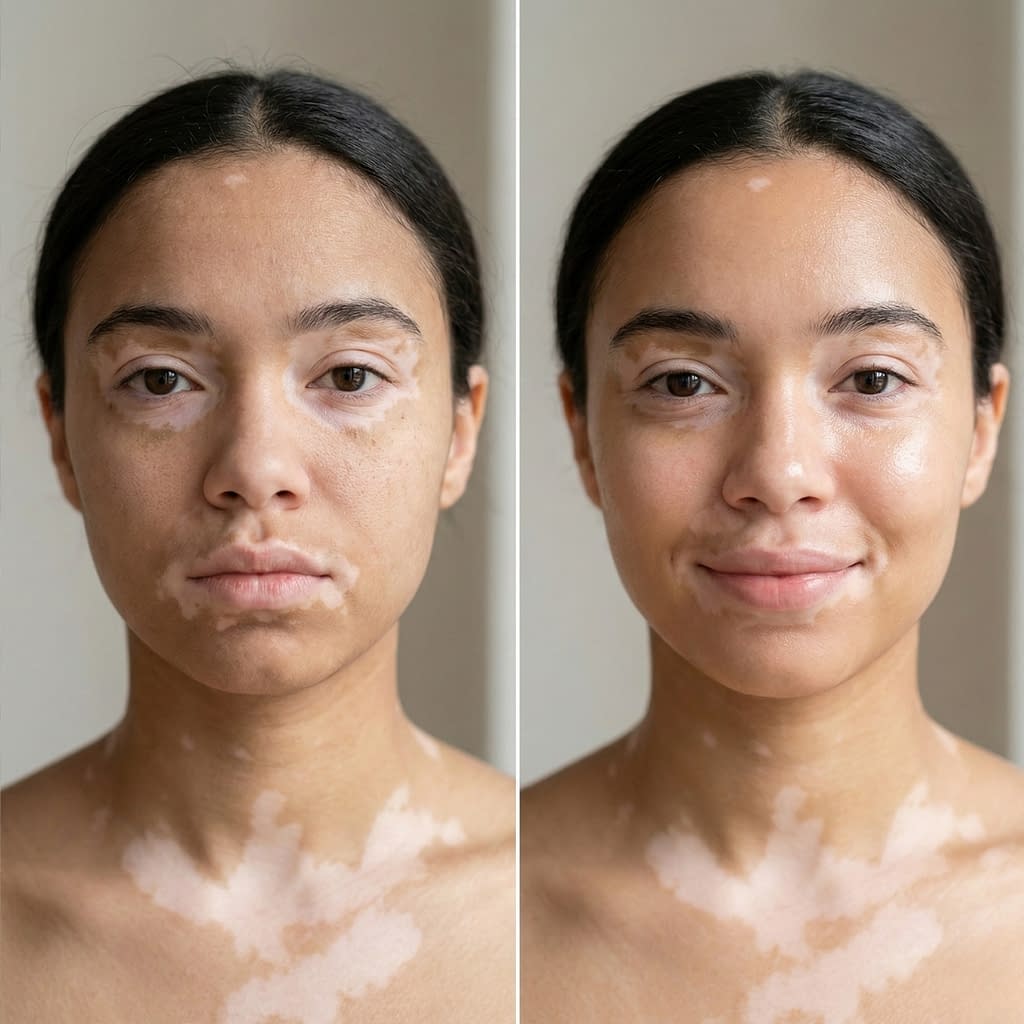
Vitiligo occurs when melanocytes (the cells that make pigment) stop working or die in certain skin areas, leaving lighter or white patches. It can start at any age and shows up in different patterns: localized patches, segmental (limited to one area), or generalized (multiple areas). The exact cause isn’t fully known; autoimmune processes are commonly involved.
Why care matters:
- Sun sensitivity: depigmented areas lack melanin and burn more easily.
- Barrier function & dryness: some people notice dryness or textural differences in affected skin.
- Psychological impact: vitiligo can affect self-esteem and social comfort.
- Cosmetic needs: many people want options to even tone or conceal patches.
This guide focuses on routine skin health, minimizing triggers, practical camouflage, and coping strategies — all aimed at safer, less stressful daily life.
Know Your Skin: What Triggers and Worsens Vitiligo
Vitiligo progression and flares vary. Common triggers or aggravating factors include:
- Sunburn & UV injury — can induce new patches (Koebner phenomenon).
- Physical trauma (cuts, friction, pressure) — areas with repeated trauma are more likely to develop patches.
- Severe chemical irritation — harsh cleansers, strong acids, certain hair dyes.
- Stress & illness — emotional stress or infections can precede flares in some people.
- Certain topical medications — corticosteroids used improperly (long-term potent steroids) can thin skin and cause other problems; always follow medical advice.
- Autoimmune associations — thyroid disease and other autoimmune conditions can coexist; keep general health checks up to date.
Practical step: keep a simple symptom log for several months noting new patches, recent sun exposure, injuries, new products, stressors, or illness — patterns often emerge that help you and your clinician.
Gentle Cleansing: Choosing Products That Don’t Irritate

Depigmented skin can be more sensitive. Use mild, fragrance-free cleansers and gentle techniques.
Daily cleansing routine (step-by-step)
- Choose the cleanser: pick a gentle, pH-balanced, fragrance-free cleanser (cream or syndet bar) — avoid strong sulfates and heavy fragrances. Look for labels “for sensitive skin” or “dermatologist-tested.”
- Temperature: use lukewarm water; hot water strips oils and irritates skin.
- Hands, not washcloths: use your palms to apply cleanser — avoid harsh scrubbing with rough cloths which cause micro-trauma.
- Gentle cleansing time: cleanse for 20–30 seconds; rinse thoroughly.
- Pat dry: gently pat with a soft towel; don’t rub.
- Avoid frequent product changes: stick with a consistent gentle cleanser rather than constantly switching.
If you must use medicated cleansers (for acne or fungal issues), spot-test first and discuss with your dermatologist whether they’re safe for areas affected by vitiligo.
Moisturizing for Barrier Health and Comfort
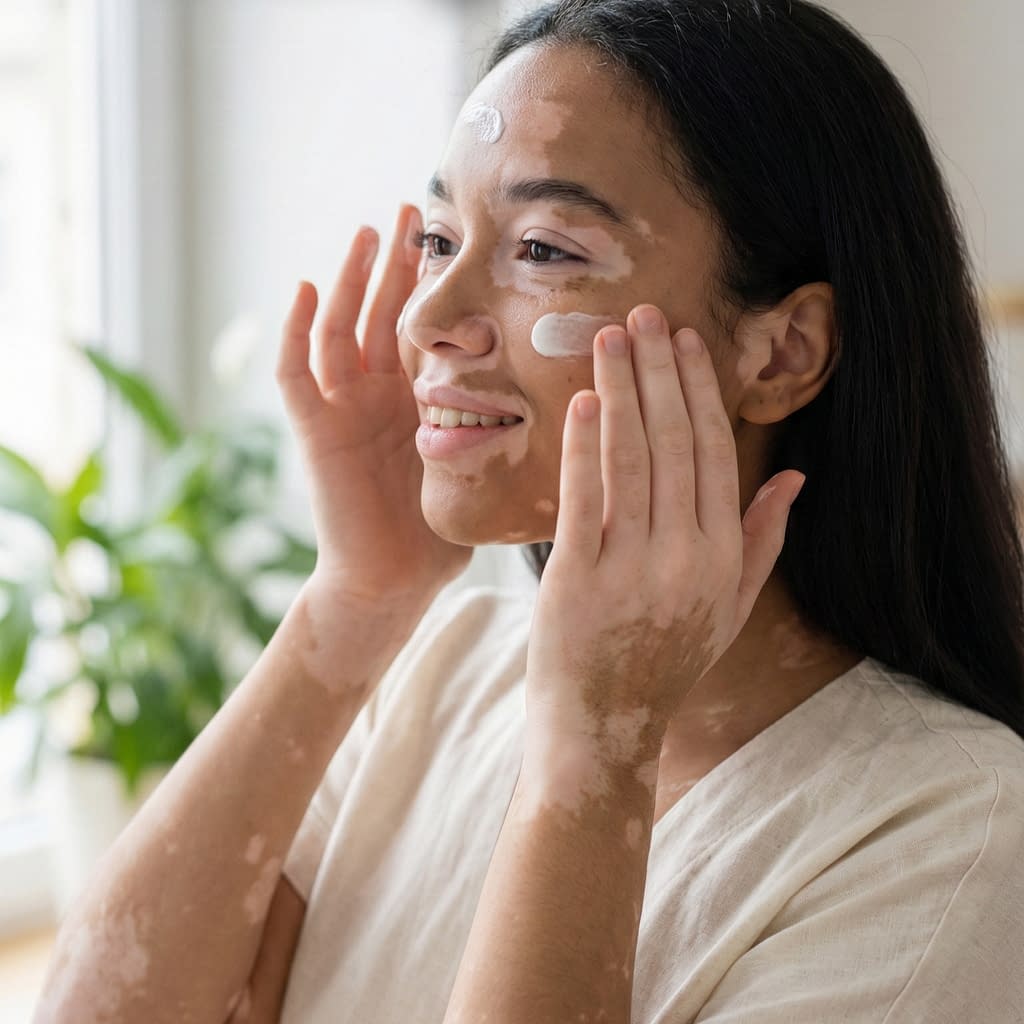
A healthy barrier reduces irritation and helps skin tolerate treatments and sun exposure better.
Moisturizing steps (daily)
- Choose the right formula: for daily use, pick fragrance-free creams or ointments containing ceramides, glycerin, hyaluronic acid, or dimethicone. Creams are better than lotions for dry patches; ointments (petrolatum) are most occlusive and useful for very dry spots.
- Apply to damp skin: after cleansing, pat skin lightly and apply moisturizer while skin is slightly damp to lock in moisture.
- Frequency: at least once daily for normal skin; twice daily for dry skin or immediately after showering.
- Target problem areas: use a richer product on scaly, dry, or treatment-prone patches to reduce flaking.
- Patch-test new moisturizers: test a new product on a small area for 48 hours to watch for irritation.
If you use topical medications prescribed by a dermatologist (e.g., topical steroids, calcineurin inhibitors), moisturize around and after application when your clinician advises to reduce irritation.
Sun Protection: How to Safeguard Depigmented Areas
Sun protection is the single most important daily habit for vitiligo skin.
Sun-safe routine (step-by-step)
- Broad-spectrum sunscreen: choose an SPF 30–50+ broad-spectrum mineral or mixed formula. Mineral (zinc oxide or titanium dioxide) sunscreens are often gentler and less irritating on sensitive skin.
- Daily application: apply sunscreen to all exposed skin each morning — do not skip for “cloudy” days. Depigmented areas need consistent protection.
- Amount & reapplication: use about a teaspoon for the face and 1 ounce (a shot glass) for the body; reapply every 2 hours when outdoors and after swimming or sweating.
- Clothing & hats: wear UPF clothing, wide-brim hats, and sunglasses for additional protection.
- Shade & timing: avoid peak sun (10am–4pm) when possible; seek shade frequently during outdoor activities.
- Kids & sun: for children with vitiligo, be especially diligent with hats, protective clothing, and sunscreen.
Sunburn not only causes discomfort but can trigger new depigmentation. Consistent protection minimizes that risk.
Camouflage Makeup and Cosmetic Options for Even Tone
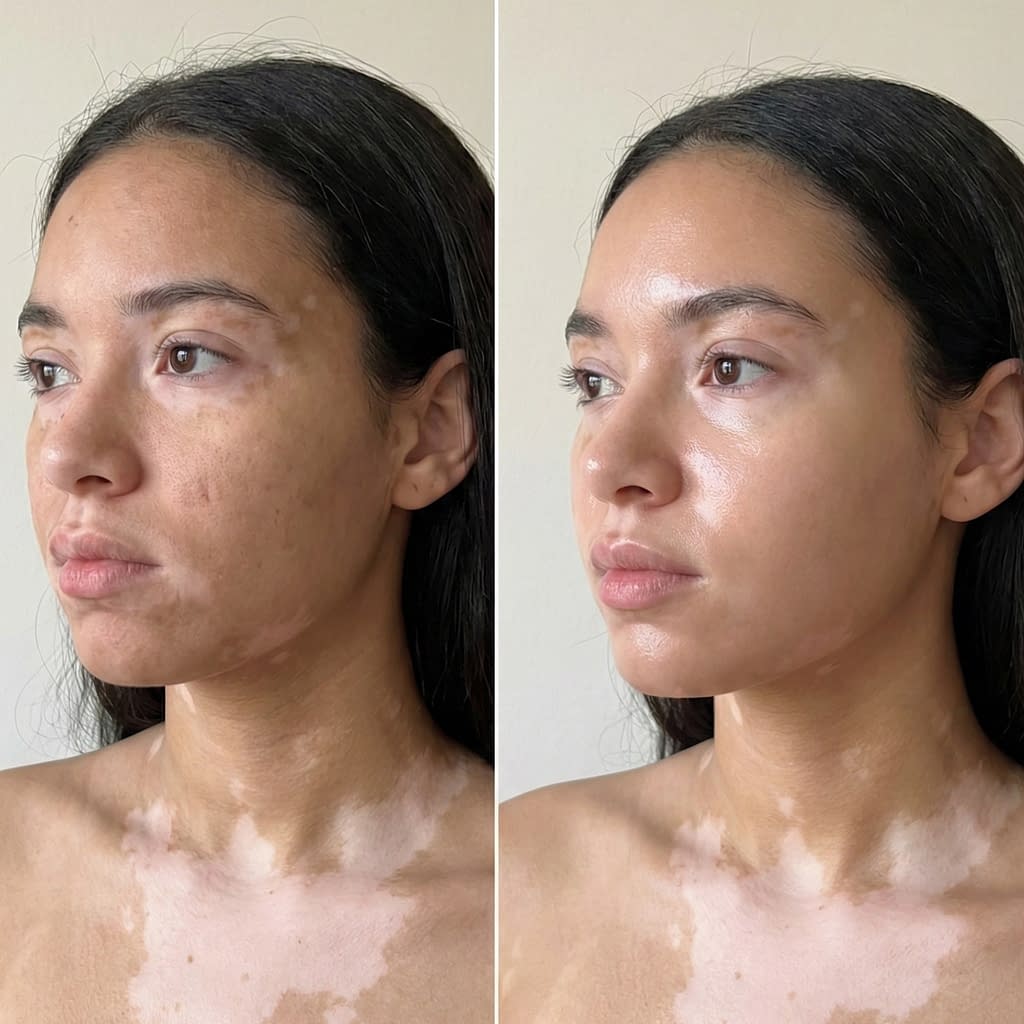
Many people choose cosmetic coverage for confidence — today’s products give realistic, natural results.
Camouflage options & how to use them (step-by-step)
- Toner-matching: get color-matched to your surrounding skin by a professional makeup artist or in-store specialist — test in natural light.
- Products to consider:
- Color-correcting creams & concealers (full-coverage, waterproof) — suitable for small patches.
- Tinted mineral foundations or full-coverage foundations — for larger areas.
- Camouflage creams (medical-grade) — designed for long wear and waterproof coverage.
- Self-tan / gradual tanners — can even tone large areas if used carefully (test small patch first to ensure even uptake).
- Application technique:
- Clean and moisturize skin; prime with a silicon-free primer if needed.
- Apply camouflage product in thin layers, building coverage gradually. Use a damp sponge or stippling brush for natural finish.
- Set with a lightweight translucent powder or setting spray for longevity.
- Removal: remove thoroughly at night with a gentle oil cleanser followed by your normal cleanser to avoid clogged pores.
- Scalp camouflage: specialized sprays, powders, and powders-for-hair can conceal scalp patches; choose formulas labeled gentle for sensitive skin or those designed for scalp use.
Tip: practice application at home before important events and carry small touch-up products for reapplication if you’ll be sweating or swimming.
Scalp and Body Care: Special Tips for Hair-bearing Areas
Areas with hair (scalp, beard, legs) need slightly different care for both depigmentation and hair care products.
Scalp & hair care tips
- Gentle hair dyes: if you color hair, choose gentle, ammonia-free dyes or vegetable dyes (henna/indigo) and patch-test 48–72 hours before use — depigmented skin can be sensitive to hair dye chemicals. Consider a professional who understands vitiligo.
- Shampoo & conditioner: use sulfate-free, fragrance-free hair care if scalp patches are sensitive. Avoid prolonged contact of strong hair products with depigmented scalp skin.
- Scalp camouflage: use hair powders, colored sprays, or microfibers to conceal patches—look for products formulated for the scalp and for sensitive skin.
- Beard care: men with facial vitiligo should be cautious with beard dyes and use patch testing; wide-brimmed hats and sunscreen for exposed jaw/neck are helpful.
- Body hair: waxing or epilation can trigger Koebnerization in some; if you notice new patches after waxing, stop and try gentler methods (trimming or depilatory creams tested cautiously).
- Hair removal at home: if you use depilatories, test on a small patch first and rinse thoroughly.
When in doubt about hair color or removal, consult your dermatologist or a colorist experienced with vitiligo clients.
Managing Flares: Practical Steps When Patches Change
If you notice new patches or enlargement, a measured response helps reduce stress and limit progression.
Immediate steps if you notice changes (step-by-step)
- Stay calm & document: take clear photos in consistent lighting (date each photo) so you can track changes objectively.
- Review triggers: consider recent sun exposure, skin injuries, new products, infections, or major stressors.
- Avoid irritants: stop new topical products, harsh peels, or vigorous physical treatments until you consult.
- Sun protection ramp-up: strictly avoid sun exposure for a while and use sunscreen and protective clothing.
- See your dermatologist: for new or rapidly expanding patches, make an appointment — early medical treatment sometimes helps stabilize or repigment patches. Your clinician may suggest topical therapies, light therapy (narrowband UVB), or other interventions depending on your case.
- Emotional support: flares can be stressful — reach out to a friend, support group, or counselor if you feel anxious.
Acting early and thoughtfully often leads to better management outcomes than waiting.
When to See a Dermatologist: Signs It’s Time for Professional Care
Consult a board-certified dermatologist if you have any of the following:
- sudden rapid spread of patches,
- new patches after injury or topical reaction,
- concern about diagnosis (to rule out other conditions),
- desire for repigmentation options (phototherapy, topical immunomodulators, surgical grafting),
- persistent irritation, flaking, or secondary infections in patches,
- if you’re considering long-term topical steroid use and need supervised guidance.
A dermatologist can provide diagnosis confirmation, tailor treatment options, manage side effects, and coordinate care for any associated autoimmune conditions.
Emotional Support and Coping Strategies
Vitiligo affects more than skin — the emotional impact can be profound. Building resilience and community is a vital part of care.
Practical coping steps
- Educate yourself and close friends/family: understanding reduces stigma and increases empathy.
- Find supportive communities: online and local support groups connect you with people with shared experiences; they’re a great place to trade tips and encouragement.
- Consider counseling: individual or group therapy can help with self-image, anxiety, or social concerns. Cognitive behavioral therapy (CBT) is often helpful.
- Mindfulness & stress reduction: breathing exercises, meditation, or gentle exercise lower stress that may correlate with flares.
- Experiment with camouflage & styling: practicing makeup, clothing, and hair options can increase confidence and give a sense of control.
- Role models & representation: seek out public figures and peers who live openly with vitiligo — their stories can be empowering.
A dermatologist or GP can often refer you to mental health resources knowledgeable about visible difference and chronic conditions.
Lifestyle Habits That Support Overall Skin Health
Good general health supports skin resilience and well-being.
Guidelines
- Balanced diet: rich in antioxidants (berries, leafy greens), healthy fats (omega-3s), and protein to support skin repair.
- Regular sleep & stress management: aim for consistent sleep and manage stress proactively.
- Avoid smoking: it harms skin health and immune function.
- Moderate alcohol & sugary foods: excess can impair overall skin condition.
- Regular checkups: monitor for autoimmune conditions such as thyroid disease.
Healthy habits don’t reverse vitiligo, but they support your skin and overall resilience.
Busting Myths: Common Misconceptions About Vitiligo
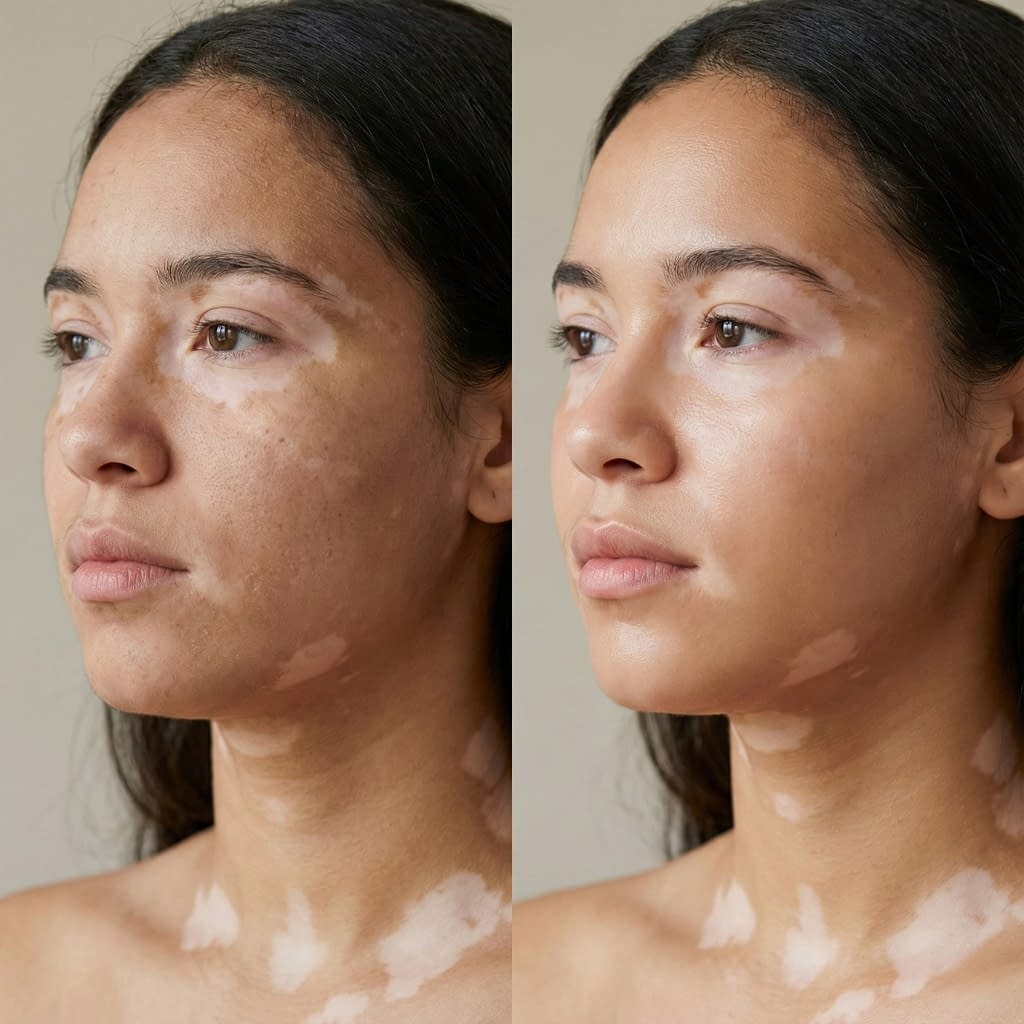
A few myths create unnecessary fear — here’s the truth:
- Myth: Vitiligo is contagious. — Fact: It isn’t.
- Myth: Only people with dark skin get vitiligo. — Fact: Anyone can get it.
- Myth: Vitiligo is caused by poor hygiene. — Fact: It’s not related to hygiene.
- Myth: Makeup will always look fake on vitiligo. — Fact: Modern camouflage and techniques can look natural and comfortable.
- Myth: Diet alone will cure vitiligo. — Fact: diet supports overall health but is not a cure; medical treatments may help in some cases.
Sharing accurate information helps reduce stigma and supports better care.
Resources and Support Groups to Explore
Finding community and trusted resources makes a real difference.
Where to start
- National vitiligo foundations & societies — many countries have organizations offering education, patient resources, and local support groups.
- Online support communities — moderated forums, Facebook groups, and Instagram communities where people share tips and stories (seek moderated groups for safer spaces).
- Dermatology associations — for finding board-certified dermatologists and evidence-based treatment information.
- Mental health & counseling services — for coping support with visible differences.
- Local hospitals/clinics — many host patient education nights or connect patients with support resources.
If you’d like, I can gather a short list of reputable organizations and support groups tailored to your country or language — just tell me where you are.
Final Words
Caring for vitiligo skin is a balanced mix of practical daily skin health routines, rigorous sun protection, thoughtful choices around products and hair care, readiness to manage flares, and attention to emotional wellbeing. Many people with vitiligo lead active, confident lives with healthier, well-protected skin and a toolkit of camouflage and clinical options when desired. If you’re dealing with new or changing patches, or you’d like to explore medical repigmentation options, please consult a dermatologist — early, professional support makes a difference.


