

You don’t have to bleach or strip your skin to even out a patchy tan. Uneven tanning is usually the result of how skin reacts to sun, friction, and previous skin trauma — not a sign you did something “wrong.” The safest, most effective approach is gradual: protect, gently resurface dead skin, support the barrier, and use mild brightening ingredients that encourage even pigment without irritation. Below is a step-by-step, long-form guide you can use to educate readers and give them a realistic, safe plan.
Why Uneven Tanning Happens
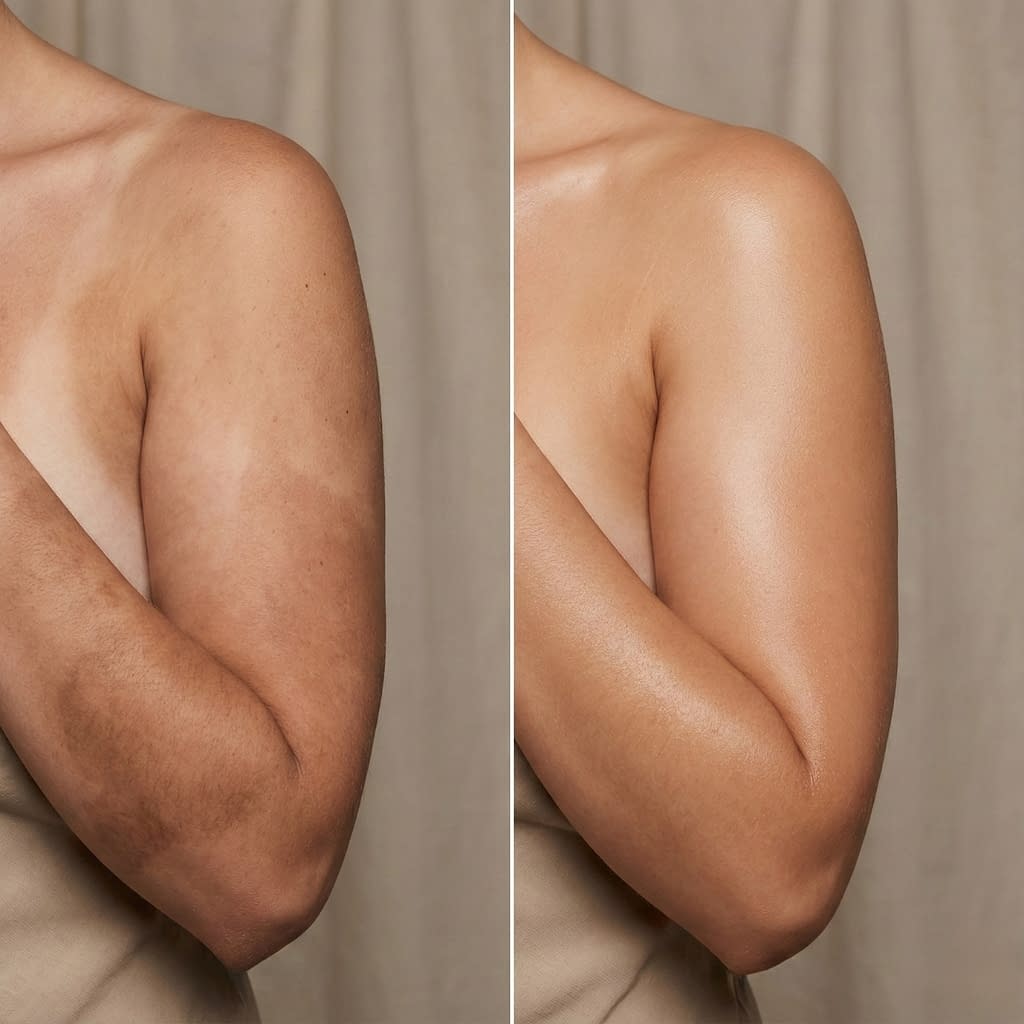
Uneven tanning happens when melanin (the pigment in your skin) is produced or distributed unequally after sun exposure. Not everyone tans the same way — and many factors influence how and where a tan develops.
Key reasons:
- Different sun exposure — some areas receive more direct sunlight (shoulders, face) while others are often shaded (under arms, inner thighs).
- Clothing and straps — fabric lines and straps create patterns of protection versus exposure.
- Friction — constant rubbing (waistbands, underarms, thighs) can cause the top layer of skin to wear away or become thicker, resulting in uneven tone.
- Previous inflammation or injury — healed acne, insect bites, or any trauma can leave post-inflammatory hyperpigmentation (PIH) that darkens after sun exposure.
- Skin thickness & melanin density differences — elbows, knees, and knuckles naturally have different texture and pigment.
- Hormonal or medication effects — pregnancy, birth control, or photosensitizing meds can shift how pigment forms.
- Sunburn and rapid tanning — intense or uneven UV exposure leads to patchy pigment.
Why this matters: treating uneven tanning needs to address both the visible pigment and the underlying behaviour/environment that caused it — otherwise it just comes back.
Understanding Your Skin Tone and Tan Patterns
Before treating anything, map the problem and set realistic goals.
Step-by-step mapping:
- Look in natural light and take photos of the areas you want to treat (front and back). Photos let you track progress objectively.
- Note patterns: is the darkening around scars, on high-friction zones, or where you’ve had sun exposure?
- Check sensitivity: lightly touch the area — is it dry, scaly, or sensitive? That affects which treatments you can use safely.
- Consider skin type: darker skin tones can be more prone to PIH and may require gentler, longer approaches to avoid further irritation.
- Decide priority areas: focus on one or two trouble spots at a time (e.g., knees, elbows, upper chest) instead of treating your whole body aggressively.
Knowing the cause and your skin’s tolerance will guide your product choices and how quickly you progress.
Common Causes of Patchy or Uneven Tan
It helps readers identify and stop the behaviours that keep a tan uneven.
Common causes (and quick fixes)
- Patchy exposure: fix by using consistent, daily SPF and clothing coverage.
- Sunscreen gaps: many people miss ears, under jaw, tops of feet — reapply these areas.
- Exfoliation differences: some zones shed faster or slower — use targeted gentle exfoliation.
- Inconsistent product application: many brightening creams are applied unevenly; use careful, even application.
- Heat and sweat patterns: sweating under clothes can change how pigment sets; shower and reapply sunscreen after sweating.
- DIY bleaching or harsh scrubs: these cause irritation and paradoxical darkening — stop immediately.
Actionable step: stop the immediate culprit first. If it’s a strap or frequent sun exposure, change the clothing or sunscreen habits today.
Why Harsh Scrubs and Bleaching Make It Worse
Harsh physical scrubbing and bleach-style products might remove surface pigment temporarily but they also injure skin and promote inflammation — and inflammation is one of the main triggers for more pigmentation (PIH).
How damage happens:
- Microtrauma from scrubs causes tiny injuries; the skin responds with melanin production to protect itself.
- Strong bleaches (like high-percent hydrogen peroxide or unregulated “bleaching” products) strip natural oils and weaken the barrier — leading to dryness, irritation, and rebound pigmentation.
- Essential oils or home bleach mixes may irritate and sensitize skin, especially on darker tones.
Better approach: gentle resurfacing + barrier repair + slow brightening ingredients = durable, safer results.
Gentle Exfoliation to Fade Uneven Tanning Safely
Exfoliation helps remove built-up dead skin that makes tans look patchy — but it must be gentle and controlled.
Two safe exfoliation routes and how to do them:
Chemical exfoliation (preferred for most body tanning unevenness)
- Choose the right acid:
- Lactic acid (AHA) — gentle, hydrates and brightens; great for body use.
- Glycolic acid (stronger AHA) — effective but more irritating for sensitive skin.
- Salicylic acid (BHA) — helps follicular areas (back, chest) and works on bumpiness.
- PHA (gluconolactone) — very gentle for sensitive skin and darker tones.
- Concentration & frequency: start with lower concentrations (5–10% lactic, 1–2% salicylic) once per week. Build to 2–3× per week as tolerated.
- Apply at night: clean skin, apply product evenly to the target area, and follow with a moisturizer. Always follow product instructions.
- Patch test first on a hidden area (inner thigh) for 48 hours to check for irritation.
- Don’t mix strong actives (e.g., high Lactic + retinoids) on the same night until you’re confident of tolerance.
- Stop if you get redness or prolonged stinging — back off frequency or concentration.
Physical exfoliation (use sparingly)
- Choose gentle tools: konjac sponge, soft washcloth, or a very gentle scrub (round sugar scrub with oil base) — avoid coarse salt or crushed shells.
- Technique: in the shower, use light pressure and circular motions for 30–60 seconds over the area once or twice weekly.
- Follow with hydration: pat dry and immediately layer humectant + emollient + occlusive.
Safety tips:
- Avoid aggressive exfoliation on elbows/knees if they are cracked or inflamed.
- For darker skin types, rely more on chemical options (lactic acid, PHA) because they tend to be more uniform and less traumatic.
Hydration and Moisturizing to Restore Skin Balance

Hydration makes skin look smooth and reduces visibility of pigment differences. Use a layering approach so moisture reaches the skin and stays there.
Step-by-step moisturizing routine for uneven tan:
- Shower & prep: use lukewarm water and a gentle cleanser; don’t over-wash the target areas. Pat skin slightly damp.
- Humectant layer: apply a glycerin or hyaluronic acid body serum (a little goes a long way) to damp skin to attract water.
- Emollient layer: apply a ceramide or fatty-acid rich lotion to replenish lipids (look for ingredient lists with ceramides, cholesterol, fatty acids).
- Occlusive (night): for very dry patches or scaly areas, finish with a thin layer of petrolatum or a body balm to lock in moisture overnight.
- Consistency: moisturize at least once daily — ideally within 3 minutes after showering, and again at night for stubborn zones.
Why this helps: well-hydrated skin reflects light more evenly and responds better to brightening actives; it also reduces irritation risk when exfoliating.
Ingredients That Help Even Skin Tone Without Irritation

Pick clinically supported, gentle ingredients. Avoid aggressive bleach-like agents and favor slow, safe options.
Recommended ingredients & how to use them:
- Niacinamide (vitamin B3): reduces pigment transfer, calms inflammation, and improves barrier. Use 2–5% in body lotions or serums daily. Very well tolerated.
- Vitamin C (stable forms like ascorbyl tetraisopalmitate or sodium ascorbyl phosphate): brightens and protects from oxidative stress. Use in morning routines under sunscreen.
- Azelaic acid: reduces inflammation and pigment; available as creams (often 10–15%) and is friendly for darker skin tones.
- Lactic acid: gentle AHA that both exfoliates and hydrates — excellent for body use in 5–12% leave-on formulas.
- Kojic acid & arbutin: melanin-inhibiting ingredients — effective but can be sensitizing; patch test and use within well-formulated products.
- Tranexamic acid (topical): emerging evidence for pigment control; often used in 2–5% topical preparations.
- Sunscreen (mineral or broad-spectrum): essential to prevent further darkening — SPF 30+ for exposed skin and lip protection as needed.
- Retinoids (low strength): topical retinoids increase turnover and can help on the body but can be drying and sensitizing; use cautiously and with sunscreen.
How to layer these safely:
- Begin with one active at a time (e.g., lactic acid 2× week + niacinamide daily).
- If tolerated, add vitamin C in the AM and lactic acid at night.
- For stubborn pigment, azelaic acid (twice daily) is a gentle, effective next step.
- Always pair actives with a good moisturizer and daily SPF.
Note for darker skin: avoid aggressive high-strength acids and visible irritation — calm, steady improvements are safer and produce better long-term results.
Natural Home Remedies for Gradual Tan Removal
Natural remedies can complement clinical ingredients, but they work slowly and must be used carefully to avoid irritation.
Safe, gentle home options:
- Yogurt & honey mask: lactic acid in yogurt + humectant honey can gently brighten and soothe. Apply for 10–15 minutes once or twice weekly.
- Papaya/pineapple enzymes: contain papain and bromelain which mildly dissolve dead cells — use diluted, short contact (5–10 minutes) and rinse well. Avoid repeated daily use.
- Aloe vera: soothes and may slightly improve texture and healing; apply daily.
- Oatmeal baths: soothe inflamed, sun-damaged skin and support barrier repair.
- Turmeric paste (with gentle base): may help tone over time but can stain clothes and skin temporarily — test first.
- DIY lemon juice caution: citrus is acidic and photosensitizing — avoid using raw lemon juice on skin that will be sun-exposed and avoid on sensitive or dark skin because it can cause paradoxical hyperpigmentation.
Keep in mind: natural does not mean risk-free. Patch test and use these remedies sparingly as adjuncts, not replacements for tested actives.
How to Brighten Dark Areas Without Lightening Healthy Skin
Precision matters. You want to reduce dark patches, not bleach surrounding healthy skin.
Targeted approach (step-by-step)
- Spot-treat only the dark area first rather than applying brighteners all over. Use a small brush or your fingertips to apply product only where needed.
- Use occlusion for stubborn spots: after applying a topical (like azelaic or lactic acid), cover with a small bandage for a few hours (if product instructions allow) to boost penetration — but be cautious and patch test first.
- Monitor daily: if surrounding skin becomes lighter or irritated, reduce frequency.
- Use anti-inflammatory partners: pair brightening actives with niacinamide or panthenol to reduce irritation and protect surrounding skin.
- Avoid harsh spot bleach treatments that promise overnight miracles — they typically irritate and create worse PIH.
- Combine with sun protection: apply SPF on and around the spot every day — UV will reverse any brightening gains if unchecked.
Precision plus protection equals selective improvement with minimal collateral lightening.
Sun Protection Habits to Prevent Further Uneven Tanning

Sunscreen is non-negotiable — it prevents existing dark spots from getting darker and helps your treatments work.
Daily sun habits:
- Use a broad-spectrum SPF 30+ on all exposed body areas every morning. For face and neck, use at least SPF 30 and reapply if you’ll be outdoors.
- Apply generously: for arms/legs use roughly 1 teaspoon per limb section; most people underapply.
- Reapply every 2 hours when outdoors and after swimming or sweating.
- Wear protective clothing: UPF shirts, wide-brim hats, and long sleeves reduce UV dose dramatically.
- Avoid direct sun during peak hours (10am–4pm) whenever possible.
- Use mineral sunscreens (zinc/titanium) if your skin is reactive to chemical filters or if you need immediate protection after a topical treatment.
Prevention is the easiest, most powerful strategy for keeping tans even.
Body Care Routine for Treating Uneven Tan
A practical daily and weekly routine readers can follow.
Daily morning routine (simple)
- Shower with a gentle cleanser and lukewarm water.
- Pat skin slightly damp and apply a humectant serum on targeted areas.
- Apply a ceramide or lipid-rich lotion evenly over treated areas.
- Apply SPF 30+ to all exposed skin (face, neck, hands, legs) before dressing.
Evening routine (repair focus)
- Cleanse to remove sunscreen and pollution.
- Apply chemical exfoliant to target areas 1–3× per week (begin slow).
- Follow with niacinamide serum for barrier support and pigment control.
- Lock in with a richer moisturizer or a balm on drier patches.
Weekly
- Exfoliate (chemical or gentle physical) 1–2× a week.
- Hydrating mask or oil on stubborn dry patches.
- Assess progress with photos and adjust active frequency.
Extra: for knees/ elbows, use slightly richer formulas and consider applying occlusive overnight twice weekly to regain softness and evenness.
How Long It Takes to See Results (Realistic Expectations)

Patience is key. Pigment is deep and skin turnover on the body is slower than the face.
Typical timelines:
- Immediate: hydration will make tone look better within days.
- 2–6 weeks: softening of texture and light reduction of surface tan with regular gentle exfoliation and moisturizing.
- 6–12 weeks: visible fading of superficial pigmentation with consistent use of lactic acid, niacinamide, and SPF.
- 3–6 months: deeper PIH and stubborn dorsal/torsal pigmentation may need several months of careful treatment or professional options.
If pigment is long-standing (years) or due to deep dermal melanin, in-office treatments (chemical peels, laser, microneedling) under dermatologist care may be faster — but require professional assessment especially for darker skin tones.
Mistakes to Avoid While Treating Uneven Tanning
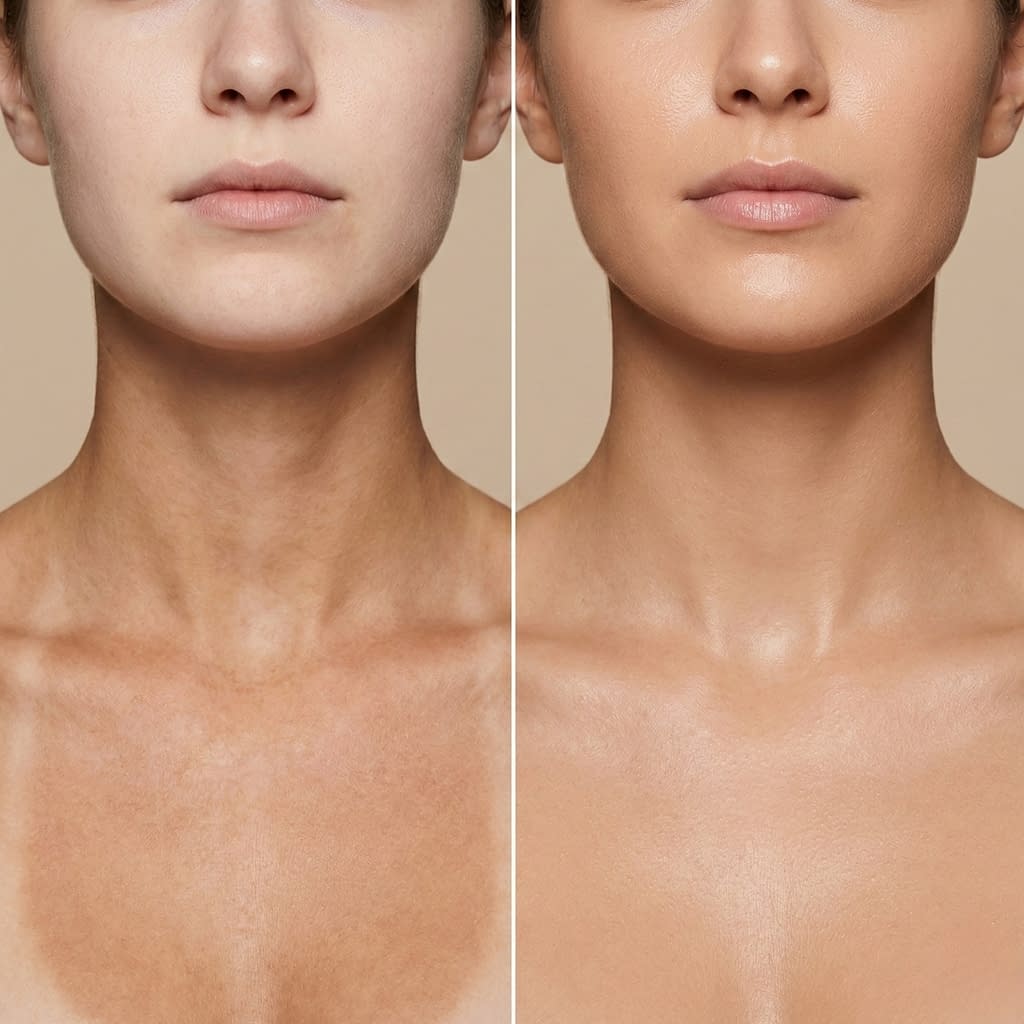
Avoiding damage speeds results and protects skin tone.
Don’t do these:
- Scrub aggressively — you’ll cause inflammation and more pigment.
- Use unregulated bleaching products or DIY peroxide mixes — they can burn and worsen PIH.
- Over-exfoliate — more is not better; it damages barrier and delays improvement.
- Skip SPF — everything you do is undone by sun exposure.
- Mix too many actives at once (high-strength AHA + retinol + bleaching agent) — irritation risk skyrockets.
- Expect overnight results — impatience pushes people to harsher, damaging methods.
- Ignore sensitivity signals — stinging, long-lasting redness, or burning means stop and reassess.
Safer progress beats fast damage every time.
Final Words
Treating uneven tanning is a slow, steady, and skin-kind process. The winning strategy combines gentle resurfacing (preferably chemical like lactic acid or PHA), consistent hydration and barrier repair, targeted brightening ingredients (niacinamide, azelaic acid, vitamin C), and strict sun protection. Start with mapping your tan, patch test new actives, and add one treatment at a time. For persistent or deep hyperpigmentation, consult a dermatologist — especially if you have darker skin where aggressive treatments carry greater risk.


