

Winter is a season of cozy layers, hot drinks, and — unfortunately — extra stress for your hair. Cold, dry outdoor air plus indoor heating creates an environment that strips moisture, dulls shine, makes hair brittle, and aggravates scalp dryness. The good news: with a few intentional swaps to your routine, seasonal tools, and smart habits, you can protect strength, shine, and manageability through the cold months. Below is a practical, step-by-step guide you can follow (or drop straight into your blog) that covers what goes wrong, how to prevent it, and exactly what to do when damage shows up.
Why Winter Is Tough on Your Hair
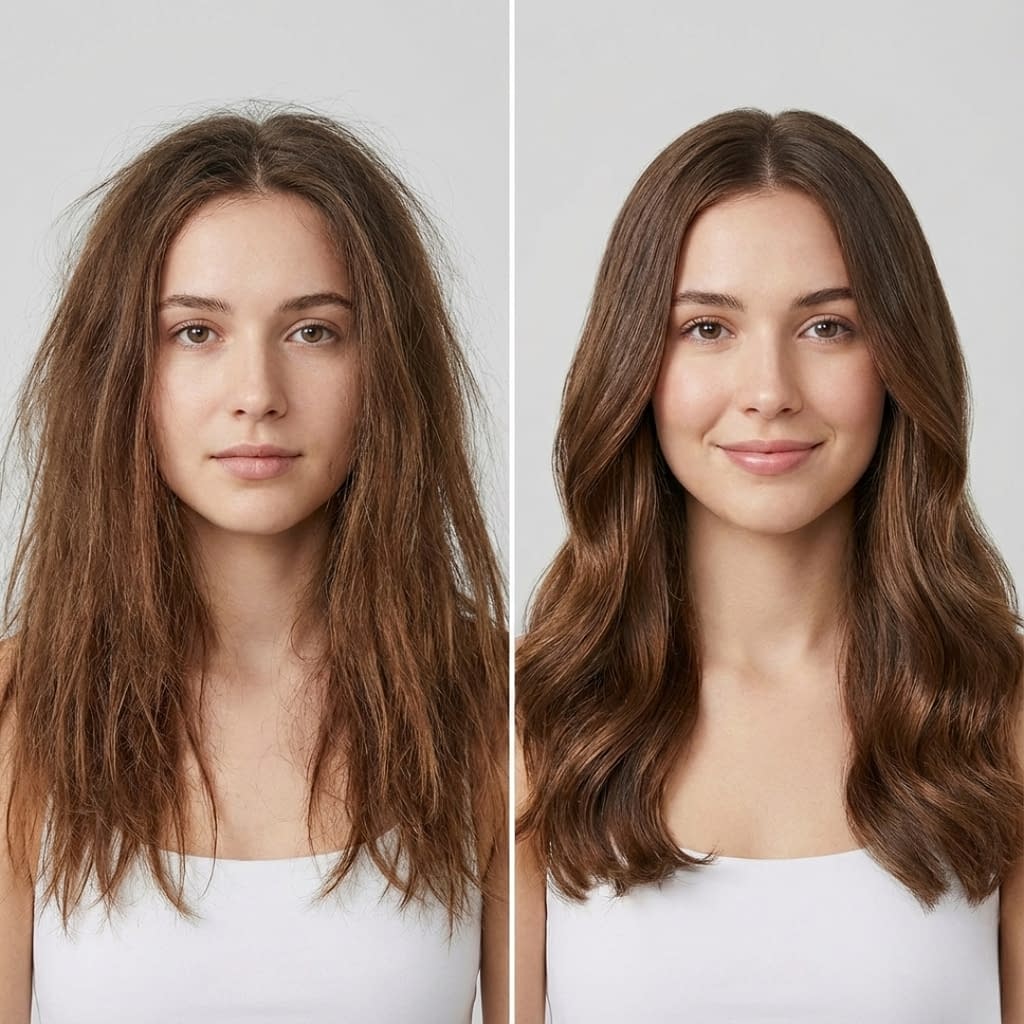
Winter does two main things that harm hair: it removes ambient moisture and it increases mechanical stress. Cold outside air holds less humidity, so hair loses surface water and the natural lipids that keep cuticles smooth. Indoors, radiators and forced air heat the atmosphere, evaporating whatever moisture remains. That combination makes the hair shaft dry, the cuticle lift, and the strand prone to breakage and static.
Other winter stressors:
- Frequent friction from hats, scarves, and collars.
- More heat styling to dry hair quickly (which compounds drying).
- Reduced frequency of hydrating treatments because people wash less or expect product buildup.
- Increased scalp dryness and flaking in some people.
Knowing the cause makes the solution obvious: keep moisture in, reduce friction and heat, and strengthen the hair internally and externally.
Common Signs of Winter Hair Damage
Watch for these early warning signs so you can act before long-term damage sets in:
- Excess static and flyaways — hair lacks moisture and the cuticle is raised.
- Dry, rough texture — hair feels sandpapery and looks dull.
- Increased breakage and split ends — brittle strands snap when you brush or style.
- Frizziness and loss of definition — curls or waves lose shape.
- Scalp tightness, itching, or visible flakes — barrier of scalp is compromised.
- Tangles and matting — lack of slip on the hair shaft causes knotting.
Early action — hydration, protection, and less mechanical stress — usually restores resilience in weeks.
How Cold Air and Indoor Heating Affect Hair Health
Step-by-step explanation and what to do about it:
- Cold air = low humidity
- Effect: hair loses surface moisture quickly.
- Fix: use a humidifier in living and sleeping areas to raise indoor relative humidity toward 40–50%. It helps both skin and hair.
- Hot radiators/forced air = evaporative stress
- Effect: accelerates water loss and dries scalp oils.
- Fix: avoid sitting directly in front of vents; lower thermostat a couple degrees and layer clothing instead.
- Temperature swings (outdoor → warm indoor)
- Effect: rapid expansion/contraction stresses the cuticle and weakens strands.
- Fix: limit extremely hot showers and high-heat styling; towel-blot gently and air-dry when possible.
- Clothing friction & static
- Effect: mechanical abrasion lifts the cuticle.
- Fix: choose softer fabrics for hats/scarves (wool can be rough — consider lined hats or silk/satin lining).
Tackle both environmental and mechanical contributors for best results.
Switch to a Winter-Friendly Hair Care Routine

A winter routine emphasizes hydration, protection, and gentle handling. Follow this seasonal template:
Daily / Every-wash routine (step-by-step)
- Shampoo less often if possible: 1–3 times per week depending on oiliness. Overwashing removes sebum that protects hair.
- Use a hydrating, sulfate-free shampoo: cleanses without stripping. Look for glycerin, panthenol, or mild surfactants.
- Condition every wash: focus conditioner on mid-lengths to ends; leave 1–3 minutes before rinsing.
- Deep condition weekly: use a mask (5–20 minutes) or an overnight oil treatment once weekly for very dry hair.
- Apply leave-in conditioner or cream to damp hair to lock moisture and add slip.
- Finish with a sealant: a small amount of oil or serum on ends seals cuticle and reduces friction.
Weekly treatment plan:
- 1× weekly protein-moisture balance if hair is chemically treated (protein treatment followed by a moisturizing mask as needed).
- 1× weekly scalp soothing treatment (oat/ aloe or a light oil massage) if the scalp is dry.
This routine keeps a steady level of hydration without buildup.
Gentle Cleansing: Avoiding Overwashing in Winter
Overwashing strips oils; under-washing can lead to buildup — find the sweet spot.
How to cleanse gently (step-by-step)
- Choose a mild low-foam cleanser or a sulfate-free shampoo formulated for dry or color-treated hair.
- Pre-shampoo oiling (optional): for very dry hair, apply a light oil to lengths 15–30 minutes before washing to protect against water swelling.
- Warm, not hot water: wash with lukewarm water to avoid boiling off protective lipids.
- Scalp-first, lengths-later: concentrate shampoo at the scalp where oil and buildup live; the rinse water will clean the lengths without drying them.
- Rinse thoroughly and follow with conditioner applied to mid-lengths and ends; comb through in the shower with a wide-tooth comb to detangle when the hair is conditioned.
- Blot dry with a microfiber towel or cotton t-shirt, don’t rub.
If you feel oilier between washes, try dry shampoo at the roots or a gentle co-wash rather than a full shampoo.
Deep Conditioning to Restore Moisture and Strength
Deep conditioning replenishes lost lipids and repairs the cuticle when used correctly.
How to deep condition (step-by-step)
- Choose the right mask: look for ingredients like shea butter, cocoa butter, ceramides, hyaluronic acid, panthenol, or hydrolyzed proteins depending on your needs.
- Apply to clean, towel-damp hair. Focus on mid-lengths and ends. Avoid heavy application at the roots unless your scalp is dry.
- Use heat for better penetration: wrap hair in a warm towel or sit under a hooded dryer for 10–20 minutes (or use a heat cap) once weekly. Heat opens the cuticle slightly so actives absorb better.
- Rinse with cool water to smooth the cuticle and lock product in.
- Frequency: once weekly for normal hair, up to 2× weekly for very dry or chemically treated hair.
Tip: alternate moisturizing masks with occasional protein treatments (if hair is chemically damaged) to rebuild structure — too much protein can make hair stiff, so balance is key.
Oils and Serums That Seal Moisture in Cold Weather

Sealants prevent moisture loss and reduce friction; apply sparingly to avoid greasiness.
Best oils/serums & how to use them
- Squalane: lightweight, non-greasy, excellent for sealing in moisture on lengths. Apply a few drops to damp hair.
- Argan oil: medium-weight, high in fatty acids and vitamin E — great for dry ends and smoothness. Use 1–2 drops on short hair, 3–6 drops on longer hair.
- Jojoba oil: closest to sebum — good for scalp balancing and light sealing.
- Coconut oil: deep-penetrating but heavier; best as pre-wash treatment, not daily leave-in if you’re prone to buildup.
- Silicone-based serums (dimethicone or cyclomethicone): excellent for a smooth, water-resistant barrier in winter; use a tiny amount to tame frizz and protect from friction.
- Apply to ends and mid-lengths — avoid heavy application at the roots to prevent limpness.
Nighttime sealing: apply a small amount of oil to ends and braid or wrap to prevent tangles and friction overnight.
Protecting Hair Outdoors: Hats, Scarves, and Fabrics
Physical protection stops mechanical damage and reduces exposure to cold wind.
How to protect effectively (step-by-step)
- Choose hat materials carefully: a lined hat (wool or knit with a silk/satin lining) prevents static and friction. Avoid rough wool directly against hair; use a silk cap under a beanie if necessary.
- Use silk or satin scarves inside hats or tie them loosely around neck to protect mid-lengths and ends from rubbing.
- Wear a high collar or hood to shield hair from wind when possible.
- Don’t overdress your hair: avoid very tight ponytails under hats which create traction and breakage at the hairline.
- Remove hats carefully: unclip or unzip hats and lift off gently to avoid sudden pulling.
Outdoor protection plus mindful handling minimizes breakage and frizz from cold wind.
Minimizing Heat Styling During Winter Months

Excessive heat compounds dryness — reduce and protect when you must use hot tools.
Heat-minimizing strategy (step-by-step)
- Air-dry when possible: rough-dry to 70–80% with a microfiber towel and let hair finish air-drying.
- Use the lowest effective temperature on tools — fine hair: 300°F/150°C or lower; medium hair: 300–375°F/150–190°C; coarse hair: 350–400°F/175–205°C.
- Always apply a heat protectant before any hot tool.
- Limit frequency: reserve flat iron/curling for special occasions; use multi-day styles (braids, buns) to stretch between heat sessions.
- Use hot tools efficiently: work in small sections, but don’t go over the same section repeatedly. Use quick passes rather than slow, prolonged heat.
Reducing heat usage and protecting when you do use tools prevents cumulative thermal damage.
Scalp Care Tips to Prevent Dryness and Flaking
The scalp needs hydration and gentle care in winter as much as the hair shaft does.
Scalp care routine (step-by-step)
- Use a gentle, moisturizing cleanser and avoid frequent harsh anti-dandruff shampoos unless medically indicated.
- Apply a lightweight scalp oil (jojoba, squalane-based) once weekly and massage to improve circulation and barrier function. Leave 15–30 minutes before shampooing if oiling pre-wash.
- Avoid over-exfoliation: a mild scalp scrub or chemical exfoliant (low concentration salicylic or PHA) can help flaking, but use no more than once weekly.
- Rinse fully: product residue can irritate in winter and cause flakes.
- Stay hydrated & consider a humidifier — poor indoor humidity commonly worsens scalp dryness.
If dandruff or flaking is severe, consult a dermatologist to rule out seborrheic dermatitis or psoriasis.
Nighttime Hair Protection for Cold Seasons
Night routines preserve style and reduce morning damage.
Nighttime steps (step-by-step)
- Brush gently before bed to distribute oils and remove tangles.
- Apply a light leave-in or oil to ends if dry (avoid roots).
- Wrap hair or use a silk/satin pillowcase to reduce friction and static. For very short hair, a silk cap can help preserve style.
- Loosely braid longer hair to minimize tangles and breakage from movement.
- Allow treatments to work overnight — a weekly overnight mask under a silk cap can deeply replenish moisture.
A short night routine reduces styling time in the morning and protects fragile winter hair.
Diet and Hydration for Strong Winter Hair
What you eat and drink supports hair structure from the inside out.
Diet & hydration tips (step-by-step)
- Stay hydrated — drink water throughout the day and include hydrating foods (soups, fruits, vegetables).
- Include protein daily (eggs, fish, legumes) — hair is made of keratin, a protein.
- Omega-3 fatty acids support scalp lipids — add fatty fish, flaxseeds, walnuts, or consider a supplement after consulting your clinician.
- Vitamin A, C, D, zinc & iron are important for healthy hair growth — aim for a balanced diet and test for deficiencies if shedding increases.
- Biotin helps some people but is rarely needed if diet is adequate; seek medical advice before high-dose supplementation.
Healthy internal support complements topical seasonal care for stronger, shinier hair.
Mistakes That Make Winter Hair Damage Worse
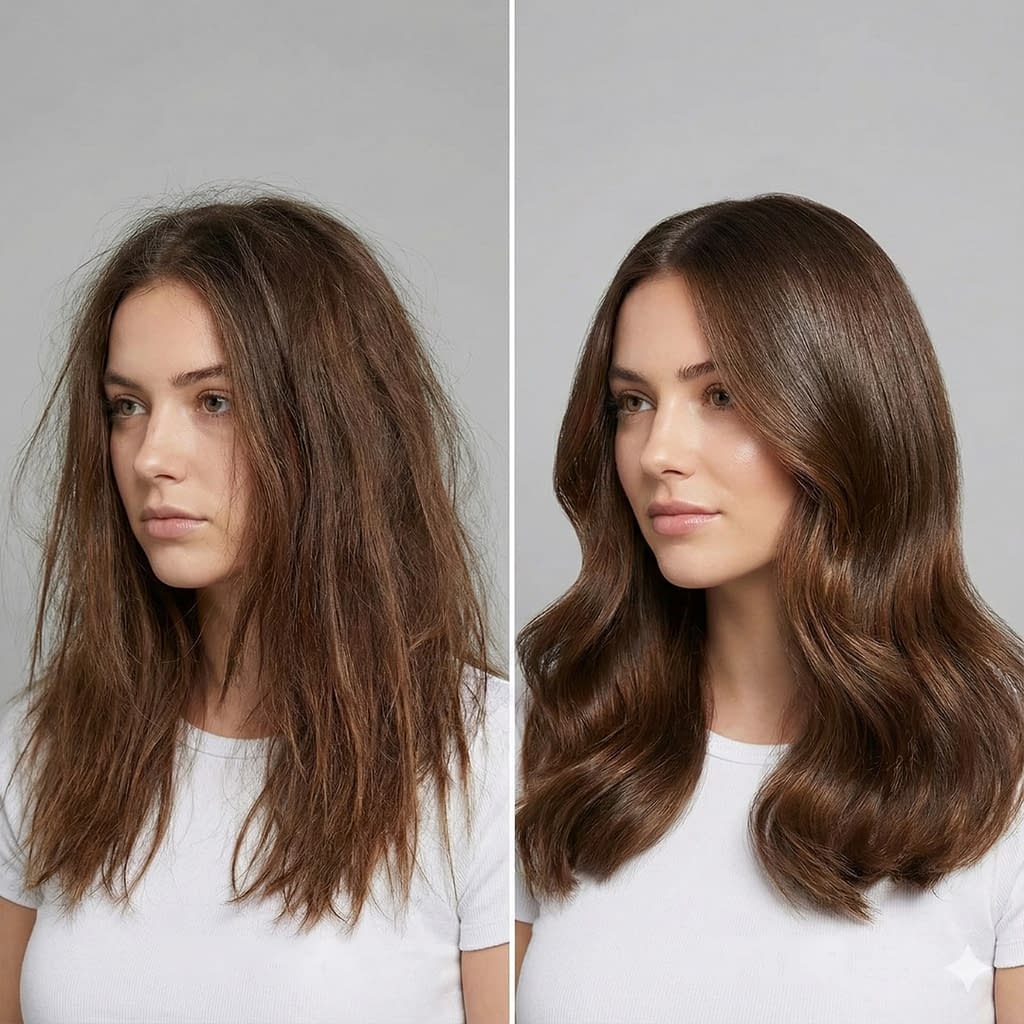
Avoid these common traps that sabotage winter hair health.
Mistakes to avoid
- Hot, long showers that strip scalp oils.
- Skipping conditioner or deep treatments because you worry about buildup. Moisture is essential.
- Using heavy oils at the root which can weigh hair down and lead to over-washing.
- Tight hats and hair ties that create traction and breakage.
- Ignoring the scalp — focusing only on lengths while the root environment is dry.
- Overuse of anti-dandruff shampoos without alternation — they can dry hair if used daily.
- Brushing aggressively when hair is wet — wet hair is more fragile; detangle gently with wide-tooth combs.
Stop these and you’ll preserve moisture and strength through the season.
Final Words
Winter hair protection is about being gentle, consistent, and proactive. Raise indoor humidity, reduce hot showers and heat styling, step up conditioning and sealing with appropriate oils/serums, protect hair from friction with smart fabrics, and support strength with good nutrition and scalp care. Small changes — a weekly mask, a silk pillowcase, a tiny dab of sealing oil — compound into major benefits: less breakage, more shine, and hair that feels healthy until spring. If you’re dealing with severe dryness, excessive breakage, or sudden hair loss, consult a professional — there may be an underlying cause that needs targeted treatment.


