

You follow the routine: gentle shampoo, weekly masks, careful brushing — yet you still find more hair in the drain, on your pillow, or on your brush than you’d expect. That frustration is real. Hair fall is rarely caused by a single mistake; usually it’s a tangle of biology (hair’s growth cycle), scalp health, lifestyle, and sometimes hidden medical issues. This post breaks down the reasons hair can fall despite good care, shows how to investigate the problem step-by-step, and gives practical fixes you can try at home — plus clear signs for when to see a clinician.
When Good Hair Care Still Isn’t Enough
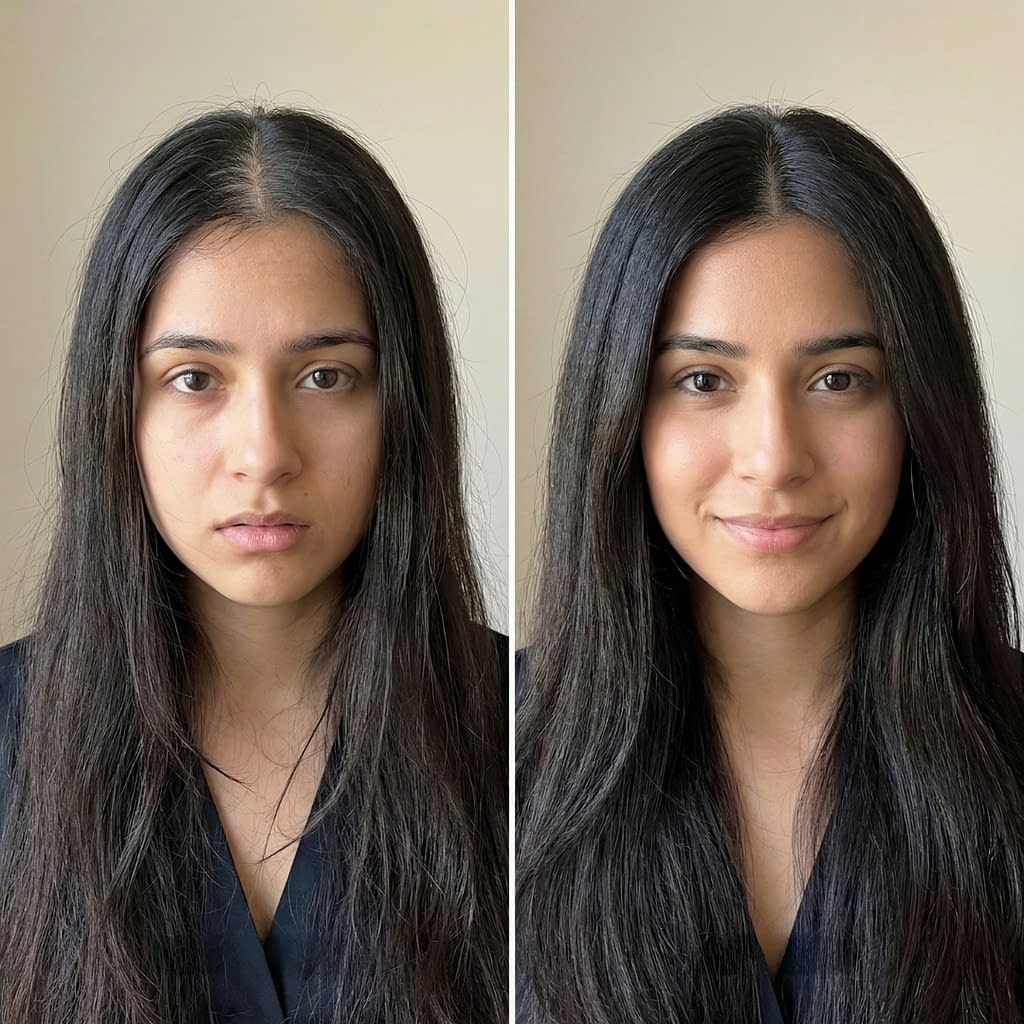
Even the best shampoos and masks can’t override biology. Think of your hair like a garden: you can water and fertilize, but soil conditions, pests, and the seasons still affect growth. Good care reduces preventable breakage and supports health, but it won’t fix:
- hormone-driven shedding (e.g., postpartum, PCOS, thyroid),
- genetically determined thinning,
- or internal deficiencies and illnesses.
Step-by-step mindset
- Accept that “care” is necessary but sometimes insufficient.
- Observe objectively: is it more hair than usual, or just more noticeable? (We all notice more hair in fall/winter or after long styling sessions.)
- Use the sections below to systematically rule out causes instead of chasing products.
Understanding Normal Hair Shedding vs. Hair Fall
You normally lose hair daily — that’s normal. The difference between normal shedding and a problem is amount, pattern, and duration.
Quick facts and a self-test
- Normal shedding: roughly 50–100 hairs/day, spread evenly.
- Problematic hair fall: sudden clumps, widening part, visible scalp, or >100 hairs/day for more than a few weeks.
- Self-check test (daily pull test): gently pull a small bundle of 40–60 hairs; losing 2–3 hairs is normal, >6 suggests active shedding. Do this only once or twice — repeated pulling can stress hair.
- Shed vs breakage: look at the hair root: a white bulb at the base suggests shedding (root released); tapered or broken ends indicate breakage.
Step-by-step observation plan
- Track how many hairs you find daily for 7–14 days (brush, shower, pillow).
- Note patterns: more in the morning? after styling? seasonal?
- Photograph part lines and hairline weekly to track thinning progress.
Hidden Scalp Issues That Cause Ongoing Hair Loss
A healthy scalp anchors hair. Problems there often go unnoticed but cause both shedding and breakage.
Common scalp causes & what to look for
- Seborrheic dermatitis / dandruff: flaky, oily patches; inflamed follicles can lead to shedding.
- Fungal infections (tinea capitis): patchy hair loss with scaling or black dots.
- Folliculitis or bacterial infection: tender bumps, pustules, soreness.
- Scalp psoriasis / eczema: red, scaly, often itchy plaques.
- Excess product buildup: clogs follicles and weakens hair.
Step-by-step scalp check & basic care
- Inspect the scalp in good light (use a hand mirror). Look for redness, flakes, bumps, or patches.
- Try a gentle salicylic or ketoconazole shampoo 2×/week if you see dandruff/oiliness (test tolerance; follow instructions).
- If you see tender pustules, expanding patches, severe scaling, or hair broken close to the scalp, see a dermatologist for diagnosis and targeted treatment.
- Avoid heavy, leave-on products on the scalp (move conditioners/masks mainly to lengths).
- Keep hair clean but not stripped — use a mild, sulfate-free shampoo.
Hormonal Imbalances and Their Impact on Hair Growth
Hormones are powerful drivers of hair behavior. Even small imbalances can push more hairs into the resting (telogen) phase.
Common hormonal contributors
- Thyroid dysfunction (hypo/hyperthyroid) — often associated with diffuse shedding.
- Androgen excess (e.g., PCOS) — causes thinning at the crown and hairline.
- Postpartum hormone shift — common, usually temporary telogen effluvium.
- Contraceptive changes — starting/stopping certain pills can change shedding.
Step-by-step actions if you suspect hormones
- Note patterns: sudden postpartum shedding, new facial hair + scalp thinning, or irregular periods suggest hormonal links.
- Make an appointment with a GP/endocrinologist for blood tests (TSH, free T4, androgens, maybe DHEA, prolactin, and vitamin D depending on symptoms).
- Follow medical advice — hormonal treatments are prescribed only after testing. Don’t self-adjust medications or supplements.
Nutrient Deficiencies That Weaken Hair From the Inside
Hair needs protein and micronutrients. Deficiencies don’t always show obvious symptoms beyond hair issues.
Key nutrients & simple checks
- Iron (ferritin) — low iron stores are commonly linked to shedding. Ask for ferritin and CBC.
- Vitamin D — low levels correlate with hair loss in some people.
- Zinc — both low and very high zinc can harm hair.
- Protein / essential fats — severe dietary restriction or rapid weight loss can trigger shedding.
- Biotin — rarely deficient; high-dose biotin can interfere with lab tests, so don’t take it blindly.
Step-by-step nutrition checklist
- Review diet: are you eating enough protein, healthy fats, and varied vegetables/fruit?
- Get blood tests if hair fall is persistent (work with a clinician).
- Correct deficiencies under medical supervision — iron supplementation should be guided by labs.
- Consider a balanced multivitamin if diet is restricted, but avoid megadoses without tests.
Stress and Lifestyle Factors That Trigger Hair Fall
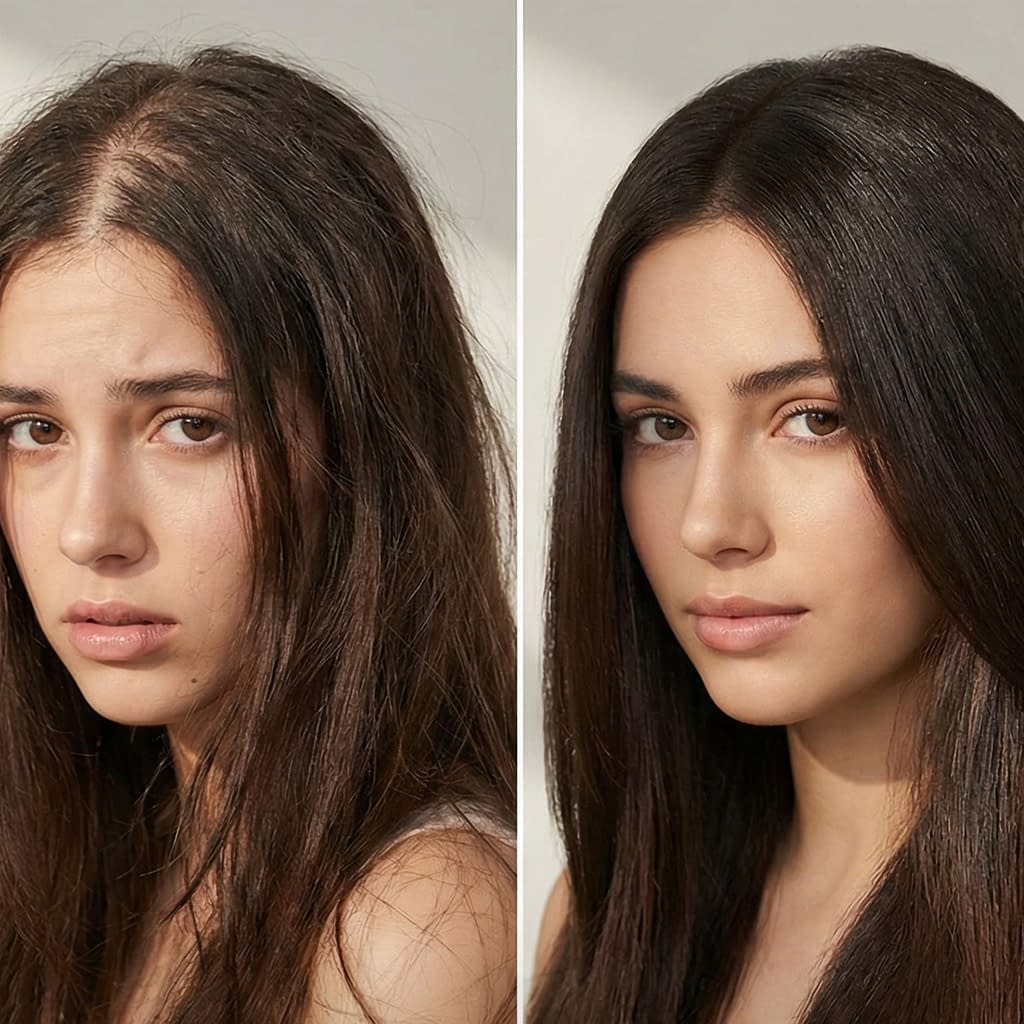
Emotional and physical stress cause telogen effluvium — a diffuse shedding that typically starts 2–3 months after the trigger.
Common triggers and how they work
- illness, surgery, high fever
- sudden weight loss or crash diets
- emotional trauma or chronic stress
- major life events (loss, exams, job changes)
Step-by-step stress & lifestyle plan
- Identify recent stressors or health events within the past 3–6 months.
- Adopt stress-reducing routines: sleep hygiene (7–9 hours), regular movement, breathing exercises, journaling, or counseling.
- Maintain steady nutrition and hydration.
- Telogen effluvium usually improves in 3–6 months once the trigger is removed and lifestyle stabilized.
Over-Caring: How Excessive Products and Treatments Backfire
Too many “fixes” — frequent masks, strong serums, or overlapping actives — can irritate scalp and damage hair.
What over-care looks like
- scalp tightness/itch after many products
- brittle, straw-like hair from protein overload or bleaching
- frequent chemical treatments (dye, relaxers) weakening the shaft
Step-by-step cutback plan
- Simplify: use a gentle shampoo + conditioner, and one supportive treatment weekly.
- Pause strong actives (high % acids, medicated serums) for 4–6 weeks and watch response.
- Space chemical/color services and ask stylists to use bond-preserving treatments.
- If you use many leave-ins, reduce quantity — layering products can weigh hair and make scalp greasy.
Heat Styling and Mechanical Damage You Might Be Overlooking
Daily blowdrying, hot tools, tight hairstyles, and rough brushing create broken hairs that look like loss.
Mechanical damage signs & fixes
- hair broken at mid-shaft (short stubs) vs roots detached
- split ends and frizz
- tight ponytail/braid lines and receding hairlines from traction
Step-by-step protective routine
- Stop tight styles that pull at the hairline. Use soft ties and low, loose buns.
- Reduce heat: air-dry when possible, use heat protectant, and set tools to the lowest effective temperature.
- Use wide-tooth combs on wet hair, detangle gently from ends → up.
- Trim split ends every 8–12 weeks to avoid progressive breakage.
- Try protective styles (loose braids) and silk pillowcases to reduce friction.
Hair Care Products That Don’t Suit Your Hair Type
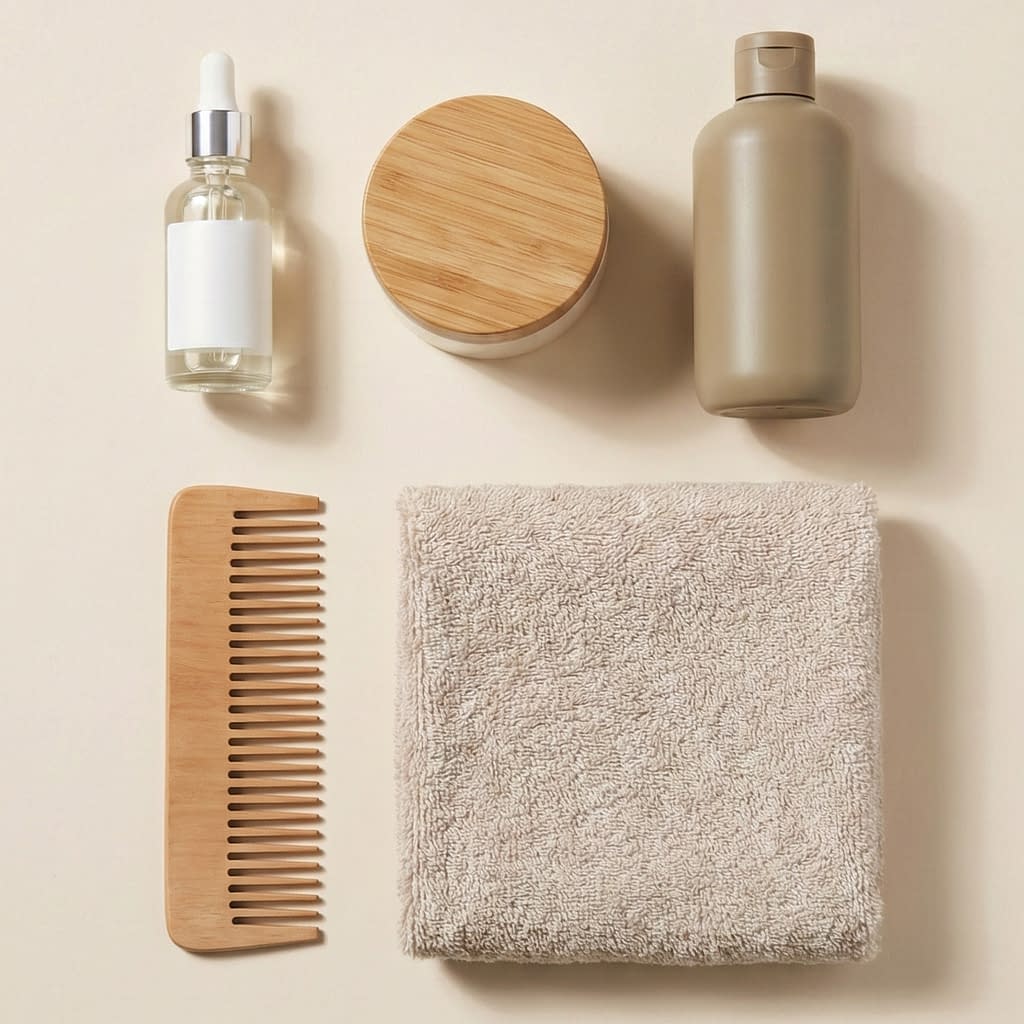
A product that’s perfect for one person can be bad for another — wrong viscosity, heavy oils, or harsh surfactants may aggravate your hair and scalp.
How to evaluate your products
- If hair feels limp, weighed down, or greasy quickly: consider lighter formulas or volumizing lines.
- If hair dries out and snaps: try richer conditioners, leave-ins, or a weekly oil mask.
- If the scalp becomes flaky/irritated: swap to fragrance-free and sulfate-free cleansers; avoid irritating preservatives.
- If you have colored/chemically processed hair: use color-safe, bond-repairing products.
Step-by-step product audit
- List all products you use daily/weekly (shampoo, conditioner, treatments, styling).
- Remove one product at a time for 2–4 weeks to see if condition improves (elimination approach).
- Replace with minimal, gentle alternatives and reintroduce slowly if needed.
Poor Blood Circulation and Scalp Health

Healthy circulation brings nutrients and oxygen to follicles. Poor circulation, while rarely the sole cause, contributes to weaker hair.
Simple circulation boosters
- scalp massage increases blood flow and feels calming.
- avoid constrictive hats and high collars that limit circulation.
- regular exercise improves systemic circulation.
Step-by-step scalp stimulation routine
- Massage scalp 3–5 minutes daily with fingertips or a soft scalp brush using light circular motions.
- Try topical stimulants (e.g., caffeine shampoos) as adjuncts — check tolerance.
- Keep overall cardiovascular health in mind: aerobic movement 3×/week supports microcirculation.
Seasonal Hair Fall and Environmental Triggers
Seasons, pollution, and UV can all influence hair condition.
Seasonal tips
- Many people notice more shedding in autumn (seasonal telogen effluvium) — it’s usually temporary.
- Protect hair from sun and chlorine; rinse after swimming.
- Protect from pollutants by washing hair gently to remove residues.
Simple steps
- Be patient — seasonal changes often resolve in months.
- Use UV-protectant sprays, hat covers for intense sun, and rinse after exposure to chlorine or salt water.
How Long Hair Growth Cycles Really Take
Understand timelines so you have realistic expectations.
Hair cycle basics
- Anagen (growth): 2–7 years (longer on scalp than body).
- Catagen (transition): ~2–3 weeks.
- Telogen (resting): ~3 months, then shedding.
Practical timeline
- If you fix a trigger (nutrition, stress), expect improvement in shedding within 2–3 months and visible regrowth over 6–12 months. Hair recovery is slow; patience is essential.
When Hair Fall Signals a Medical Concern
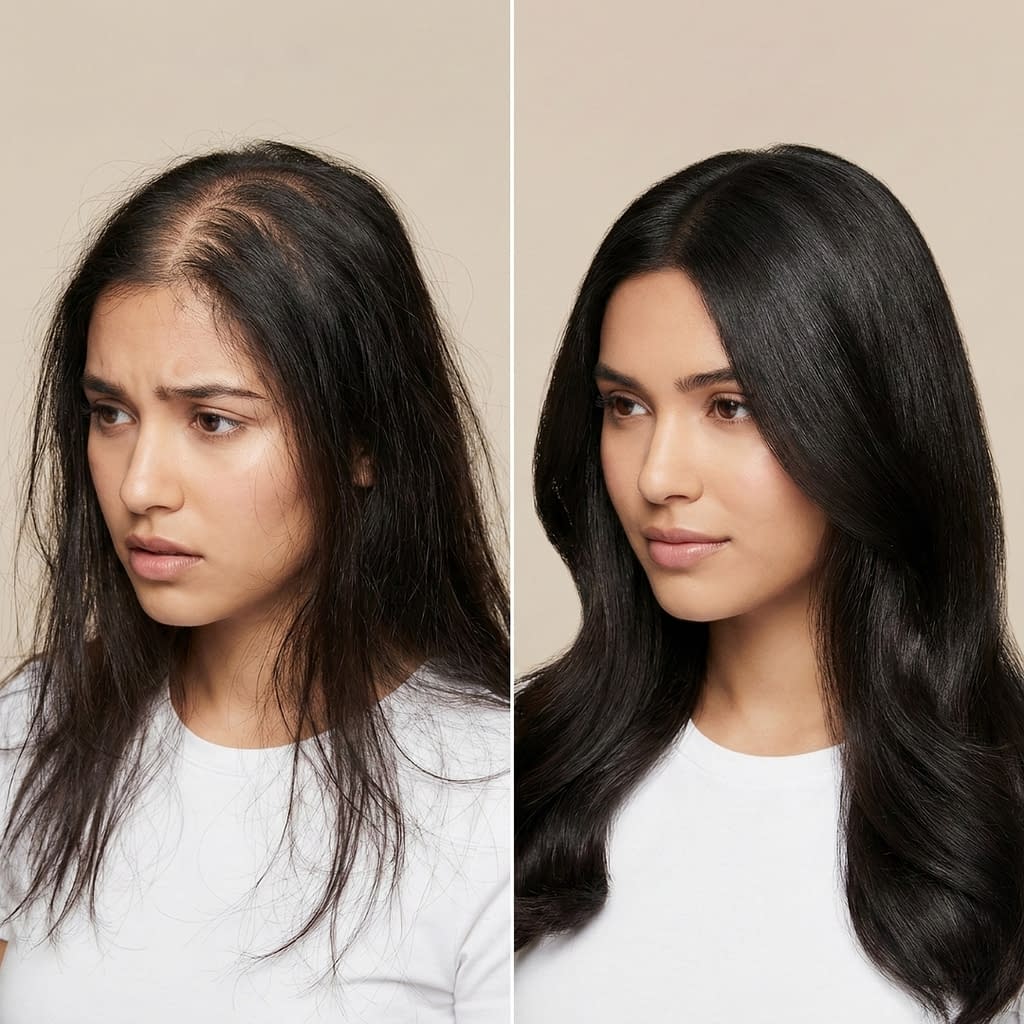
Some patterns need medical attention fast.
Red flags — see a doctor promptly if you have:
- Sudden, rapid hair loss or large clumps falling out,
- Patchy bald spots (could be alopecia areata or infection),
- Severe scalp pain, pus, or spreading inflamed areas,
- Accompanying systemic symptoms (weight changes, fatigue, palpitations — possible thyroid or endocrine issues),
- Sudden excess facial/body hair + scalp thinning (hormonal imbalance).
Step-by-step when to get help
- Document onset, pattern, and any related symptoms.
- Book a GP or dermatologist appointment and bring photos and your observations.
- Expect possible tests: blood work (iron/ferritin, TSH, vitamin D, androgens), scalp exam, or biopsy in rare cases.
- Follow medical treatment plans — many causes are treatable with targeted therapy.
Final Words
If you care for your hair and still see loss, don’t blame yourself: hair is influenced by many invisible systems. The best approach is systematic: observe patterns, simplify and protect (gentle cleansing, limit heat, reduce friction), support nutrition and sleep, manage stress, and check for scalp problems. If you suspect hormones or deficiencies, get medical tests — targeted treatment often makes the biggest difference. Most non-scarring hair fall improves with time and consistent care. Be patient, follow the step-by-step checks above, and ask a professional when in doubt.


