

Perceived facial symmetry influences how balanced and attractive a face looks — but perfect symmetry isn’t required to look beautiful. Small, smart changes in skincare, grooming, makeup, hair, and posture can create a balanced, harmonious appearance that reads naturally symmetrical. Below you’ll find practical, step-by-step techniques to assess, correct, and flatter asymmetry while preserving a realistic, human look.
Why Facial Symmetry Affects Perceived Beauty
Humans notice symmetry because our brains use it as a quick signal of balance. Symmetry doesn’t equal beauty on its own, but faces that read as balanced often look healthier, younger, and more attractive.
Quick, practical takeaway
- Symmetry cues help the brain process faces faster — they feel “pleasant.”
- Small asymmetries are normal and usually not noticed once you reduce the most obvious differences.
- The goal is perceived symmetry: optical corrections that flatter the face without erasing character.
Understanding Natural Facial Asymmetry
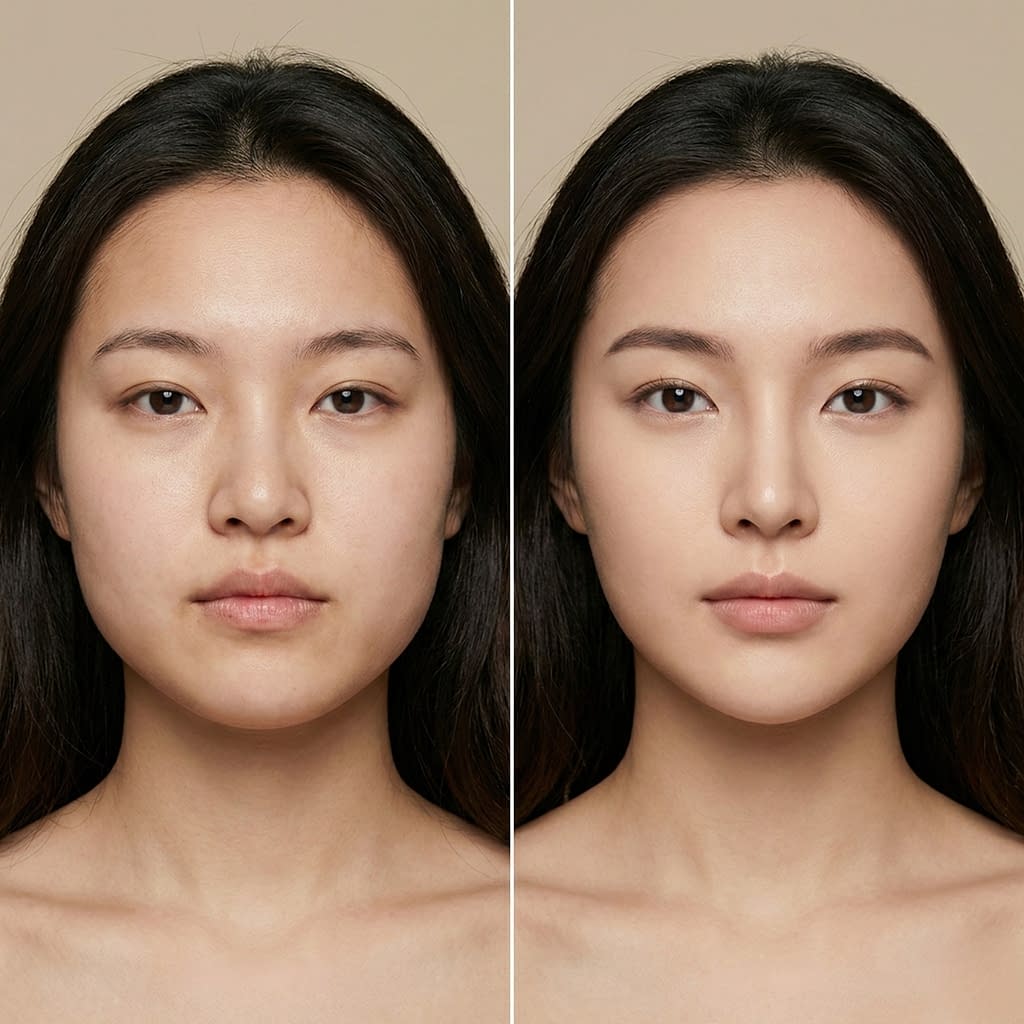
Everyone has asymmetry — one eyebrow sits higher, one cheek is fuller, a smile tilts. The first step is observing calmly.
How to assess your face (step-by-step)
- Take three straight-on photos in natural light (neutral face, gentle smile, relaxed).
- Use a thin object (ruler, business card) or a photo-editing grid to mark the vertical midline from forehead to chin.
- Note obvious differences: eyebrow height, eyelid fold, nostril shape, mouth corners, cheek fullness.
- Decide which features bother you most; prioritize one or two areas rather than chasing “fix all.”
Observation tip: look for patterns not perfection — minor left-right differences become less noticeable after you fix the main focal imbalance.
Skincare and Makeup: The Foundation for Balanced Features
Healthy, even skin tone and texture make symmetry fixes much easier and more convincing.
Step-by-step skincare + base makeup
- Cleanse and hydrate daily: even tone reflects light uniformly.
- Target redness or dark spots with gentle actives (niacinamide, vitamin C) introduced slowly.
- Prime strategically: smoothing primer on textured side to reflect light similarly across both halves.
- Apply a thin, even base: tinted moisturizer or sheer foundation blended outward to the hairline and jaw.
- Spot-correct selectively: use concealer on darker/discolored areas rather than heavy full-face coverage.
Skin-level symmetry trick: evening out tone evens perceived shape because light and shadow behave similarly across both sides.
Highlighting and Contouring to Enhance Symmetry
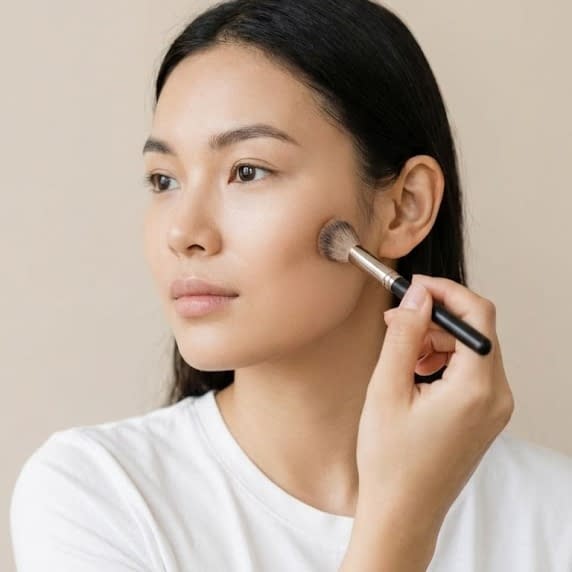
Light and shadow sculpt the face — used precisely, they balance differences.
Step-by-step sculpting guide
- Map differences: note which side appears flatter, lower, or fuller.
- Contour the fuller side lightly: use a matte contour (cream or powder) 1–2 shades darker than skin along the cheek or jaw to reduce visual volume. Blend thoroughly.
- Highlight the smaller side: apply a subtle, dewy highlighter or slightly lighter concealer on high points (cheekbone, brow bone) of the less prominent side to give lift.
- Soften transitions: always diffuse edges with a clean brush or sponge so the effect looks like natural shadow.
- Check in natural light and photos — tiny shifts often make the biggest difference.
Rule of thumb: contour the heavy, highlight the light — create a visual balance without harsh lines.
Eyebrows: Shaping for a Harmonious Look
Brows frame the face. Small brow adjustments can create a huge sense of balance.
Step-by-step brow correction
- Measure and map: align each brow start and arch using a pencil from nostril to inner eye and nostril through pupil.
- Even the base: if one brow starts further in, use hair-like pencil strokes to extend the inner end slightly rather than overplucking the other.
- Adjust arch visually: add a few micro-strokes under the higher arch to lower it slightly, or add soft strokes above the flatter arch to lift it.
- Blend with spoolie and set with a clear gel to keep hairs in place.
- Consider professional shaping or tinting if you want a longer-term correction.
Mini-rule: make the brows read similar in density and shape from a normal viewing distance — exact mirror symmetry isn’t necessary.
Eyes: Techniques to Make Them Appear Even
Eyes are central to perception. Makeup and grooming can minimize asymmetry in lids, creases, and eye width.
Step-by-step eye balancing
- Match base on both lids: apply the same neutral wash of shadow to both eyelids to create a uniform canvas.
- Adjust crease depth: for the deeper crease/hood, apply a slightly lighter transition shade and blend upward to open it visually; for the higher lid, deepen the crease slightly to match.
- Eyeliner tricks: tightline both upper lash lines; if one eye looks smaller, extend the liner a hair longer at the outer corner on that side to open it. Keep the line soft, not harsh.
- Mascara balance: apply a tiny extra focus at the root of lashes on the smaller-looking eye and comb through to avoid clumps. Consider light individual lashes at outer corner only on the smaller side.
- Check from distance — small eyeliner or lash moves make a noticeable balancing difference.
Avoid heavy winged liners that emphasize asymmetry; soft, blended definition works best.
Lips: Balancing Shape and Fullness
Lips are a focal point. Subtle lining and shading create symmetry without obvious overlining.
Step-by-step lip balancing
- Identify imbalance: one cupid’s peak higher, one corner lower, or one side fuller.
- Use a tiny bit of concealer to soften the edge of the fuller side slightly (blend outward).
- Line with a neutral lip liner — redraw the lip border to match the side you want to emulate (use short strokes). Don’t overline beyond natural by much.
- Fill in with matching lipstick and dab a touch of gloss on the center to draw attention inward and away from side-to-side differences.
- Smile check: make sure the adjusted outline moves naturally with expressions.
Key: subtle micro-adjustments beat obvious overlining. Aim for balance, not perfection.
Nose and Cheeks: Subtle Contouring Tips
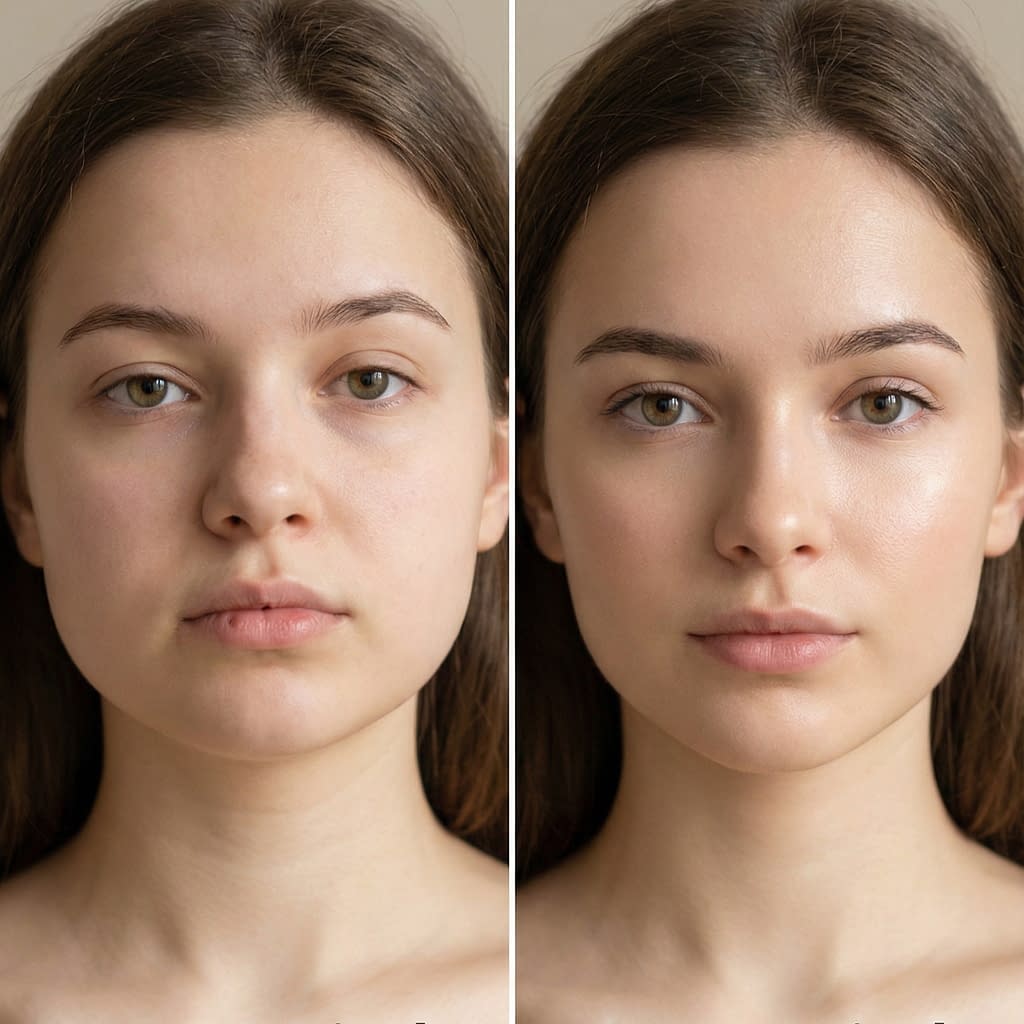
Tiny contour moves on nose and cheeks can visually straighten or balance features.
Step-by-step nose and cheek tricks
- Nose balance: if one side appears wider, softly shade the wider side with a thin vertical line and add a soft highlight on the center to create a straighter illusion. Blend carefully.
- Cheek balance: if one cheek sits lower, lightly contour beneath the higher cheek to lower it visually or add a soft highlight to the higher cheek to bring it forward.
- Blush placement: place blush slightly more on the lifted side or sweep it diagonally to harmonize cheek visual weight.
- Always diffuse: harsh lines make asymmetry obvious; soft, blurred transitions read like natural bone structure.
Subtlety wins: tiny pigment shifts produce convincing balance.
Hairstyles That Complement Symmetry
Your hairline, part, and volume affect perceived facial balance.
How to choose and style (step-by-step)
- Part strategically: if one side of your face looks heavier, try a side part on the opposite side to balance. Center parts can emphasize facial symmetry but may highlight asymmetry in some faces.
- Use volume to correct: add lift at the root on the smaller side to visually balance uneven cheek or brow height.
- Frame the face: soft layers around the jaw can disguise asymmetrical jawlines; angled bobs can redirect focus.
- ** bangs/ fringes:** a soft fringe can hide uneven forehead height or asymmetrical hairlines but keep it light to avoid drawing attention.
- Try temporary styles: test different parts and volumes in front of a mirror to see what visually balances your face best.
Hair is one of the fastest, non-invasive ways to influence perceived symmetry.
Using Accessories to Draw Attention to Balanced Features
Earrings, glasses, scarves — used cleverly they steer the eye.
Accessory strategies (step-by-step)
- Statement earrings near the side you want to highlight will draw attention there.
- Glasses frame choice: frames that balance width at temple level can harmonize cheek or brow asymmetry.
- Necklines and scarves: choose necklines or scarves that visually lift or anchor the face as needed (V-necks lengthen; round necks broaden).
- Hairstyle + accessory combo: combine a soft updo with a side earring on the less prominent side to even perceived balance.
Accessories redirect the gaze intelligently — use them to showcase your most balanced features.
Facial Exercises for Natural Muscle Tone and Balance
Facial muscle tone can subtly affect symmetry over time. Exercises won’t reshape bone but can balance muscular pull.
Simple daily routine (step-by-step)
- Cheek lift: smile widely, press fingertips to top of cheeks, hold smile while pushing cheeks up for 10 seconds; repeat 8–10 times.
- Lip balance exercise: hold a straw between lips and move it side-to-side slowly for 1 minute — works perioral muscles.
- Brow relax & lift: place index fingers just above brows and try to lift brows while resisting with fingers; hold 5–8 seconds; repeat 8 times.
- Consistency: do a short 5–7 minute routine 4–5 times weekly for gradual tone improvements.
Note: results are modest and slow; exercises complement but don’t replace cosmetic techniques.
Common Mistakes That Make Asymmetry More Noticeable
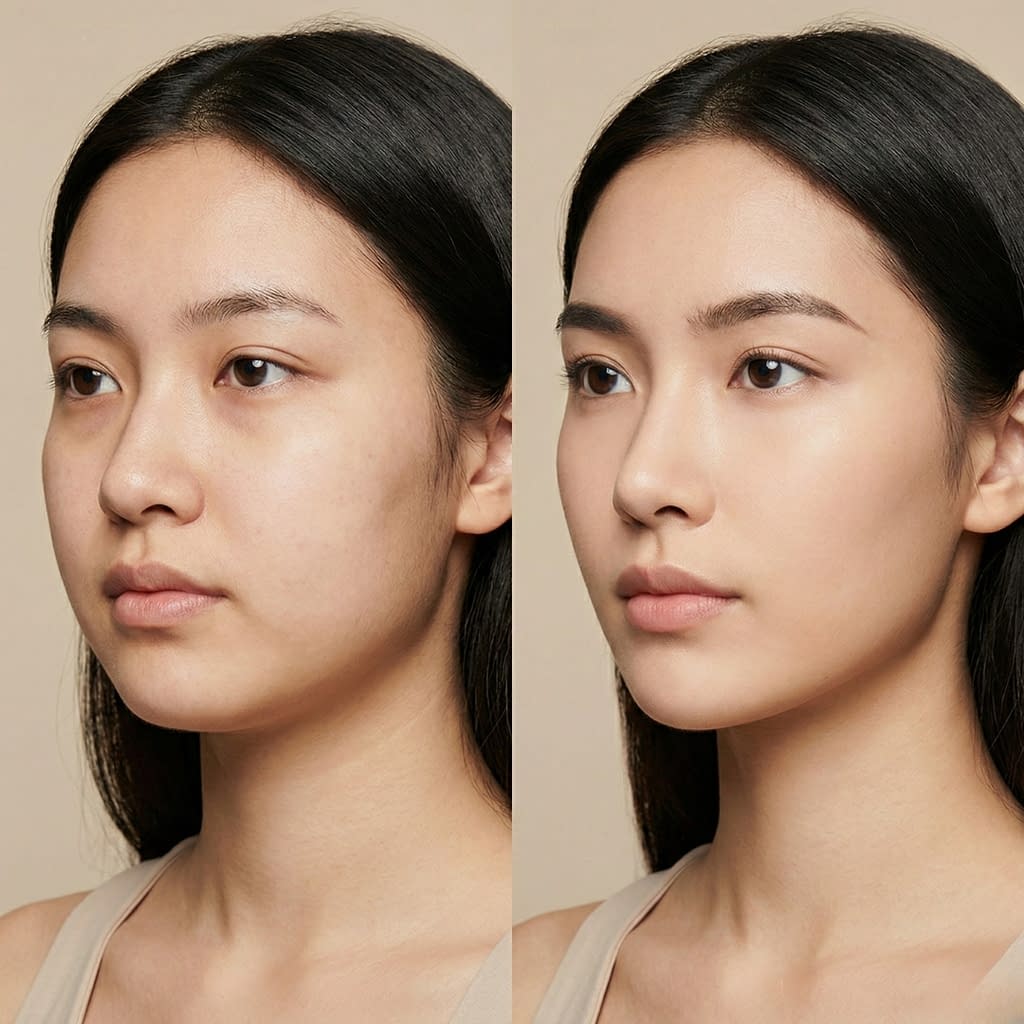
Avoid these errors that unintentionally spotlight differences.
Mistakes to avoid
- Heavy, unblended makeup that creates harsh edges.
- Overplucking brows to force symmetry — hair regrowth may not match.
- Using identical makeup on both sides when slight asymmetry needs tailored placement.
- Ignoring posture — head tilt or habitual sleeping positions can deepen perceived asymmetry.
- Overcorrecting with drastic changes (too much contour, large bangs) — subtlety works better.
Fix: make incremental adjustments and check in photos and natural light.
Makeup Tools and Tricks That Save Time
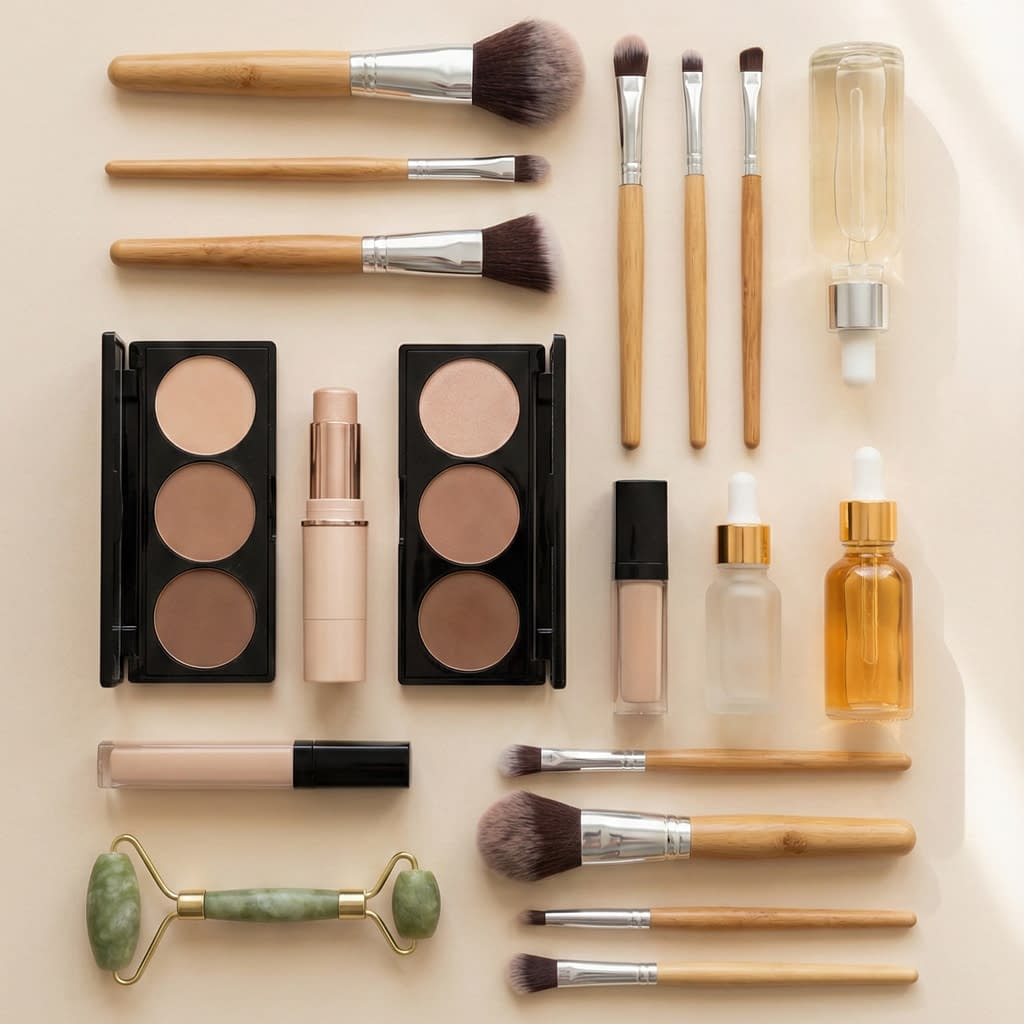
Small tools and reliable tricks make symmetry work fast.
Tools & time-savers (step-by-step)
- A narrow concealer brush for precise corrections under brows, nose, and mouth.
- A thin angled brush for hair-like brow strokes and precise liner.
- A small fluffy blending brush to soften contour edges quickly.
- Tape or sticky note guides to map liner/wing symmetry for beginners.
- Take a photo every few steps to see how corrections look in flat light — often more reliable than the mirror.
Smart tools let you work precisely without overthinking.
Final Words
Natural facial symmetry is a balance of subtle corrections, good skin health, and smart styling — not absolute mirror-image perfection. Start by observing calmly, prioritize one or two features to correct, and use gentle makeup, shaping, hair, and accessory strategies to steer perception. Small, well-placed shading and highlighting, matched brow work, and thoughtful hair/part choices will harmonize your face while keeping your features authentically you. Over time, consistent, subtle habits (and a relaxed mindset) are the best route to a naturally symmetrical, confident look.


