

Keeping your teeth aligned isn’t only the dentist’s job — there are safe, sensible daily habits you can use at home to support alignment, protect orthodontic results, and sometimes slow or reduce mild shifting. This isn’t a replacement for braces, clear aligners, or professional care, but with the right routine (oral hygiene, posture, tongue posture, chewing, sleep habits and simple myofunctional exercises) you can give your teeth and jaw the best environment to stay where they belong. Below are practical, step-by-step tips you can start today.
Why supporting alignment at home matters
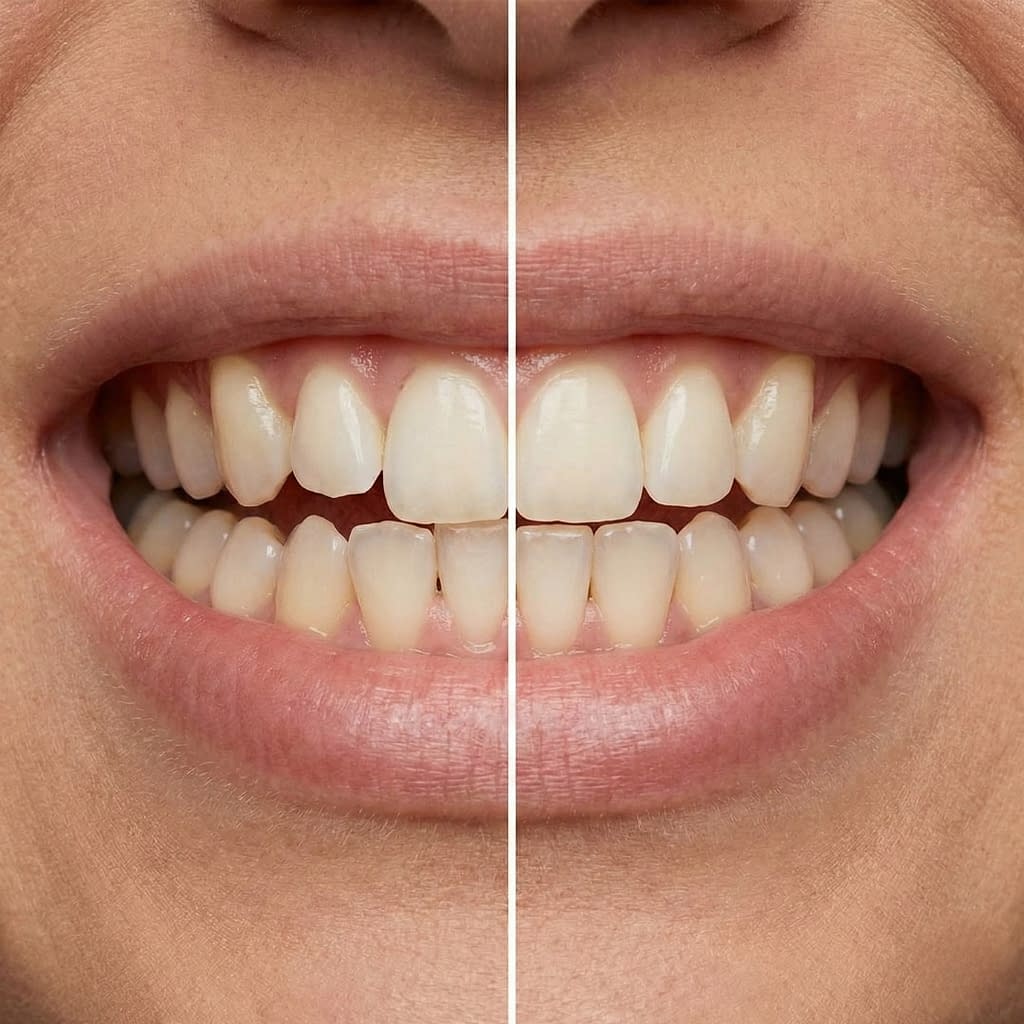
Teeth can move slowly throughout life. After orthodontic treatment, they’re especially likely to drift if you don’t follow retainers and healthy habits. Even without prior braces, thumb-sucking, mouth breathing, poor posture, or tongue thrust can nudge teeth over time. Supporting alignment at home helps protect long-term results, reduces the need for re-treatment, and improves bite comfort and oral health.
Understand how teeth move and what you can realistically influence
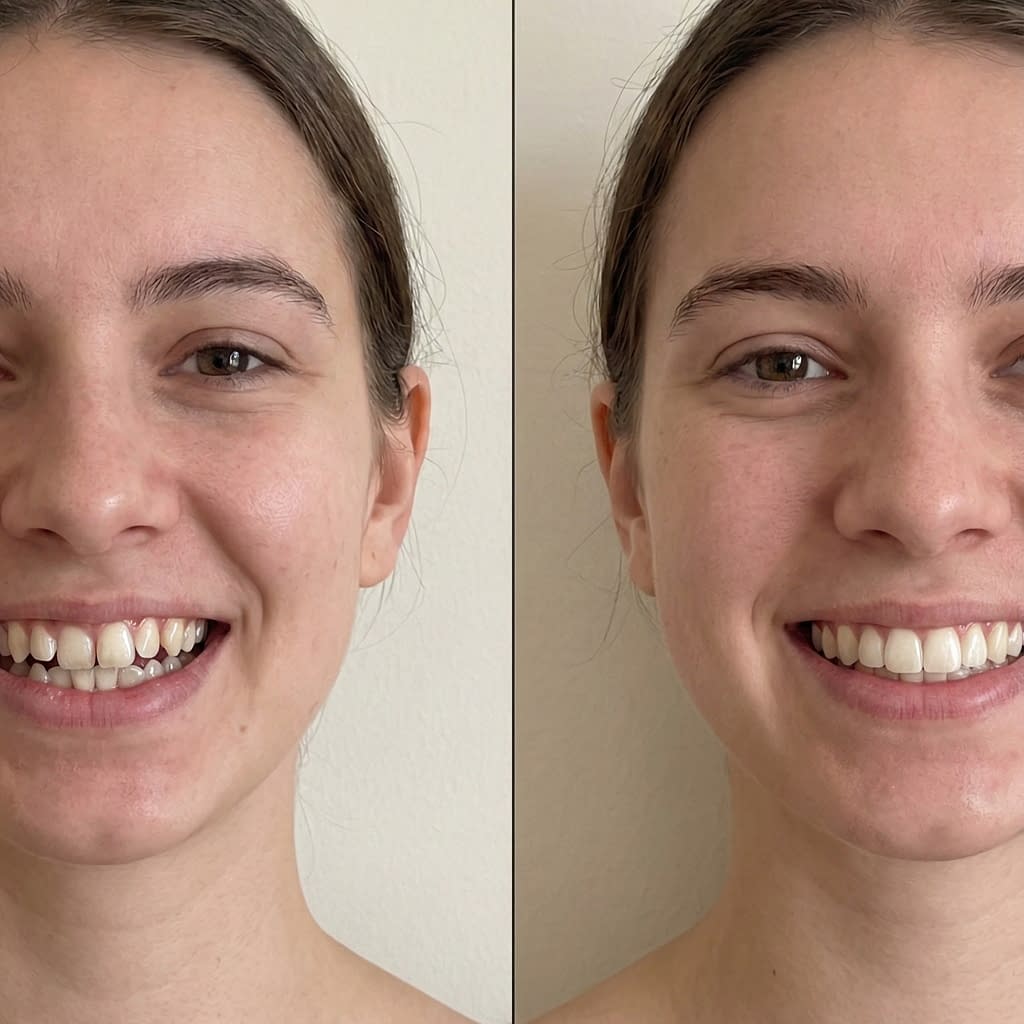
Teeth shift when pressure is applied to them repeatedly (braces intentionally apply force). Everyday forces—chewing, tongue resting position, lip pressure, nighttime grinding, and habits like nail-biting—can all cause tiny movements that add up. You can’t safely or predictably move teeth like an orthodontist can, but you can manage the pressures around your teeth: reduce harmful habits, improve oral posture, protect against grinding, and keep tissues healthy.
Daily habits that protect alignment
Step-by-step routine to follow every day:
- Clean well: brush twice daily and floss once daily. Healthy gums anchor teeth; gum disease loosens teeth and accelerates shifting.
- Wear your retainer exactly as prescribed after orthodontic work. If you lose or break one, contact your provider immediately — don’t skip wearing it.
- Avoid using your teeth as tools (opening packages, biting nails). Use scissors or your hands instead.
- Don’t clench or grind consciously; if you notice it, relax your jaw and practise the “lips together, teeth apart” resting posture (see next section).
- Eat balanced meals and avoid extreme crunchy/chewy habits that strain the bite.
Consistency here prevents slow forces from nudging teeth out of place.
Optimize oral posture — tongue, lips and jaw

Proper resting posture reduces asymmetric forces on teeth.
How to find the right resting posture (step-by-step)
- Close your lips gently.
- Let your teeth have a tiny space between them (light contact should be avoided) — imagine a small piece of rice between molars, or feel that upper and lower teeth are not clenched.
- Rest the entire tongue (not just the tip) gently against the roof of your mouth — broad contact with the palate, not forceful pushing.
- Breathe through your nose. If nasal breathing is hard, see an ENT or GP for help with congestion.
Practice several times daily until it feels natural. This reduces forward tongue pressure and lip/tongue imbalances that can push teeth.
Safe myofunctional exercises to improve tongue and lip function
These strengthen the muscles that help keep teeth in place. Do them calmly, 5–10 minutes total daily.
Simple exercises (step-by-step)
- Tongue-to-roof holds: press the tongue flat against the roof of the mouth (palate) and hold 5–10 seconds. Repeat 8–10 times.
- Swallow training: place the tongue on the palate, then swallow without using the cheeks or lips to create pressure. Repeat 8–10 swallows.
- Lip seal practice: close lips gently and hold for 10–15 seconds, breathing through the nose; repeat 6–8 times.
- Cheek puff work: puff cheeks and switch air side-to-side slowly to improve muscle coordination — 10 cycles.
If you have severe tongue thrust, lisping, or swallowing problems, an orofacial myofunctional therapist can prescribe tailored exercises.
Chew smart — use food to support jaw health
Chewing provides natural stimulation to bone and muscles when it’s varied and balanced.
Chewing tips
- Eat a variety of textures: soft foods are fine sometimes, but include crunchy vegetables and lean proteins that require chewing (carrots, apples, nuts in moderation) to stimulate healthy bone and muscle.
- Don’t overdo extremely hard items (very hard candy or ice) that can crack teeth or apply excessive force.
- Alternate chewing sides if you normally favor one side — this balances muscle development.
Good chewing habits support a stable bite and strong jaw muscles.
Protect teeth from nighttime grinding and clenching
Bruxism places powerful forces on teeth and can shift them.
What to do
- If you suspect grinding (sore jaw, morning headaches, worn teeth), ask a dentist about a custom night guard — this protects teeth and reduces movement.
- Use stress-management techniques (deep breathing, short evening relaxation routine) to reduce night-time clenching.
- Avoid stimulants (caffeine, heavy sugar) close to bedtime; get regular sleep.
Wearing a properly fitted guard is safe and effective; don’t use over-the-counter appliances as a long-term substitute for a dentist’s guidance.
Keep gums and bone healthy — the foundation for alignment
Strong bones and healthy gums are crucial.
Daily & monthly care steps
- Brush gently with a soft brush and fluoride toothpaste twice daily.
- Floss daily and use interdental brushes where wide spaces exist.
- Use an antimicrobial mouthwash if advised by your dentist for gum disease control.
- See your dentist for regular checkups and professional cleanings (every 6–12 months as recommended).
- If you have gum disease signs (bleeding, swelling, bad breath), seek treatment — untreated periodontal disease is a major cause of tooth loss and shifting.
Nutrition and supplements that support jaw and tooth health

Food fuels bone health and reparative processes.
Practical nutrition tips
- Get enough calcium (dairy or fortified plant milk, leafy greens) and vitamin D (sun exposure, fatty fish, or supplements if advised) to support bone health.
- Ensure adequate protein and vitamin C to support collagen and gum tissue.
- Avoid crash diets — nutritional stress can trigger shedding or weaken tissues.
- If you suspect low iron, vitamin D or other deficiencies, talk to a doctor and test before supplementing.
Supplements should be guided by tests or a clinician, especially for teens.
Gentle at-home tools and when not to use DIY appliances
Some market products (mouthguards, silicone trainers) can help with clenching or posture, but be cautious.
Safe guidance
- Use a dentist-fitted night guard for grinding, not one-size OTC molds long-term.
- Avoid DIY tooth-moving devices or attempting to move teeth with rubber bands or clips — those can permanently damage roots, gums, and bone.
- Over-the-counter orthodontic aligners without professional oversight risk poor results and harm — consult a licensed orthodontist before starting any tooth-moving device.
If you see companies selling unsupervised at-home orthodontics, talk to a professional before trying them.
Monitor progress safely
Keep records so you notice trends early.
How to track (step-by-step)
- Take clear front and profile photos every 4–6 weeks with similar light and relaxed lips.
- Note any new shifting, gaps, or bite changes (chewing discomfort, clicking).
- If you wear a retainer, check fit regularly — if it becomes tight, contact your orthodontist; if loose, you may be losing correction.
- Keep a short diary: any clenching episodes, changes in habits, new dental work.
Early detection lets professionals intervene before bigger changes happen.
When to see a dentist or orthodontist — red flags
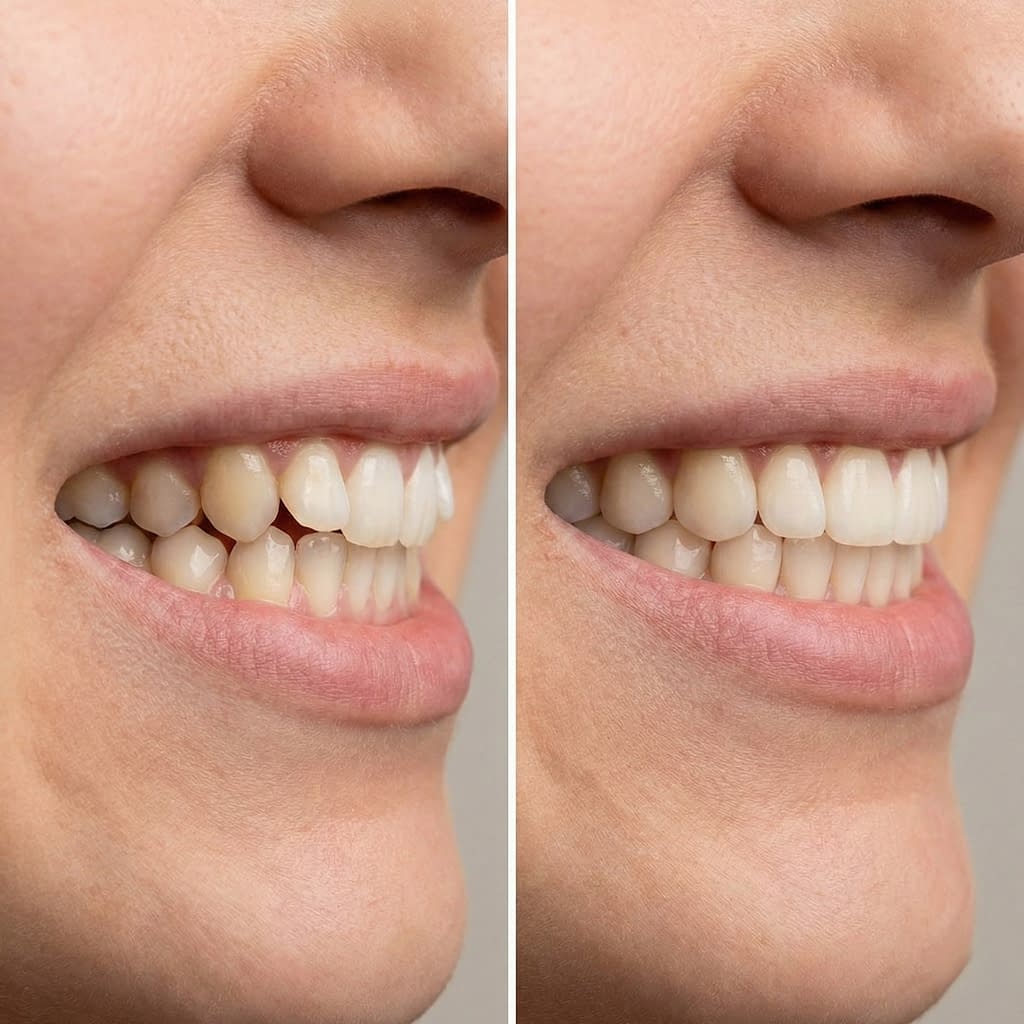
Seek professional help if you notice any of these:
- Sudden or rapid shifting of teeth.
- Pain, mobility (loose teeth), or bleeding gums.
- Bite changes that affect chewing or speech.
- A retainer that no longer fits or you can’t replace.
- Visible damage (cracks, chips) or signs of infection.
Orthodontic and dental professionals can assess cause and recommend safe clinical options (retainer adjustment, braces, aligners, periodontal therapy).
Final words
You can’t safely force big tooth movements at home, but you can do a lot to support alignment: protect your retainer, practice good oral posture, strengthen oral muscles with safe myofunctional exercises, manage grinding, maintain excellent gum health, and eat to support bone. Those steady daily choices reduce harmful pressures on teeth and preserve results of past orthodontic care. If anything changes quickly or concerns you, contact a dental professional — early, guided care prevents most problems.


