

Shaving your chest and stomach can give you a cleaner, more sculpted look — when it’s done correctly. Done badly, it leads to razor burn, cuts, itchy regrowth, and ingrown hairs. This guide walks you through everything: whether you should shave at all, how to prep and trim, the safest shaving technique for the chest, careful work around the navel, post-shave care, how often to touch up, and gentler alternatives if you don’t want a close shave. Follow the step-by-step tips below and your skin will thank you.
Why Proper Body Hair Shaving Matters
Shaving body hair is skin work: the blade removes hair close to the skin’s surface and — if you rush it — can nick delicate skin, strip oils, and inflame hair follicles. Proper technique reduces cuts, minimizes irritation, prevents ingrown hairs, and keeps the skin smooth longer. It also helps avoid patchy or uneven results. Think of shaving as a mini grooming ritual: a little preparation and aftercare makes it comfortable and long-lasting.
Should You Shave Chest and Stomach Hair? Pros and Cons

Pros
- Cleaner, neater look; can emphasize muscle definition.
- Less sweat and odor during sports or hot weather for some people.
- Easier application of topical products (e.g., body bronzer, oil) on smooth skin.
Cons
- Regrowth can be itchy and stubbly after a few days.
- Risk of razor burn, nicks, and ingrown hairs if done incorrectly.
- Some people prefer the natural look; cultural/personal taste matters.
- Maintenance time: shaving requires repeated upkeep or alternative long-term methods.
Decide based on comfort, aesthetics, and how much maintenance you want. You can also try a trim first to see how you like the look.
Common Mistakes Men Make When Shaving Body Hair
- Shaving long hair without trimming first (clogs blades, tugs hair).
- Using dull blades or old disposable razors.
- Skipping warm water or a pre-shave soak.
- Pressing too hard and doing many repeated passes.
- Shaving dry without proper lather.
- Not exfoliating beforehand, which increases ingrown hairs.
- Applying fragranced alcohol aftershaves that sting and dry the skin.
Avoid these and shaving becomes comfortable and low-maintenance.
Trim First: Why You Should Never Shave Long Hair Directly
Step-by-step trimming
- If hairs are longer than ~5 mm (a noticeable tuft), use a body trimmer or scissors first.
- Set an electric trimmer to a medium guard (~3–6 mm) and remove bulk with slow passes.
- For a very short/clean look, switch to a shorter guard and trim gradually; don’t jump from long to skin in one pass.
Why it helps: trimming prevents blade clogging, reduces tugging, and lowers the chance of irritation.
Choosing the Right Razor or Trimmer for Body Hair
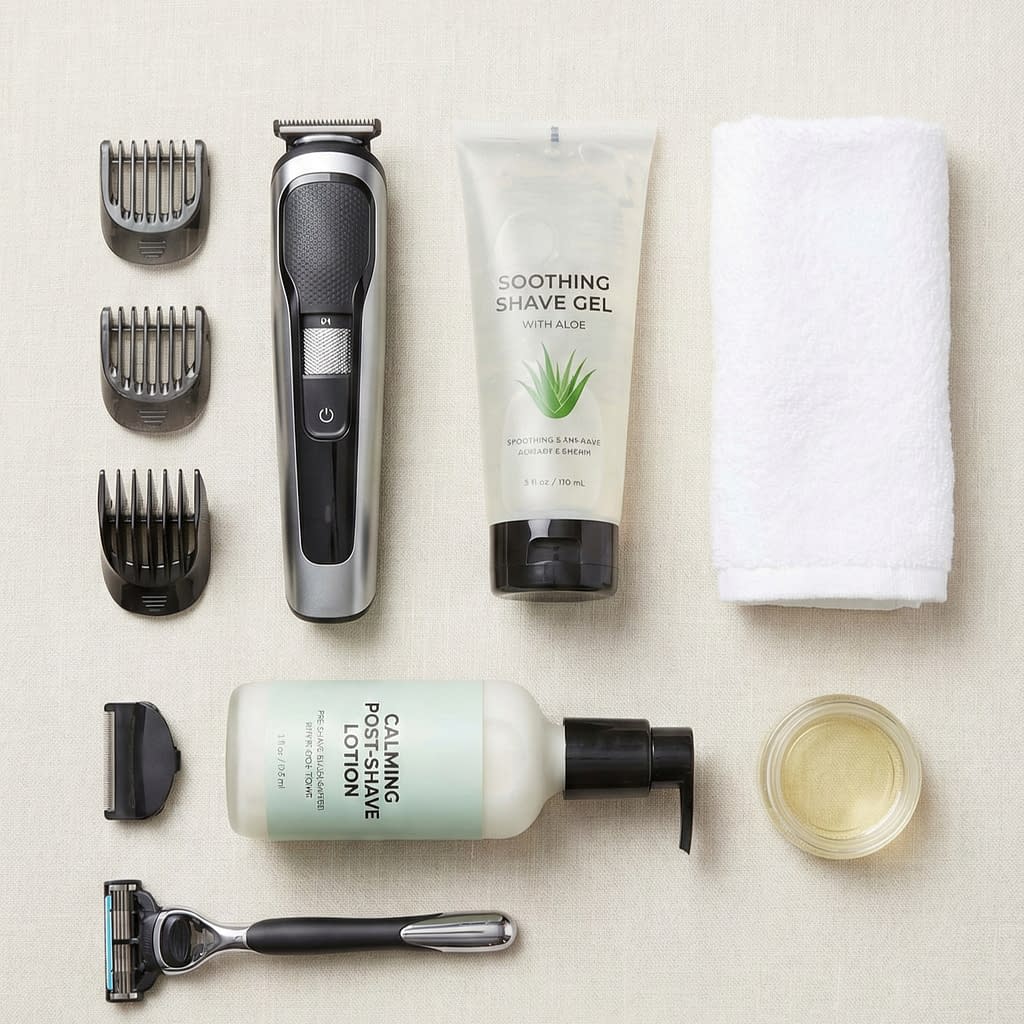
What to use
- Electric body trimmer — best for quick maintenance and less irritation; use if you prefer short stubble.
- Multi-blade cartridge razor — gives the closest shave but needs careful technique and new blades.
- Safety razor — lower long-term cost and less tugging when used correctly, but needs skill.
- Single-use disposables — okay in a pinch if fresh, but change blades often.
Tips
- Replace blades frequently — a dull blade pulls hair and causes razor burn.
- Use a trimmer with a rubberized grip and waterproof rating if using in the shower.
- For sensitive skin, many prefer an electric trimmer or a single-blade safety razor with proper technique.
How to Prep Your Skin Before Shaving
Preparation is the most important part of a smooth shave.
Step-by-step pre-shave routine (10–15 minutes)
- Shower or soak in warm water for 3–5 minutes to soften hair and open pores. Warmth reduces tugging.
- Exfoliate gently with a soft body scrub or washcloth to remove dead skin that traps hair and can cause ingrows. Don’t scrub aggressively.
- Trim long hairs (see trimming section) if necessary.
- Apply pre-shave oil or a generous layer of shaving cream/gel designed for sensitive skin — this improves glide and protects skin.
- Check the skin for cuts, pimples, or irritation — avoid shaving over broken skin.
The Correct Shaving Direction for Chest and Stomach Hair

Shaving direction affects closeness vs. irritation.
Step-by-step shaving technique
- First pass — with the grain: shave in the direction the hair grows (usually downward on the chest, downward or diagonally on the stomach). Use short, gentle strokes and let the razor do the work. Rinse the blade after each pass.
- Assess: if you want a closer finish and your skin tolerated the first pass (no redness or tugging), re-lather and do a light second pass across the grain (not aggressively against it). For very sensitive skin, skip the second pass.
- Avoid multiple hard passes over the same spot — that’s the main cause of razor burn.
- Stretch the skin slightly with the free hand to keep the surface flat; this reduces nicks.
- Use short strokes around curved areas (chest contours, belly) rather than long sweeping motions.
How to Avoid Cuts, Razor Burn, and Ingrown Hairs
Prevention steps
- Use a sharp blade and change it often.
- Keep the skin well-lubricated with shaving cream or gel.
- Shave gently — no pressure.
- Rinse the blade frequently to avoid clogging.
- After shaving, rinse with cool water to close pores and pat dry.
- Exfoliate 2× weekly (not immediately before or after shaving) to prevent dead skin trapping hairs.
- Avoid tight clothing immediately after shaving; friction increases irritation.
For ingrown hair prevention: use a gentle chemical exfoliant (salicylic acid) 2–3× weekly after the skin has healed to keep hair follicles clear.
Shaving Sensitive Areas Around the Navel Safely
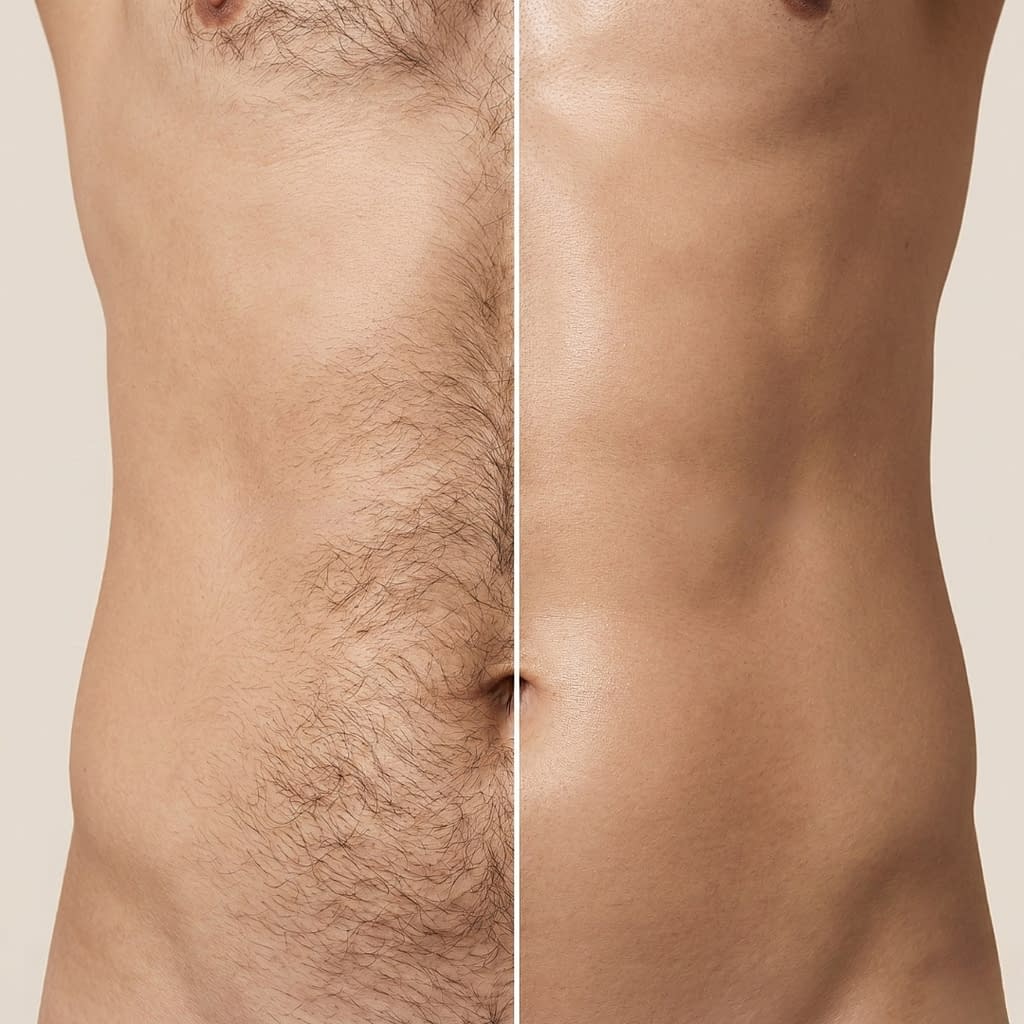
The navel area is delicate and uneven; be extra careful.
Step-by-step navel area guide
- Trim the hair around the navel with scissors or a short trimmer first.
- Apply lather and use a small, clean razor or the corner of a blade for precision.
- Pull the skin taut with one hand to flatten the crease.
- Use very short, light strokes and shave across the curve rather than deep into the cavity.
- Rinse often and be conservative — it’s better to trim a bit than to nick the inner navel.
- After shaving, gently rinse and pat dry; apply a small amount of fragrance-free moisturizer.
Rinsing and Cleaning the Skin After Shaving
A clean rinse is key to calming and preventing infection.
Post-shave rinse routine
- Rinse the entire shaved area with cool to lukewarm water to remove leftover cream and hair.
- Pat dry with a clean towel — don’t rub.
- If you had any tiny nicks, press gently with a clean cloth or use a styptic pencil/ alum block for small bleeders.
- Avoid hot showers for the next hour; cool rinse helps close pores.
Post-Shave Care to Calm and Protect the Skin
Aftercare prevents burning, driesness and ingrowns.
Step-by-step post-shave care
- Apply a mild, alcohol-free aftershave balm or a fragrance-free body lotion containing soothing ingredients (aloe vera, panthenol, glycerin).
- For extra moisture on dry skin, use a lightweight body oil or a moisturizing balm at night.
- If irritation occurs, apply a cold compress for a few minutes and use a 1% hydrocortisone cream for short periods only if needed (check label and avoid long term).
- Avoid tight clothing for several hours to reduce friction.
- Use a gentle chemical exfoliant (BHA) once the skin has fully calmed (48–72 hours) to prevent ingrowns if you’re prone to them.
How Often You Should Shave Chest and Stomach Hair
Frequency depends on your hair growth and the look you want.
Guidelines
- Daily to every 2 days: if you want completely smooth, baby-soft skin.
- Every 3–7 days: for short, neat stubble that’s still tidy.
- Every 1–2 weeks: if you only need occasional grooming or like a softer natural look.
Tip: if you’re new to shaving body hair, try every 3–4 days to see how your skin reacts before increasing frequency.
Grooming Alternatives If You Don’t Want a Clean Shave
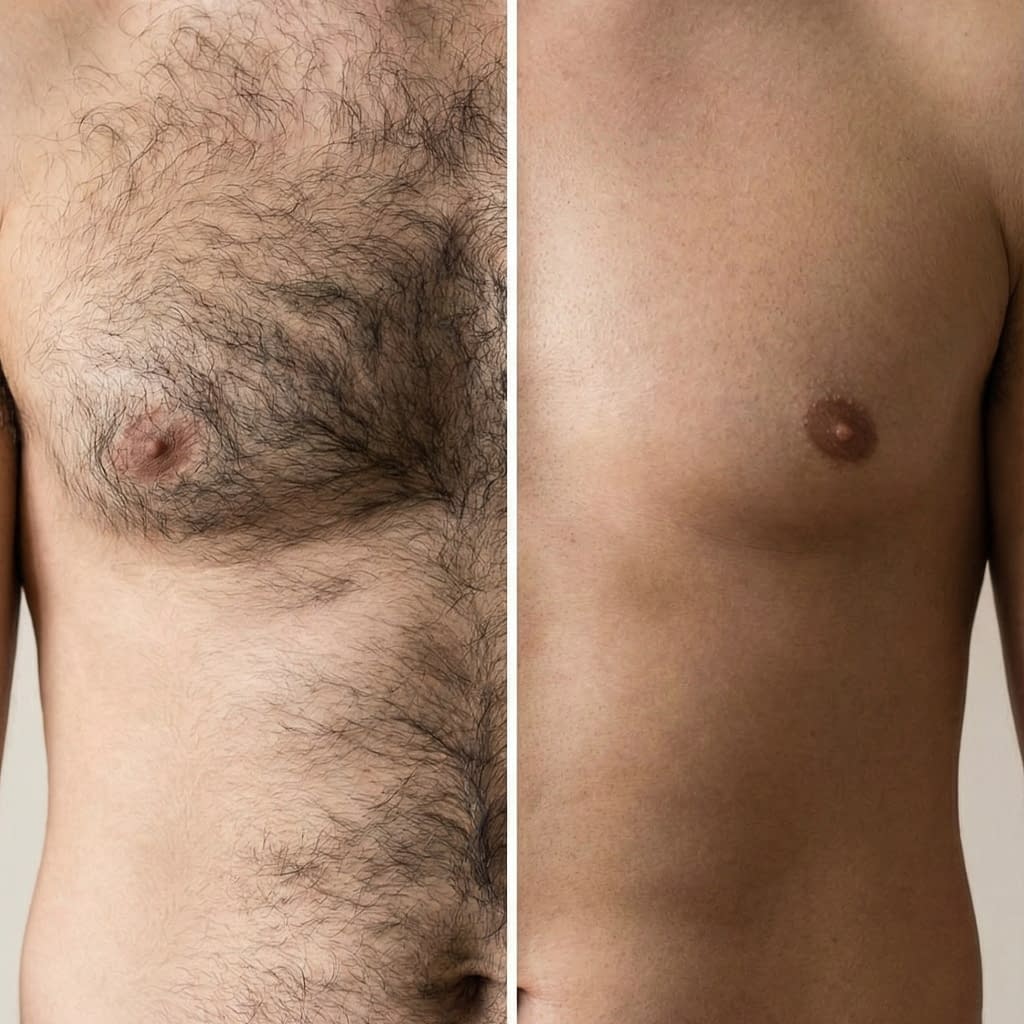
If shaving isn’t your thing, you have options.
Alternatives
- Trim only (electric trimmer): keeps hair short and natural with minimal irritation.
- Body hair clippers with guards: create a uniform short length without close contact to the skin.
- Depilatory creams: dissolve hair at the skin surface — test on a small patch first and follow instructions. These can irritate sensitive skin and smell strongly.
- Waxing: removes hair from the root for longer smoothness (2–6 weeks) but can be painful and cause ingrown hairs; best done by a professional for chest/abdomen.
- Sugaring: gentler natural waxing alternative for some people.
- Laser hair removal: long-term reduction; consult a licensed provider. Usually requires multiple sessions and is more costly, but it’s the least maintenance over time.
Note for teens: avoid chemical depilatories and laser without parental/medical guidance if under 18.
Final Words
Shaving your chest and stomach can be quick, comfortable and effective when you treat it like a skincare step rather than a rushed chore. Trim first, soften hair with warm water, use a sharp clean blade, shave gently with good lubrication, take care around the navel, and finish with calming, fragrance-free aftercare. If you want sustained smoothness, consider waxing or laser;


