

We’re all hunched over screens more than we used to — and the horizontal lines that form on the front of the neck (a.k.a. “tech neck”) are an annoying visual sign of that habit. The great news: you can slow, soften, and in many cases noticeably improve those lines with posture work, targeted neck-friendly skincare, daily sun protection, and simple at-home routines. Below is a long, practical guide with step-by-step exercises, skincare ingredients that actually help, massage/movement tips, and realistic timelines. I wrote this for easy reading and safe at-home action — and I’ll point out when to ask a clinician or parent/guardian (if you’re a teen) before trying stronger stuff.
What “Tech Neck” Really Means
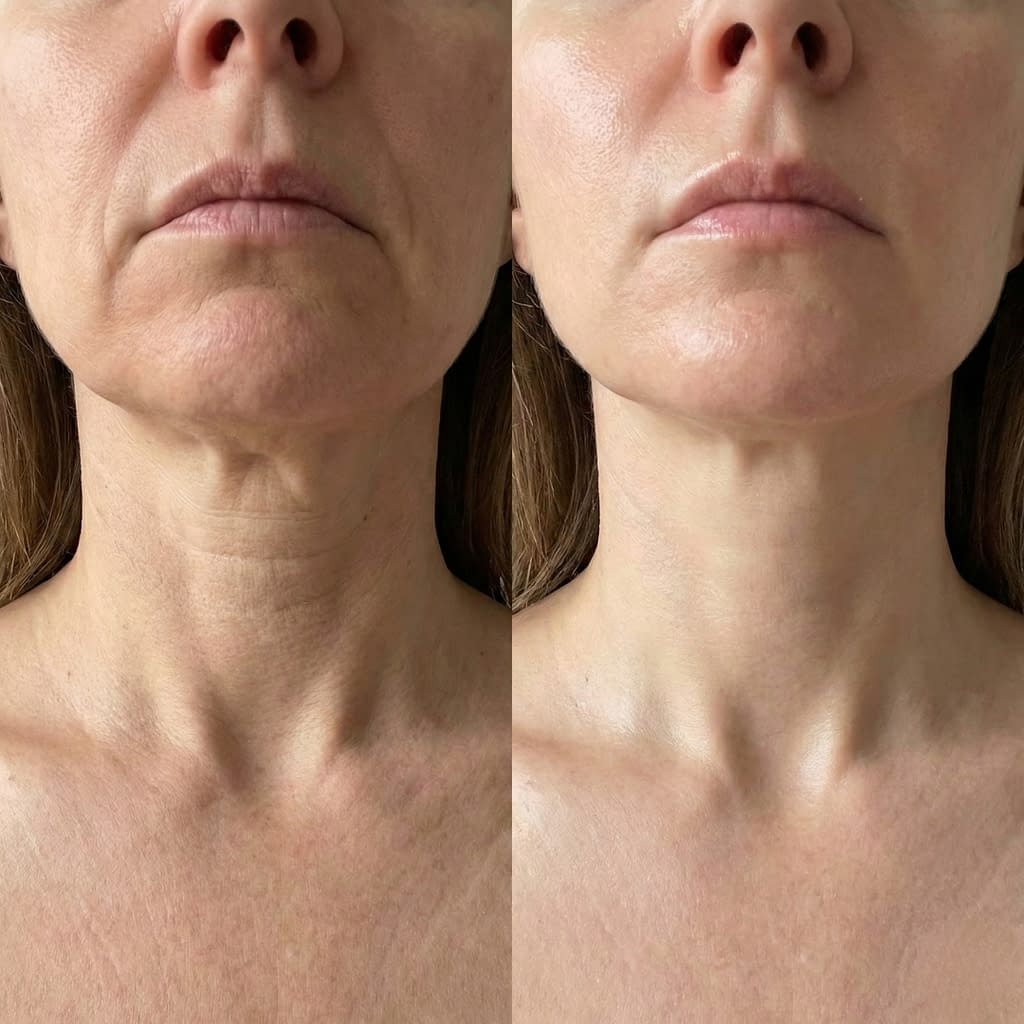
“Tech neck” describes two related things: (1) neck pain and stiffness from repeatedly looking down at phones/computers, and (2) premature horizontal creases and lines on the neck caused by repetitive neck flexion and collagen loss in the skin. Repeated downward head posture shortens the front neck muscles, increases tension, and creates creases where the skin folds. Mayo Clinic.
Why Looking Down at Screens Causes Neck Wrinkles
Two main mechanisms:
- Mechanical folding — every time you tilt your head down the skin creases; repeated creasing trains the skin to hold those lines.
- Skin aging factors — sun exposure, reduced collagen, and lifestyle factors (smoking, poor sleep) make the neck skin less able to bounce back from repeated folding. The neck is particularly prone to visible lines because the skin there is thin and gets a lot of movement. Cleveland Clinic
Early Signs of Tech Neck You Shouldn’t Ignore
Watch for:
- Horizontal lines that deepen with head movement.
- A “corded” or banded appearance when you tilt your head back.
- Persistent tightness in the front of the neck or reduced range of motion.
Catching things early makes at-home fixes far more effective than trying to reverse long-established deep lines.
Can Neck Wrinkles Be Reversed Naturally?
Short answer: partly. Light-to-medium lines respond well to consistent at-home care (posture + skincare + sunscreen + massage), while very deep lines may require professional procedures for dramatic improvement. That said, many people see visible softening within 8–12 weeks of a consistent routine that combines posture correction and proven topical ingredients. For deeper or rapidly worsening lines, a dermatology consult will give you options.
Daily Posture Habits That Prevent Further Lines

Fixing posture is the single most impactful long-term step.
Step-by-step posture routine
- Raise your screen: position laptop or phone so the top third of the screen is at eye level — that reduces downward gazing.
- Habits check (every hour): set a timer (phone or computer) to do a “posture reset.” Stand tall, roll shoulders back and down, lengthen the back of the neck, and tuck the chin slightly (gentle chin tuck).
- Ergonomic setup: chair height so your feet are flat and your screen is roughly an arm’s length away.
- Phone habit change: hold your phone at eye level rather than bending the neck down to read.
- Carry less load: heavy bags and backpacks shift the body forward and worsen posture; lighten loads where possible.
These small changes reduce the number of times your neck folds each day — slow wins.
Simple Stretching Exercises to Relax the Neck Area
Do this 2–3× daily — each exercise is short and safe.
Daily neck routine (10 minutes)
- Chin tucks (posture reset): sit or stand tall, gently draw the chin straight back (not down) to lengthen the back of the neck. Hold 5–8 seconds, repeat 8–10 times. (Clinical studies support chin-tuck methods for improving neck posture/muscle control.) Yonsei University
- Levator/upper trapezius stretch: tilt ear to shoulder, use the same-side hand to add a tiny extra stretch; hold 20–30 seconds each side.
- Scapular squeeze + chest opener: interlace fingers behind your back, squeeze shoulder blades together and lift chest for 10–15 seconds — helps undo forward shoulders.
- Gentle neck rotations: slow circles or side-to-side turns (pain-free range) to improve mobility.
Consistency matters — these moves retrain muscles and relieve forward-head posture over weeks.
Skincare Ingredients That Improve Neck Texture

Extend the face routine to the neck — but go slow because neck skin is thin.
Ingredients to look for and how they work
- Retinoids / retinol: stimulate collagen production and improve texture; start slowly (every 3rd night) and build tolerance. Retinoids are among the most evidence-backed topical options for lines. Mayo Clinic
- Peptides: small proteins that support collagen/firming; often included in neck-specific creams.
- Vitamin C (L-ascorbic acid): antioxidant that brightens, protects against free-radical damage, and supports collagen.
- Hyaluronic acid & glycerin: hydrate and plump fine lines immediately (short-term visible smoothing).
- Azelaic acid / niacinamide: anti-inflammatory and barrier-supportive — useful if skin is sensitive.
How to introduce actives safely
- Patch-test new products on a small neck area.
- Start 1–2 times a week and increase frequency gradually.
- If using retinoids, pair them with a nourishing moisturizer to prevent irritation.
How to Moisturize the Neck the Right Way
Technique matters as much as the product.
Step-by-step moisturizing routine
- Cleanse gently with a mild cleanser — avoid harsh soaps that strip moisture.
- Apply active (if using) like vitamin C in the morning or retinoid at night — follow product instructions.
- Use upward strokes: when applying moisturizer or oil, use gentle upward and outward motions (from clavicle up toward the jaw) — this helps counteract gravity and reduces repeated folding during application.
- Don’t forget the décolletage: extend products down to the chest area where skin also shows aging.
- Nightly nourishment: at night use a richer cream (ceramides, fatty acids) to support repair.
A hydrated, healthy barrier reduces the visual depth of lines.
The Importance of Sunscreen on the Neck
Sun damage accelerates collagen breakdown and deepens neck lines. Use sunscreen daily. Dermatologists stress correct application and reapplication for the neck and chest as much as for the face. American Academy of Dermatology
Quick sunscreen checklist
- Apply broad-spectrum SPF 30+ to neck and chest daily — at least a nickel-sized amount for the neck area.
- Reapply every 2 hours outdoors or after sweating/swimming.
- For extra protection, use clothing (collars, scarves) and seek shade during peak sun.
Sunscreen is one of the single best preventive moves you can take.
Facial and Neck Massage Techniques for Smoother Skin

Massage increases blood flow, relaxes tight muscles, and may temporarily soften lines. Tools like gua sha or rollers can help if used gently.
Safe massage routine (5–8 minutes)
- Clean hands & skin. Apply a slip product (oil or hydrating cream).
- Gentle upward strokes: using fingertips, glide from collarbone up toward jaw 8–10 times.
- Gua sha (optional): with a flat stone, gentle strokes from center neck outward and up; 3–5 passes per area. Don’t press hard. Some small studies suggest gua sha/facial massage can improve skin elasticity when done regularly.
- Finish with light tapping to stimulate circulation.
Caution: skip massage on sunburned or very inflamed skin. If you have a bleeding disorder or are on blood thinners, check with a clinician first.
Lifestyle Factors That Accelerate Neck Aging
Beyond posture and skincare, these accelerate lines:
- Smoking — speeds collagen breakdown.
- Poor sleep — less repair time for skin.
- High sugar diets — glycation damages collagen over time.
- Chronic stress — hormonal effects can affect skin health.
Small changes (sleep schedule, quit smoking, reduce processed sugar) make a measurable difference over months.
Mistakes That Make Tech Neck Wrinkles Worse
Avoid these common missteps:
- Applying heavy downward pressure when using devices (e.g., cradling device on chest) — it increases creasing.
- Skipping sunscreen on neck and chest.
- Using harsh physical scrubs repeatedly — they can thin the barrier on delicate neck skin.
- Starting retinoids without building tolerance — can cause irritation and post-inflammatory lines temporarily.
Do less, but do it consistently.
How Long Natural Improvements Take
Be realistic:
- Immediate (hours–days): hydration and massage can temporarily plump and smooth lines.
- Short term (4–8 weeks): consistent sunscreen + hydration + daily posture work reduces new creasing and improves the look.
- Medium term (8–16 weeks): topical retinoids/peptides often show measurable improvement in texture and fine lines when used consistently.
- Long term (months+): structural improvements from collagen stimulation take time; combine at-home care with posture change for best results.
Track progress with photos from the same angles every 4 weeks.
When Professional Treatments May Be Needed

If lines are deep or you want faster, more dramatic change, clinicians offer a range of in-office options (laser resurfacing, microneedling, radiofrequency, injectable fillers, or neuromodulators). These can be very effective but carry costs and potential downtime — discuss risks/benefits with a board-certified dermatologist. For the gentlest start, ask about collagen-stimulating procedures and conservative injectables.
Final Words
Tech neck lines are common — especially in our screen-filled lives — but they’re also one of the most preventable cosmetic concerns. The best plan combines daily posture fixes, simple neck stretches, consistent sunscreen and hydration, gentle targeted skincare (retinoids, peptides, vitamin C), and regular upward massage. Be patient: results take weeks to months. If you’re a teen, talk to a parent/guardian before starting active ingredients (retinoids) or booking professional treatments.


