

Color-treated hair needs a little extra love — and the shampoo you choose is one of the fastest ways to protect (or wreck) your color. This guide walks through what dye does to hair, which shampoo ingredients help preserve shade and shine, which to avoid, and how to match formulas to your color and texture. Follow the step-by-step tips and you’ll get longer-lasting color, healthier-looking hair, and fewer mid-month salon fixes.
Why Color-Treated Hair Needs Special Care
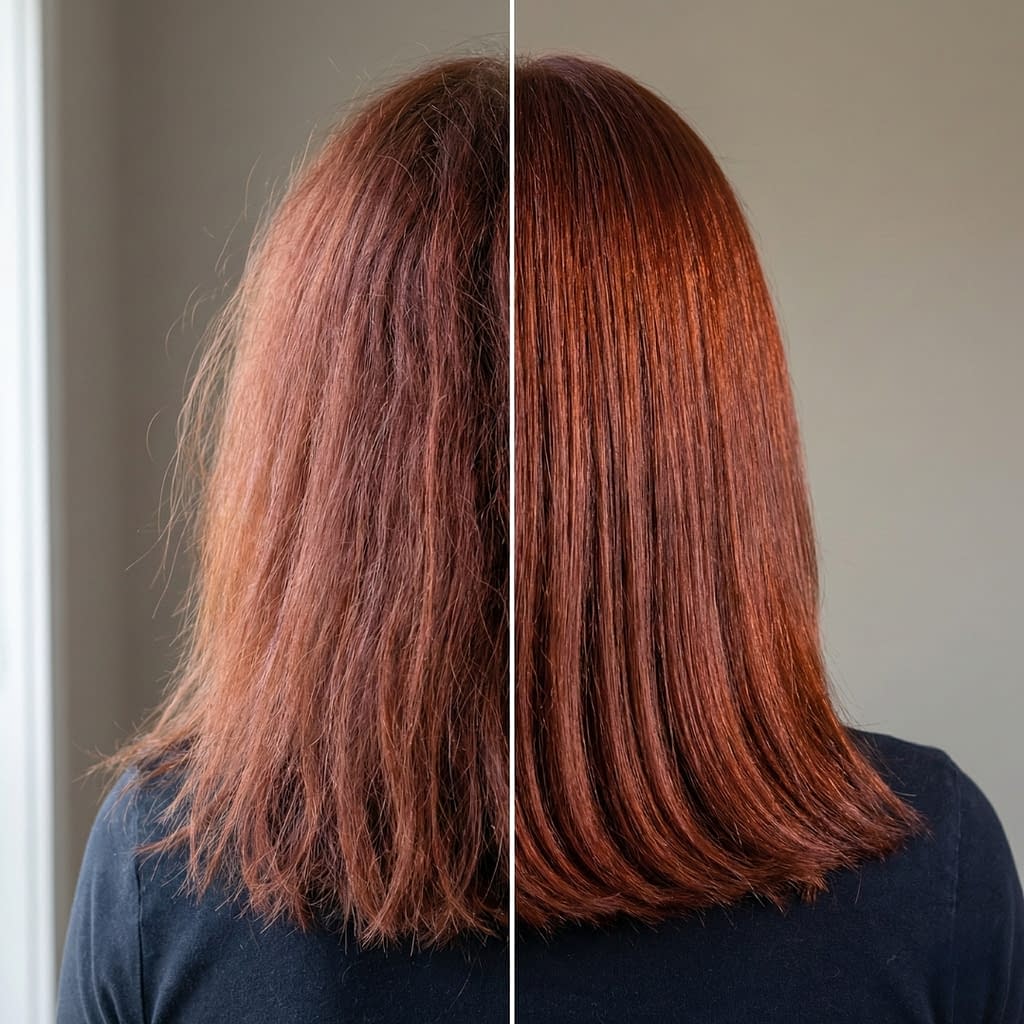
Hair dye opens the hair cuticle to deposit pigment. That process can:
- Reduce natural moisture, leaving hair drier and more porous.
- Make hair more prone to breakage, frizz, and dullness.
- Let color molecules escape over time (fade), especially with heat, sun, and harsh cleansing.
A shampoo for color-treated hair should gently cleanse while sealing the cuticle, locking color inside, and adding moisture — not strip it away.
How Hair Dye Changes Your Hair and What That Means for Shampoo
Dyeing (permanent or demi-permanent) changes hair structure:
- Cuticle lift: chemical dye (especially permanent) lifts cuticle scales so pigment can penetrate. After dyeing, the cuticle doesn’t always sit perfectly flat — which increases friction and color loss.
- Porosity increase: porous hair absorbs and releases moisture and pigment more quickly.
- Weakened cortex: structural proteins can become damaged, reducing strength.
What your shampoo should do because of these changes:
- Clean without stripping natural oils or pigment.
- Contain film-forming or conditioning agents that help flatten and seal cuticles.
- Add moisture and proteins to restore strength and reduce porosity.
- Be safe with regular use (unless you’re intentionally clarifying occasionally).
Sulfate-Free vs. Sulfate Shampoos: What to Choose and Why
Sulfates (SLS, SLES, ALS) are powerful detergents that create foam and remove oil — and color.
- Sulfate-free: gentler, less likely to strip color, better for dry or processed hair. Choose this as your daily shampoo if you want long color life.
- Sulfate-containing: good when you need a deep clean (after heavy product buildup or before a color correction), but don’t use them frequently on recently colored hair.
Rule of thumb: use a sulfate-free shampoo for regular washing; reserve mild sulfate shampoos for 1–2 clarifying washes a month if needed.
Look for These Helpful Ingredients (and Why They Matter)
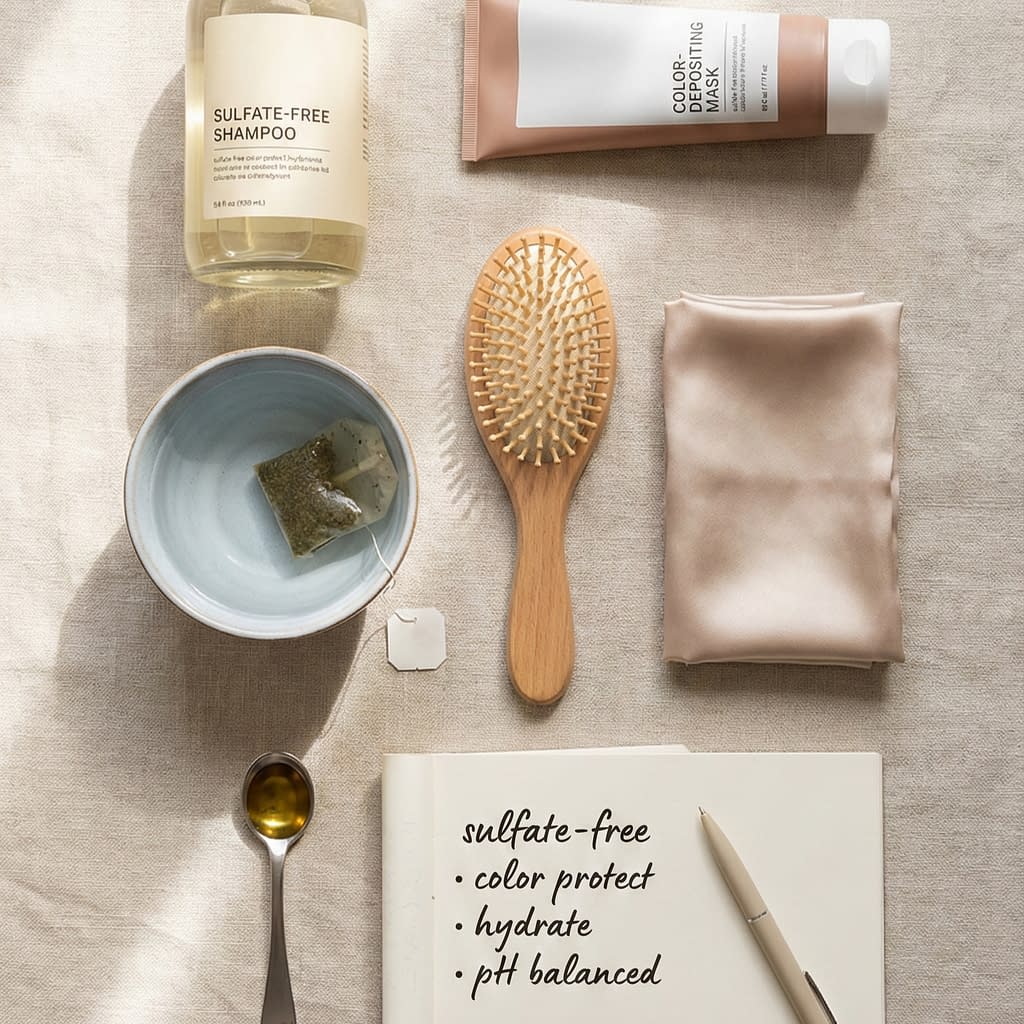
When reading labels, the helpful ingredients aren’t always glamorous, but they work.
Key supportive ingredients:
- Glycerin / Hyaluronic acid — humectants that attract moisture.
- Dimethicone / Cyclomethicone — lightweight silicones that smooth cuticles and lock color (use moderate amounts to avoid buildup).
- Cetrimonium chloride / Behentrimonium chloride — conditioning quats that reduce static and friction.
- Hydrolyzed proteins (keratin, silk, wheat) — temporarily strengthen and fill gaps in damaged hair.
- Panthenol (pro-vitamin B5) — adds shine and moisture.
- UV filters / antioxidants (vitamin E, green tea extract) — protect dye from sun-driven fade.
- Mild surfactants (cocamidopropyl betaine, sodium cocoyl isethionate) — clean gently without aggressive stripping.
Tip: a short ingredient list doesn’t always mean a poor product — it may be focused and mild. Look for the above functional ingredients when you want protection and conditioning.
Ingredients to Avoid That Accelerate Color Fade
Avoid or minimize shampoos with these if your goal is color longevity:
- Strong sulfates (SLES, SLS) used every wash.
- Heavy alcohols (isopropyl alcohol high up the list) — dry out hair.
- Clarifying acids used often (in high concentration) — they can open cuticles repeatedly.
- High levels of fragrance and unnecessary dyes — they can irritate scalp and contribute little.
- Frequent use of high-pH products — pH above ~7 opens cuticle and encourages pigment loss. Look for pH-balanced or slightly acidic shampoos (pH ~4.5–6.5).
Match Shampoo to Your Color Type: Blonde, Brunette, Red, or Bleached
Different colors have distinct fading patterns — choose accordingly.
- Blonde (natural or highlighted)
- Use purple or violet toning shampoos 1–2× weekly to neutralize brassiness.
- Use hydrating, gentle daily shampoos the rest of the week.
- Brunette
- Use sulfate-free, shine-enhancing formulas with light conditioners that add gloss but avoid heavy darkening pigments unless you want to deepen tones.
- Occasional color-depositing brown/ash shampoos can refresh tone.
- Red
- Red fades the fastest. Use color-depositing red shampoos/conditioners every 1–2 washes to refresh.
- Pick UV-protectant formulas and wash less frequently.
- Bleached or platinum
- Extremely porous — needs intense moisture and protein. Use blue or purple shampoos to cancel yellow or brassy tones.
- Choose reparative, low-alkaline (slightly acidic) shampoo and incorporate protein treatments.
Fine, Thick, or Curly — Choosing Formulas for Your Hair Texture
Color care isn’t one-size-fits-all — match texture too.
- Fine hair: avoid heavy silicones and waxy conditioners that weigh down the hair. Use lightweight, protein-balanced shampoos to protect color without flattening.
- Thick/coarse hair: richer, creamier formulas with more emollients and oils help retain moisture and sheen. Color tends to hold better here but needs hydration.
- Curly hair: curls need moisture. Use sulfate-free, high-conditioning but low-foaming shampoos; consider co-washing (see below) between mild shampoo days.
Practical step: if your hair feels limp after a product, try a lighter formula next time.
Scalp Concerns and Color Care: When to Use Gentle or Medicinal Shampoos
If you have scalp issues, choose carefully:
- Dandruff / seborrheic dermatitis: medicated shampoos (ketoconazole, zinc pyrithione, selenium sulfide) can be used, but they sometimes strip color. Use them only as directed (e.g., once a week) and follow with a color-safe conditioner.
- Sensitive scalp: fragrance-free, very mild surfactant systems. Look for products labeled for sensitive scalp and color-treated hair.
- Oil-prone scalp: balance cleansing frequency; use a gentle clarifying wash occasionally but avoid daily harsh sulfates.
If in doubt, ask your stylist or dermatologist how to combine medicinal products with your color-care routine.
Purple and Blue Shampoos: How and When to Use Them
Purple and blue shampoos are toning tools that neutralize warm brassiness by color theory.
How to use:
- Shampoo normally and let the purple/blue foam sit for 1–5 minutes — timing depends on how pigmented the shampoo is and how brassy your hair is.
- Rinse thoroughly.
- Use 1× per week for maintenance, more often only if needed. For bleached hair, start with shorter times to avoid over-toning.
Cautions:
- Overuse can lead to a slightly ashy or lilac tint, especially on very porous or very light hair.
- Condition well after toning to restore moisture.
Clarifying Shampoos — Use Sparingly, Know the Risks

Clarifying shampoos remove buildup (silicones, heavy oils, minerals) that trap color molecules on the surface.
When to use:
- Once every 2–6 weeks depending on product buildup or before a fresh color service.
Risks:
- Clarifiers can be drying and open the cuticle, making newly dyed hair release pigment faster. Avoid clarifying right after coloring (wait at least 1–2 weeks).
If you use a clarifier, follow with a deep conditioning or protein treatment to reseal the cuticle.
Co-Washing and Low-Lather Options for Longer-Lasting Color
Co-washing = using conditioner instead of shampoo to cleanse lightly (best for low-porosity, dry, or curly hair).
When co-wash:
- Use between mild shampoos when hair needs moisture but not heavy cleansing.
- Choose a co-wash designed for color-treated hair or a lightweight conditioner free of heavy dark dyes.
Low-lather shampoos (syndet bars, gentle surfactants) are an excellent compromise for color care: they clean while minimizing pigment loss.
How to Read Labels: Claims, Marketing, and What’s Actually Useful
Marketing is loud; ingredients speak truth.
Label reading tips:
- Ignore buzzwords by themselves (“professional”, “salon”).
- Look for function: “sulfate-free”, “pH-balanced”, “color-protecting”, UV filters, and listed conditioning agents.
- Ingredient order matters: earlier ingredients are in higher concentration. If the product lists harsh surfactants first, expect a stronger cleanse.
- Beware of “color depositing” products that will tint hair — use intentionally.
If a label makes a claim, cross-check ingredient list for the supporting tech (e.g., UV filters, antioxidants).
Practical Tips for Washing to Preserve Color (water temp, frequency, timing)

Small routine tweaks add up.
- Water temperature: use lukewarm or cool water. Hot water opens the cuticle, which encourages color loss.
- Frequency: wash less often if possible. Every 2–3 days preserves color better than daily washing.
- Shampoo technique: concentrate shampoo on the scalp; let suds rinse down the lengths rather than rubbing lengths aggressively.
- Timing: after coloring, wait at least 48–72 hours before the first wash (follow your colorist’s recommendation) — this helps pigment bind.
- Drying/heat: minimize heat styling and use thermal protectant sprays designed for color-treated hair.
Small changes: cooler water + less frequent washing = major color improvement.
How to Transition Between Shampoos Without Stripping Color
If you switch brands or types, do it gently.
Transition plan:
- Start by alternating the new shampoo with your old color-safe shampoo for 2–4 washes.
- If the new product contains toning pigments (purple/blue), test on a small section first.
- Add a deep conditioning mask after the first few uses to maintain moisture and seal cuticles.
If your color looks dull after switching, add a color-depositing mask or gloss treatment once to refresh tone.
Budget Options vs. Salon Formulas — What’s Worth Spending On
You don’t need to buy the most expensive bottle for good results — but some things are worth the splurge.
Spend more on:
- A good color-protecting shampoo/toner if your color is expensive to maintain (reds, platinum).
- Toners and masks designed to deposit pigment or rebuild protein.
- UV-protectant leave-ins if you spend time outdoors.
Save on:
- Basic gentle, sulfate-free daily shampoos (many effective drugstore formulas exist).
- Simple conditioners that hydrate (unless you need very targeted repair).
Quality over price: read ingredients and reviews rather than relying on price tags alone.
Quick Checklist: Pick the Right Shampoo in 60 Seconds
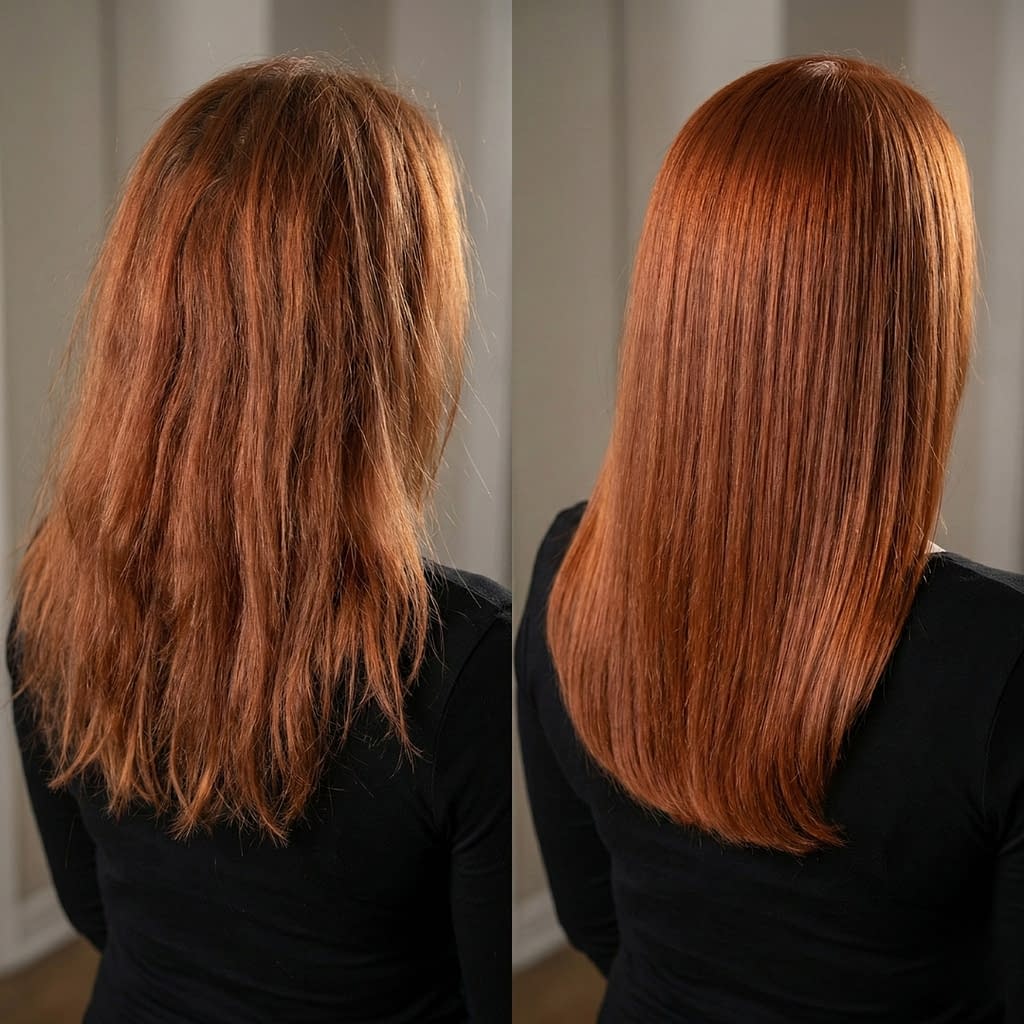
Use this cheat-sheet in-store or online:
- Sulfate-free? ✅
- pH-balanced/acidic? ✅
- Contains antioxidants or UV filters? ✅
- Has gentle surfactants (cocamidopropyl betaine, sodium cocoyl isethionate)? ✅
- Suitable for your color type (purple for blonde, red-deposit for reds)? ✅
- Appropriate texture for your hair (light vs. rich)? ✅
If you can check most boxes → add to cart.
Final Words
Color-treated hair is a beautiful investment — protect it with the right shampoo, rinsing habits, and occasional treatments. Choose gentle, color-safe cleansers, hydrate and repair with masks and proteins, use toning products thoughtfully, and avoid frequent hot-water washes or strong clarifiers right after coloring. With thoughtful product choices and a few technique tweaks (cooler water, less frequent washing, UV protection), you’ll keep your color vibrant, hair healthy, and your salon visits meaningful — not constant.


