

Summer humidity can turn even well-behaved hair into a frizzy, puffy mess. One minute your hair looks smooth, and the next it is expanding, curling in the wrong places, or refusing to stay sleek. The reason is simple: humid air adds extra moisture to the hair shaft, and if your cuticle is raised or your hair is dry, that moisture gets in more easily and creates frizz.
The good news is that summer frizz is very manageable. You do not need a completely different hair type or a shelf full of products to fix it. You need the right routine, the right products, and a few smart habits that help your hair resist humidity instead of absorbing it.
This guide breaks down exactly why hair frizzes in humid weather, how to tell whether your frizz comes from moisture or damage, and the best step-by-step ways to keep your hair smoother all summer long.
Why Hair Gets Frizzy in Humid Weather
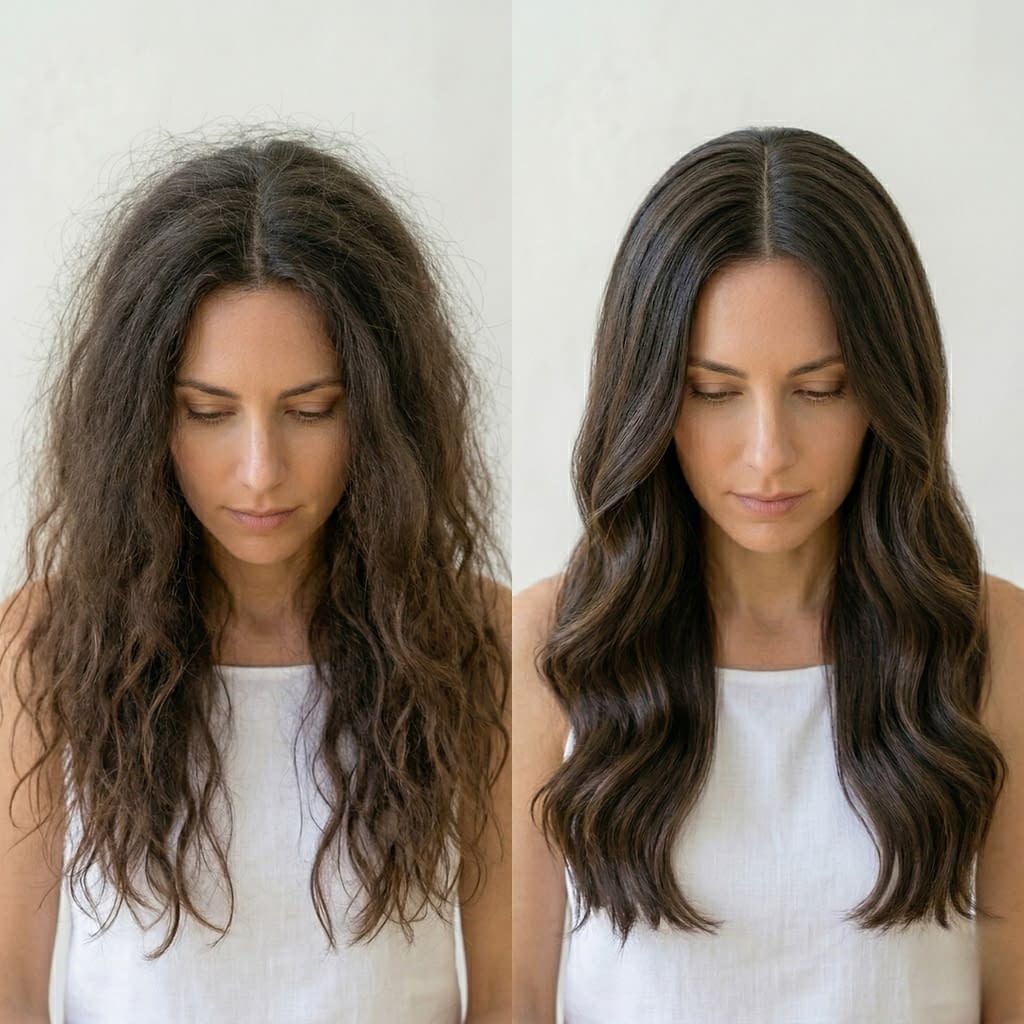
Hair gets frizzy in humid weather because it tries to absorb the moisture in the air. When the air is filled with water vapor, hair can swell unevenly. That swelling makes strands separate, curl unpredictably, and look fuzzy or puffy.
This happens more easily when:
- your hair is dry
- your cuticle is rough or lifted
- you have wavy, curly, or porous hair
- you use too much heat or too many harsh products
Step by step, humidity affects hair like this:
- Your hair is exposed to warm, damp air.
- The strands take in moisture.
- The hair shaft swells unevenly.
- The cuticle opens or lifts.
- Hair loses smoothness and starts to frizz.
The more damaged or porous your hair is, the more likely it is to react this way.
What Humidity Does to the Hair Cuticle
The hair cuticle is the outer layer of your hair, made of overlapping scales. When it lies flat, hair looks smoother and shinier. When it lifts, hair feels rough and looks frizzy.
Humidity affects the cuticle by making it swell and lift. That allows moisture to move in and out more easily, which causes inconsistency in the hair shape. Some strands expand more than others, which is why frizz often looks uneven.
To protect the cuticle:
- Use moisturizing products that smooth the surface.
- Avoid harsh washing that strips natural oils.
- Apply products that help seal the cuticle.
- Minimize heat damage, since damaged cuticles frizz more easily.
Think of the cuticle like shingles on a roof. The flatter they lie, the better your hair can handle humidity.
How to Tell If Your Frizz Is Caused by Moisture or Damage
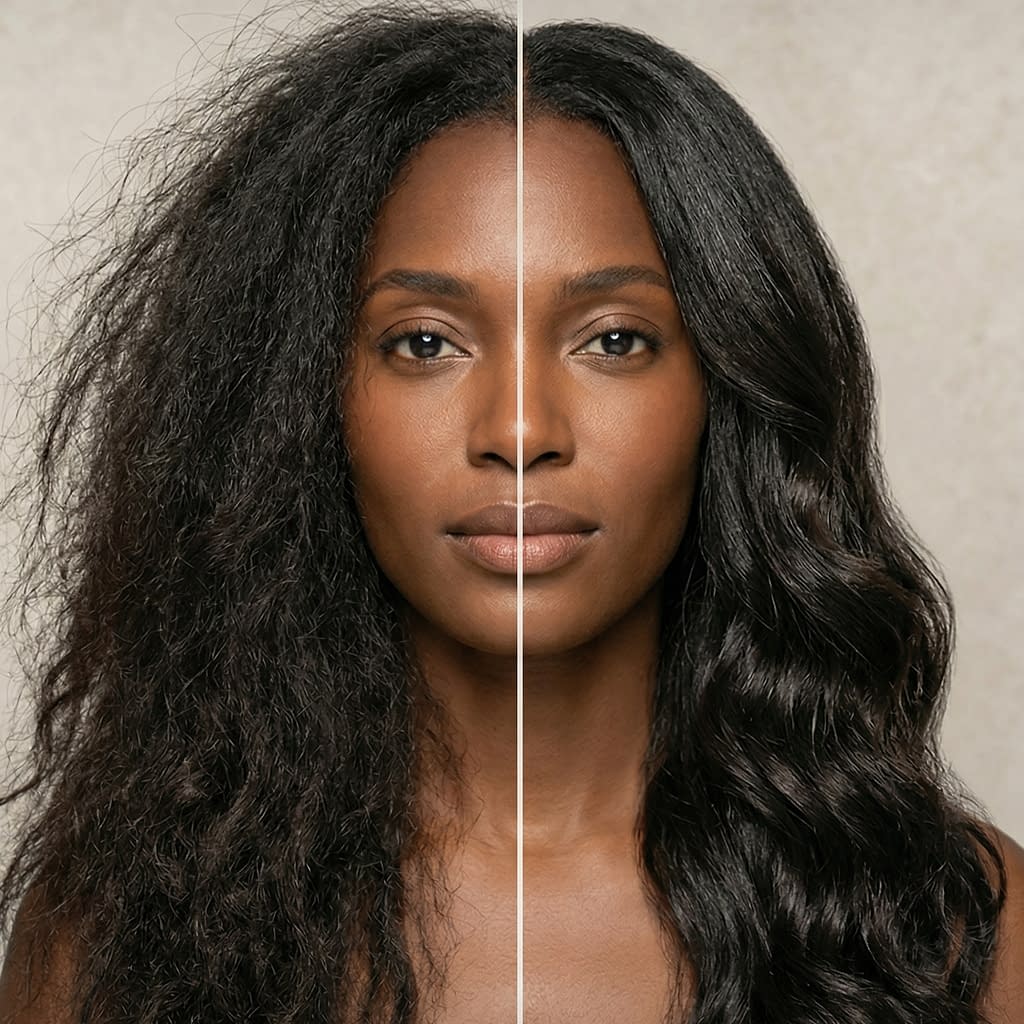
Not all frizz comes from the same cause. Some frizz is caused mainly by humidity, while other frizz is caused by dryness or heat damage.
Humidity frizz usually:
- appears more in wet, sticky weather
- comes and goes depending on the day
- makes hair puff up as the day goes on
Damage frizz usually:
- happens even in dry weather
- is paired with split ends or breakage
- feels rough or straw-like
- gets worse after heat styling or bleaching
Step by step, check your frizz:
- Wash and style your hair as usual.
- Notice how it looks on a humid day versus a dry day.
- Feel the ends and the mid-lengths.
- If your hair feels rough all the time, damage is likely part of the issue.
- If it only frizzes when the air is damp, humidity is the main trigger.
Most people have a mix of both, so the best routine usually addresses moisture and damage together.
Choose the Right Shampoo and Conditioner for Frizz Control
Frizz control starts in the shower. If shampoo strips your hair and conditioner is too light, humidity will have an easier time taking over.
Look for shampoos that are:
- sulfate-free or gently cleansing
- moisturizing but not heavy
- designed for frizz control, smoothness, or hydration
Look for conditioners that:
- add slip
- smooth the cuticle
- help detangle
- contain ingredients like ceramides, glycerin, or oils
Step by step, build a good wash routine:
- Use a gentle shampoo focused on the scalp.
- Let the suds rinse through the lengths instead of scrubbing them.
- Apply conditioner from mid-lengths to ends.
- Leave it on for a few minutes.
- Rinse with cool or lukewarm water.
A good conditioner helps hair stay softer and more manageable in sticky weather.
Why Deep Conditioning Helps Hair Stay Smooth

Deep conditioning gives your hair more moisture and helps it resist frizz. Dry hair absorbs humidity more quickly, so the more balanced and conditioned your strands are, the less they will react to summer air.
A deep conditioner can help:
- soften rough ends
- improve elasticity
- smooth the cuticle
- reduce puffiness
- make hair easier to style
Step by step:
- Pick a deep conditioner made for moisture or frizz control.
- Apply it to clean, damp hair.
- Focus on the mid-lengths and ends.
- Leave it on for the recommended time.
- Rinse thoroughly.
- Follow with a leave-in or smoothing product if needed.
Using a deep conditioner once a week can make a real difference in humid weather.
Leave-In Products That Help Block Humidity
Leave-in products are one of the most useful tools for summer frizz. They create a light protective layer over the hair, which can help limit moisture absorption from the air.
Helpful leave-ins include:
- leave-in conditioners
- anti-frizz creams
- smoothing sprays
- humidity-blocking serums
Step by step, apply leave-in products the right way:
- Use them on damp hair, not soaking wet hair.
- Start with a small amount.
- Focus on the areas that frizz most.
- Comb or finger-distribute evenly.
- Do not overload your hair, or it may look greasy instead of smooth.
The goal is to coat the hair lightly, not drown it.
The Best Styling Techniques for Sleeker Summer Hair
How you style your hair matters just as much as what products you use. Some styling habits make frizz worse, while others help keep hair smooth longer.
Better styling techniques:
- style hair while it is damp
- use a smoothing brush or wide-tooth comb
- avoid rough towel-drying
- work in sections for more even product distribution
- finish with a smoothing product on top
Step by step:
- Apply your leave-in or cream while hair is damp.
- Comb through gently.
- Create your part or style before hair dries fully.
- Let hair set without touching it too much.
- Add a small amount of anti-frizz serum at the end if needed.
The less you disturb the cuticle while drying, the smoother your hair usually stays.
Heat Styling Tips That Reduce Frizz Without Causing Damage
Heat can help smooth hair, but too much of it can also make frizz worse later. Damaged hair tends to frizz more, so if you use heat, the goal is to do it carefully.
Step by step for safer heat styling:
- Always use a heat protectant.
- Use the lowest temperature that still works.
- Dry hair about 70–80 percent before styling.
- Avoid going over the same section repeatedly.
- Finish with a cool shot if your dryer has one.
Better yet, use heat only when needed. A little heat, used carefully, is better than over-styling your hair every day.
How to Dry Your Hair Properly to Prevent Puffiness
Drying technique can either calm or trigger frizz. Rubbing hair with a rough towel creates friction, which lifts the cuticle and adds puffiness.
Step by step:
- Gently squeeze out extra water with your hands.
- Use a microfiber towel or soft T-shirt instead of a rough bath towel.
- Pat and press rather than rub.
- Let hair air-dry when possible.
- If blow-drying, use a nozzle and direct airflow downward along the hair shaft.
The smoother the drying process, the less frizz you usually get.
Protective Hairstyles That Help in Humid Weather
Sometimes the easiest way to fight humidity is to style your hair in a way that keeps it controlled.
Protective or humidity-friendly styles include:
- low buns
- braids
- twists
- sleek ponytails
- clipped-up styles
- soft updos
Step by step:
- Apply smoothing product first.
- Detangle carefully.
- Choose a style that keeps the hair tucked away.
- Use soft ties or clips that do not pull too tightly.
- Do not keep the same hairstyle too tight for too long.
These styles help reduce daily exposure to humidity and protect your ends at the same time.
Frizz-Fighting Oils, Serums, and Creams That Work
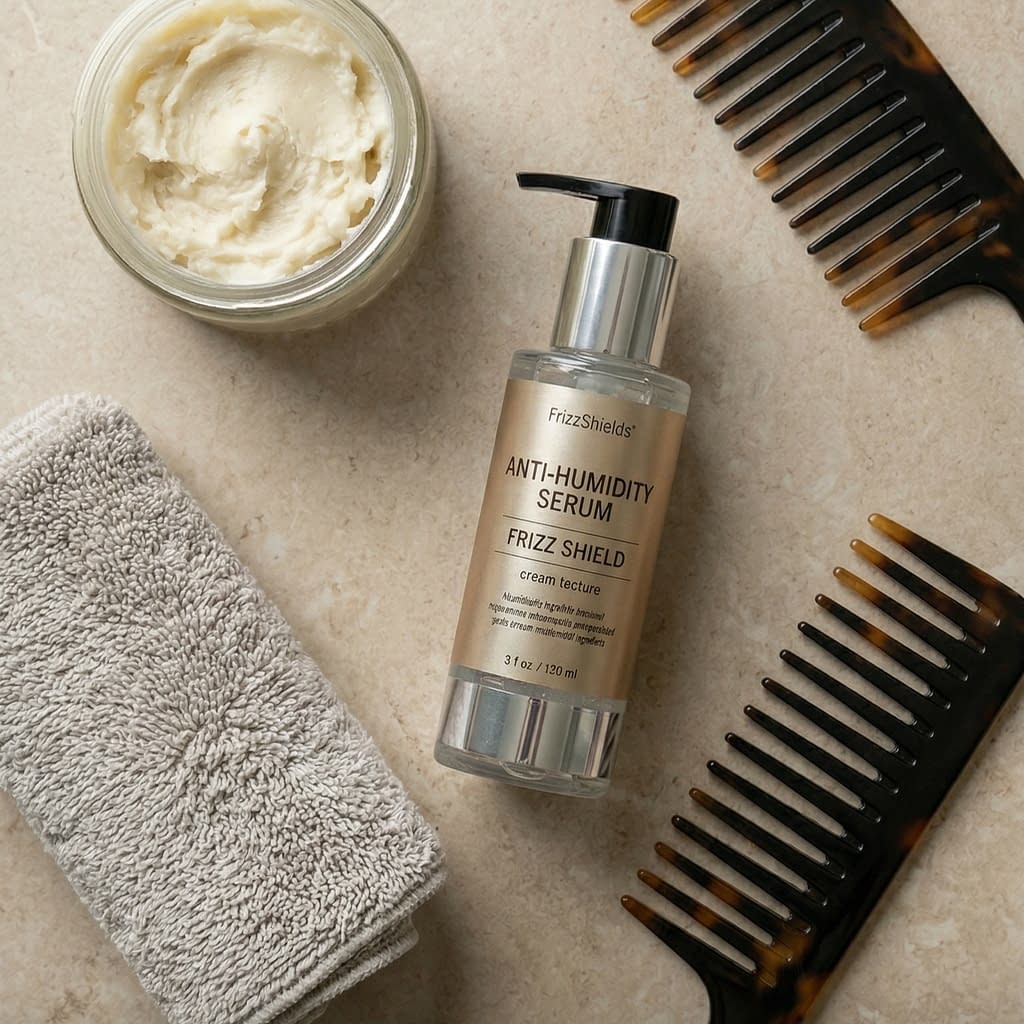
Oils and serums help smooth the hair surface and reduce puffiness. The key is to use the right amount in the right place.
Useful product types:
- lightweight hair oils
- silicone-based smoothing serums
- anti-frizz creams
- nourishing finishing creams
Step by step:
- Use a tiny amount.
- Warm it between your hands.
- Smooth it over the outer layer of your hair.
- Focus on the ends and frizzy areas.
- Do not pile on too much, or your hair may look oily.
The right finishing product can make hair look polished without weighing it down.
Nighttime Hair Care to Keep Hair Smooth by Morning
Summer frizz does not stop when the day ends. The way you sleep can affect how smooth your hair looks in the morning.
Helpful nighttime habits:
- sleep on a silk or satin pillowcase
- wear a loose braid or bonnet
- avoid going to bed with very wet hair
- use a small amount of leave-in on dry ends if needed
Step by step:
- Make sure hair is mostly dry before bed.
- Apply a tiny amount of smoothing product if needed.
- Put hair in a loose protective style.
- Sleep on a smooth pillowcase.
- Refresh with a little water or serum in the morning if needed.
A good nighttime routine can make your mornings much easier.
Common Mistakes That Make Summer Frizz Worse
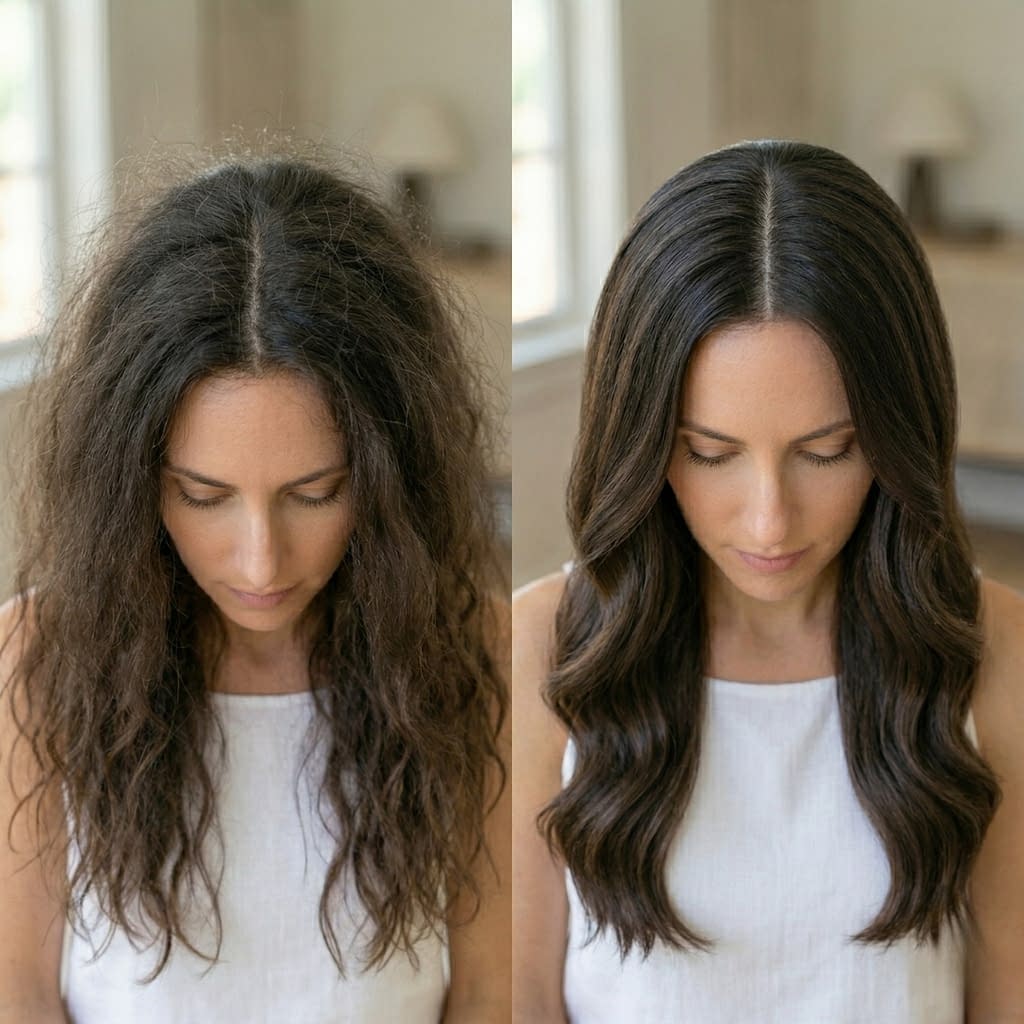
Some habits make humidity frizz much worse without people realizing it.
Common mistakes include:
- using too much shampoo
- skipping conditioner
- rubbing hair dry
- overusing hot tools
- touching hair too much while it dries
- applying too many products at once
- not trimming damaged ends
Step by step, avoid this:
- Simplify your routine.
- Be gentle with wet hair.
- Use the right amount of product, not more.
- Treat damaged ends regularly.
- Keep your hands out of your hair during the day.
The more you protect the cuticle, the better your hair handles humidity.
Final Words
Summer humidity can be frustrating, but frizz does not have to ruin your hair. Once you understand what causes it, you can build a routine that keeps your hair smoother, softer, and much easier to manage.
The biggest wins usually come from a few simple habits:
- use moisturizing shampoo and conditioner
- deep condition regularly
- apply leave-in products
- dry hair gently
- protect it at night
- avoid overdoing heat
You do not need a perfect routine. You just need a consistent one. With the right care, your hair can stay sleek and controlled even when the weather is not cooperating.


