

Heat rash can show up fast in hot, humid weather and feel stubbornly annoying, but it usually improves when you cool the skin, reduce sweating, and stop anything that traps heat or blocks pores. The basic idea is simple: heat rash happens when sweat gets trapped in blocked sweat ducts, and the fastest relief comes from making the skin cooler and drier while it heals.
This guide walks you through what heat rash looks like, how to calm it quickly, what to avoid, and how to prevent it from coming back during workouts, summer outings, and humid days. If your rash is severe, spreading, or paired with other warning signs like trouble breathing, swallowing, or swelling of the lips or eyes, get urgent medical help.
Why Heat Rash Happens in Summer
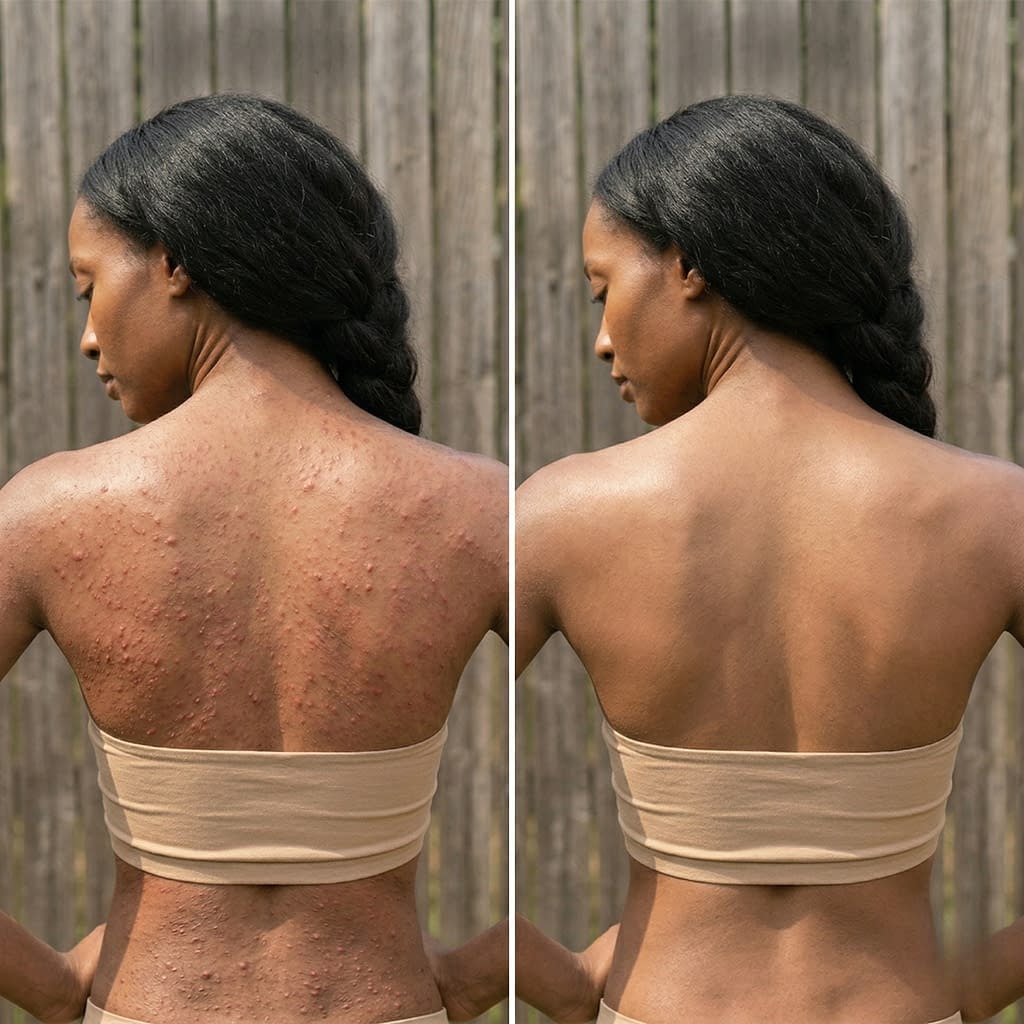
Heat rash happens when sweat ducts become blocked, so sweat gets trapped under the skin instead of reaching the surface and evaporating. Hot weather, humidity, heavy sweating, tight clothing, and limited airflow all make this more likely. Once the skin is cooled and kept dry, mild heat rash often clears fairly quickly.
A simple way to think about it is: sweat is normal, but heat rash happens when sweat cannot get out. That is why the best first step is not to “treat” it with heavy products, but to cool the skin and remove the conditions that keep the ducts blocked.
What Heat Rash Looks and Feels Like
Heat rash often looks like tiny red or pink bumps, sometimes with a prickly or stinging feeling. It can also appear as small blisters or patches that feel itchy or irritated. The rash commonly shows up in places where sweat collects or clothing rubs, such as the neck, chest, back, underarms, groin, or skin folds.
Step by step, check the pattern:
- Look for small bumps or a red, bumpy patch.
- Notice whether the area feels prickly, itchy, or hot.
- Think about whether you were sweating heavily, wearing tight clothes, or spending time in heat.
- See if the rash is in a sweat-prone area.
Common Triggers That Make Heat Rash Worse
Heat rash is more likely to flare when sweat stays on the skin, when clothing traps heat, or when the environment stays hot and humid for long periods. Mayo Clinic also notes that activities that increase sweating can keep the rash going longer, and that oily or greasy products can block pores further.
Common triggers include:
- hot, humid weather
- exercise or other heavy sweating
- tight, non-breathable clothing
- heavy creams, ointments, or greasy products
- sleeping in a hot room or under heavy bedding.
How to Cool the Skin and Reduce Irritation Fast
Cooling the skin is the most important first move. NHS guidance says the main thing is to keep skin cool so you do not sweat and irritate the rash. Mayo Clinic recommends cooling the skin and avoiding the heat exposure that caused the rash in the first place.
Step by step:
- Move to a cooler place right away.
- Use a fan or air conditioning if possible.
- Take a cool shower or bath.
- Let the skin air-dry instead of rubbing it dry.
- Put on loose clothing as soon as the skin is dry.
If you are outdoors or exercising, stopping the heat exposure early usually helps the rash settle faster.
Gentle Cleansing Habits for Sweaty, Sensitive Skin
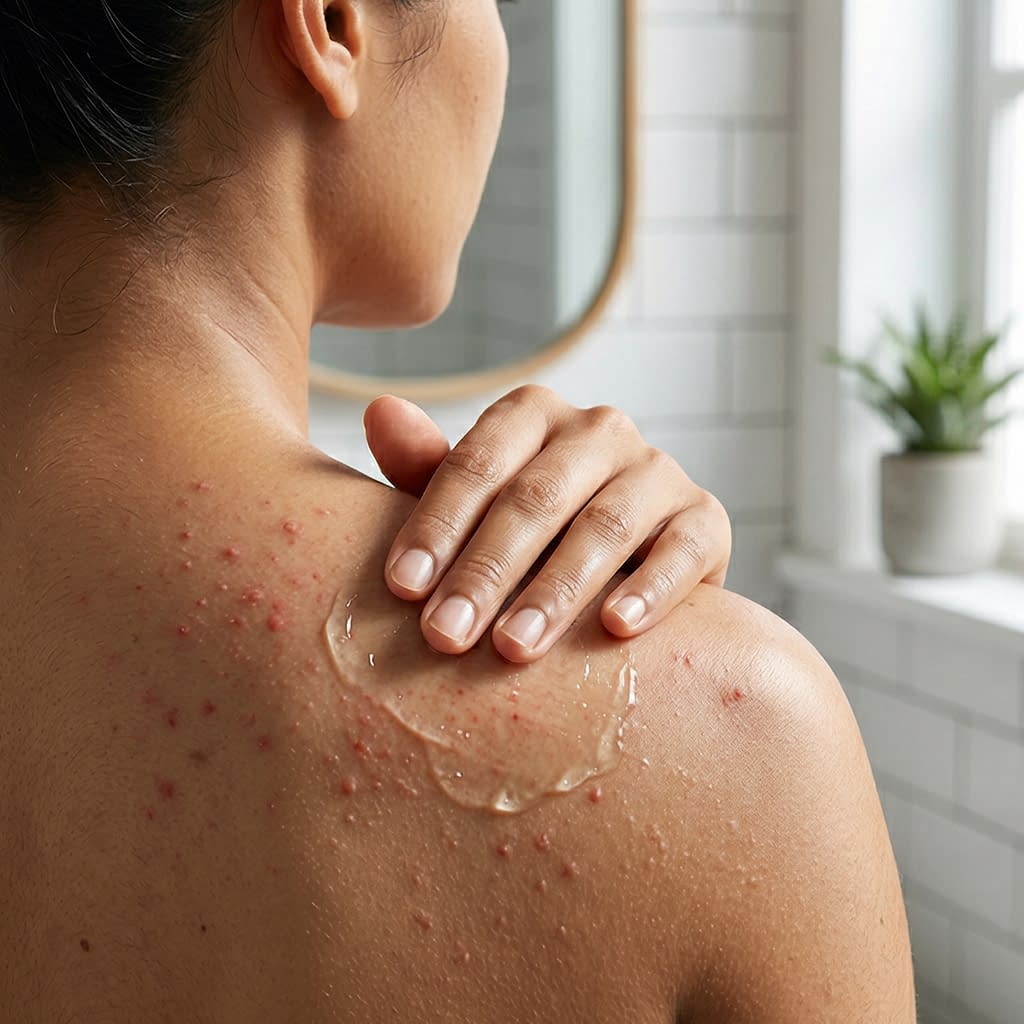
A mild cleanse can help remove sweat and residue without further irritating the rash. Use lukewarm or cool water and a gentle cleanser, then pat the skin dry. The goal is to clean the area while keeping it cool and avoiding friction.
Step by step:
- Wash the area with cool or lukewarm water.
- Use a gentle, fragrance-free cleanser if needed.
- Rinse thoroughly so no residue stays behind.
- Pat dry softly.
- Leave the skin open to air when you can.
Avoid hot water and harsh scrubbing, because both can make sensitive skin feel worse.
Clothing Choices That Help Prevent Friction and Trapped Heat
Loose, lightweight clothing helps heat escape and keeps sweat from sitting on the skin. NHS and Mayo Clinic both recommend loose cotton or lightweight, moisture-wicking clothing during hot weather.
Best clothing habits:
- choose loose cotton or breathable fabrics
- avoid tight seams that rub
- swap sweaty clothes quickly
- use lightweight bedding at night
- keep layers light in hot weather.
If a certain shirt, bra, or waistband traps heat, changing that one item can make a big difference.
Best Home Care Tips to Soothe Heat Rash Naturally
For mild heat rash, simple home care often works best. Cooling the skin, resting from heat exposure, and keeping the area dry are the core steps. NHS says to drink plenty of fluid, use cool baths or showers, and wear loose cotton clothing.
A practical at-home routine:
- Cool the skin.
- Change into dry, breathable clothes.
- Rest in a cooler room.
- Avoid workouts or other heat exposure until the rash settles.
- Drink enough water to stay hydrated.
If the rash is itchy, a pharmacist or clinician can advise whether a nonprescription anti-itch product makes sense, but the main treatment remains cooling and avoiding blocked sweat ducts.
Ingredients and Products That Can Calm the Skin

For heat rash, the most important advice is to avoid products that block pores further. Mayo Clinic specifically says to avoid oily or greasy moisturizers, cosmetics, and sunscreens that can make sweat ducts clog more.
That means the safest approach is usually:
- no thick ointments while the rash is active
- no heavy oils
- no greasy balms over the rash
- no products that make the skin feel sealed in or overly sticky.
If your skin is very dry after the rash settles, use a light, fragrance-free moisturizer later, but while the rash is active, keeping the area cool and open is more important.
What to Avoid When You Have Heat Rash
Do not keep the skin hot, sweaty, or occluded. Mayo Clinic and Cleveland Clinic both note that oily creams, ointments, and other occlusive products can make heat rash worse by blocking pores and keeping sweat from getting out.
Avoid:
- hot showers
- heavy lotions and ointments
- greasy sunscreen on the rash
- intense exercise until the rash calms
- tight clothing or bedding that traps heat
- rubbing or scratching the area.
If the rash is already irritated, simple is better.
How to Prevent Heat Rash During Workouts and Hot Days
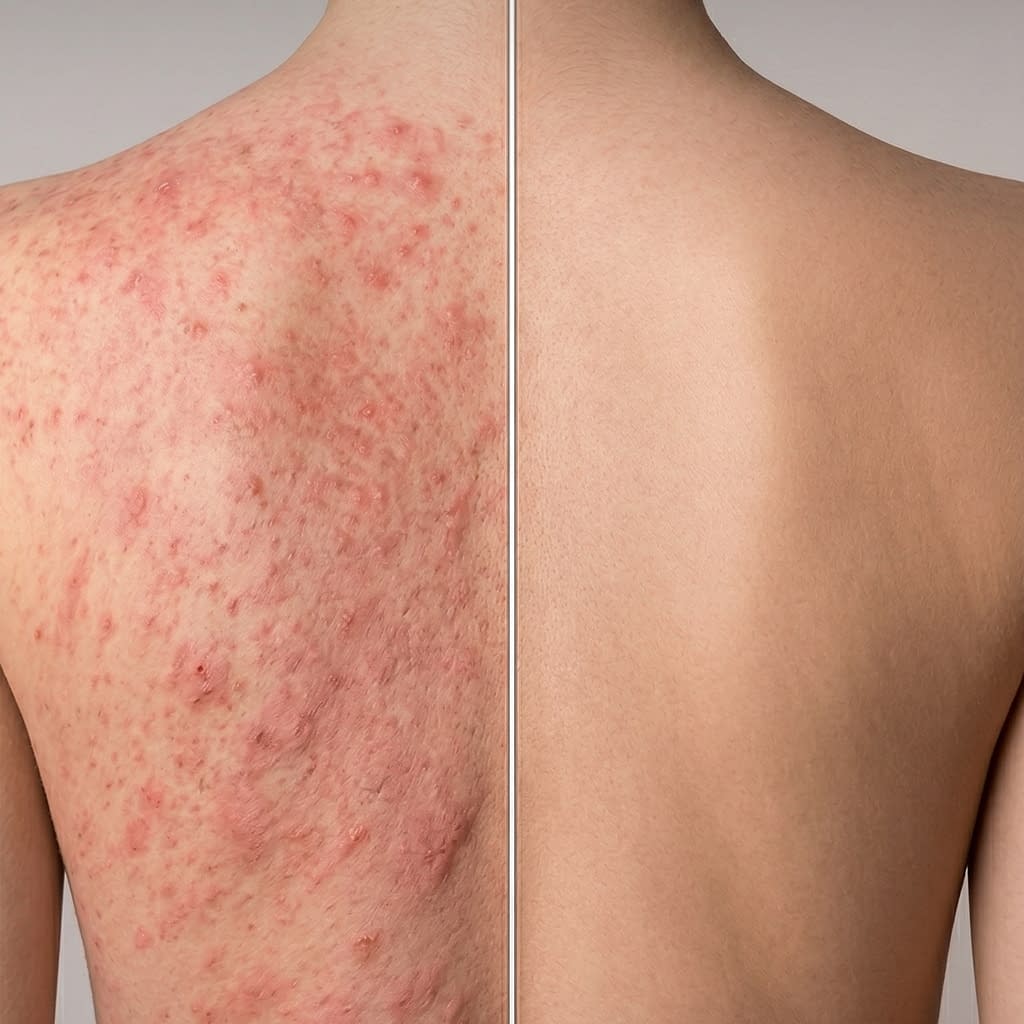
The best prevention strategy is to reduce overheating and sweating when you can. Cleveland Clinic recommends limiting activities that cause sweating until the rash is gone, and Mayo Clinic recommends staying in the shade or in an air-conditioned building, using a fan, and wearing loose, lightweight clothing that wicks moisture away.
Step by step:
- Plan workouts for cooler times of day.
- Wear breathable, loose, moisture-wicking clothing.
- Use a fan or AC when resting.
- Change out of sweaty clothes quickly.
- Shower or rinse soon after exercise.
- Avoid heavy creams before hot activity.
Heat Rash in Different Areas of the Body
Heat rash can show up in places where sweat gets trapped or skin rubs together. NHS and Mayo Clinic both note common areas such as the neck, chest, back, underarms, and skin folds.
A useful approach is to think about the area:
- Neck and chest: keep collars loose and avoid necklaces or straps that rub.
- Back and shoulders: change out of sweaty shirts quickly.
- Underarms: keep the area dry and wear breathable fabrics.
- Skin folds: use cool air, light clothing, and avoid friction.
When Heat Rash May Need Medical Attention
Most mild heat rash improves when the skin is kept cool and dry, but you should get medical help if the rash does not improve, spreads, looks infected, or you develop other symptoms. AAD says a rash may need medical evaluation if you are concerned, and urgent care is needed if you have trouble breathing, trouble swallowing, or swelling of the eyes or lips. Heat rash can also appear with heat exhaustion, so symptoms like dizziness, headache, nausea, weakness, or a high temperature should not be ignored.
Get help promptly if:
- the rash keeps getting worse
- you see pus or signs of infection
- you feel faint, very thirsty, weak, or sick
- the rash comes with other serious symptoms.
Common Mistakes That Make Heat Rash Last Longer
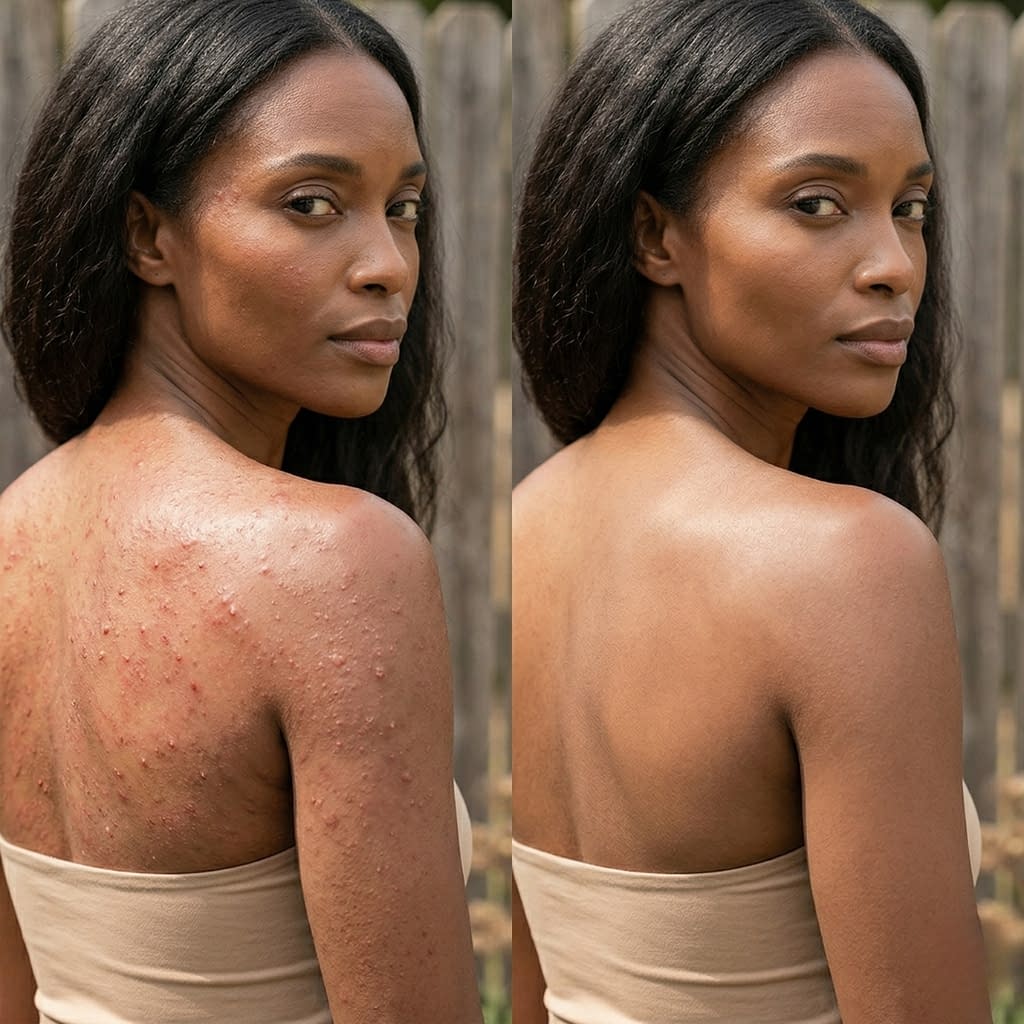
The most common mistake is trying to treat heat rash like dry skin. Mayo Clinic and Cleveland Clinic both caution that greasy moisturizers and ointments can make the rash worse because they block sweat ducts. Other mistakes include staying in the heat, working out too hard before the rash calms, and wearing tight clothing that keeps the skin hot.
Avoid these habits:
- using heavy creams on the rash
- scratching or rubbing the area
- going back to heavy sweating too soon
- sleeping in warm, heavy bedding
- wearing clothes that trap heat.
Final Words
Heat rash usually gets better when you keep the skin cool, dry, and free from anything that blocks sweat from escaping. The simplest plan is often the best one: cool showers, loose clothing, light bedding, hydration, and a break from heat and sweating until the rash settles.
If the rash is severe, keeps spreading, or comes with symptoms like dizziness, weakness, trouble swallowing, or swelling of the lips or eyes, get medical help right away.


