

Dyed hair can look fresh, vibrant, and polished at the start of summer, but the season itself is often the biggest threat to that color. Between strong UV rays, heat, sweat, swimming, and frequent washing, summer creates the perfect conditions for hair color to fade faster than usual. What once looked rich and glossy can quickly turn dull, brassy, dry, or washed out.
The good news is that faded color is not inevitable. With the right care, you can protect dyed hair from the sun, keep your shade looking salon-fresh longer, and reduce the damage that usually builds up during hot weather. The key is to combine smart daily habits with the right products and a few simple protective routines.
In this guide, you will learn exactly why dyed hair fades in summer, how to spot the first signs of fading, and how to build a hair care routine that helps preserve your color all season long. Whether your hair is blonde, brunette, red, or fashion-colored, these tips will help keep it vibrant, soft, and healthy.
Why Summer Sun Causes Dyed Hair Color to Fade Faster
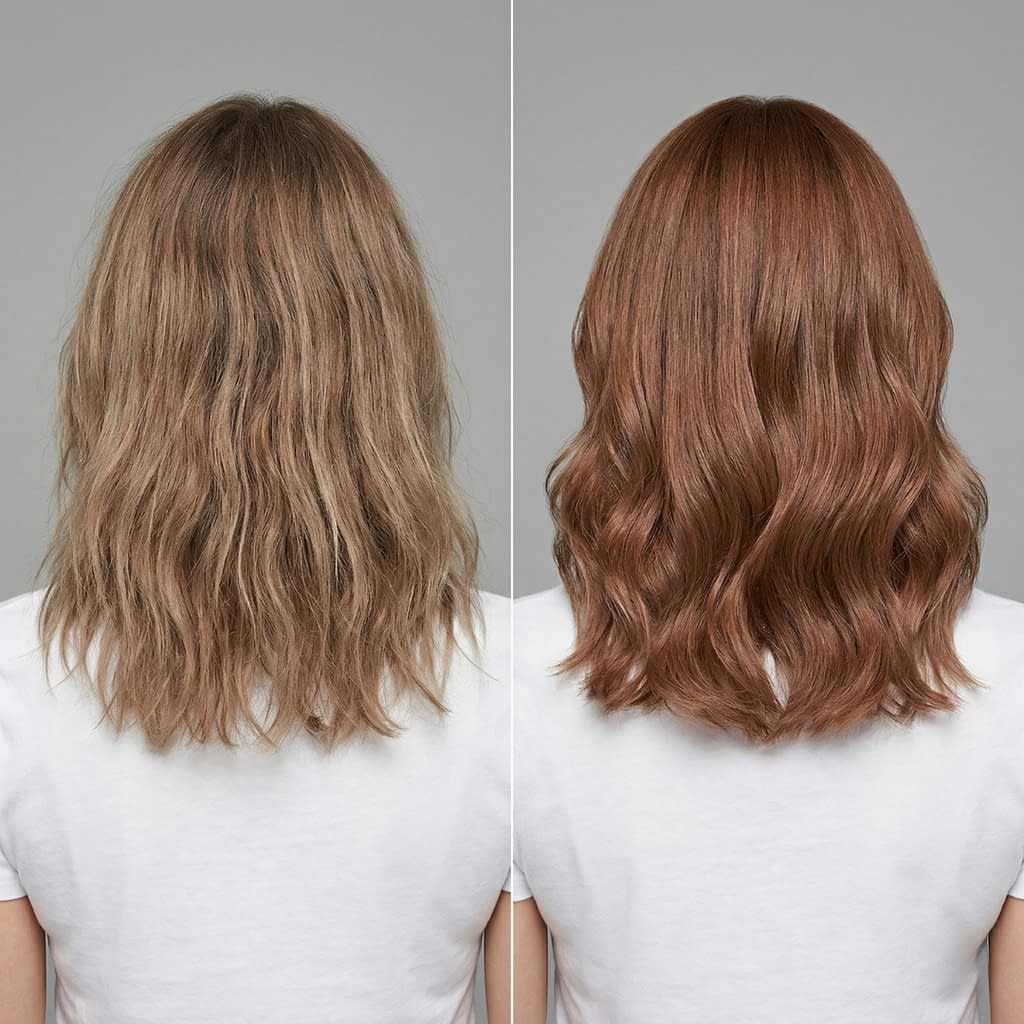
Summer sun is one of the biggest reasons dyed hair loses its richness. UV radiation does not just affect the skin. It also breaks down the molecules that give hair color its depth and tone. When dyed hair is exposed to sunlight for long periods, the color can become weaker and less stable.
Hair that has been dyed is already more vulnerable because the coloring process changes the hair’s structure. That makes it easier for outside factors like sun, heat, and water to strip away pigment.
Step by step: what happens in the sun
- UV rays hit the outer layer of the hair.
- The protective cuticle becomes weaker and more open.
- Color molecules inside the hair begin to break down.
- Moisture escapes faster, leaving hair dry and porous.
- The shade looks lighter, duller, or less even.
The more often your hair is exposed to direct sunlight, the faster that fading can happen.
How UV Rays Affect Hair Color Pigments
Hair color pigments are sensitive to light, heat, and oxidation. UV rays speed up this process by breaking the chemical bonds that help hold color in the hair shaft.
What this means for dyed hair
- Dark colors can look faded or reddish
- Blonde hair may turn yellow, brassy, or dull
- Red shades often lose intensity quickly
- Fashion colors like pink, blue, or purple can fade even faster
Step by step: pigment damage process
- UV rays penetrate the hair surface.
- Pigment molecules begin to oxidize.
- The color becomes less stable.
- Repeated exposure causes visible fading.
- The shade may shift unevenly instead of fading softly.
Once pigments start breaking down, hair can look dry and uneven even if the roots are still fresh.
Signs Your Dyed Hair Is Fading Due to Sun Damage
It is not always obvious when sun exposure is causing the problem. Sometimes the changes are gradual. The earlier you notice them, the easier it is to prevent further fading.
Common signs of sun-faded hair
- Hair color looks lighter than it should
- Ends appear brassy, orange, or yellow
- Shine has decreased
- Hair feels drier than usual
- The color looks uneven from roots to ends
- Hair becomes more frizzy or rough
- Red or vivid shades lose their richness quickly
Step by step: how to check for fading
- Compare your hair in natural light to recent photos.
- Look at the ends, which fade first.
- Check whether your toner or gloss is disappearing.
- Notice if your hair feels drier after sun exposure.
- Watch for color changes after beach days, pool days, or long outdoor hours.
When hair starts looking tired even though you just colored it, sun damage is often part of the reason.
The Best Ways to Protect Dyed Hair from Summer Sun
Protecting dyed hair works best when you layer a few simple habits together. One product alone is rarely enough.
Step by step: best protection routine
- Start with hydrated hair. Dry hair fades faster.
- Use a leave-in product with UV protection.
- Cover hair with a hat or scarf when you are outdoors for long periods.
- Reduce exposure during peak sun hours.
- Reapply protection if you spend the whole day outside.
- Rinse hair after swimming or heavy sweating.
Smart protection habits
- Wear a wide-brimmed hat
- Use protective hairstyles like braids or buns
- Keep hair moisturized so the cuticle stays smoother
- Avoid overexposing freshly dyed hair in the first few days after coloring
The goal is to reduce direct sun contact as much as possible while keeping your hair moisturized and sealed.
UV Protection Products That Help Preserve Hair Color
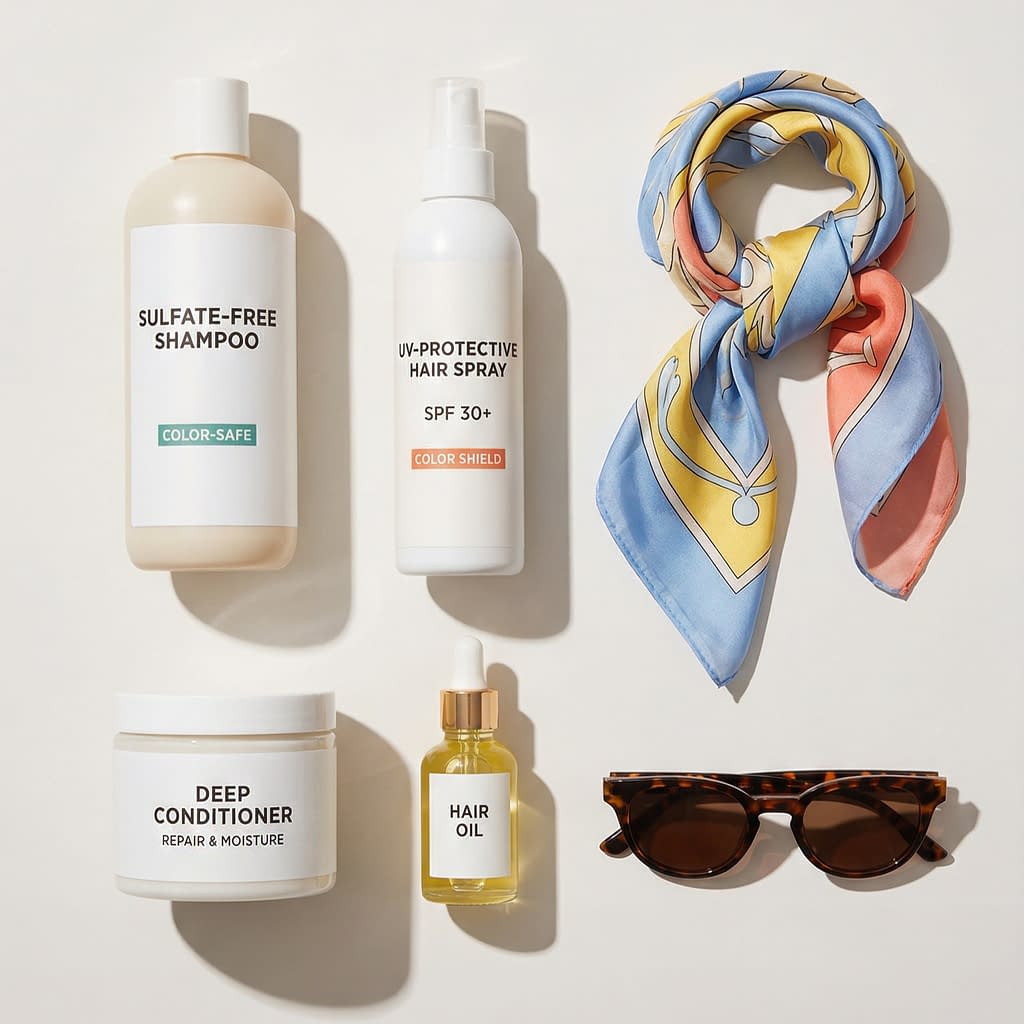
Not every product that says “color safe” actually protects against UV fading. The best products are the ones that create a light shield around the hair and help keep moisture locked in.
What to look for
- UV filters
- Color-safe formulas
- Leave-in conditioners
- Light protective sprays
- Serums with antioxidants
- Heat protection plus UV protection in one product
Step by step: how to use them properly
- Apply to damp hair before going outside.
- Focus on the mid-lengths and ends.
- Use enough to coat the hair lightly, not weigh it down.
- Reapply after swimming or several hours in the sun.
- Combine with hats or scarves for stronger protection.
If your hair is already dry or porous, protective products become even more important because color escapes faster from damaged strands.
How Often You Should Wash Dyed Hair in Summer
Frequent washing can make dyed hair fade faster because every wash removes some color, even when you use a gentle shampoo. In summer, many people wash more often because of sweat, chlorine, and humidity, but that can speed up fading.
General guidance
- Wash dyed hair as infrequently as your scalp and lifestyle allow
- Most color-treated hair does well with two to three washes per week
- Use dry shampoo between washes if needed
- Rinse after swimming, but do not always shampoo unless necessary
Step by step: safer summer washing routine
- Stretch time between washes when possible.
- Use a gentle, sulfate-free shampoo.
- Shampoo only the scalp, not the full length every time.
- Condition the mid-lengths and ends every wash.
- Use cool or lukewarm water instead of hot water.
The less often you wash harshly, the longer your color tends to stay rich and fresh.
Choosing the Right Shampoo and Conditioner for Color Protection
Your shampoo and conditioner matter more than many people realize. The wrong formula can strip color quickly, while the right one helps preserve it.
What to look for in shampoo
- Sulfate-free
- Color-safe
- Moisturizing but not too heavy
- Gentle cleansing ingredients
What to look for in conditioner
- Hydrating ingredients
- Smooth, detangling formula
- UV or color protection benefits
- Protein or strengthening support if hair is weak
Step by step: how to build the wash routine
- Choose a gentle shampoo designed for color-treated hair.
- Massage shampoo into the scalp only.
- Rinse well.
- Apply conditioner from mid-length to ends.
- Leave it on for the suggested time.
- Rinse with cool water to help the cuticle lie flatter.
Healthy, smooth hair holds color better than dry, rough hair.
Heat Styling and Sun Exposure How They Speed Up Color Fading
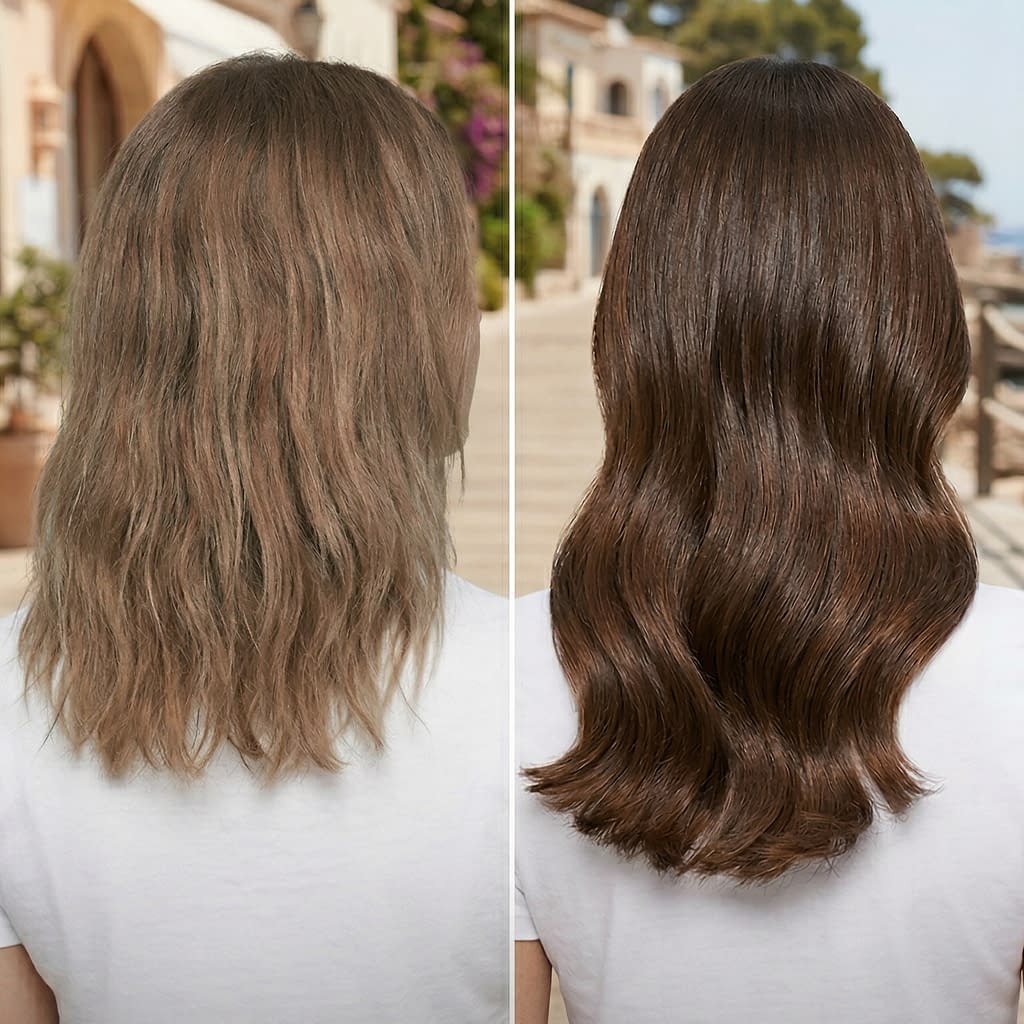
Heat styling and sun exposure are a damaging combination. The sun weakens the hair cuticle, and hot tools add even more stress. Together, they can make dyed hair fade and dry out much faster.
Why this happens
- Hair becomes more porous
- Moisture escapes more easily
- Pigment breaks down faster
- Ends become rough and brittle
Step by step: lower the damage
- Reduce hot tool use as much as possible.
- Air-dry hair when you can.
- Use a heat protectant every time.
- Avoid high temperatures on dyed hair.
- Skip unnecessary styling on days with heavy sun exposure.
During summer, giving your hair a break from heat often makes a visible difference in how long the color lasts.
Summer Hair Care Tips for Blonde, Brunette, and Red Hair
Different shades fade in different ways, so each color needs slightly different care.
Blonde hair
Blonde shades can turn brassy or yellow under sun exposure.
Step by step:
- Use a purple shampoo occasionally.
- Protect with UV sprays.
- Keep hair moisturized to reduce dullness.
- Avoid overusing clarifying shampoos.
Brunette hair
Brown hair often fades into lighter, warmer tones.
Step by step:
- Use color-depositing or glossing products if needed.
- Choose moisturizing masks.
- Protect ends, which show fading first.
- Limit hot tool use.
Red hair
Red is one of the fastest-fading hair colors.
Step by step:
- Wash less frequently.
- Use color-safe shampoo.
- Protect from direct sunlight every time you go out.
- Refresh the shade with a gloss or color conditioner if needed.
Color-specific care helps preserve the tone that makes your hair look fresh and intentional.
How to Protect Dyed Hair at the Beach and Pool
Beach and pool days are especially hard on dyed hair. Sun, saltwater, chlorine, and sand can all strip color or leave hair rough and dry.
Step by step: before swimming
- Wet your hair with clean water first.
- Apply leave-in conditioner or a protective oil.
- Braid hair or tie it in a loose bun.
- Wear a hat or swim cap if appropriate.
Step by step: after swimming
- Rinse your hair as soon as possible.
- Remove chlorine or salt with a gentle cleanse.
- Apply conditioner or a mask afterward.
- Detangle carefully with a wide-tooth comb.
- Let hair rest and recover before more sun exposure.
The faster you rinse after swimming, the less time damaging minerals and chemicals have to stay in the hair.
Natural Oils That Help Lock in Hair Color
Natural oils do not “seal” color permanently, but they can help smooth the hair cuticle, reduce moisture loss, and make hair look healthier and shinier. That can help color appear richer for longer.
Good options
- Argan oil
- Coconut oil
- Jojoba oil
- Avocado oil
- Grapeseed oil
Step by step: how to use oils safely
- Choose a light amount, not a heavy coating.
- Apply to mid-lengths and ends.
- Use before sun exposure or after washing.
- Avoid putting too much on the scalp if your hair gets greasy easily.
- Focus on smoothing rather than soaking.
Oils work best when used as part of a full color-care routine, not as the only form of protection.
Weekly Hair Masks That Restore and Protect Dyed Hair
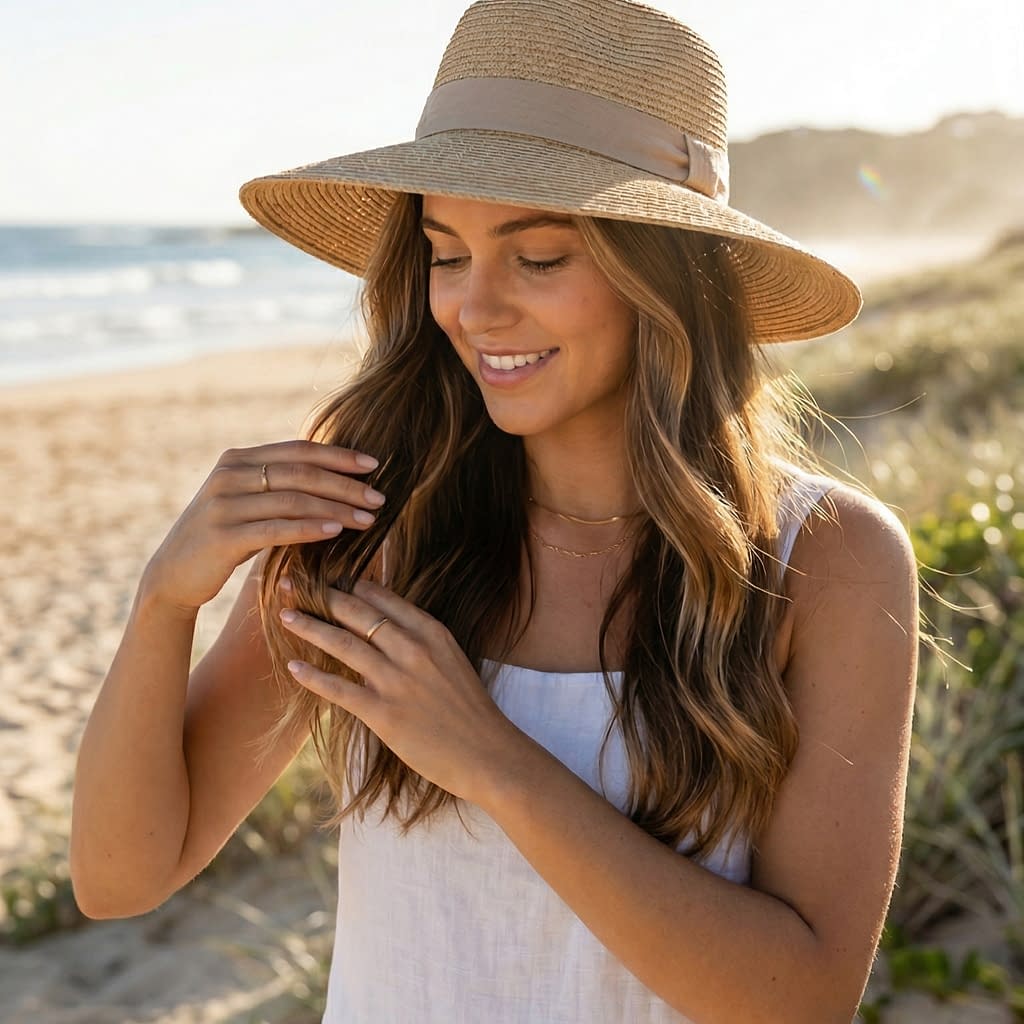
Weekly masks can help refill moisture, soften rough strands, and support color retention. Dyed hair in summer usually needs extra care because it loses hydration faster.
What a good mask should do
- Add moisture
- Improve smoothness
- Help reduce breakage
- Support shine
- Make hair easier to manage
Step by step: weekly mask routine
- Wash hair gently.
- Apply the mask from mid-length to ends.
- Leave it on for the recommended time.
- Rinse with cool water.
- Follow with a leave-in protector if needed.
Best ingredients in masks
- Shea butter
- Argan oil
- Keratin
- Aloe vera
- Coconut milk
- Protein, if hair is weak
A once-a-week mask can make a big difference in how polished and vibrant your color looks.
Common Summer Hair Care Mistakes That Ruin Hair Color
Some habits quietly make fading worse. Avoiding them is just as important as using the right products.
Mistakes to avoid
- Overwashing dyed hair
- Using harsh sulfate shampoos
- Skipping heat protectant
- Spending long hours in the sun with uncovered hair
- Leaving chlorine or saltwater in the hair
- Brushing harshly when hair is wet
- Applying too much heat during blow-drying or styling
Step by step: how to fix your habits
- Reduce wash frequency.
- Replace harsh products with color-safe ones.
- Protect hair before sun exposure.
- Rinse after beach or pool time.
- Be gentle when detangling.
Small mistakes repeated all summer can undo even the best salon color.
Long-Term Habits to Keep Dyed Hair Vibrant All Summer
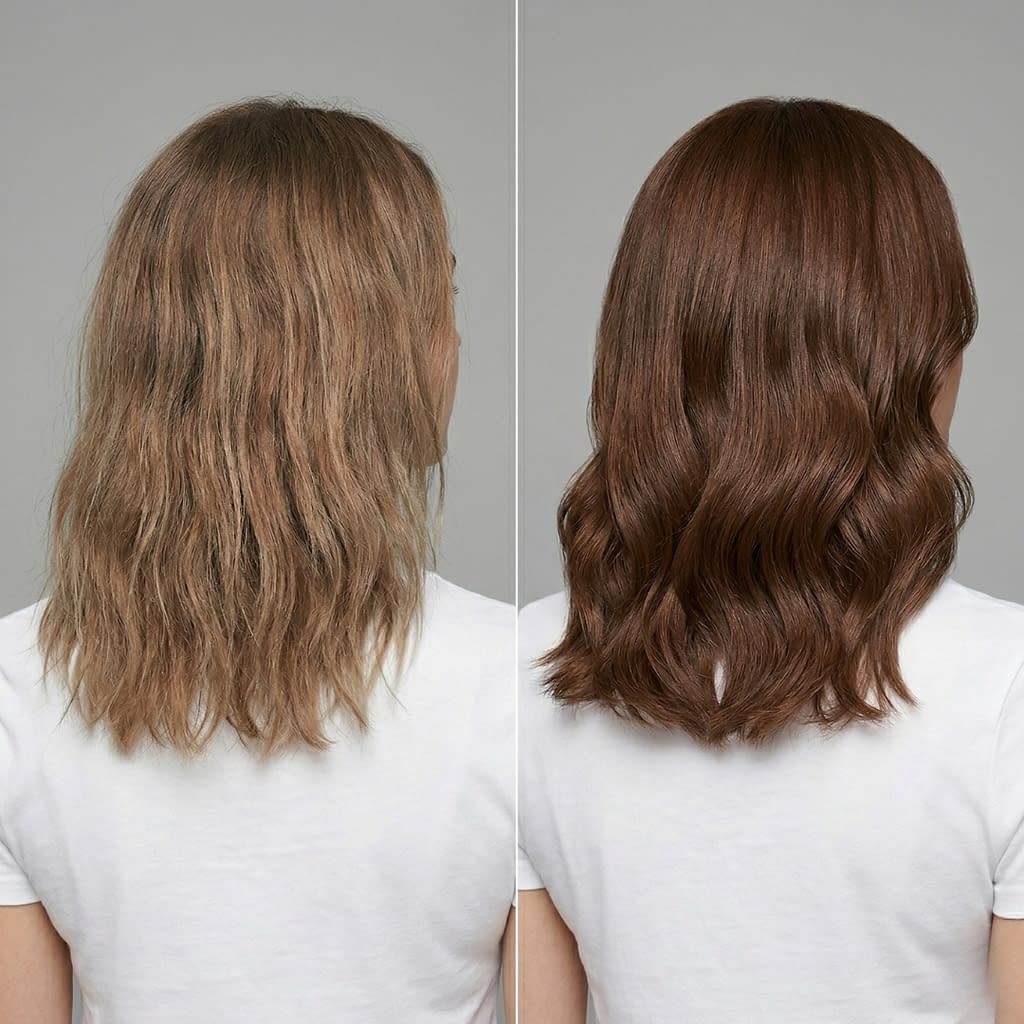
Keeping dyed hair bright all summer is about consistency. One good wash day will not save color if the rest of the week is rough on the hair.
Long-term habits that help
- Use color-safe products regularly
- Keep hair moisturized
- Protect against UV exposure every time you go outside
- Trim dry ends when needed
- Limit hot tools
- Refresh color with glosses or toning treatments as needed
Step by step: build a summer color routine
- Wash gently and less often.
- Use UV protection before outdoor time.
- Deep condition weekly.
- Minimize heat styling.
- Reassess your hair every couple of weeks and adjust as needed.
When you treat dyed hair with regular care instead of emergency repair, the color stays vibrant much longer.
Final Words
Summer sun can be tough on dyed hair, but fading does not have to be part of the season. Once you understand how UV rays, heat, washing, and water exposure affect hair color, it becomes much easier to protect it with the right routine.
The best results come from simple, consistent habits: use color-safe products, protect your hair before sun exposure, wash gently, limit heat styling, and give your hair regular moisture. Whether your shade is blonde, brunette, red, or something bold and vivid, these habits help preserve the richness, shine, and life of your color.
Healthy, vibrant dyed hair in summer is absolutely possible. With a little care and the right routine, your hair can stay glossy, soft, and beautiful all season long.


