

Everyone wants a brighter smile, but “whitening” doesn’t have to mean harsh chemicals or risky shortcuts. Natural brightening works best when it focuses on two things: removing surface stains safely and supporting long-term tooth health. That means consistent oral hygiene, smart food choices, gentle at-home rituals, and realistic expectations. In this guide you’ll find safe methods, step-by-step routines, and warnings about what to avoid so your enamel and gums stay healthy while your smile improves.
Why Teeth Lose Their Natural Whiteness Over Time
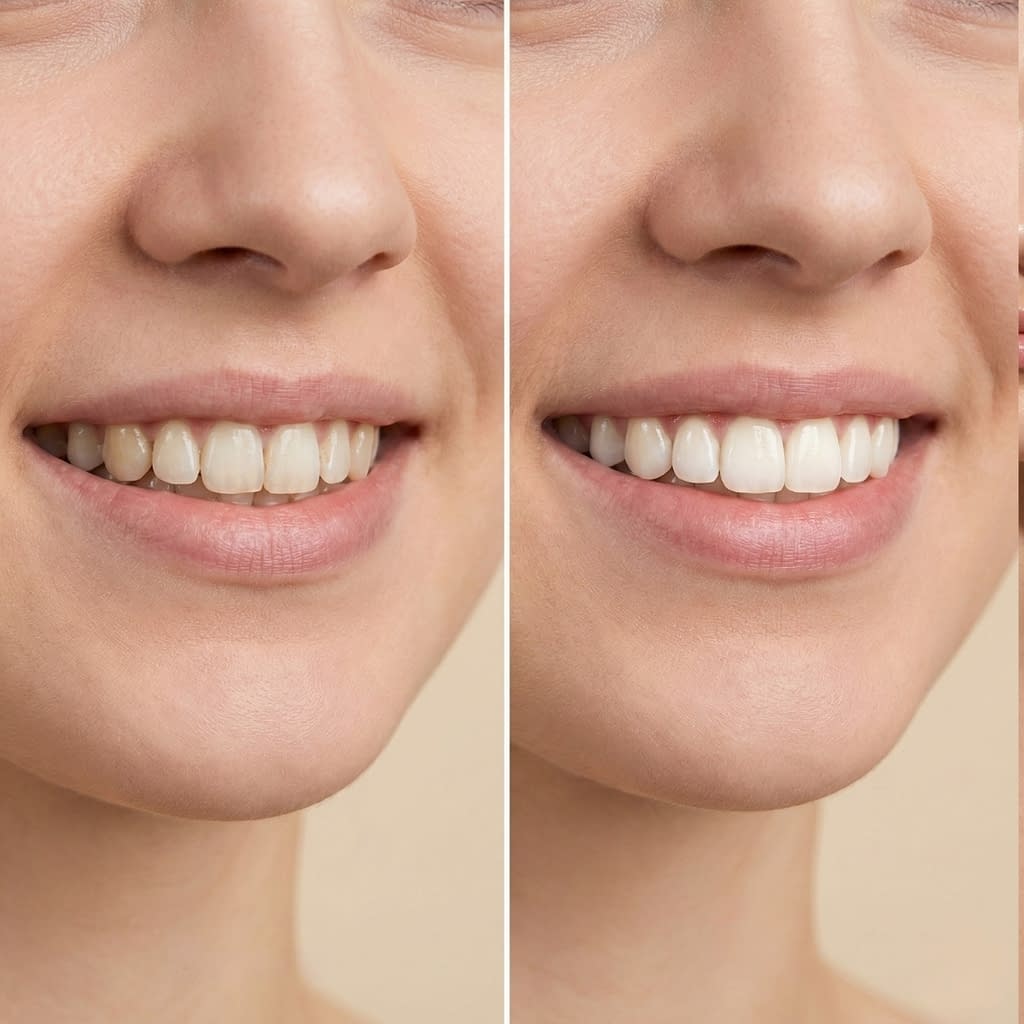
Teeth aren’t naturally snow-white — they have a slight ivory or off-white tone. Over time that tone changes due to:
- Surface staining: Pigments from coffee, tea, red wine, berry juices and tobacco coat the enamel.
- Enamel wear: The outer enamel layer thins with age and abrasion, making the darker dentin underneath more visible.
- Tartar and plaque buildup: Mineralized plaque (tartar) traps stains and dulls the tooth surface.
- Medications and illness: Some antibiotics or health conditions can change tooth color.
- Poor oral hygiene: Infrequent brushing and flossing let bacteria and stains accumulate.
- Diet and lifestyle: Acidic foods, smoking, and sugary snacks accelerate discoloration.
Understanding these causes helps you choose safe, effective ways to reduce staining and prevent future discoloration — without damaging enamel.
Understanding Tooth Enamel and Why Gentle Care Matters
Enamel is the hard, protective outer layer of your teeth. It’s mostly mineral, and once it’s worn away it can’t regrow. That’s why any brightening method must respect enamel:
- Enamel is thin — aggressive scrubbing and abrasive substances remove enamel over time.
- Dentin shows through when enamel thins — making teeth look darker or more yellow.
- Gum health matters — irritated gums can recede, exposing yellow root surfaces.
Bottom line: brightening should remove surface stains and support enamel (not strip it). Always prioritize gentleness over instant results.
Daily Oral Hygiene Habits That Keep Teeth Bright

Consistency beats occasional “fixes.” These daily habits are the foundation of a naturally brighter smile.
Step-by-step daily routine
- Brush twice a day — 2 minutes each time. Use a soft-bristled brush and a fluoride toothpaste.
- Technique: Hold the brush at a 45° angle to the gumline. Use gentle circular motions; avoid heavy scrubbing.
- Floss once a day — removes pigment and plaque between teeth where brushes can’t reach.
- Rinse or swish after staining foods — after coffee, tea, or wine, rinse your mouth with water to reduce pigment time on enamel.
- Use a tongue scraper — removes bacteria and surface buildup that can affect overall mouth freshness.
- Consider a whitening toothpaste occasionally — look for low-abrasion formulas and use them as part of your routine rather than relying on them exclusively.
These habits keep stains from building up and make any natural brightening you do work better.
Foods and Drinks That Stain Teeth (and Smarter Alternatives)
Some tasty things are also tooth-staining. Knowing them helps you reduce staining without giving them up entirely.
Major stain offenders
- Coffee and black tea
- Red wine and dark sodas
- Berries (blueberries, blackberries) and deeply pigmented juices
- Soy sauce, balsamic vinegar
- Tobacco
Smarter swaps & tips
- Drink staining beverages through a straw when possible.
- Rinse or drink water after staining foods/drinks.
- Swap black tea for green tea (less staining, plus antioxidants).
- Limit frequency rather than total intake — sipping coffee all day stains more than one cup in the morning.
- Eat crunchy fruits and vegetables (like apples, celery) that help mechanically scrub teeth.
Diet changes won’t instantly whiten teeth, but they prevent future staining and support long-term results.
Natural Ingredients That Help Brighten Teeth Safely

Certain household or natural ingredients can reduce surface stains when used carefully. Use these sparingly and gently:
- Baking soda (sodium bicarbonate) — mildly abrasive and effective at removing surface stains.
- Use no more than once per week. Mix a small pinch with water into a paste. Brush gently for 1 minute, then rinse thoroughly. Overuse wears enamel.
- Hydrogen peroxide (diluted 3%) — a mild bleaching agent used in many whitening products.
- Dilute 3% hydrogen peroxide with equal parts water and use as a short rinse (swish 30–60 seconds), or mix a few drops into baking soda for an occasional paste. Do not swallow. Limit to 1–2 times per week and stop if sensitivity occurs.
- Strawberry + baking soda mash — strawberries contain malic acid that may help remove stains. Mix mashed strawberry with a tiny pinch of baking soda and apply for no longer than 1 minute, then rinse. Use rarely (monthly) because acids can erode enamel.
- Activated charcoal — marketed as a natural whitener but can be abrasive and messy. If you try it, use very gently and rarely; avoid if you have sensitive enamel.
Important safety notes: Avoid daily abrasive scrubs or acidic home treatments. Always prioritize enamel protection and stop any method that causes pain or increased sensitivity.
How to Use Natural Remedies Without Weakening Enamel
Natural doesn’t always mean safe. Use this step-by-step checklist to protect enamel:
- Limit frequency — use abrasive or acidic DIY methods no more than once per week (or less).
- Use soft bristles and gentle pressure — heavy scrubbing removes enamel faster than the product itself.
- Rinse thoroughly after any home treatment — residual acids or abrasives should be washed away.
- Wait after acidic foods/treatments — don’t brush immediately after citrus or acidic masks; wait 20–30 minutes so enamel reharden.
- Alternate with fluoride toothpaste — fluoride helps strengthen enamel if you’re doing occasional whitening.
- Monitor sensitivity — if teeth become sensitive, reduce frequency and talk to a dentist.
- Avoid mixing multiple aggressive methods at once — e.g., no baking soda + charcoal + hydrogen peroxide in the same week.
These rules keep home brightening effective but safe.
Oil Pulling: Benefits and Proper Technique
Oil pulling is an ancient practice that can support oral health by reducing bacteria and improving oral freshness — it’s not a magic whitener, but it can help reduce stain buildup.
How to oil pull safely
- Choose the oil: coconut oil is popular (pleasant taste + antimicrobial properties), or use sesame/olive oil.
- Amount: place 1 tablespoon of oil in your mouth.
- Swish gently: pull and push the oil through your teeth for 10–15 minutes. Keep movements relaxed — don’t gargle or swish vigorously.
- Spit into a trash can (not the sink — oil can clog drains).
- Rinse with water and brush as usual.
Frequency: 3–4 times a week is common. Oil pulling is a supportive hygiene step — combine it with brushing and flossing for best results.
The Role of Diet in Maintaining Naturally Bright Teeth
What you eat affects your teeth from the inside out. A tooth-friendly diet supports enamel health and reduces discoloration risk.
Top nutrients for tooth health
- Calcium & vitamin D — strengthen enamel and bones (dairy, fortified plant milks, leafy greens).
- Phosphorus — found in eggs, lean meats, dairy; supports enamel.
- Vitamin C — supports gum health (citrus, berries, peppers — but rinse after acidic foods).
- Antioxidants — green tea and certain veggies support oral health and reduce bacteria.
Diet tips
- Snack mindfully: crunchy, fibrous foods help clean teeth naturally.
- Limit frequent acidic or sugary snacks that promote enamel erosion and staining.
- Drink water throughout the day to help clear food pigments and maintain saliva flow — saliva neutralizes acid and helps remineralize enamel.
Lifestyle Habits That Dull Your Smile
Certain habits accelerate staining and reduce enamel quality:
- Smoking and tobacco — heavy staining and harms gum health. Quitting is the single best change for oral brightness and health.
- Poor hydration — low saliva leads to more staining and cavities.
- Excessive alcohol — some drinks stain and dry the mouth.
- Neglecting dental visits — professional cleanings remove tartar and deep stains that home care can’t.
Addressing these habits gives the most noticeable, durable improvements.
How Often You Should Try Natural Whitening Methods

Frequency matters. Overdoing at-home methods causes more harm than good.
Safe frequency guide
- Daily hygiene (brushing, flossing, rinsing) — every day, twice daily brush + floss nightly.
- Whitening toothpaste — alternate, not continuously; follow product guidance.
- Baking soda paste — once per week max.
- Dilute hydrogen peroxide rinse — 1–2 times per week max, short duration.
- Strawberry masks, charcoal, or acid rinses — use rarely (monthly or less).
- Oil pulling — 3–4 times per week if desired.
If you’re uncertain, stick to gentle daily hygiene and limit “treatments” to occasional use.
Common Mistakes That Damage Teeth While Whitening
Avoid these pitfalls — they’re common and can cause lasting harm:
- Brushing hard — scrubbing removes enamel faster than most home ingredients.
- Using undiluted hydrogen peroxide or overly strong concentrations — this irritates gums and weakens enamel.
- Daily abrasive scrubs (baking soda/charcoal every day) — enamel loss and sensitivity.
- Mixing multiple aggressive methods (e.g., peroxide + baking soda + charcoal) — cumulative abrasion/acid exposure.
- Ignoring gum health — inflamed gums mean exposed roots and more visible discoloration.
- Expecting instant results — healthy whitening is gradual; impatience pushes people toward risky solutions.
When in doubt, slow down and choose gentler, proven habits.
When to Consider Professional Advice
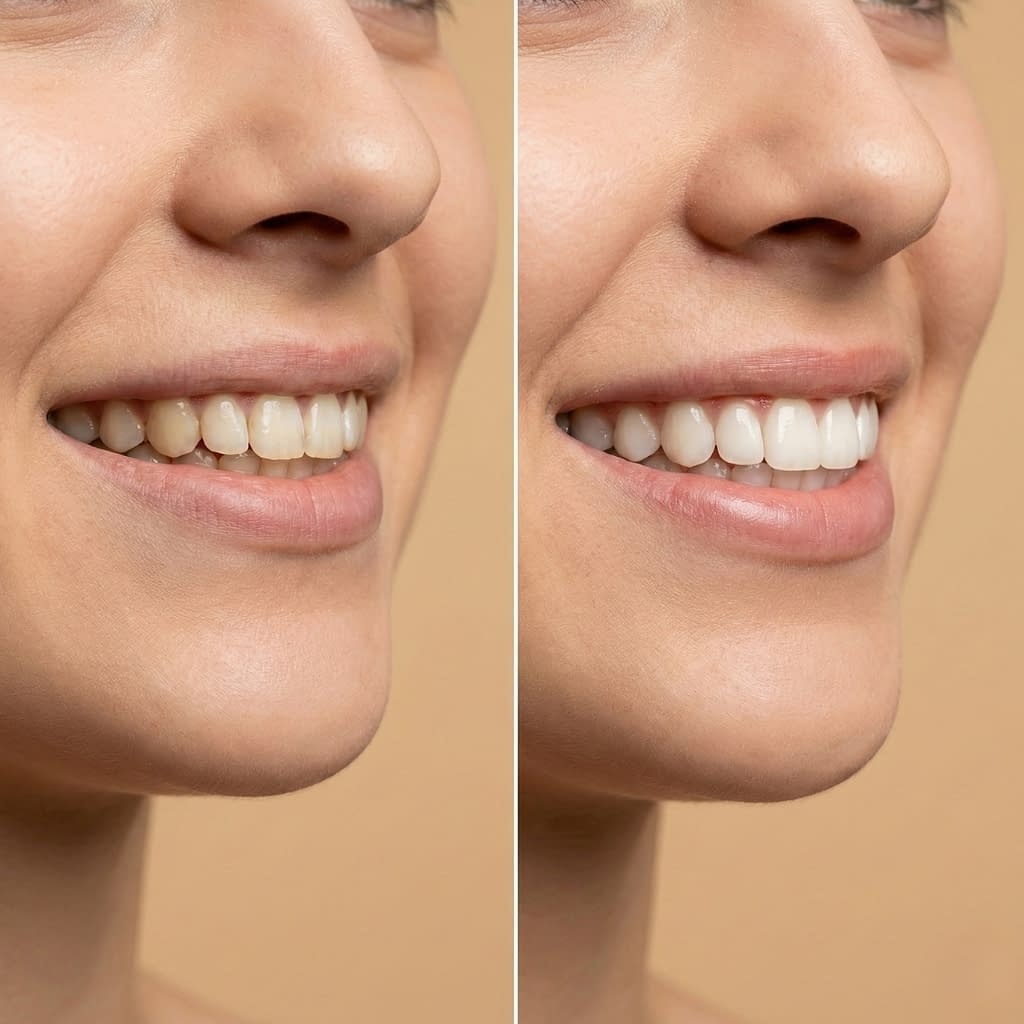
Natural methods help mild surface stains, but see a dentist if:
- Staining is deep or sudden (could indicate internal changes).
- You have repeated sensitivity or pain after home treatments.
- There’s extensive tartar or calculus — professional cleaning removes it safely.
- You want faster, more dramatic whitening — dentists offer supervised bleaching that’s safer for enamel and gums.
- You have dental restorations (crowns, veneers) because they don’t whiten the same way natural teeth do — a dentist can advise on matching shades.
A professional can check enamel health, recommend tailored treatments, and supervise any in-office whitening to protect your teeth.
Final Words
Brightening your teeth naturally is absolutely possible — but it works best when you combine safe at-home care with smart lifestyle choices and realistic expectations. The healthiest “whitening” is slow and steady: remove surface stains gently, protect enamel, support oral and gum health, and minimize staining habits. Use baking soda, diluted hydrogen peroxide, or oil pulling sparingly and correctly; never scrub hard; and prioritize daily brushing, flossing, water after staining foods, and regular dental checkups.
If you follow the step-by-step routines and safety guidelines in this post, you’ll see gradual, reliable improvements — and you’ll keep your enamel and gums healthy for the long run.


