

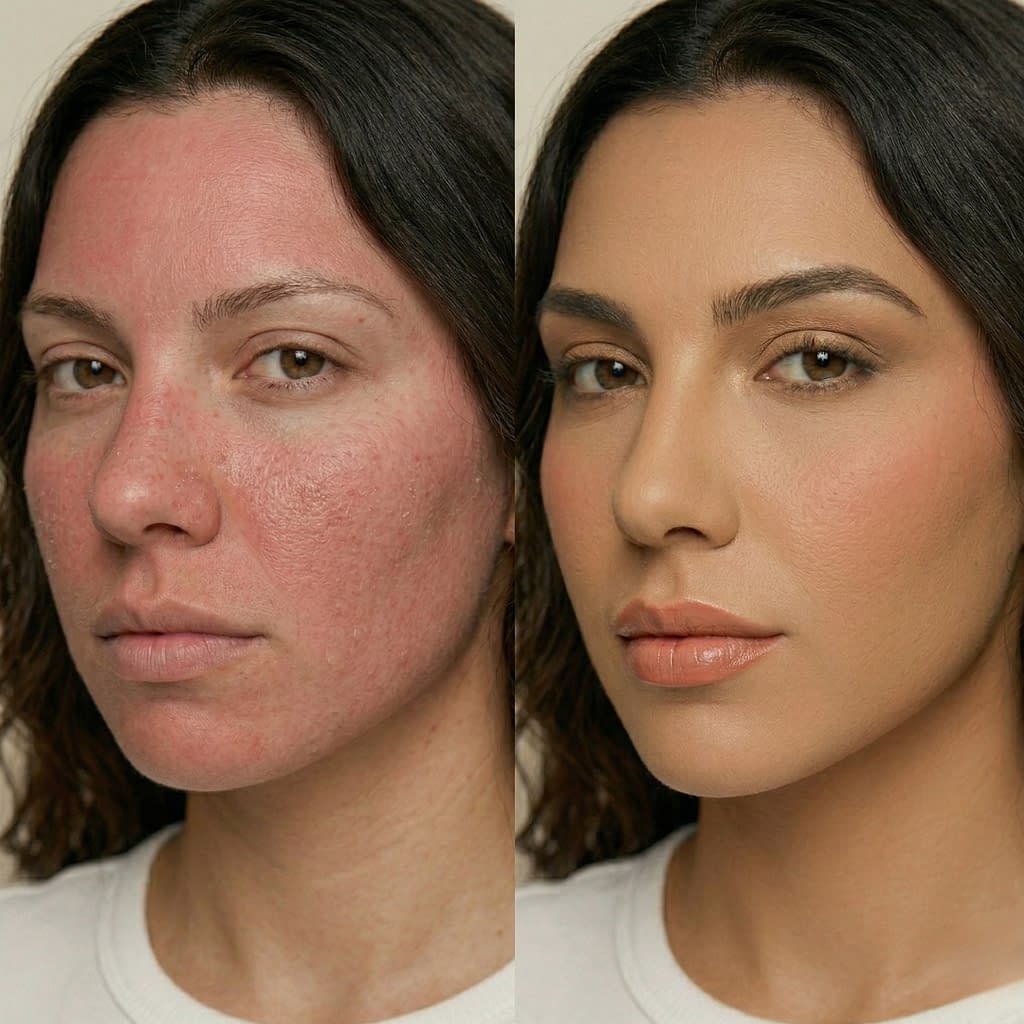
Sunburn redness can be one of the most frustrating skin issues to deal with because it is both visible and uncomfortable at the same time. Your skin may feel hot, tight, tender, or even sting when touched, yet you still may want to step out looking polished and confident. The challenge is that sunburned skin is not just red. It is inflamed, dehydrated, and extra sensitive, which means regular makeup routines can easily make things worse.
That is why covering sunburn redness takes a gentler approach than normal makeup application. The goal is not to pile on thick layers and force the redness to disappear. Instead, the best method is to soothe the skin first, choose calming formulas, and use light, careful techniques that let your skin breathe while still giving you the coverage you need.
In this guide, you will learn how to prepare sunburned skin, which products are least likely to irritate it, how to neutralize redness with color correcting, and how to wear makeup without slowing the healing process. The steps are simple, practical, and designed to help your skin look better while still recovering safely.
Why Sunburn Redness Can Be Tricky to Cover
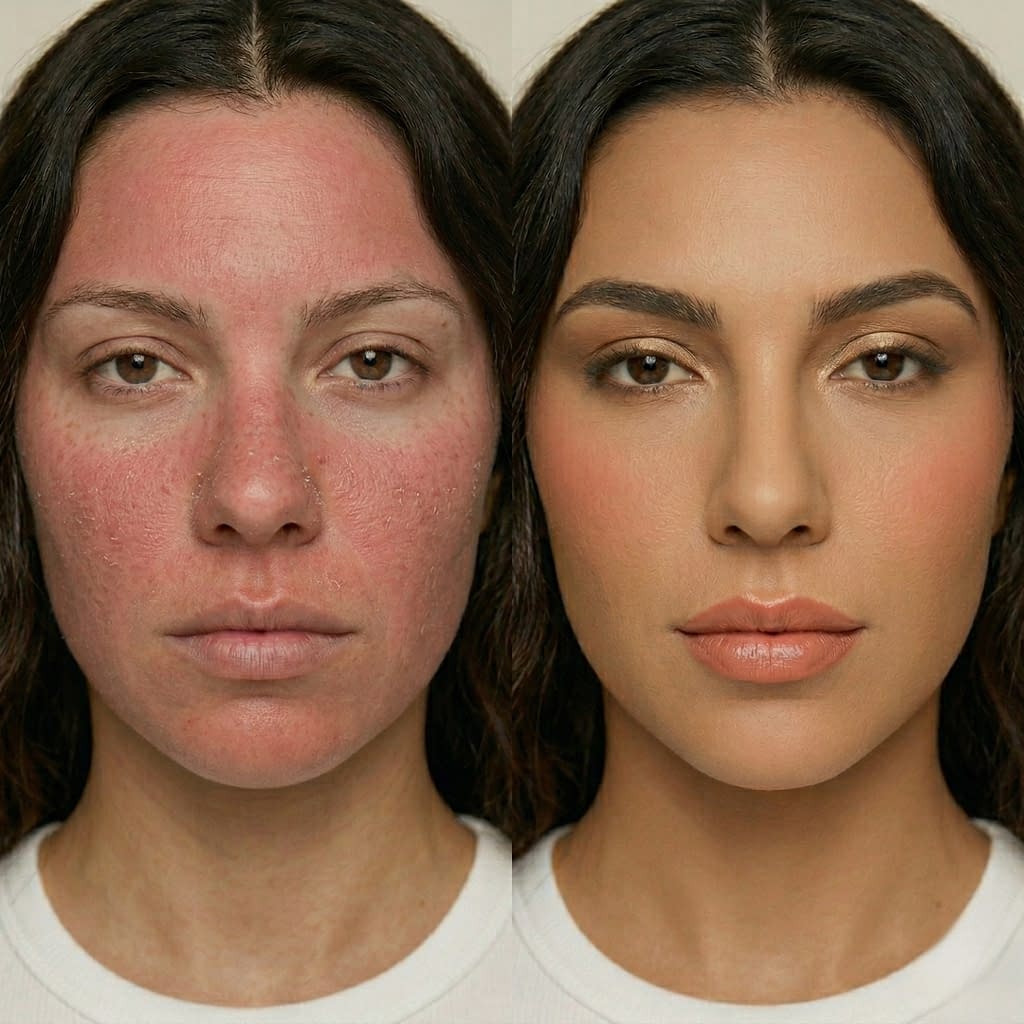
Sunburn redness is harder to cover than regular discoloration because it is caused by inflammation, not just pigment. That means the area is usually warm, sensitive, and more reactive than normal skin. Makeup can cling unevenly, slide off, or make the redness look even more obvious if the skin is already irritated.
Another reason sunburn is tricky is that red skin often has a lot of visual contrast. Even a small amount of redness can stand out against the rest of the face, especially in natural light. If the skin is peeling or blotchy, coverage becomes even harder because makeup settles into dry areas.
Step by step: why it is so difficult
- The skin becomes inflamed after UV exposure.
- Blood flow increases, making the area look red and warm.
- The surface may dry out or peel.
- Makeup may not stick evenly.
- The redness can show through even after applying product.
The key is to reduce the irritation first, then cover carefully.
How Sunburn Affects Your Skin and Makeup Application
Sunburn changes the skin’s texture, moisture level, and sensitivity all at once. These changes affect how makeup sits on the face.
What happens to the skin
- The skin barrier becomes weaker
- Moisture escapes more quickly
- Sensitivity increases
- The surface may become rough or flaky
- Makeup may sting or feel uncomfortable
How this affects makeup
- Primer may not grip the skin properly
- Foundation can look patchy
- Concealer may separate or cake
- Powder can cling to dry spots
- Heavy layers may emphasize peeling
Step by step: what this means in practice
- Sunburn makes the skin less stable.
- Makeup applies less smoothly.
- Dry or inflamed areas show through faster.
- The more product you add, the more texture may show.
- Lightweight, gentle application works best.
When your skin is burned, the usual makeup rules often need to be softened and simplified.
Early Steps to Soothe Your Skin Before Applying Makeup
Before you even think about makeup, your skin needs a little care. The calmer and more hydrated it is, the better your makeup will look.
Step by step: pre-makeup soothing routine
- Get out of the sun and stay in a cool indoor space.
- Rinse your face gently with cool or lukewarm water.
- Pat the skin dry with a soft towel.
- Apply a soothing, fragrance-free moisturizer or gel.
- Let the skin absorb the product before moving on to makeup.
Helpful tips
- Avoid scrubbing or exfoliating
- Do not apply makeup over hot, stinging skin if possible
- Keep the routine very simple
- Wait a bit after moisturizing so products can settle
A soothed base gives you a much better chance of comfortable, natural-looking coverage.
Best Skincare Ingredients to Calm Redness
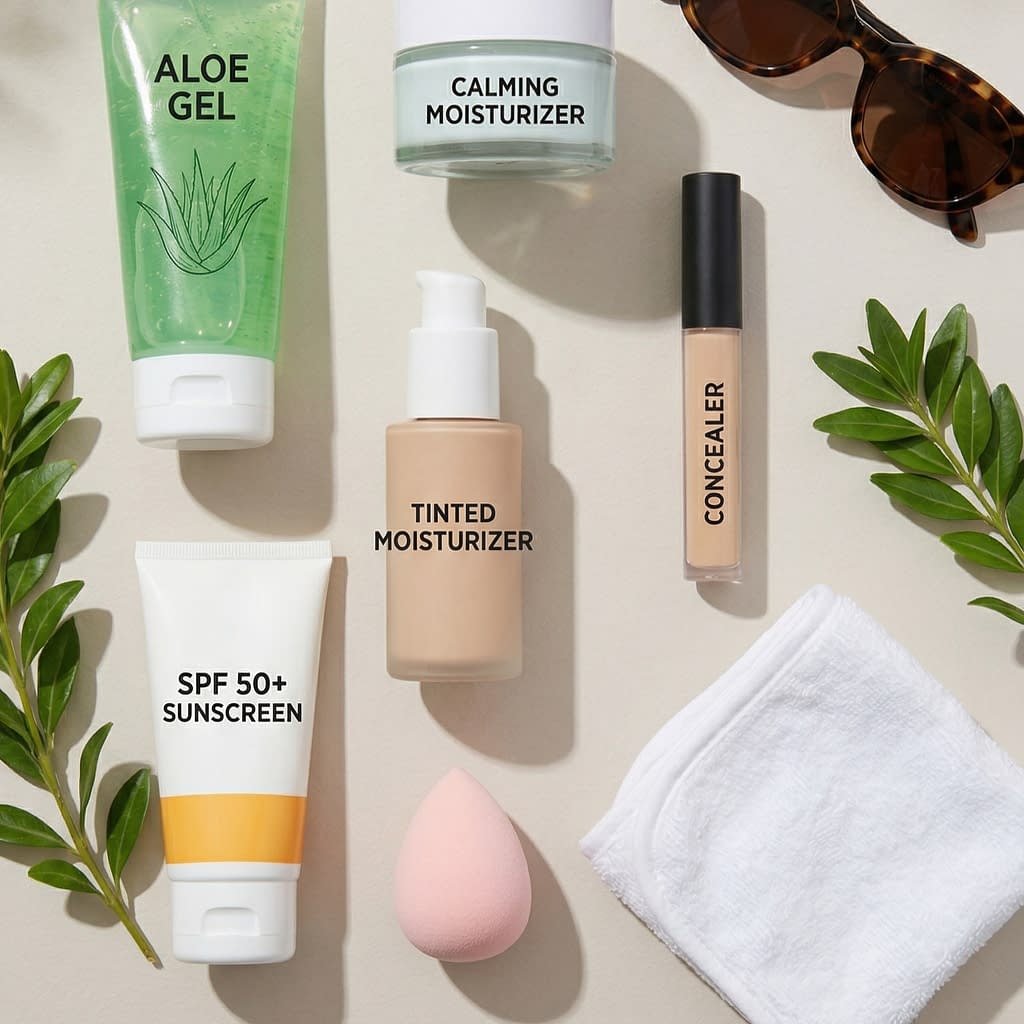
The right skincare ingredients can help the skin feel less hot, tight, and irritated before makeup goes on.
Good calming ingredients
- Aloe vera for soothing
- Centella asiatica for comfort and barrier support
- Panthenol for skin repair
- Glycerin for hydration
- Hyaluronic acid for moisture
- Ceramides for barrier support
- Colloidal oatmeal for sensitive skin relief
- Niacinamide in gentle formulas for calming appearance of redness
Step by step: how to use calming ingredients
- Choose a simple, fragrance-free product.
- Apply it to clean skin.
- Use a small amount so it absorbs well.
- Let the skin rest before applying makeup.
- Stop using anything that stings or burns.
The goal is not to overload the skin. It is to create a comfortable, calm base.
Choosing the Right Primer for Sunburned Skin
Primer can help makeup sit better, but sunburned skin needs a very careful choice. Some primers are too matte, too drying, or too packed with active ingredients.
What to look for
- Hydrating or soothing formulas
- Fragrance-free products
- Lightweight texture
- No strong acids or alcohol-heavy formulas
- A smooth, flexible finish
Step by step: choosing the right primer
- Pick a primer made for sensitive or dry skin.
- Avoid anything that stings on contact.
- Test a tiny amount on a small area first.
- Use only a thin layer.
- Let it settle before applying foundation.
A good primer should help makeup glide on, not aggravate the burn.
How to Pick Concealers and Foundations That Don’t Irritate
Sunburned skin does best with gentle, lightweight coverage. Thick, heavy formulas often cling to dryness and emphasize irritation.
What to look for
- Lightweight or serum-like foundations
- Creamy concealers that blend easily
- Non-comedogenic formulas
- Fragrance-free options
- Buildable coverage instead of full coverage from the start
Step by step: choosing coverage products
- Choose a formula meant for sensitive skin if possible.
- Avoid products with strong fragrance or harsh drying ingredients.
- Pick a shade that matches your skin once redness settles a little.
- Use concealer only where you need it most.
- Build coverage slowly instead of applying a lot at once.
The best makeup for sunburned skin should feel soft, flexible, and breathable.
Techniques to Blend Makeup Gently Over Red Skin
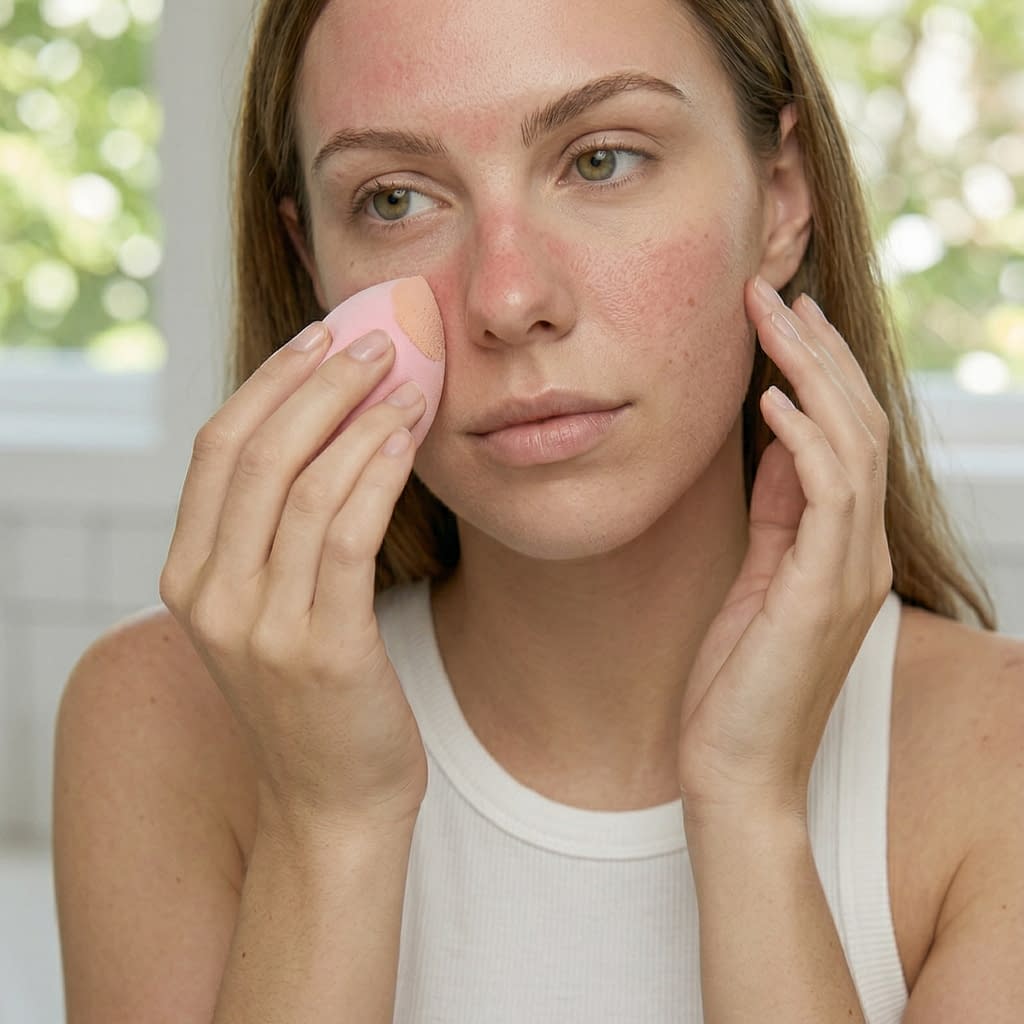
Blending gently is one of the most important parts of covering sunburn. Rubbing or buffing too hard can irritate the skin further and make redness worse.
Step by step: gentle blending
- Apply a small amount of product.
- Use tapping or pressing motions instead of rubbing.
- Blend with a damp sponge, soft brush, or clean fingertips.
- Build the coverage in thin layers.
- Stop as soon as the redness looks even and comfortable.
Helpful blending tips
- Use a tapping motion rather than sweeping
- Keep pressure very light
- Focus on evening tone, not masking every mark
- Blend around peeling areas carefully
Gentle blending helps makeup look smoother while protecting the skin from extra stress.
How to Use Color Correcting to Neutralize Redness
Color correcting can be a very useful tool for sunburn redness because red and green sit opposite each other on the color wheel. A soft green corrector can help neutralize the red before foundation or concealer is added.
Step by step: how to color correct
- Apply a tiny amount of green corrector only to the reddest areas.
- Blend it lightly so it disappears into the skin.
- Do not use too much product or the skin may look dull or gray.
- Layer a light foundation or concealer over it.
- Check the result in natural light.
Important tips
- Use a very small amount
- Keep the layer thin
- Choose a creamy, non-drying corrector
- Avoid using color correction on very raw or peeling skin
Used properly, color correcting can reduce the amount of foundation you need.
Tips for Avoiding Heavy Makeup That Stresses Sunburned Skin
Heavy makeup may seem like the fastest way to hide redness, but on sunburned skin it often backfires. It can look cakey, settle into dry areas, and make the skin feel even more irritated.
Step by step: keep makeup light
- Use only as much coverage as needed.
- Spot conceal instead of covering the whole face.
- Apply thin layers and stop when the redness is softened.
- Keep powders to a minimum.
- Avoid piling on too many products at once.
Why this matters
- Less product means less friction
- Lightweight makeup is less likely to crease
- The skin can still breathe while healing
- The finish often looks more natural
The best look for sunburned skin is usually a soft, skin-like finish rather than a full matte mask.
Setting Makeup Without Causing Flakes or Irritation
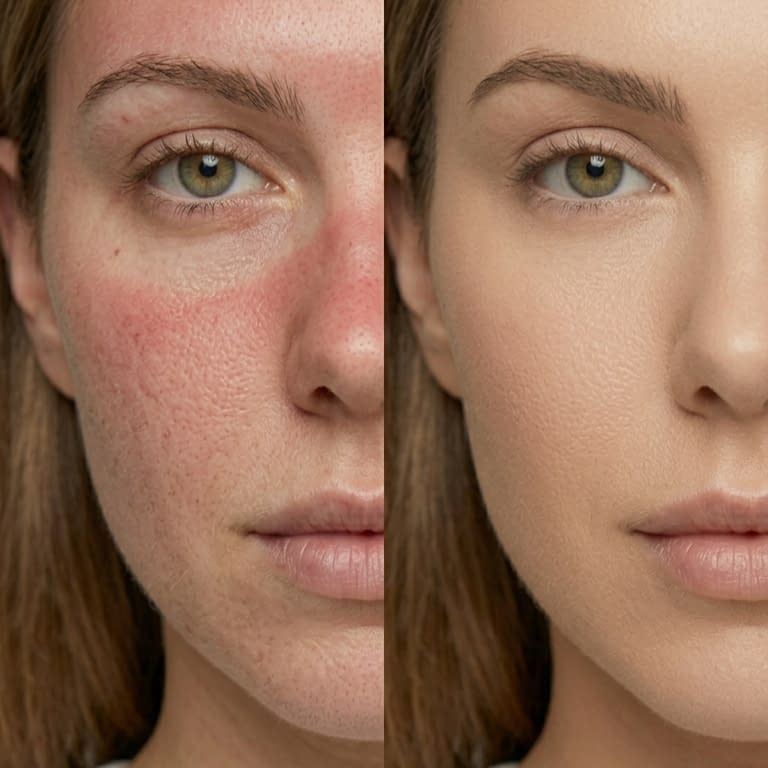
Powder can help makeup last longer, but too much powder can make peeling or dryness much more obvious. The trick is to set only where needed.
Step by step: smart setting
- Wait a moment after applying liquid products.
- Use a very small amount of finely milled powder.
- Press it gently into the skin instead of sweeping.
- Focus only on areas that need control.
- Avoid over-powdering dry or peeling patches.
Helpful tips
- Use a soft brush or puff
- Keep powder away from very flaky areas
- Choose a lightweight, non-drying setting product
- Do not try to completely mattify sunburned skin
A light setting touch keeps makeup in place without making the skin look worse.
Quick Touch-Up Tips for Redness Throughout the Day
Sunburned skin can shift during the day as warmth, oil, and dryness change. Having a few quick touch-up habits can help your makeup stay neat without disturbing the skin.
Step by step: quick touch-up routine
- Blot the skin gently if it becomes shiny or sweaty.
- Reapply a tiny amount of concealer only if needed.
- Tap it into place with a sponge or fingertip.
- Avoid layering too much powder over the area.
- Check for any irritation before adding more product.
Best items to keep nearby
- Compact concealer
- Small sponge
- Blotting papers
- Travel-size soothing mist
- Gentle moisturizer for dry spots
Touch-ups should refresh the look, not create more layers and stress.
How to Protect Your Sunburned Skin While Wearing Makeup
Makeup should never become a reason to keep exposing sunburned skin to more damage. Protection is essential while the skin heals.
Step by step: protect healing skin
- Stay out of direct sunlight as much as possible.
- Wear a hat or use shade when outdoors.
- Reapply sunscreen only if your skin is no longer too irritated for it.
- Choose mineral sunscreen if your skin is sensitive and can tolerate it.
- Remove makeup gently at the end of the day.
Important reminders
- Makeup does not replace sunscreen
- Sunburned skin needs rest and protection
- If skin stings, keep the routine even simpler
Healing should always come before perfect coverage.
Final Words
Covering sunburn redness with makeup is possible, but the best results come from kindness, not force. Sunburned skin is fragile and needs a soft approach that calms irritation first, then adds light coverage only where needed. The more you support the skin barrier, the easier it is to create a natural, even finish.
The smartest routine is simple: soothe the skin, use gentle skincare ingredients, choose lightweight makeup, blend carefully, and avoid heavy layers that can make the burn look worse. Color correcting, when used lightly, can be especially helpful for reducing redness without piling on more foundation.
Most importantly, remember that makeup should never get in the way of healing. If the burn is severe, blistered, or extremely painful, skip makeup and focus on recovery instead. Healthy skin always comes first, and once the redness settles, your makeup will look even better on a calm, cared-for base.


