

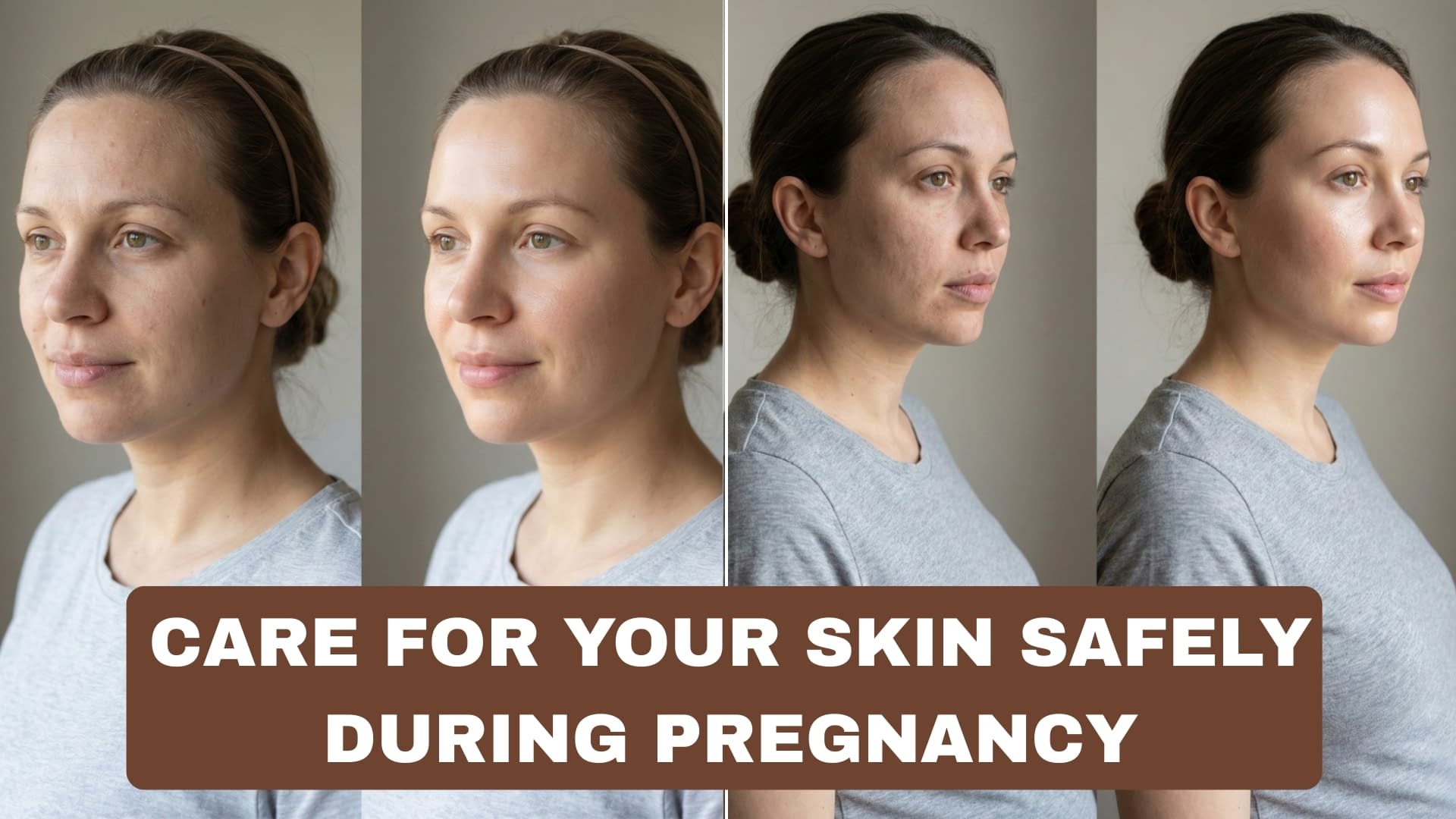
Pregnancy is a beautiful, busy, and sometimes confusing time for your skin. Hormones shift, circulation changes, and previously calm skin can become reactive, dry, oily, or prone to pigmentation. The good news: with a few simple adjustments you can protect your skin and your baby — keep things simple, prioritize sunscreen and gentle care, avoid a handful of risky ingredients, and ask your clinician when in doubt. Below is a comprehensive, practical guide you can paste into your blog.
Why Pregnancy Changes Your Skin
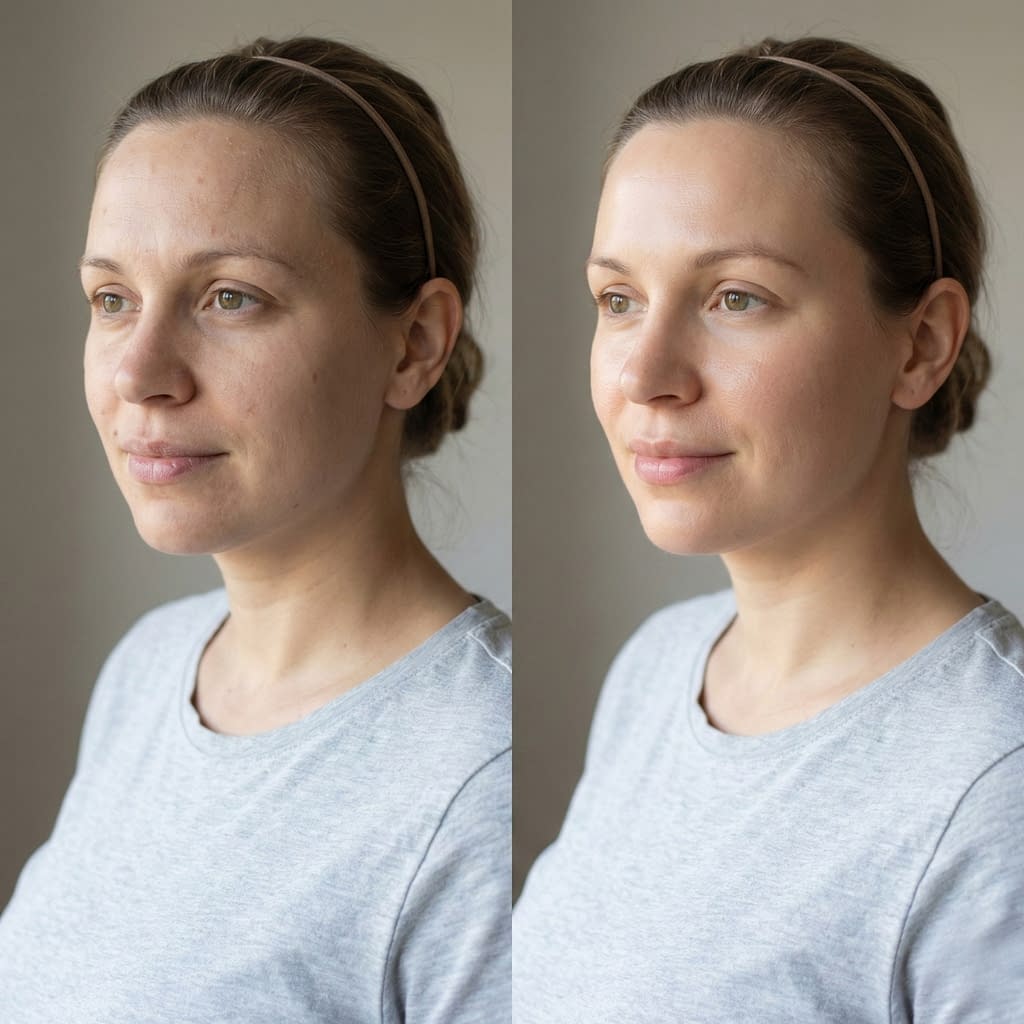
Pregnancy causes major hormonal changes (especially shifts in estrogen and progesterone) and changes in blood flow and immune function. Those shifts can increase oil production, change pigment patterns (melasma), affect how skin heals, and make you more sensitive to certain products. Because the skin barrier and immune responses change, some ingredients are best avoided and other gentle, proven options can be used safely.
Common Skin Changes During Pregnancy (Stretch Marks, Pigmentation, Acne)
- Stretch marks (striae): common on the belly, breasts, hips and thighs as skin stretches. Genetics and the speed/extent of weight gain play the biggest roles.
- Pigmentation (melasma / “the mask of pregnancy”): brownish patches often on the cheeks, upper lip, and forehead triggered by hormones and sun exposure.
- Acne flare-ups: increased oil production (especially early pregnancy and sometimes postpartum) may cause new or worsened acne.
- Increased sensitivity or eczema: some people see dry, itchy patches or flare-ups of pre-existing conditions.
Realistic approach: many of these changes are temporary or manageable — sun protection and gentle routines reduce the worst outcomes.
Hormonal Effects on Skin: What’s Normal and Temporary
- Oiliness and acne often spike because hormones increase sebum production — this can settle after pregnancy or change with breastfeeding and postpartum hormone shifts.
- Melasma is driven by hormones plus sun exposure; it often improves after pregnancy but can persist without strict sun protection and treatment.
- Stretch marks tend to fade but rarely vanish completely without professional treatments. Early barrier care and moisturization reduce itching and may improve appearance over time.
Patient, consistent care is the safest way to manage these changes.
Safe Cleansing Routines for Sensitive, Pregnancy Skin
Gentle cleansing keeps skin healthy and avoids stripping oils that protect the barrier.
Step-by-step gentle cleanse:
- Use a gentle, fragrance-free cleanser morning and night (gel for oily/acne-prone skin; cream or milk for dry or sensitive skin). Avoid aggressive scrubs.
- Rinse with lukewarm water — hot water increases irritation.
- Pat skin dry with a clean towel — don’t rub.
- If you sweat (exercise), rinse afterward to avoid pore-clogging.
- For acne-prone skin, you may use a salicylic-acid cleanser sparingly only after discussing with your clinician — many experts recommend caution with high-dose BHAs (see “ingredients to avoid” and clinician advice).
Keep the routine short and soothing — less is more while your skin is adapting.
Moisturizing Tips That Protect and Nourish Your Skin
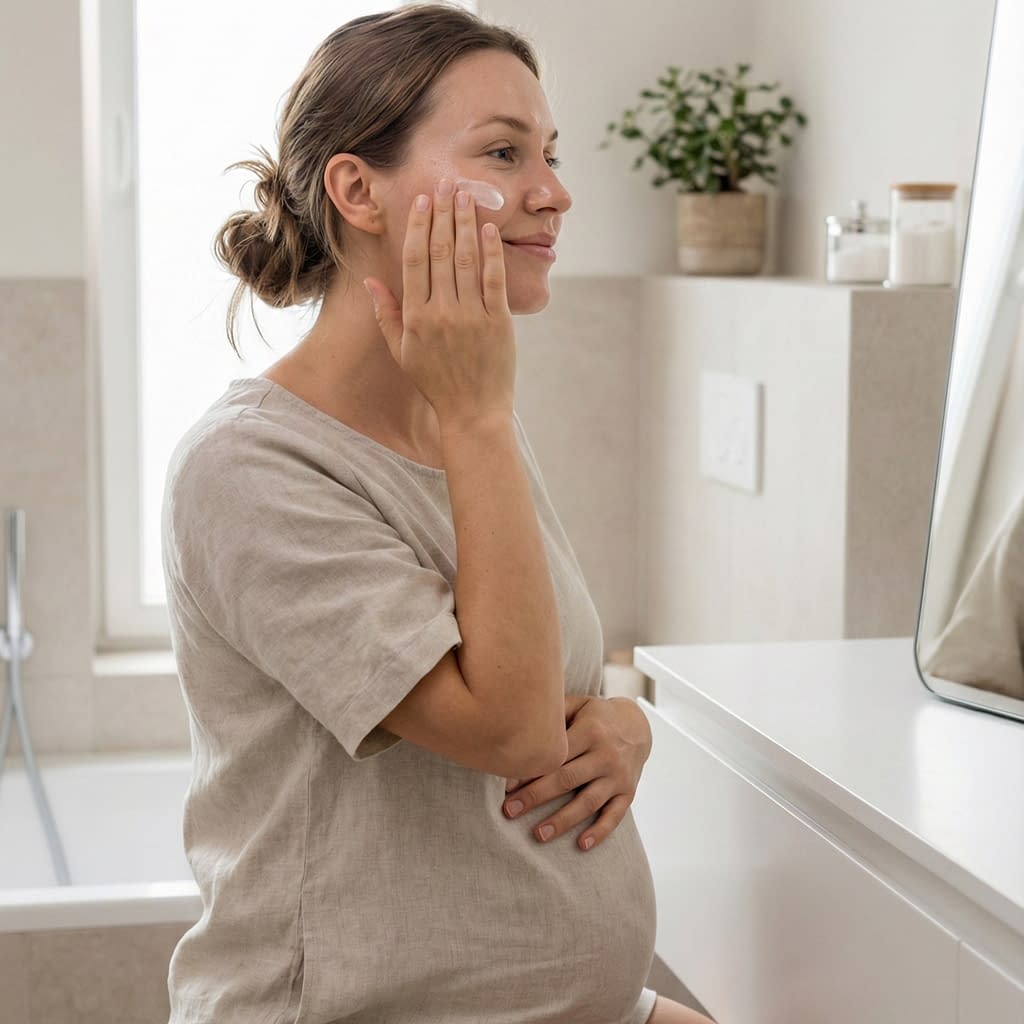
Moisturizers do two jobs: relieve dryness and support the skin barrier.
How to moisturize (step-by-step):
- Choose non-fragranced, non-comedogenic moisturizers. Ingredients like glycerin, hyaluronic acid, ceramides, squalane and dimethicone are great.
- Apply moisturizer right after cleansing to lock in hydration (while skin is slightly damp).
- For stretch-prone areas (belly, breasts, hips), use a richer cream or an oil-based moisturizer and apply twice daily; massage gently as you apply (massage can help comfort and circulation but won’t guarantee prevention).
- If you have eczema, choose products with ceramides and avoid known irritants.
- If you’re acne-prone, pick lightweight gel or lotion textures to avoid clogging pores.
Consistent moisturization supports comfort and helps damaged or itchy skin heal faster.
Sun Protection: SPF Essentials for Pregnant Skin
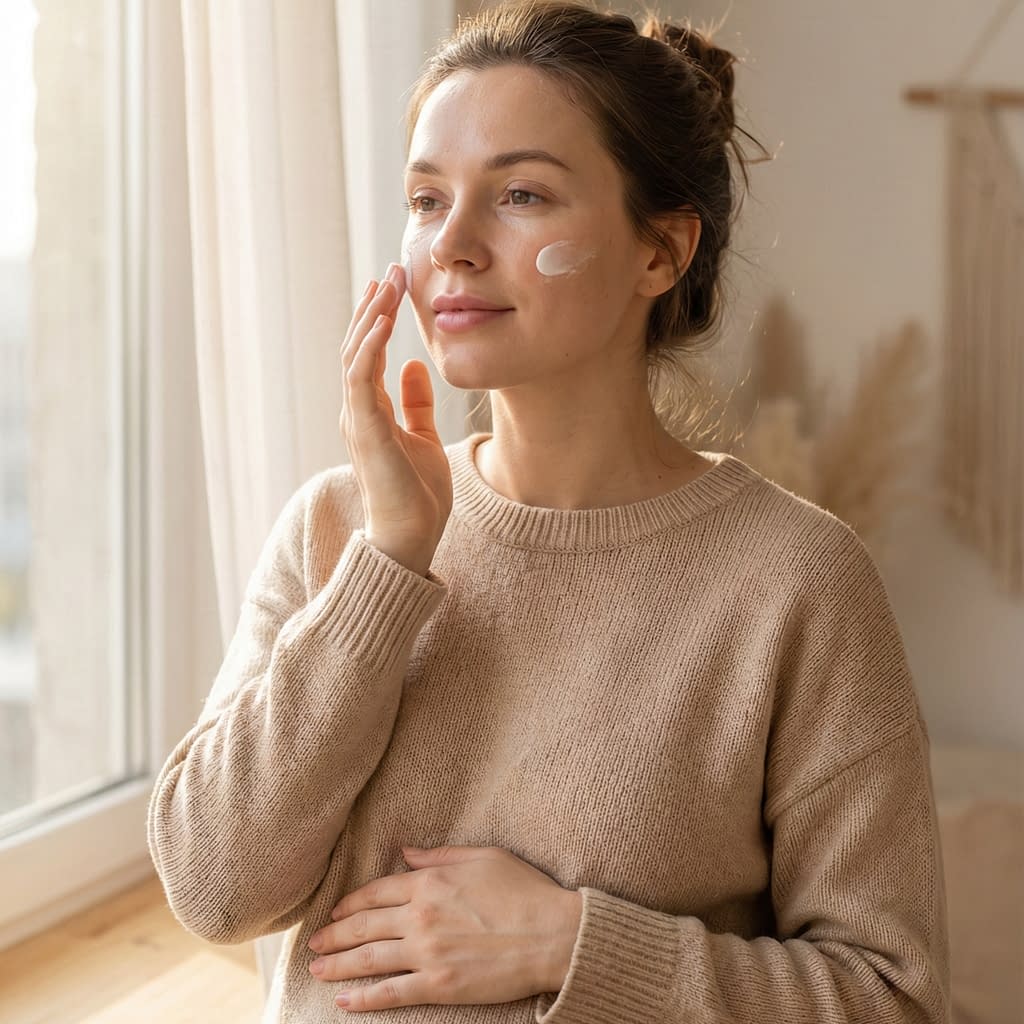
Sun protection is non-negotiable during pregnancy — it’s the single best step to prevent melasma and PIH (post-inflammatory hyperpigmentation).
Quick rules:
- Use broad-spectrum SPF 30+ daily, even on cloudy days. Reapply every 2 hours if outdoors.
- Mineral sunscreens (zinc oxide and titanium dioxide) are often recommended because they sit on the skin and have minimal systemic absorption. They’re effective and gentle for pregnancy.
- Wear hats and seek shade during peak sun hours (10am–4pm).
- Combine sunscreen with sun-smart habits (UPF clothing, sunglasses).
If you’re using prescription lightening for melasma, strict photoprotection is essential.
Ingredients to Avoid During Pregnancy (Retinoids, Salicylic Acid, Hydroquinone)
Some ingredients should be avoided or used only under medical supervision during pregnancy:
- Topical and oral retinoids (vitamin A derivatives) — generally advised against during pregnancy (oral retinoids are clearly teratogenic and topical forms are recommended to be avoided as a precaution). Avoid retinoid-containing products while pregnant or planning pregnancy.
- High-dose salicylic acid (systemic exposure concerns): small amounts in cleansers are often discouraged by some sources; avoid chemical peels or high-concentration salicylic treatments during pregnancy and discuss topical BHA use with your clinician.
- Hydroquinone — often advised against during pregnancy because of limited safety data and higher systemic absorption compared with other topical agents; avoid unless a clinician recommends it and supervises use.
When in doubt, stop and check with your obstetrician or dermatologist — their advice will be tailored to your situation.
Safe Active Ingredients That Actually Work (Vitamin C, Hyaluronic Acid, Niacinamide)
There are several well-studied and commonly recommended actives that are safe and effective in pregnancy:
- Vitamin C (L-ascorbic acid) — antioxidant, brightens PIH and supports collagen; generally considered safe in topical form when used as a stable serum.
- Hyaluronic acid — excellent for hydration and barrier support; safe and useful for all skin types.
- Niacinamide — reduces inflammation, helps even tone, improves barrier and is well-tolerated in pregnancy.
- Azelaic acid — often recommended for acne and pigmentation in pregnancy (considered safe).
- Benzoyl peroxide — many guidelines consider topical benzoyl peroxide acceptable in pregnancy in limited concentrations (eg up to 5%) because systemic absorption is minimal; still consult your clinician before use.
These actives make great building blocks for a pregnancy-safe routine — introduce slowly and stop if irritation appears.
Handling Pregnancy Acne Safely
Acne is common in pregnancy. Use treatments that balance safety and effectiveness.
Safe acne approach (step-by-step):
- Start with gentle cleansing twice daily (see above).
- Spot-treat with benzoyl peroxide (2.5–5%) if prescribed or approved by your clinician — it’s widely considered low risk because very little is absorbed systemically.
- Use topical azelaic acid for inflammatory acne and pigmentation; it’s a safe alternative for many pregnant people.
- Avoid oral isotretinoin and systemic retinoids (definite contraindication). Consult your OB/derm if acne is severe — some prescription options are not pregnancy-safe and will be avoided.
- Moisturize to support the barrier; overly drying treatments can cause rebound oiliness.
- If acne is severe, dermatologists and obstetricians can discuss alternatives and timing for treatment postpartum.
Always check with your healthcare team before starting any new acne medication while pregnant.
Natural Remedies and Home Care Tips for Stretch Marks

No guaranteed prevention, but consistent care reduces itch and may improve appearance over time.
Practical home steps:
- Keep skin well-moisturized on hips, belly, thighs and breasts — apply a richer cream or oil twice daily and massage the area to increase comfort (massage can help with itch and circulation).
- Choose products with safe ingredients: glycerin, shea butter, hyaluronic acid, and oils like squalane or almond oil are good choices for hydration.
- Maintain gradual, steady weight gain as advised by your clinician — rapid stretching increases mark risk.
- Consider gentle retinol-type treatments only after pregnancy (retinoids should be avoided during pregnancy and while breastfeeding).
- Postpartum options (once cleared by your clinician) include topical retinoids and professional procedures (laser, microneedling) for improvement.
Massage + hydration = comfort and potentially less severe-looking marks — but genetics matter most.
How Diet and Hydration Support Healthy Skin During Pregnancy
Nutrition and hydration are foundations for skin health.
Simple, safe tips:
- Stay hydrated — sip water across the day to support skin turgor and general health.
- Eat a balanced diet: lean protein, healthy fats (omega-3s), fruits and vegetables rich in vitamin C and antioxidants support collagen and healing.
- Avoid crash diets and extreme restrictions which can stress your body and skin.
- If concerned about deficiencies (iron, vitamin D), check with your OB — many pregnant people are already on prenatal vitamins that support general health.
Food won’t eliminate stretch marks or melasma, but good nutrition supports repair and resilience.
Safe Exfoliation and Masks During Pregnancy
Exfoliation is helpful but treat it gently.
Guidance:
- Physical scrubs: avoid harsh scrubs on sensitive or inflamed skin; if you exfoliate physically, choose a very gentle scrub and limit frequency (once weekly at most).
- Chemical exfoliants: avoid high-concentration salicylic acid peels and professional chemical peels. Low-concentration AHAs like lactic acid in OTC products are generally gentler, but check with your clinician before starting new acid treatments.
- Masks: use hydrating and calming masks (hyaluronic acid, oatmeal, aloe) rather than strong acid or detox masks.
- Patch-test any active new product and introduce slowly.
When in doubt, skip aggressive exfoliation until after pregnancy or discuss mild options with your dermatologist.
Lifestyle Habits That Help Maintain a Glowing Skin
Small daily habits add up.
Daily habits:
- Sleep as consistently as possible — repair happens overnight.
- Manage stress with short breathing breaks, walks, or sleep hygiene — chronic stress affects skin and hormones.
- Avoid smoking and limit alcohol as recommended by your clinician — both damage skin and overall health.
- Gentle exercise (as cleared by your OB) helps circulation — increased blood flow supports skin health.
These lifestyle choices support healthier skin and a healthier pregnancy.
When to Seek Medical Advice for Skin Concerns
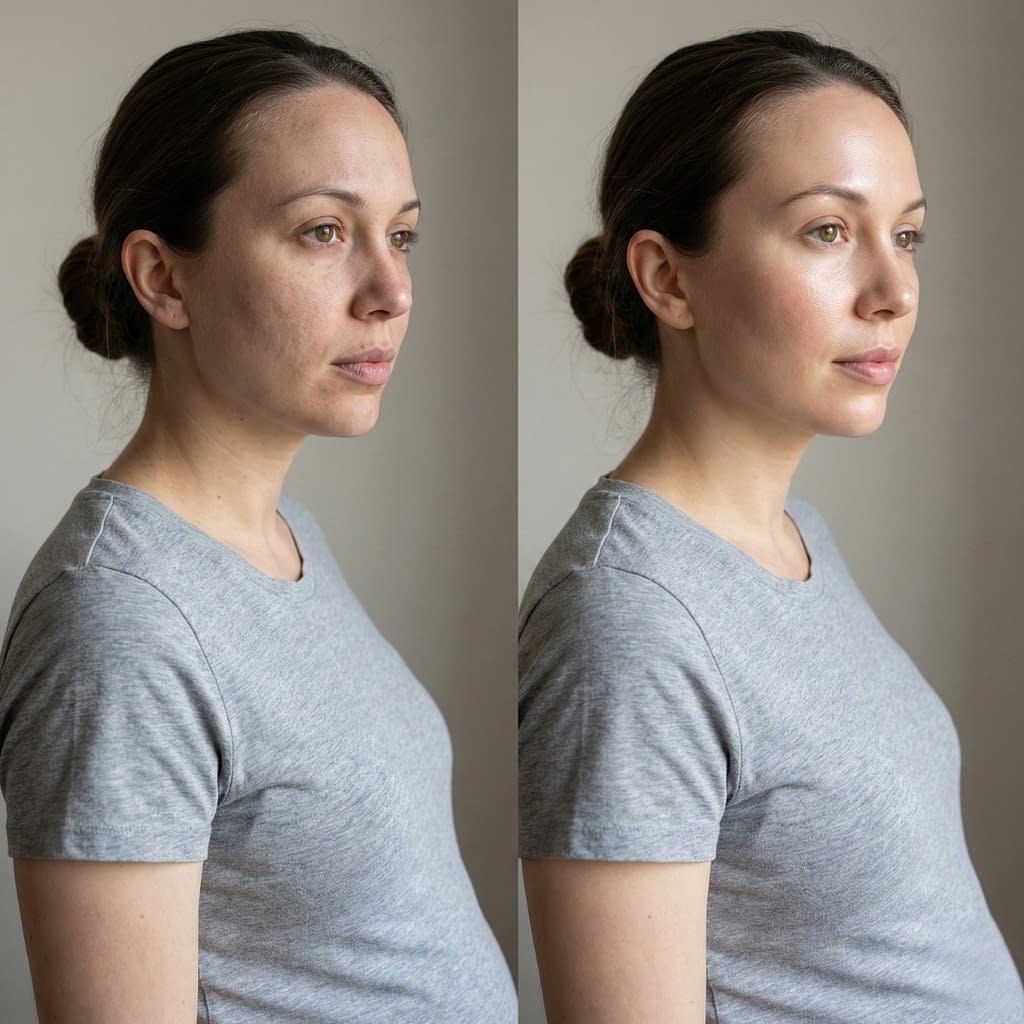
Talk to your healthcare team if you experience:
- Sudden, severe or widespread rashes (possible pregnancy-specific dermatoses).
- Painful, rapidly spreading infections, or weeping lesions.
- Severe acne that is affecting your mental health or is not responding to safe topical care — your clinician can coordinate with dermatology.
- Any new pigmented lesion that changes quickly— get it evaluated.
Your obstetrician/dermatologist can tailor safe treatments and balance risks/benefits for your individual situation.
Final Words
Pregnancy calls for a gentle, evidence-based approach to skincare: protect your skin with mineral sunscreen and sun-smart habits, simplify your routine, avoid known high-risk actives (retinoids, high-concentration salicylic peels, hydroquinone), and use safe, effective alternatives like vitamin C, hyaluronic acid, niacinamide and azelaic acid when needed. Keep moisturized, manage stress and sleep, and contact your healthcare team for any red flags. When in doubt, ask — your obstetrician or dermatologist can offer tailored, up-to-date advice for your skin and your pregnancy.
Quick Reference — Pregnancy-Safe Skincare Summary
- Must use: broad-spectrum SPF 30+ (mineral preferred), gentle cleanser, moisturizer, hyaluronic acid, niacinamide, vitamin C (topical), azelaic acid (where appropriate).
- Avoid: oral retinoids, topical retinoids (recommended to be avoided), hydroquinone, high-concentration salicylic peels.
- Acne: benzoyl peroxide (limited topical use) and azelaic acid are often acceptable but check with your clinician.


