


Early awareness saves lives. Knowing the usual look and feel of your breasts — and checking them on a regular schedule that fits your body — helps you notice changes quickly and get medical advice sooner. A self-check is not a replacement for professional screening (mammograms, clinical exams) but it’s a practical way to stay familiar with your body and act fast if something new appears.
Why Early Awareness Matters
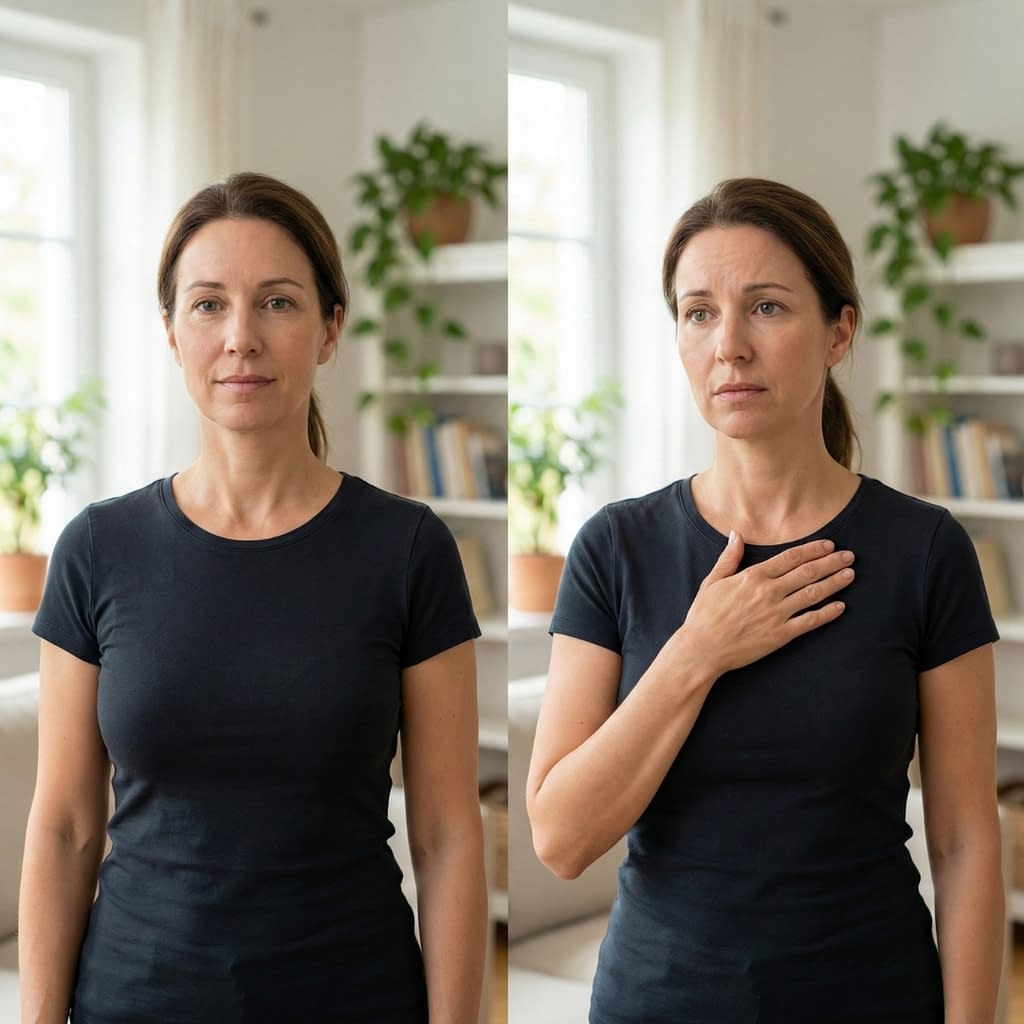
Breast cancer detected at an earlier stage is usually easier to treat and often has better outcomes. Many cancer organizations emphasize awareness and appropriate screening because early detection increases the chance of successful treatment. Knowing what’s normal for your breasts makes it easier to spot unusual changes and get prompt medical evaluation.
Understanding What Breast Cancer Is (briefly and simply)
Breast cancer happens when abnormal cells in breast tissue grow in an uncontrolled way. It can appear in different parts of the breast (milk ducts, lobules, connective tissue) and looks and behaves differently person to person. Because not every change is cancer, the key is to report anything new or different — lumps, skin changes, nipple changes, or persistent pain — to a healthcare professional for evaluation.
Who Should Perform Regular Self-Checks
Anyone with breast tissue — cisgender women, trans men, non-binary people, and others — can benefit from regular self-awareness. If you have higher risk factors (family history of breast cancer, certain genetic mutations, prior chest radiation, etc.), discuss a personalized screening plan with your provider. Self-checks are most useful as a way to notice changes and prompt medical review.
When Is the Best Time to Check Your Breasts?
If you have periods: a good time is about 1 week after your period ends, when hormonal swelling/tenderness is usually lowest — that makes it easier to notice real changes. If you don’t have monthly cycles (post-menopausal, on certain hormones, or irregular cycles), pick one consistent day each month (for example, the 1st of the month). Doing checks on a regular schedule makes it easier to track changes over time.
How to Perform a Breast Self-Exam Step by Step

Below is a clear, practical routine you can follow. You can do the steps in about 5–10 minutes; many people check in the shower and add a quick visual check in front of a mirror.
Step 1 — Visual inspection (mirror)
- Stand undressed from the waist up in front of a mirror with your arms relaxed at your sides. Look for symmetry, changes in shape, dimpling, redness, or puckering.
- Raise your arms slowly overhead and watch for the same changes.
- Check for nipple inversion, crusting, or discharge.
(Do this each month so you notice what’s new or different.)
Step 2 — Hands-on — standing (shower or standing)
- In the shower (or standing), use the pads of your three middle fingers on one hand to gently feel the opposite breast.
- Cover the whole breast from top to bottom, side to side — from your collarbone to the top of your abdomen, and from your armpit to your cleavage.
- Use three levels of pressure: light (for tissue just beneath the skin), medium (for tissue in the middle), and firm (to feel the deep tissue). Move your fingers in a circular motion or an up-and-down vertical pattern.
Step 3 — Hands-on — lying down (more thorough for some)
- Lie flat on your back with a pillow under your right shoulder and your right arm behind your head.
- Using the pads of the left hand’s fingers, press gently but firmly and move in small circles to cover the entire right breast and armpit area.
- Repeat on the left side with a pillow under your left shoulder. This position spreads the breast tissue evenly and can make lumps easier to feel.
Step 4 — Check the nipples
- Gently squeeze each nipple to see if there is any unusual discharge (clear, bloody, or milky if you are not breastfeeding). Note that some milky discharge can be benign, but any new, bloody, or spontaneous discharge should be checked by a clinician.
What to Look for in the Mirror (Visual Changes to Notice)
- New dimpling, puckering, or skin that looks like orange peel (peau d’orange).
- Any change in the shape or size of one breast compared with the other.
- Redness, warmth, or an area that looks irritated and doesn’t go away.
- Nipple that becomes pushed inward or changes position.
If you spot any of these, contact your healthcare provider — early evaluation matters.
How to Check for Lumps or Unusual Thickening
- A lump can feel like a firm marble, a pea, or an area of fullness that is different from the surrounding tissue. It may be moveable or fixed and may or may not be painful.
- Compare both breasts and note anything that feels new, hard, or thicker than the rest of the breast tissue. If you find a persistent lump (present and unchanged for a week or two), schedule a medical check. Many lumps are benign (cysts, fibroadenomas), but they should still be examined.
Changes in Skin Texture or Appearance to Watch For

- Dimpling or puckering of skin.
- Areas that look scaly, crusted, or ulcerated.
- Skin that becomes darker or develops an unusual rash on one breast.
- Any new swelling or an area that looks noticeably different from the rest of your breast. Report these promptly.
Nipple Changes That Shouldn’t Be Ignored
- Nipple inversion that is new (turning inward) or a nipple that has recently changed shape.
- Any unexplained nipple discharge — especially if it’s bloody or on only one side and not related to breastfeeding or known medications.
- Persistent crusting, scaling, or redness around the nipple or areola.
These changes should be evaluated by a clinician.
Understanding What’s Normal vs. What’s Not
Breasts naturally change with your menstrual cycle, pregnancy, breastfeeding, menopause, weight shifts, and aging. They can feel lumpy or tender at certain times of the month. That’s why it’s helpful to check after your period (when tissue is less tender) and to compare changes month to month. Anything new or persistent — not just feelings that waver with your cycle — deserves a professional opinion.
Keeping Track of Changes Over Time

- Keep a simple log (date + brief note) or take a discreet photo (if you’re comfortable) on the same day each month to compare over time. Note any new lumps, skin changes, nipple changes, or pain that does not resolve.
- Bring this record to your medical appointment — it helps clinicians understand whether a change is new, growing, or stable.
When to See a Doctor
Make an appointment if you notice any new lump, thickening, nipple change, unexplained nipple discharge, or persistent skin changes. Also seek care if you have persistent breast pain in one area, or any orange-peel skin texture, sudden swelling, or a growing area of fullness. Don’t delay — prompt evaluation (clinical exam, imaging like ultrasound or mammogram, and possibly biopsy) is the right step. If you’re unsure, a primary care clinician can advise next steps.
Common Myths About Breast Cancer Symptoms
- Myth: “If it’s painful, it’s not cancer.” — Not always true. Some cancers can cause pain, and many benign conditions cause pain too. Any persistent or unusual pain should be checked.
- Myth: “Only older people get breast cancer.” — While risk increases with age, younger people can develop breast cancer too. Know your family history and report changes at any age.
The Importance of Professional Screenings and Checkups
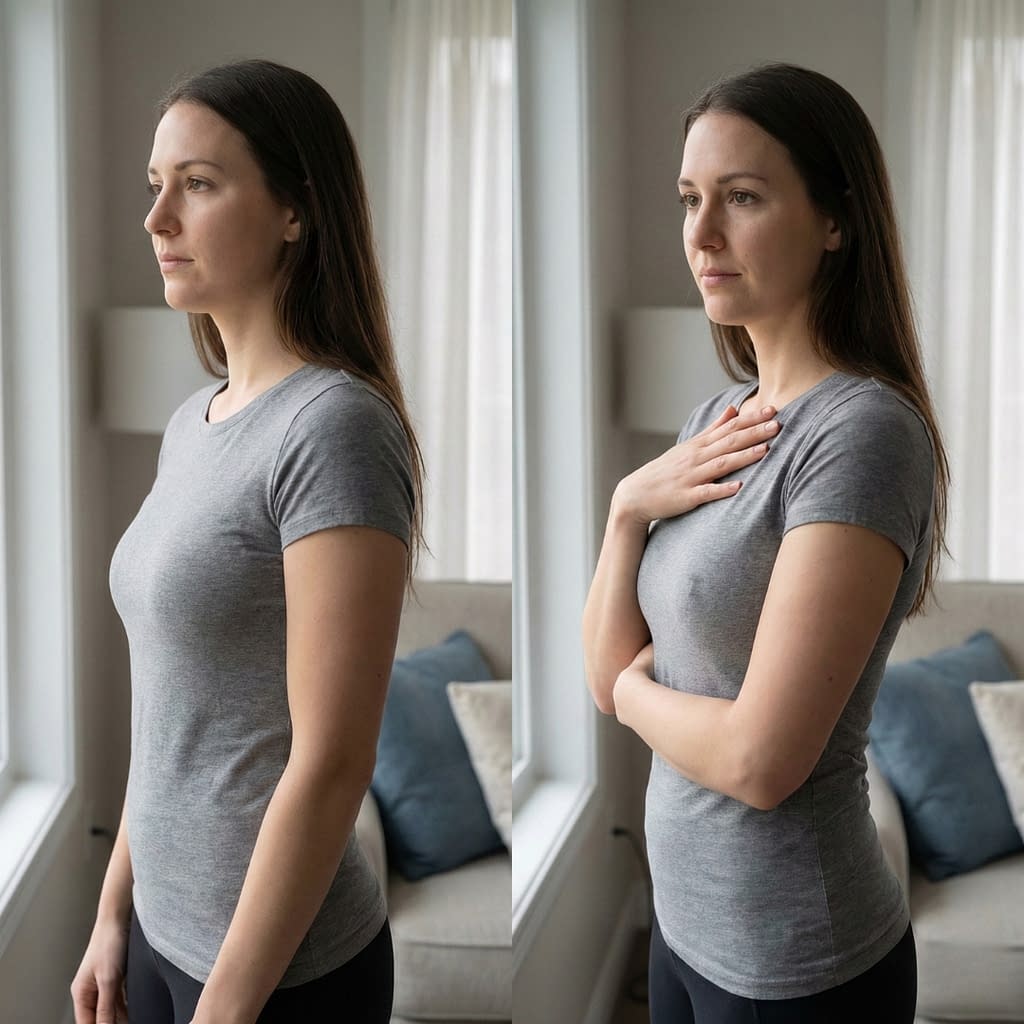
Self-checks increase awareness but are not a substitute for professional screening. Mammograms, clinical breast exams, and personalized screening schedules (based on age and risk factors) are the evidence-based ways to detect cancers early. If you have risk factors or family history, your provider may recommend earlier or more frequent screening and might suggest genetic testing or referrals to specialists.
Final Words
Monthly breast self-awareness is a simple habit that helps you notice changes earlier. Use the steps above, pick a consistent day each month (or right after your period), and report anything new or persistent to a healthcare professional. Keep in mind: most breast changes are not cancer, but getting checked quickly is the best way to rule out serious problems and get reassuring, timely care. If you’re ever unsure, call your doctor — it’s the right move.


