


Acne scars are stubborn, but most of them can be noticeably improved with the right mix of patience, consistent skincare, sun protection, and—when needed—professional treatments. This guide explains what works (and why), how long results typically take, and step-by-step, safe actions you can start today. Because fading scars is a marathon, not a sprint, I also highlight the things that actually slow progress so you don’t waste time or harm your skin.
Realistic Expectations for Scar Fading
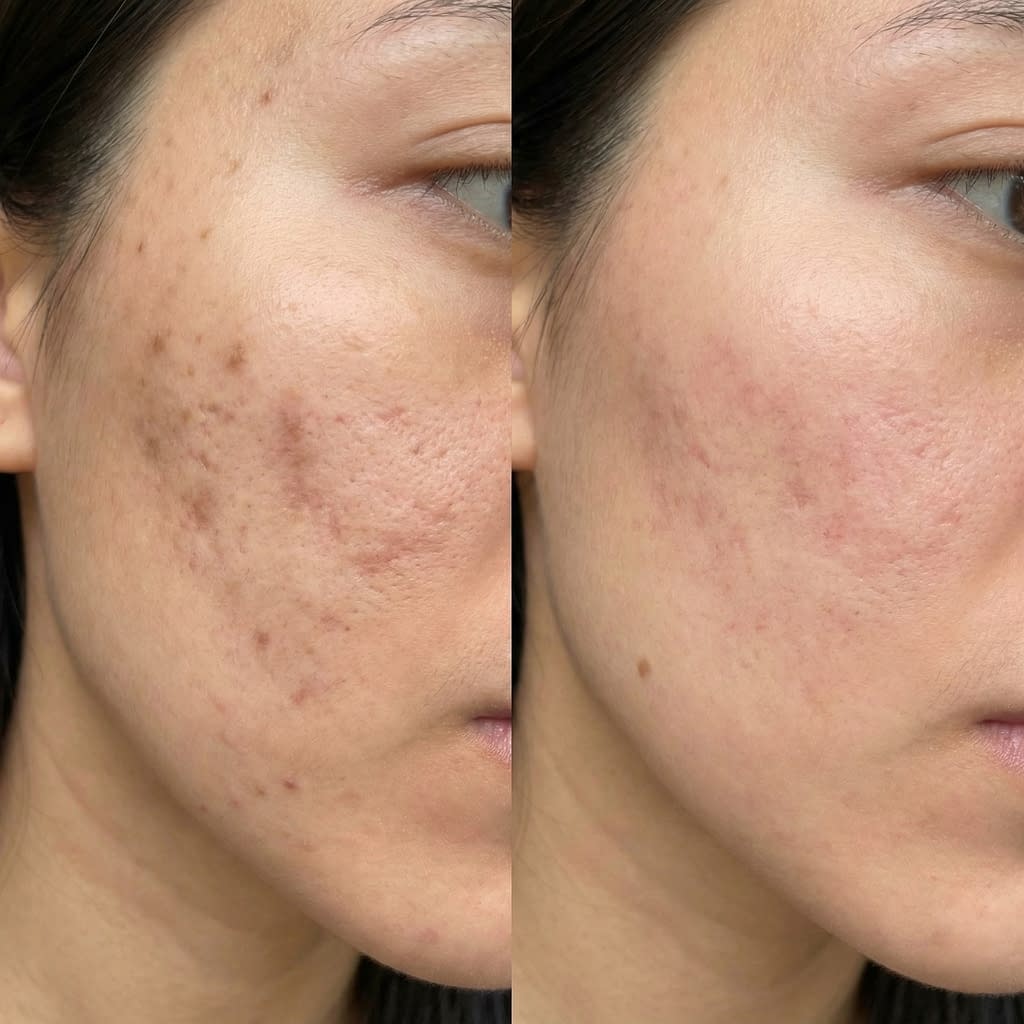
Start here so you don’t get disappointed.
- Time: modest fading from topical care often takes 6–12 weeks to notice and 3–6 months for clearer improvement. Deep texture changes can take many months or require professional procedures.
- What’s realistic: color changes (post-inflammatory hyperpigmentation) usually respond faster than physical dents and pits. Surface marks and pink or purple spots often fade more quickly than atrophic (indented) scars.
- Consistency > intensity: daily, gentle care over months beats aggressive one-off fixes that irritate your skin.
- Combining approaches (topicals + sun protection + gentle resurfacing + in-clinic treatments when needed) gives the fastest, safest results.
If you’re under 18, talk with a parent/guardian and a clinician before starting powerful actives or professional treatments.
Know Your Scar Type: Post-Inflammatory, Atrophic, or Pigmented
Correct identification directs treatment.
- Post-inflammatory hyperpigmentation (PIH): flat dark or red/brown marks left after inflammation. Not true “scarring” of tissue structure; usually responds well to brightening ingredients and sunscreen.
- Atrophic (depressed) scars: pits or indentations from lost tissue (ice-pick, boxcar, or rolling scars). These need resurfacing or collagen-stimulating treatments for best improvement.
- Hypertrophic / keloid scars: raised scars (less common on the face); often need specialist treatments.
Step: take clear photos, compare month-to-month, and if you’re unsure which type you have, show them to a dermatologist.
Why Patience and Consistency Matter More Than Quick Fixes

Quick fixes often make things worse.
- Irritation slows healing — over-exfoliating or using many strong actives at once damages the skin barrier and can darken PIH.
- Real tissue remodeling takes time: collagen production and reorganization are slow biological processes.
- Daily sun protection prevents new darkening and is the single most important thing you can do to protect progress.
Make a realistic plan: pick 2–3 safe, evidence-backed treatments to use consistently, track progress with photos, and give each step at least 8–12 weeks.
Gentle Cleansing: The Foundation for Scar Recovery
Healthy, calm skin heals better.
Step-by-step gentle cleanse routine:
- Use a mild, non-foaming or gentle foaming cleanser morning and night (or once at night and rinse with water in the morning if skin is dry).
- Pat dry with a soft towel — don’t rub.
- Avoid harsh scrubs or rough washcloths on scarred areas. Physical abrasion can prolong redness and PIH.
- If you’re acne-prone, a salicylic acid (BHA) cleanser 2–3×/week can help reduce congestion — don’t combine with other strong acids the same day unless instructed.
Healthy skin = better response to treatments.
Essential Active Ingredients That Help Fade Scars (Vitamin C, Niacinamide, Azelaic Acid)

These are safe, effective starting points.
Vitamin C (L-ascorbic acid or stable derivatives)
- Benefits: antioxidant, brightens PIH, supports collagen.
- Use: morning if tolerated (apply sunscreen after). Start with lower concentrations (5–10%) and patch test.
Niacinamide (2–5%)
- Benefits: reduces redness, evens tone, strengthens barrier, compatible with many other actives.
- Use: morning or night; great for sensitive skin.
Azelaic acid (10–20%)
- Benefits: antibacterial, anti-inflammatory, reduces pigmentation and redness.
- Use: daily as tolerated; good for both acne and PIH, usually well-tolerated by teens (but check with guardian).
Practical combo: niacinamide + azelaic for gentle daytime control; vitamin C in the AM if skin tolerates it (don’t layer vitamin C + azelaic at full strengths without patch testing).
Retinoids and Their Role in Skin Renewal — How to Use Them Safely
Retinoids are among the most powerful at driving visible improvement through increased cell turnover and collagen stimulation.
- How they help: speed skin cell renewal, improve texture, fade pigmentation over months, and can reduce new acne that causes future scarring.
- Which ones: adapalene (a gentler retinoid) is available OTC in many places; tretinoin is prescription.
- How to start (step-by-step):
- Begin once every 3 nights for 2 weeks.
- If your skin tolerates it, increase to every other night, then nightly as tolerated.
- Use a pea-sized amount for the whole face, avoiding eyes and mouth.
- Apply a gentle moisturizer after the retinoid (or apply moisturizer first — the “buffer” method — if you’re sensitive).
- Always use sunscreen the next morning — retinoids increase sun sensitivity.
- Cautions for teens/minors: consult a parent/guardian and clinician before using prescription retinoids; adapalene OTC may be a safer first step under guidance.
Expect gentle peeling and dryness early on; if severe irritation occurs, reduce frequency.
Safe Chemical Exfoliation: AHAs and BHAs for Smoother Texture
Chemical exfoliants help even texture without scrubbing.
- BHAs (salicylic acid) — oil-soluble, enters pores: good for acne and clogged pores. Use 0.5–2% leave-on products or cleansers; start slow (2×/week).
- AHAs (glycolic, lactic acid) — water-soluble, good for surface texture and PIH; lactic is gentler and hydrating. Start with lower concentrations (5–10% leave-on or mild AHA toners) and do 1–2×/week, building up.
- How to use safely (step-by-step):
- Introduce one product at a time and patch test.
- Start with low frequency (1–2×/week).
- Don’t combine multiple strong exfoliants the same night (e.g., retinoid + glycolic) unless advised.
- Always follow with moisturizer and sunscreen.
Chemical exfoliation is often safer and more even than physical scrubs for scarred skin.
Brightening Boosters: How to Use Vitamin C & Licorice Extract
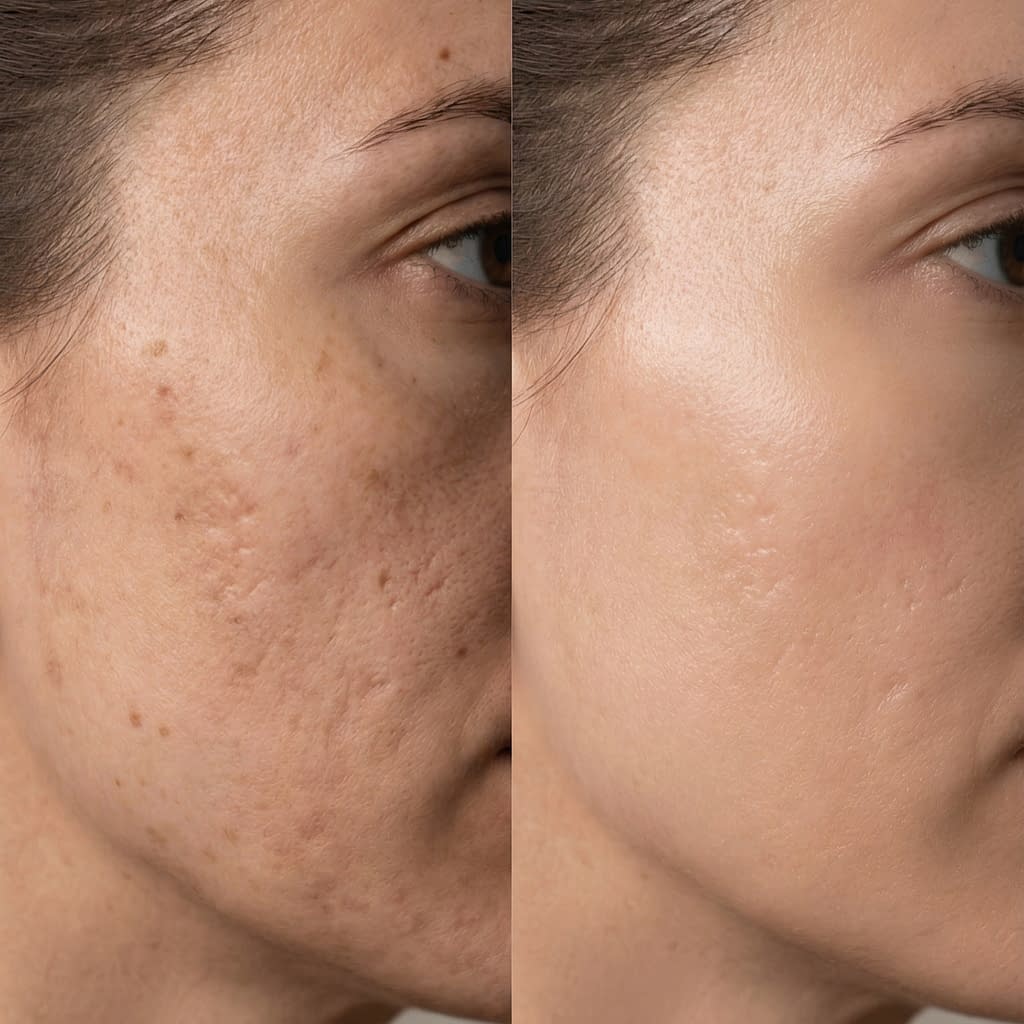
Targeted brightening reduces the visibility of pigmentation.
- Vitamin C: morning use is common; provides antioxidant protection and gradual brightening. Use stable formulations and start with lower concentrations if sensitive.
- Licorice extract / arbutin / tranexamic acid: gentle brighteners that reduce melanin production and are good for PIH. Many are well tolerated and can be used daily.
- Layering tip: if using vitamin C and azelaic or niacinamide, monitor tolerance — many people tolerate combinations well, but patch testing avoids surprises.
Realistic timeline: expect gentle lightening over 8–12 weeks with consistent morning use + sunscreen.
Physical Treatments to Consider at Home (Microneedling Alternatives, Dermarollers — use caution)
Be careful: at-home invasive treatments carry risks, especially for young users.
- Dermarollers / at-home microneedling: these create micro-injury intended to stimulate collagen. Caution: improper use can cause infection, worsen scars, or create new pigmentation. Many dermatologists advise against at-home microneedling, especially if you have active acne or are under 18.
- Safer at-home alternatives:
- Silicone gel sheets/pads for some raised scars (less relevant to acne pits).
- Derma-stamping at very shallow depths is sometimes used, but only under professional guidance.
- Consistent topical regimen (retinoids, AHAs/BHAs, azelaic acid, vitamin C) and at-home LED devices (with tolerance) can support improvement with lower risk.
- Bottom line: if you’re considering needles or aggressive tools, talk to a dermatologist first. Don’t use microneedles over active acne, open skin, or without strict sterile technique.
Professional Options That Speed Results (When to See a Dermatologist)
Office treatments can accelerate and deepen results—ask a dermatologist which fits your scar type.
Common in-clinic options:
- Chemical peels (medium depth): controlled resurfacing to smooth texture and fade PIH.
- Microneedling with radiofrequency: stimulates collagen safely in controlled settings.
- Fractional lasers (ablative & non-ablative): improve texture and deep scarring; powerful but require downtime and sun protection.
- Subcision + filler: for tethered rolling scars, subcision releases fibrous bands; fillers can temporarily lift depressions.
- Punch excision or grafting: for deep ice-pick scars.
- Professional microneedling (in-clinic): safer and more effective than DIY.
- Prescription topicals: higher-strength retinoids or hydroquinone (for pigment) under supervision.
If scars are deep, recurrent, or causing you distress, a consult can map a staged, safe plan. For minors, parental involvement is required for many procedures.
Sun Protection: The Single Most Important Step to Prevent Darkening
You can undo months of work with a few minutes of sun.
- Use broad-spectrum SPF 30+ every day, even on cloudy days. Reapply every 2 hours if you’re outdoors.
- Physical protection: hats, shade, and clothing help.
- Why it matters: UV exposure darkens PIH and slows fading—no topical will work well without strict sun protection.
Make sunscreen your non-negotiable daily habit.
Diet, Sleep, and Lifestyle Habits That Support Skin Repair
Your daily routine affects healing.
- Sleep: aim for consistent, quality sleep — repair processes are active overnight.
- Diet: a balanced diet with protein, vitamin C, zinc and omega-3s supports repair; avoid crash diets.
- Hydration: supports skin function.
- Stress management: chronic stress can worsen acne activity and inflammation; habits like walking, sleep routines, and breathing help.
- Avoid smoking — it impairs collagen synthesis and slows healing.
Healthy habits amplify topical and professional results.
Common Mistakes That Make Scars Worse — What to Avoid
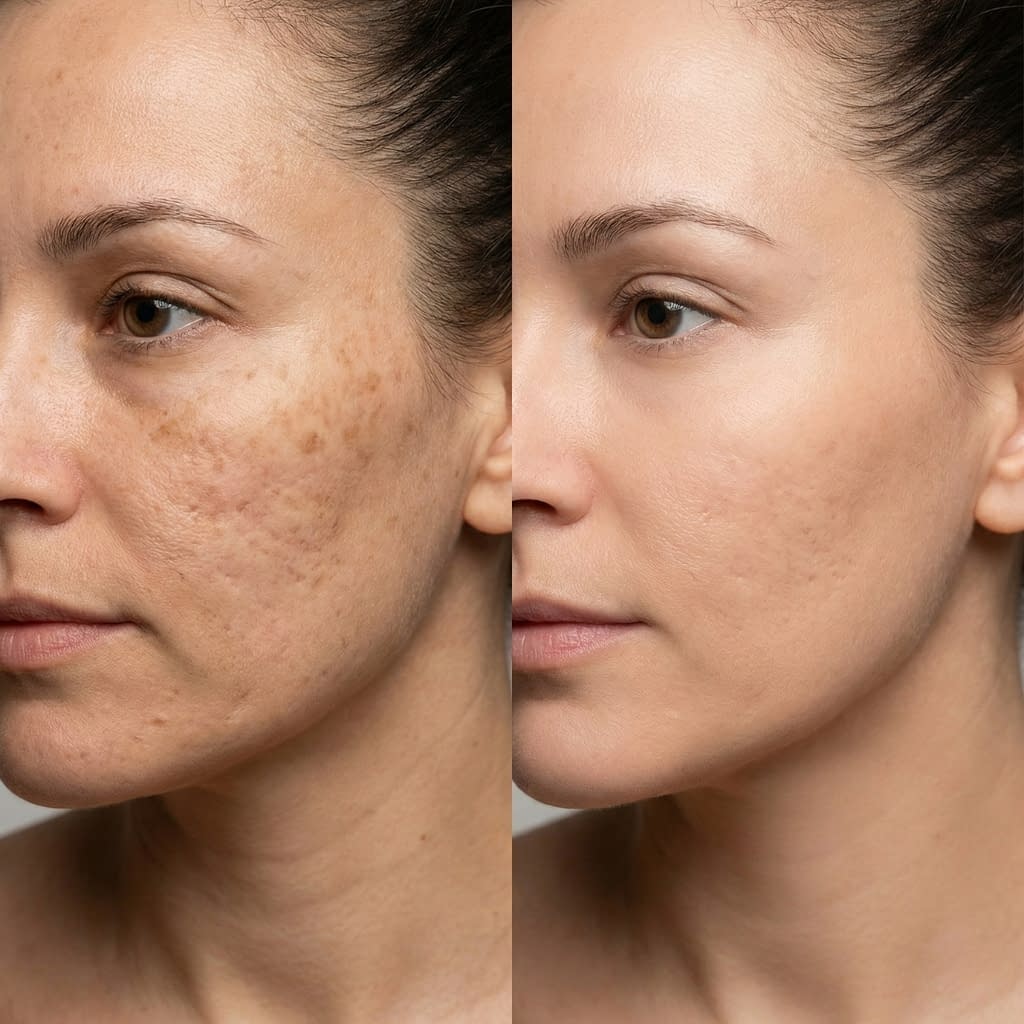
Simple mistakes are surprisingly common.
- Picking and squeezing acne — this causes worse scarring and deeper PIH. If you struggle with picking, ask for support and strategies to stop.
- Over-exfoliating or layering too many strong actives — this causes irritation and worsens pigment.
- Skipping sunscreen — UV exposure locks in PIH.
- Using aggressive at-home devices incorrectly — see the microneedling warning above.
- Expecting instant results — frustration can lead to over-treatment.
If a product causes stinging, redness that worsens, or spreading irritation — stop and simplify your routine.
Final Words
Fading acne scars safely means a smart, steady plan: identify your scar type, use gentle cleansing, protect from sun, introduce effective actives (niacinamide, azelaic acid, vitamin C, and retinoids) one at a time, and be patient. For deeper texture work, professional in-clinic procedures are the fastest route—but they should be planned with a dermatologist.


