

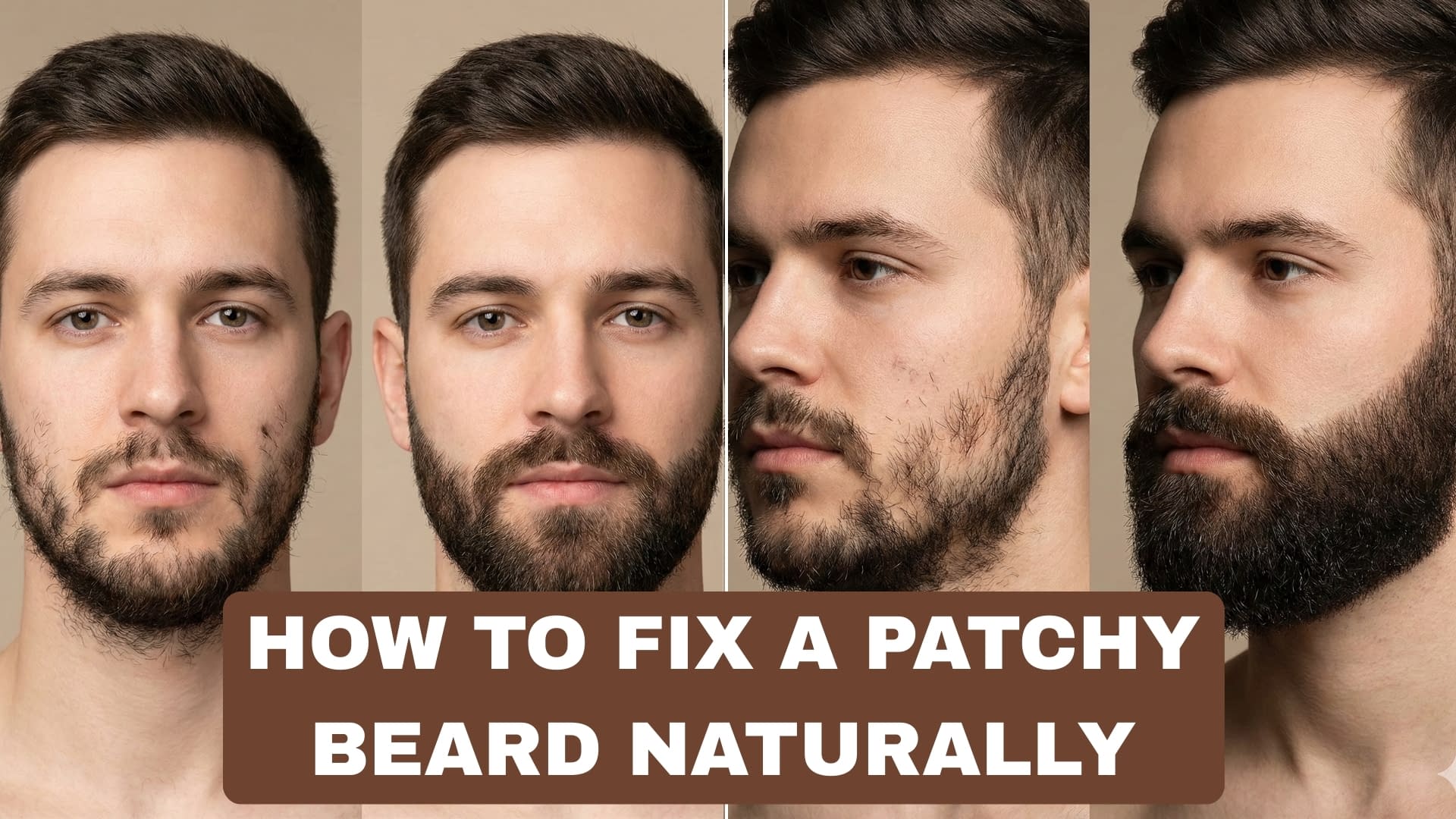
Every beard starts somewhere — even the patchiest ones. If your facial hair grows in unevenly, don’t panic: patchiness is extremely common and often fixable (or disguisable) with a mix of patience, daily care, smart styling and a few lifestyle tweaks. Below you’ll find an honest, practical guide that explains why beards go patchy, what you can realistically change, and step-by-step routines (care, oils, brushing, trimming and styling) to make your beard look fuller and healthier — naturally.
Why Patchy Beards Are More Common Than You Think
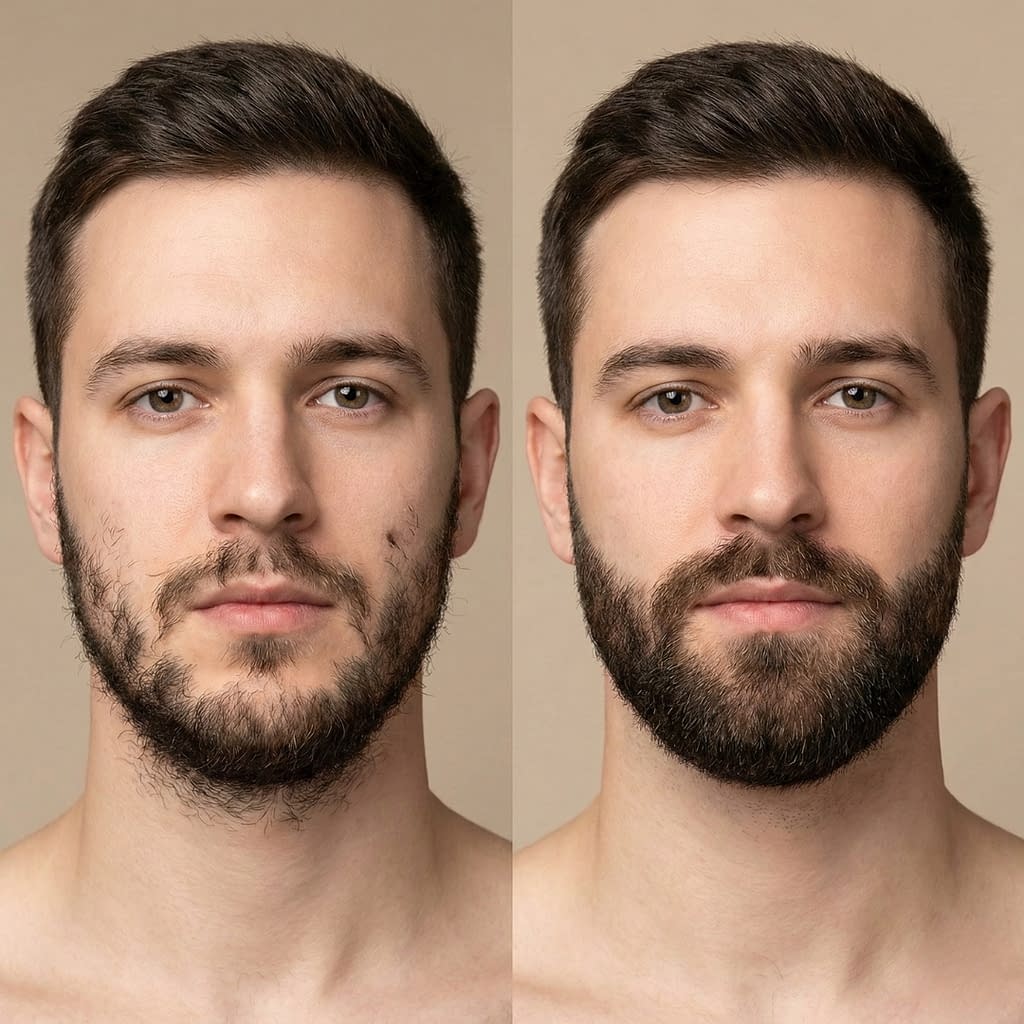
Patchy beards show up for a lot of men and teens. Many think they’re alone, but genetics, hormones and hair-cycle timing mean most men have thin or slower-growing areas at some point. Some spots fill in with time, some don’t — and that’s normal. Being patchy doesn’t mean you can’t have a great-looking beard; it means you might need a slightly different approach: emphasis on density where it exists, encouragement of growth where possible, and styling that camouflages gaps.
Understanding the Real Causes of a Patchy Beard
A few things cause patchiness:
- Genetics: your family genes strongly influence where thicker terminal hairs grow and where thinner vellus hairs stay.
- Hormones: androgens (like testosterone and DHT) influence facial hair growth — different follicles respond differently.
- Hair growth cycle: hair grows in cycles (anagen/growth, catagen/transition, telogen/rest). Some follicles are in rest phase and will come back later.
- Skin/scalp health: inflammation, dermatitis or clogged follicles can slow growth locally.
- Damage: overplucking, harsh chemical exposure, or repeated friction can harm follicles.
Identifying which of these plays a role for you helps prioritize solutions.
Genetics vs. Lifestyle: What You Can Actually Control
You can’t change genetics, but many other factors are under your control and make a real cosmetic difference:
- You can control daily grooming, nutrition, sleep, scalp/scalp-like care for the face (cleansing, non-irritating products), and techniques to make the beard appear fuller.
- You can influence the environment of follicles (reduce inflammation, improve blood flow), which sometimes improves thickness or the look of thickness.
- You can’t reliably change the basic pattern of where terminal hairs form. Accepting the limits is part of getting a better-looking beard without frustration.
How Beard Growth Cycles Affect Thickness and Density
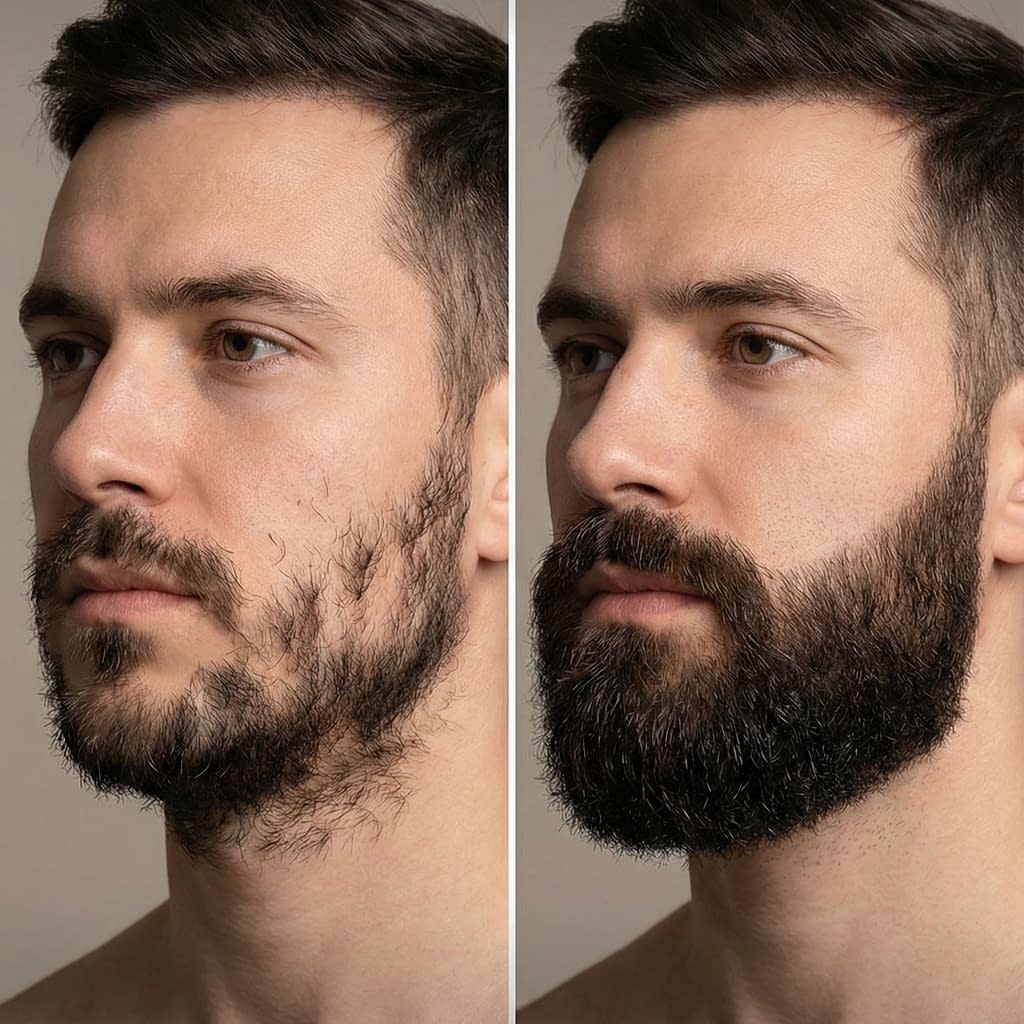
Hair doesn’t grow continuously — follicles cycle. Some follicles on your cheeks may have a short anagen phase (so hairs stay short), while those on the chin may have a longer one (long, thick hairs). That’s why the chin often looks denser. This also means you shouldn’t judge a growth attempt after only a week or two. Real changes — either natural filling-in or response to supportive measures — typically take months because of the cycles.
The Importance of Patience: Growing It Out Before Judging
A practical timeline:
- 0–4 weeks: early stubble, many short hairs still in anagen.
- 4–12 weeks: visible length, some gaps may appear as some follicles are slower.
- 3–6 months: real pattern emerges; some previously thin areas may thicken.
If you want to give growth a fair chance, aim for at least 8–12 weeks without aggressive trimming (just tidy stray hairs). Many guys see improvement after 3 months; others need longer. Patience + consistent care = best odds.
Daily Beard Care Habits That Support Fuller Growth
Consistency beats miracle cures. A simple daily routine you can do in 3–5 minutes:
Morning & night routine (step-by-step)
- Cleanse: wash your face and beard area once daily with a gentle, non-stripping cleanser — if you work out or sweat heavily, wash after workouts as well.
- Moisturize: apply a light, non-comedogenic moisturizer to beard skin — healthy skin supports healthy hair. Aim for ingredients like glycerin, ceramides, or squalane.
- Massage (60–90 seconds): use fingertips to gently massage the beard area in circular motions — this increases local blood flow and feels good.
- Apply beard oil (once daily): rub 2–6 drops between palms and press into hair and skin (more for longer beards). Focus on the skin under the hair. Oils keep hair supple and skin healthy.
- Comb/brush: use a wide-tooth comb then a boar-bristle brush to distribute oils and train hairs into direction. Brushing also stimulates the follicles.
Stick to this for months — the small steps add up.
Natural Oils That May Help Improve Beard Appearance

Oils won’t create new follicles, but they improve hair look and can reduce breakage and dryness so hairs appear thicker.
Use these safely (how-to)
- Jojoba oil: lightweight, mimics skin sebum; good for daily use.
- Argan oil: richer, glossy finish, helps control frizz.
- Castor oil (ricinoleic acid): traditionally used to promote hair thickness; quite viscous — mix a small amount (10–20%) into a carrier oil (jojoba) before applying. Use once or twice weekly to avoid residue.
- Sweet almond or squalane: good light carriers for daily use.
Application (step-by-step)
- Warm a few drops in palms.
- Rub into the skin first, then into hair.
- Comb through and leave (use small towel if oily).
Patch-test new oils and avoid excessive amounts that make hair look limp.
How Beard Brushing and Training Improve Coverage
Training directs hair so thin patches are less visible.
Training & brushing steps
- After oiling, comb hairs outward from the cheeks toward the chin; this helps create overlap and cover gaps.
- Use a boar-bristle brush to flatten and thicken the outer appearance — brush with moderate pressure in the direction you want hair to lie.
- Build a habit: brush daily for 1–2 minutes; consistent direction trains hairs and improves the visual density.
- For stubborn cowlicks, try blow-drying on low while brushing to set the direction, then apply a tiny bit of balm for hold.
Nutrition and Vitamins That Support Healthy Hair Growth

Good food helps hair. No single vitamin is a miracle, but deficiencies slow growth.
Key nutrients & simple guidance
- Protein: hair = keratin. Make sure you eat adequate protein (eggs, fish, poultry, legumes).
- Iron & ferritin: low iron can reduce hair growth in some people — test before supplementing.
- Vitamin D: supports hair cycle; check levels and supplement if low under doctor advice.
- B vitamins (esp. B7/biotin): biotin deficiency is rare, but some people use low-dose supplements; again, test if in doubt.
- Zinc & magnesium: modest roles in hair health.
- Omega-3 fats: fatty fish, flaxseed help skin and hair condition.
Practical approach: eat a balanced diet, consider a basic multivitamin if your diet is poor, and check bloodwork for iron and vitamin D if growth is a major concern.
Trimming Techniques That Make a Patchy Beard Look Fuller
Smart trimming can create the illusion of density.
Trim-for-fullness steps
- Grow slightly longer than you think for 4–8 weeks so you have material to shape.
- Use the guard trick: trim the longer, denser areas (chin, jawline) slightly shorter with a trimmer guard to create a uniform canvas — don’t over-thin fragile areas.
- Scissor-over-comb: for the cheeks, use scissors to blend lengths and remove stray short hairs that draw the eye to gaps. This keeps surface even.
- Define edges: clean cheek and neck lines make the beard look intentional and therefore fuller. A tidy neckline (1–2 fingers above Adam’s apple) frames the beard and gives the appearance of density.
- Avoid shaving shapes that expose gaps: long, narrow styles emphasize gaps, while square-ish/rounded styles tend to hide them.
If you’re unsure, ask a barber for a first professional shaping; after that you can maintain at home.
Styling Tricks to Reduce the Look of Gaps
Camouflage and optical illusions work great.
Styling tips & step-by-step
- Use a beard filler or tinted balm: a tiny amount of tinted beard balm or brow powder in a shade slightly darker than your hair can fill visible gaps subtly. Apply sparingly with a small brush and blend.
- Go for a textured, slightly messy look: texture creates depth; use matte balm or clay to create lift and shadow over patchy spots.
- Keep hair longer where it counts: a bit more length on chin and mustache helps visually connect patchy cheek areas.
- Use contrast: slightly lighter moustache and darker chin can draw the eye downward, away from cheek gaps.
- Play with parting: direct hair across a thin spot as long as it looks natural.
Practice with small changes and photos so you know what hides gaps best.
Common Mistakes That Make Patchiness Worse
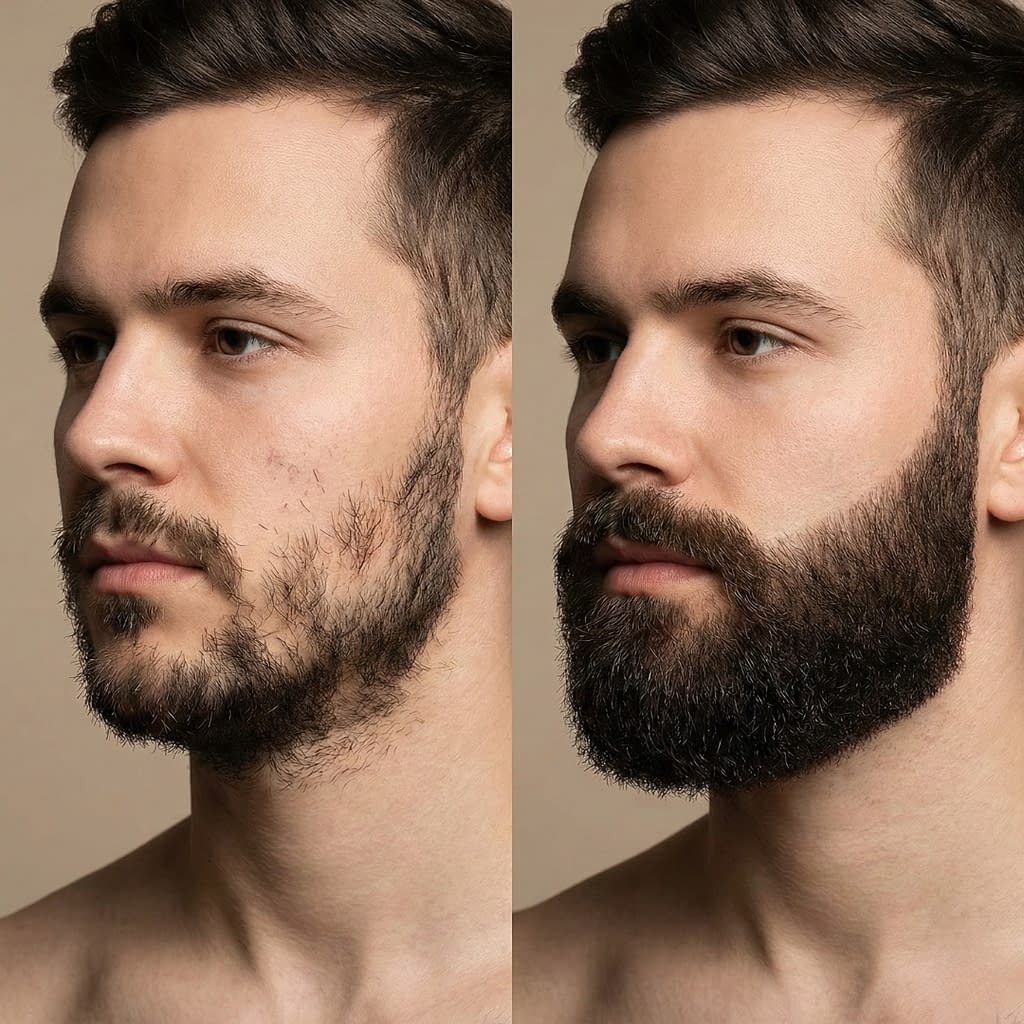
Avoid these traps:
- Over-trimming or over-styling early: cutting frequently in the first months kills the chance for slow follicles to show.
- Frequent hot tools or harsh chemicals: bleaching, constant heat, or strong styling products damage hair.
- Plucking stray hairs obsessively: this can create scarred follicles and permanent gaps.
- Using heavy, greasy products: they weigh hair flat and reduce visual fullness.
- Neglecting underlying skin health: clogged pores, dandruff or dermatitis can suppress growth locally — treat skin problems first.
When to Consider Professional Advice
See a dermatologist or trichologist if:
- You have sudden, patchy hair loss (alopecia areata can cause round patches) — seek medical evaluation quickly.
- You suspect scalp/skin disease (redness, scaling, pus, severe itch) affecting beard follicles.
- You’ve tried lifestyle improvements for 6–12 months and see no improvement but want options (PRP, topical minoxidil, or other medical interventions) — these should be discussed with a professional.
A pro can test hormone levels, iron/ferritin, and recommend safe, evidence-based approaches if natural measures aren’t enough.
Final Words
Fixing a patchy beard naturally is a mix of realistic acceptance and intelligent effort. Start with patience — give follicles time to cycle. Build consistent daily habits: gentle cleansing, skin and beard hydration, targeted oiling, massage and brushing. Eat well, sleep enough, manage stress, and learn simple trimming and styling tricks to make the most of what you have. Most improvements you’ll see are subtle and gradual — but compounding small wins over months yields a beard that looks fuller and healthier without drastic interventions.


