

Foot odor is embarrassing, but almost always fixable. It usually comes from sweat + bacteria + trapped moisture — not “badness.” With the right hygiene, simple home remedies, and a few lifestyle tweaks, you can dramatically reduce or eliminate foot smell without harsh chemicals. Below is a practical, step-by-step guide that explains why odor happens, what actually works at home, and when to see a doctor if the smell persists.
Why Foot Odor Happens and How to Fix It
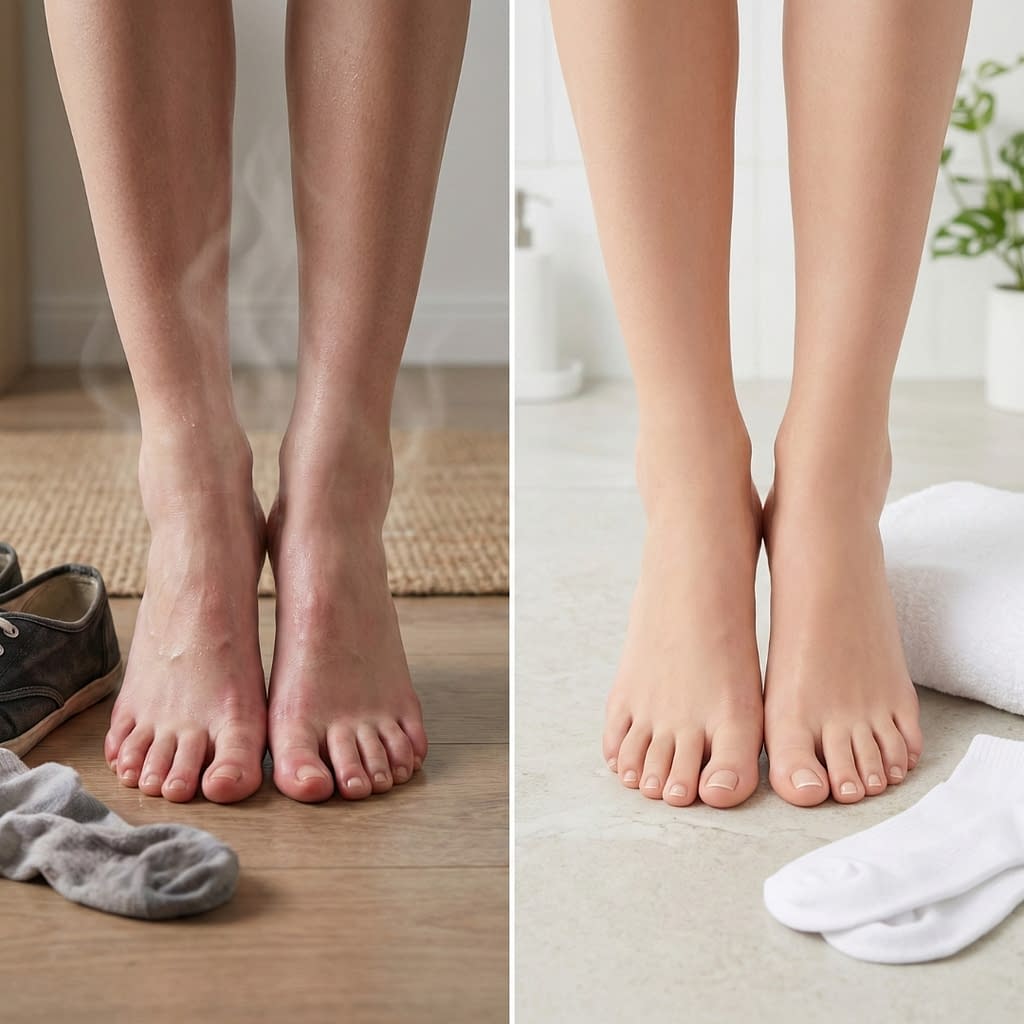
Foot odor is the result of bacteria and fungi breaking down sweat and dead skin, producing smelly compounds. Fixing it means removing the conditions those microbes love: warmth, moisture, and dead skin. The strategy is threefold:
- Clean & dry the feet properly.
- Limit sweat and moisture in shoes and socks.
- Reduce microbial load with safe home remedies and airing footwear.
Quick overview — what you’ll do: wash daily and after heavy sweating, treat with simple soaks or powders, rotate shoes, choose breathable fabrics, and use odor-fighting essentials like baking soda or tea tree oil sensibly.
Understanding the Causes of Foot Odor
Knowing the causes helps you target them.
Main contributors
- Sweat: feet have many sweat glands — sweat itself is odorless, but it creates the wet environment microbes love.
- Bacteria & fungi: microbes break down sweat and skin oils into smelly compounds.
- Dead skin buildup: provides food and hiding places for microbes.
- Trapped moisture: closed shoes and non-breathable socks trap wetness.
- Poor shoe rotation / damp footwear: keeps a warm, moist environment overnight.
Actionable insight: attacking one cause rarely suffices — combine cleaning, drying, and footwear care for the best result.
Importance of Foot Hygiene: Washing and Drying Properly

Proper washing and drying is the non-negotiable base of odor control.
Daily routine — step-by-step
- Wash your feet every day (and after heavy sweating) with warm water and a gentle soap. Spend ~30 seconds on each foot, including between toes.
- Exfoliate 1–2× weekly with a pumice stone or gentle scrub to remove dead skin (don’t overdo it).
- Dry thoroughly: press a towel between toes and along soles — don’t just wipe over the top. Microbes thrive in damp crevices.
- Air time: give feet 5 minutes barefoot in a clean area after drying so any remaining moisture evaporates.
- Keep toenails trimmed and clean — dirt under nails can harbor odor-causing microbes.
Tip: use a separate towel for feet and wash it every 2–3 uses to avoid reintroducing bacteria.
How Sweat Contributes to Odor and Ways to Control It
Reducing excessive foot sweat reduces odor dramatically.
Ways to manage sweat — step-by-step
- Change socks daily (more if you sweat heavily). Cotton or moisture-wicking blends help.
- Use antiperspirant on feet (aluminum-based roll-ons or sprays made for sweating) at night: apply to dry feet before bed — it reduces sweat production by temporarily blocking sweat ducts. Patch-test first.
- Dust with a drying powder: cornstarch or talc-free foot powders absorb moisture between changes.
- Wear breathable shoes and rotate them — give shoes 24–48 hours to dry fully before wearing again.
- Try absorbent insoles: charcoal or moisture-wicking insoles can help if shoes are a problem.
If sweating is extreme and lifestyle fixes don’t help, a clinician can suggest treatments (e.g., medical antiperspirants, iontophoresis, or other options).
Natural Foot Soaks to Eliminate Odor
Soaks reduce bacteria, neutralize smell, and soften dead skin — use 2–3× weekly.
Safe soak recipes (step-by-step)
- Vinegar soak (antimicrobial): 1 part white vinegar to 2–3 parts warm water. Soak 10 minutes, then rinse and dry thoroughly. Don’t use on broken skin.
- Epsom salt + warm water: 2 tablespoons Epsom salt per liter of water; soak 10–15 minutes to soothe and reduce bacteria. Rinse and dry.
- Black tea soak (tannins tighten pores): steep 2–3 black tea bags in 1 liter hot water, cool to warm, soak 15 minutes. Tannins can reduce sweat temporarily.
- Alternating cold finish: end the soak with a brief cool rinse to close pores.
How often: 2–3 times a week is enough for most people. Over-soaking can dry and irritate the skin.
Using Baking Soda and Other Home Remedies Safely

Baking soda is a useful odor neutralizer — use it gently and sparingly.
Baking-soda routine (step-by-step)
- Daily dusting: after drying feet, sprinkle a small pinch of baking soda into shoes or socks (a little goes a long way).
- Baking soda soak: dissolve 1–2 tablespoons in warm water and soak for 5–10 minutes; rinse and dry. Don’t soak more than 2–3× weekly.
- Baking soda + cornstarch mix for shoes: mix equal parts and sprinkle into shoes overnight; knock out and vacuum the powder in the morning.
Other gentle remedies
- Apple cider vinegar (diluted) as an occasional rinse — similar to white vinegar but slightly irritating for sensitive skin.
- Hydrogen peroxide (very diluted) can disinfect small, non-sensitive areas — avoid repeated use and don’t apply to open wounds.
- Activated charcoal pouches: place in shoes to absorb odors (replace regularly).
Caution: stop any remedy that causes stinging, redness, or irritation.
Essential Oils That Keep Feet Fresh
Certain essential oils have antimicrobial properties; use them diluted.
Safe essential-oil use (step-by-step)
- Choose mild options: tea tree oil, lavender, or eucalyptus are commonly used for foot odor.
- Dilute well: mix 1–2 drops of essential oil into 1 tablespoon (15 mL) carrier oil (coconut or jojoba) or into a foot soak. Never apply undiluted to skin.
- Spot test: apply a small dab of the diluted mix to the inner forearm and wait 24 hours to check for sensitivity.
- Use sparingly: a few drops in a foot soak 1–2× weekly or 1 drop diluted in carrier oil massaged into soles after drying can help scent and antimicrobial action.
- Avoid strong fragrances inside enclosed shoes as they may irritate or stain fabrics.
Remember: essential oils are concentrated — dilution and caution are essential, especially for young people.
Choosing Socks and Footwear That Prevent Odor

Socks and shoes are often the weakest link — choose them wisely.
Socks & footwear guide (step-by-step)
- Prefer natural & technical fabrics: cotton, bamboo, wool blends, or moisture-wicking synthetics that pull sweat away from the skin.
- Change socks daily and more often during heavy activity. Carry an extra pair for long days.
- Rotate shoes: avoid wearing the same pair two days in a row — allow 24–48 hours drying time.
- Choose breathable shoes: leather, canvas, or mesh let air circulate compared to non-breathable synthetics.
- Use removable insoles — wash or replace them regularly; charcoal or antimicrobial insoles help odor control.
A small investment in better socks and breathable shoes delivers big odor payoff.
How to Keep Shoes Odor-Free
Treat shoes directly to stop odors at the source.
Shoe-care steps (step-by-step)
- Air them out immediately after wearing — place shoes in a ventilated area and remove insoles if possible.
- Sun & fresh air: occasional sunlight can help reduce microbes (don’t leave delicate materials too long in direct sun).
- Freeze method for bacteria: place shoes in a plastic bag and freeze overnight — cold can reduce bacterial load (works for some athletic shoes).
- Baking soda or charcoal sachets: sprinkle a little or insert charcoal pouches overnight; vacuum or tap out in the morning.
- Washable shoes: launder machine-safe shoes per manufacturer instructions; allow to air-dry completely.
- Replace very old, permanently smelly shoes — sometimes the odor is embedded in padding and isn’t salvageable.
Routine shoe care prevents the cycle: clean feet → fresh socks → clean shoes = less odor overall.
Moisturizing Without Creating a Breeding Ground for Bacteria
Moisturize feet sensibly — too much greasy product inside socks can trap odor.
Moisturizing tips (step-by-step)
- Moisturize at night only if barriers are dry — apply a thin layer of an unscented cream or a light oil, then wear cotton socks to bed.
- Avoid heavy creams before wearing socks/shoes during the day — they make the environment more occlusive.
- Choose non-comedogenic, fragrance-free options if you’re prone to fungal or bacterial issues.
- If athlete’s foot or fungal infection is present, avoid oils and use antifungal treatment instead (see medical section).
Smart timing (night-only) keeps feet hydrated without feeding microbes during the day.
Lifestyle Habits That Reduce Foot Sweat and Smell
Small daily habits make a big difference.
Practical habits (step-by-step)
- Rotate shoes and socks. Keep several pairs in active rotation.
- Let feet breathe at home — go barefoot where safe to reduce constant trapping.
- Wash socks in hot water when heavily soiled to kill microbes; dry fully in a warm dryer.
- Keep overall hygiene: wash workout shoes or let them dry out between uses.
- Monitor diet and hydration: spicy foods, caffeine, and alcohol can increase sweating in some people — observe any personal triggers.
Consistency is key — the habits above prevent odor from recurring.
When Persistent Odor Could Signal a Medical Issue
Most foot odor is benign, but persistent or unusually strong smell can point to conditions needing medical attention.
Red flags — see a clinician if you have:
- Foul odor that doesn’t improve despite good hygiene and footwear care.
- Painful, inflamed, or spreading skin changes (redness, blisters, cracking).
- Persistent athlete’s foot (itching, flaky, white skin between toes) or fungal nails — these often need antifungal treatment.
- Sudden excessive foot sweating (hyperhidrosis) that interferes with life — treatments are available.
- Foul smell plus fever or signs of infection.
A doctor (GP or dermatologist) can diagnose fungal/bacterial infections, prescribe antifungal/antibacterial medications, or recommend procedures for severe sweating.
Common Mistakes That Make Foot Odor Worse
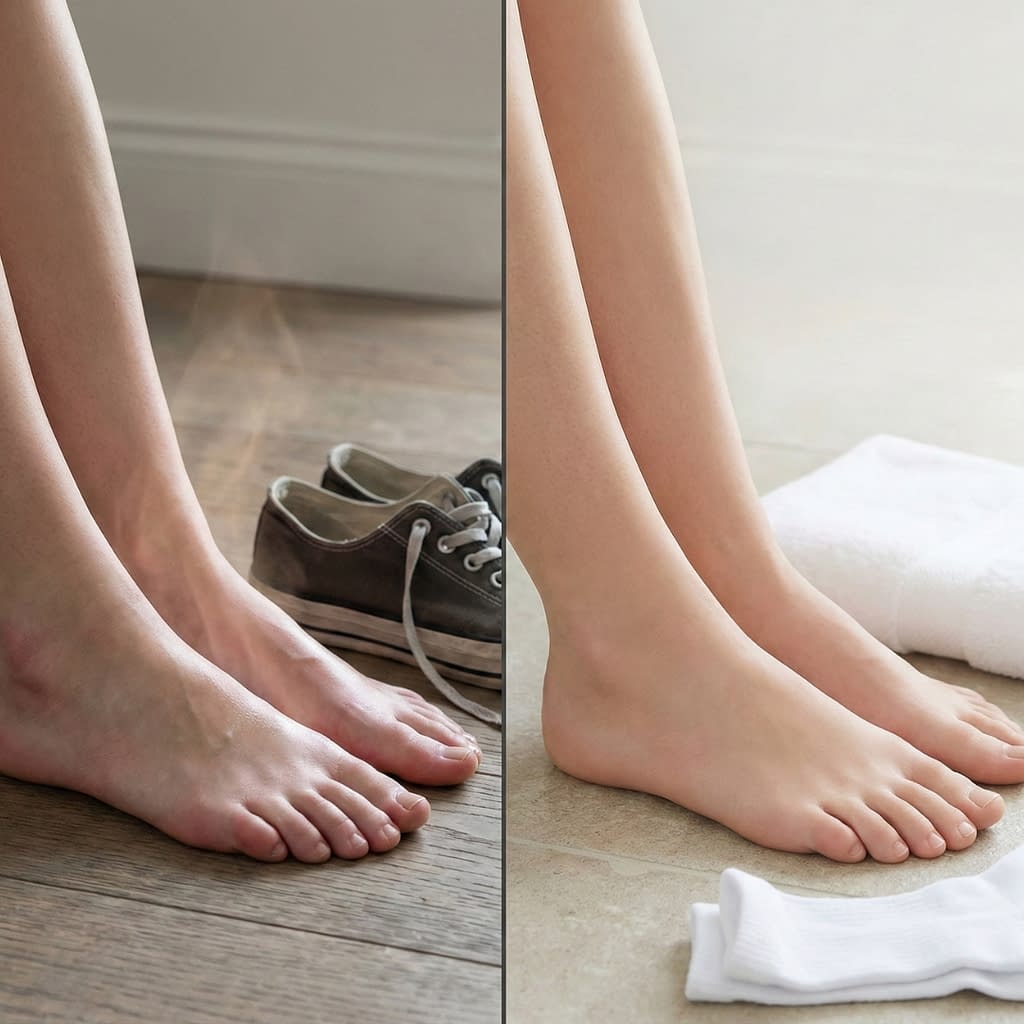
Avoid these errors that unintentionally worsen odor.
Mistakes to avoid
- Re-wearing damp shoes or socks — the biggest single mistake.
- Overloading shoes with scented powders that just mask odor while keeping moisture inside.
- Using undiluted essential oils on skin (can irritate).
- Ignoring shoe care and focusing only on feet.
- Wearing non-breathable shoes or synthetic socks daily without rotation.
- Over-washing to “fix” odor — excessive washing can dry and crack skin, making problems worse.
Fix the root cause (moisture + microbes) rather than covering smell with strong fragrances.
Final Words
Foot odor is manageable with consistent, sensible habits: wash and dry feet thoroughly, use occasional soaks and safe powders, choose breathable socks and shoes, rotate footwear, and treat shoes directly. Use essential oils and baking soda thoughtfully, moisturize at night only when needed, and watch for signs of infection. If odor persists despite good care, seek medical advice — many causes are treatable. With a few simple daily changes, most people see a clear improvement in weeks.


