

Asian hair has a long reputation for being glossy, straight, and healthy — and much of that comes from simple, time-tested habits rather than expensive products. This guide breaks down those traditions into practical, science-friendly steps you can use today: how to assess your hair, gentle routines, oil treatments, fermented rice water, herbal rinses, scalp care, heat-free styling, diet tips, washing habits, protective sleep practices, DIY masks, and what to avoid. Follow these principles consistently and you’ll build stronger, sleeker hair that actually behaves — no gimmicks, just care.
What Makes Asian Haircare So Effective?
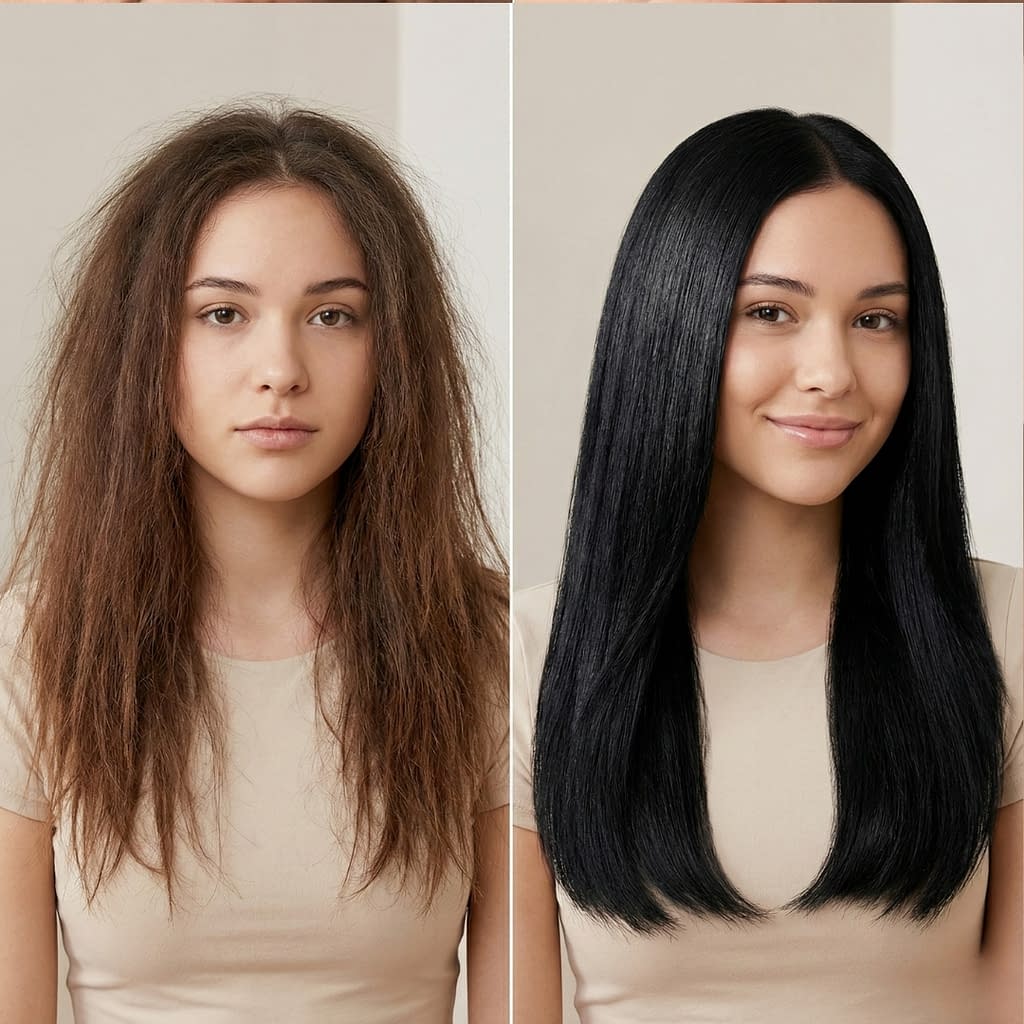
Asian haircare traditions are effective because they focus on three core things:
- Prevention over repair: gentle daily habits stop damage before it starts.
- Nourishment from natural sources: oils, fermented water, and herbs provide nutrients and surface-smoothing benefits.
- Scalp-first thinking: healthy hair grows from a healthy scalp, so many rituals target circulation and balance.
Those practices emphasize low-frequency, high-impact rituals (oil treatments, gentle cleansing, regular trims) rather than daily heavy styling. The result is hair that maintains its natural shine, strength, and smooth cuticle alignment.
Understand Your Hair Type Before Starting
Before you adopt any routine, know your hair’s baseline. Asian hair is often straight and dense, but everyone’s hair varies.
Quick tests to map your hair:
- Texture (strand test): pull one hair and look at its thickness. Fine, medium, or coarse? Thicker strands hold shine differently than fine ones.
- Porosity (water float test): place a clean strand in a glass of water. It sinks quickly = high porosity (absorbs moisture but loses it fast). Floats a while = low porosity (resists moisture). Sits in the middle = normal. Adjust products accordingly (lighter products for low porosity; richer for high).
- Elasticity: wet a strand and gently stretch. If it snaps easily, hair lacks protein; if it stretches and returns, elasticity is healthy.
- Scalp type: oily, dry, normal, or flaky? That determines wash frequency and oil treatment choices.
How to use the info:
- Fine/low-porosity hair: steer clear of heavy oils on the roots; prefer light oils (jojoba, grapeseed) and dilute treatments.
- Coarse/high-porosity hair: use richer oils (coconut, avocado, castor) and more occlusion to seal moisture.
- Oily scalp: focus oil on lengths/ends and be conservative on scalp application, or use short pre-wash scalp-only treatments.
Knowing your type saves trial-and-error and helps you choose the right Asian-inspired rituals for shiny results.
The Importance of Gentle, Minimal Haircare Routines
One common theme across Asian hair traditions is “less is more.” Over-washing, over-styling, and excessive product layering create buildup and damage.
A minimalist routine that works:
- Wash 2–3 times a week for most people (adjust by scalp oiliness).
- Use one targeted treatment at a time (oil, mask, rinse) rather than layering five heavy products.
- Limit heat styling — embrace air drying and heat-free methods.
- Trim regularly every 8–12 weeks to remove split ends and keep hair visually silky.
Why minimal works: hair shines when the cuticle lies flat. Less manipulation, fewer silicones and waxes, and fewer heat cycles = smoother cuticles and more natural reflectivity.
Oil Treatments: The Core of Asian Haircare Traditions

Oil is central to many Asian hair routines because it both nourishes and reduces protein loss.
Common oils and why they work:
- Coconut oil: penetrates the hair shaft, reduces protein loss, great for pre-wash treatments.
- Camellia (tea seed) oil: common in East Asian traditions — lightweight, excellent for shine and daily smoothing.
- Rice bran oil: nourishing and used for scalp massage and shine.
- Sesame oil / almond oil / argan oil: versatile, medium-weight options depending on preference.
- Castor oil: thick and promotes shine and (traditionally) growth; mix with a lighter carrier for easier application.
Step-by-step basic oil treatment (weekly)
- Choose oil for your hair type (coconut or castor blend for coarse; camellia or jojoba for fine).
- Warm the oil slightly (few seconds in warm water — not hot). Warm oil penetrates better and feels luxurious.
- Apply: part hair into sections. For scalp stimulation, place 2–3 drops on fingertips and massage the scalp for 5–10 minutes. For lengths, smooth oil from mid-shaft to ends (avoid heavy roots on oily scalps).
- Cover and wait: use a shower cap and leave 30 minutes to overnight depending on tolerance. Overnight gives deep conditioning; short waits are fine for lighter maintenance.
- Rinse & shampoo: double-cleanse if oily buildup remains — oil first to dissolve, then gentle shampoo.
- Condition as usual if needed.
Pro tip: oil massage increases blood flow and helps delivery of nutrients; do it mindfully 1–2× weekly.
Fermented Rice Water: A Natural Shine Booster
Fermented rice water has a long history in parts of Asia for boosting shine and strength. It’s rich in amino acids, vitamins, and inositol — a carb that can improve hair elasticity.
How to make fermented rice water (simple)
- Rinse 1/2 cup of rice lightly to remove surface dust.
- Soak in 2 cups of warm water for 30 minutes, stirring occasionally.
- Strain the water into a clean jar — this is your rice water.
- Ferment: leave the jar at room temperature for 12–24 hours (until slightly sour). Fermentation increases bioavailability.
- Dilute 1:1 with plain water before using (fermented is potent). Store in fridge for up to a week.
How to use rice water
- After shampooing, pour diluted rice water over hair as a final rinse. Leave 2–5 minutes, then rinse lightly with cool water.
- Use 1–2× weekly — start less frequently to assess tolerance.
- If any itchiness occurs, stop. Patch test first on a small scalp area.
Benefits: rice water can temporarily smooth cuticles and increase slip, leading to visible shine and manageability.
Herbal Rinses Used Across Asia for Stronger Hair
Various cultures use herbal decoctions to strengthen hair and soothe scalp. Ashwagandha, ginseng, hibiscus, fenugreek, and green tea are examples depending on the region.
DIY hibiscus rinse (for shine & conditioning)
- Simmer 10 hibiscus petals (or a small handful dried) in 2 cups water for 10 minutes.
- Cool and strain.
- Apply after shampooing as a final rinse, leave 2–5 minutes, then rinse lightly. Use 1× weekly.
Fenugreek seed rinse (for strength)
- Soak 2 tbsp fenugreek seeds overnight, blend into a paste, strain the liquid.
- Use liquid as a final rinse after shampoo — fenugreek has proteins and nicotinic acid that condition hair.
Green tea rinse (antioxidant + mild stimulation)
- Brew strong green tea (1–2 bags) and cool.
- Use as a final rinse 1–2× weekly to soothe scalp and provide antioxidant benefits.
Notes & cautions:
- Always strain well to avoid sediment in hair.
- Patch-test for allergies (especially fenugreek/hibiscus).
- These rinses complement — they don’t replace basic conditioning or hydration.
Scalp Care Techniques for Healthy, Fast-Growing Hair
Healthy hair starts at the scalp. Many Asian practices emphasize gentle scalp stimulation and balance.
Daily/weekly scalp care steps:
- Gentle massage 3–5 minutes daily with fingertips (or during oil treatment) to improve circulation.
- Avoid harsh daily scrubs — use a clarifying treatment 1× every 2 weeks only if buildup occurs.
- Use scalp-friendly shampoos (mild surfactants, balanced pH). For dandruff/seborrheic dermatitis consult medicated options.
- Exfoliate gently once a month using a sugar scrub or scalp brush to remove dead skin and product buildup.
- Keep scalp moisturized if dry: light oils massaged in small amounts, or a leave-in scalp serum.
- Avoid heavy oils at roots for oily scalps — focus them mid-shaft to ends.
Lifestyle supports:
- Scalp circulation benefits from movement and reduced stress — short headstands, neck stretches, and stress management help.
Heat-Free Styling for Natural Silkiness
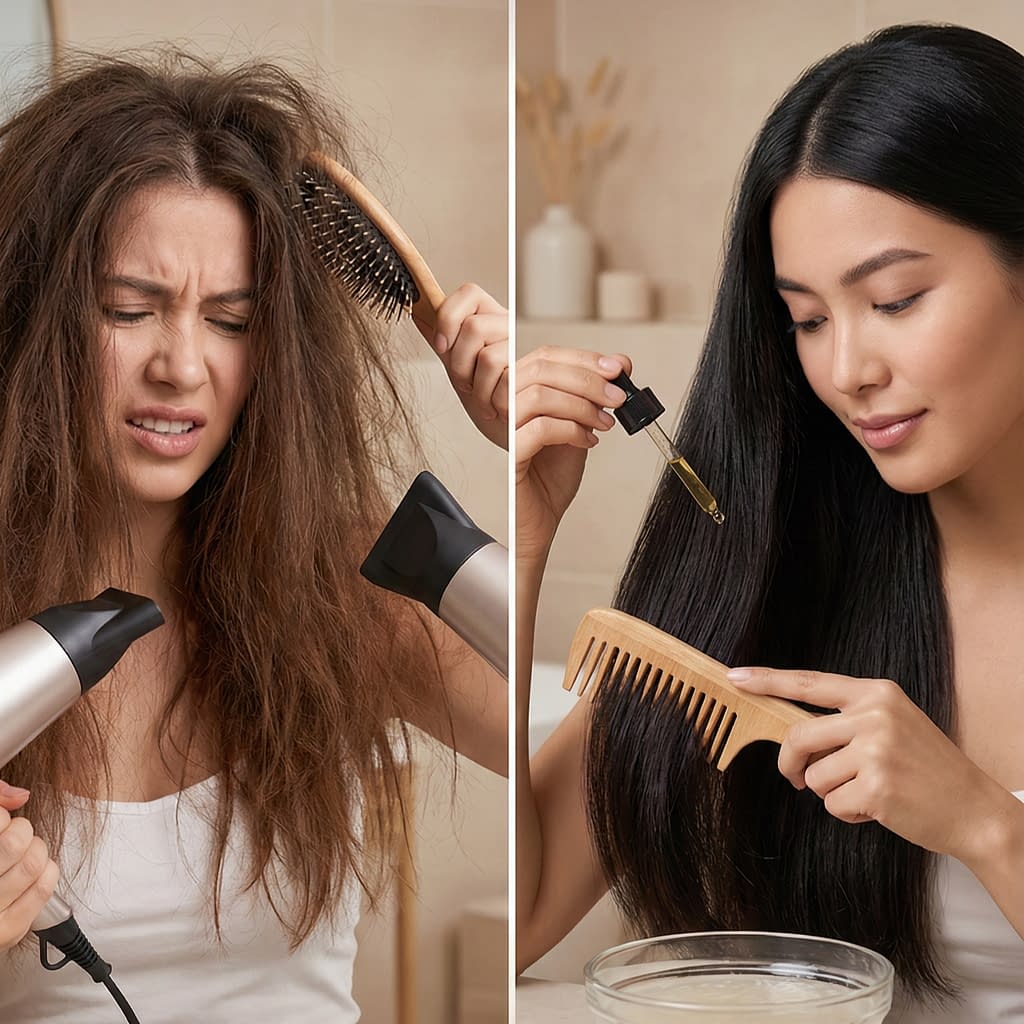
Minimizing heat preserves the cuticle. Asian haircare favors heat-free methods to create smooth waves or straight styles.
Heat-free straightening & smoothing tips:
- Wrap technique: for straight, glossy hair, wrap damp hair around the head and secure with pins; cover with a silk scarf overnight for mild straightening.
- Cold air & smoothing: after washing, gently comb and air-dry in a loose braid or low bun to reduce frizz.
- Tension drying: use a wide-tooth comb and low-tension sections while hair air-dries to encourage a sleeker finish.
Heat-free curling & waves:
- Large braids overnight for soft waves.
- Foam rollers or flexible rods on damp hair; sleep and undone in morning.
- Twist & pin method for gentle S-waves.
Finishing for silkiness:
- After hair is dry, use 1–2 drops of light oil (camellia, argan) warmed on palms and smooth over lengths to flatten cuticle and add shine. Use sparingly.
Asian Diet Habits That Promote Healthy Hair Growth
Diet in many Asian cultures includes foods that support hair health: fish, sea vegetables, soy, eggs, and nutrient-rich greens.
Eat for hair:
- Protein: eggs, fish, tofu, legumes — hair needs amino acids.
- Omega-3s: salmon, mackerel, chia, flaxseed for scalp health.
- Iodine & minerals: seaweed, shellfish (in moderation) supports metabolism.
- Iron & B vitamins: lean meats, spinach, lentils — prevent shedding from deficiency.
- Collagen support: vitamin C-rich fruits with protein sources aid collagen production.
Hydration and gut health:
- Include fermented foods (kimchi, miso, natto) where culturally appropriate to support gut-skin axis. Drink water and green tea for antioxidants.
If you suspect deficiency or heavy shedding, consult a healthcare provider for blood tests (iron, ferritin, vitamin D, thyroid).
Hair Washing Habits That Prevent Damage
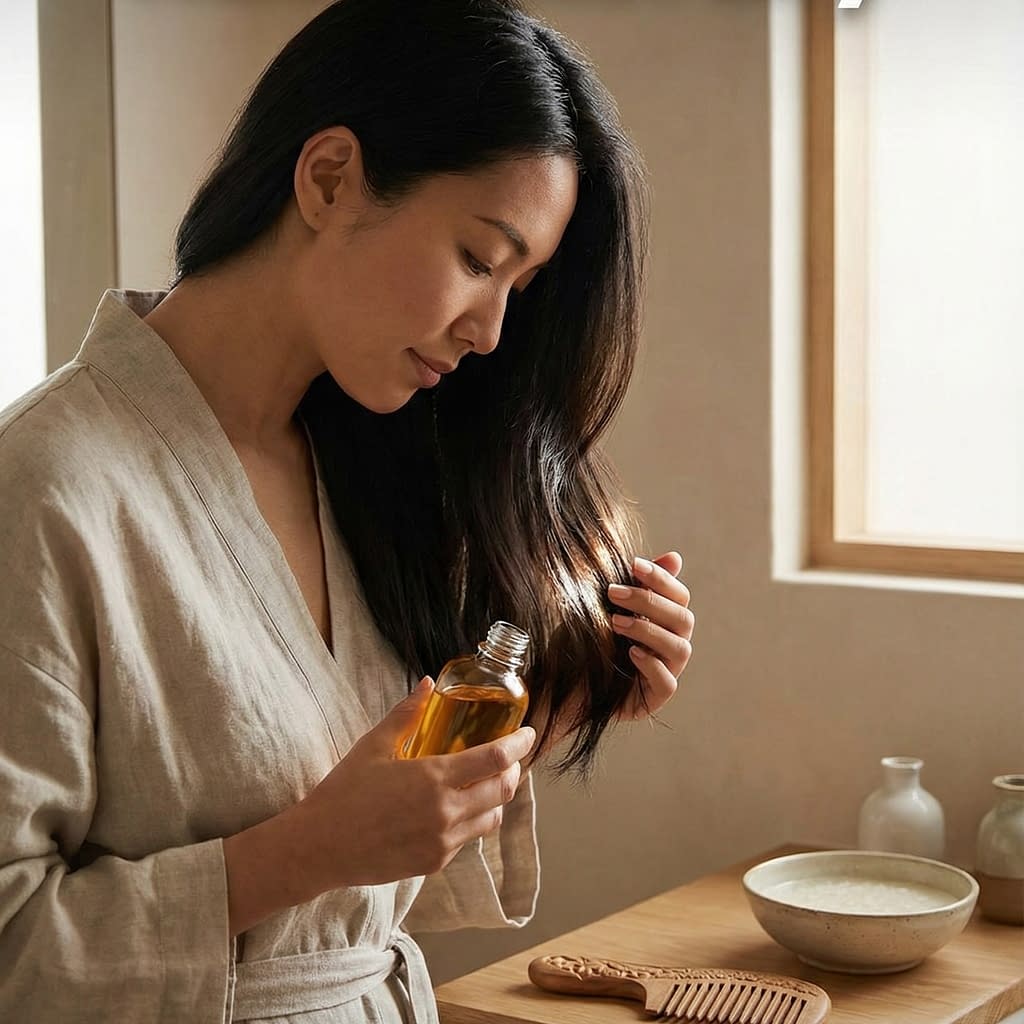
How you wash matters as much as what you use.
Gentle washing routine:
- Wet hair thoroughly with lukewarm water. Hot water is drying.
- Apply shampoo to scalp only and massage gently with fingertips (not nails). Shampoo removes sebum and dirt from the root; lengths get cleaned by the run-off.
- Rinse thoroughly then apply conditioner to mid-lengths and ends only.
- Comb conditioner through with a wide-tooth comb and leave 2–5 minutes before rinsing with cool water to close cuticles.
- Avoid daily shampooing unless you sweat heavily; use co-washing (conditioner-only) between washes for dry hair.
- Pat hair dry with a microfiber towel or soft T-shirt to prevent rough friction; do not rub.
- Detangle gently starting at the ends and working up.
These habits keep cuticles flat, reduce friction, and preserve natural oils for shine.
Importance of Using Satin or Silk for Hair Protection
Sleeping on cotton can cause friction and frizz. Satin or silk pillowcases and scarves minimize friction.
How to use:
- Silk/satin pillowcase: reduces breakage and preserves styles overnight.
- Silk hair scarf or bonnet: wrap selectively if you use oil treatments overnight or want to protect a style.
- Silk scrunchies: hold hair without tight creases.
These small swaps reduce mechanical damage and help maintain sheen and smoothness.
DIY Asian-Inspired Hair Masks for Smoothness
Simple, kitchen-friendly masks inspired by Asian traditions.
- Coconut + honey repair mask (moisture & protein)
- 2 tbsp coconut oil + 1 tbsp honey. Warm and apply to mid-lengths and ends. Leave 30–60 minutes, then shampoo. Great for coarse or dry hair.
- Rice water + aloe moisturizing mask
- Mix 2 tbsp fermented rice water (diluted) with 1 tbsp aloe gel. Apply to hair after shampoo, leave 10 minutes then rinse. Enhances slip and shine.
- Hibiscus + yogurt smoothing mask
- 2 tbsp yogurt + 1 tbsp hibiscus paste (blend petals with a little water). Apply 20 minutes, rinse and condition. Hibiscus adds softness and conditioning phytochemicals.
Use masks 1× weekly; adjust frequency based on need. Always patch test if you have sensitivities.
Avoiding Common Western Hair Mistakes That Cause Damage
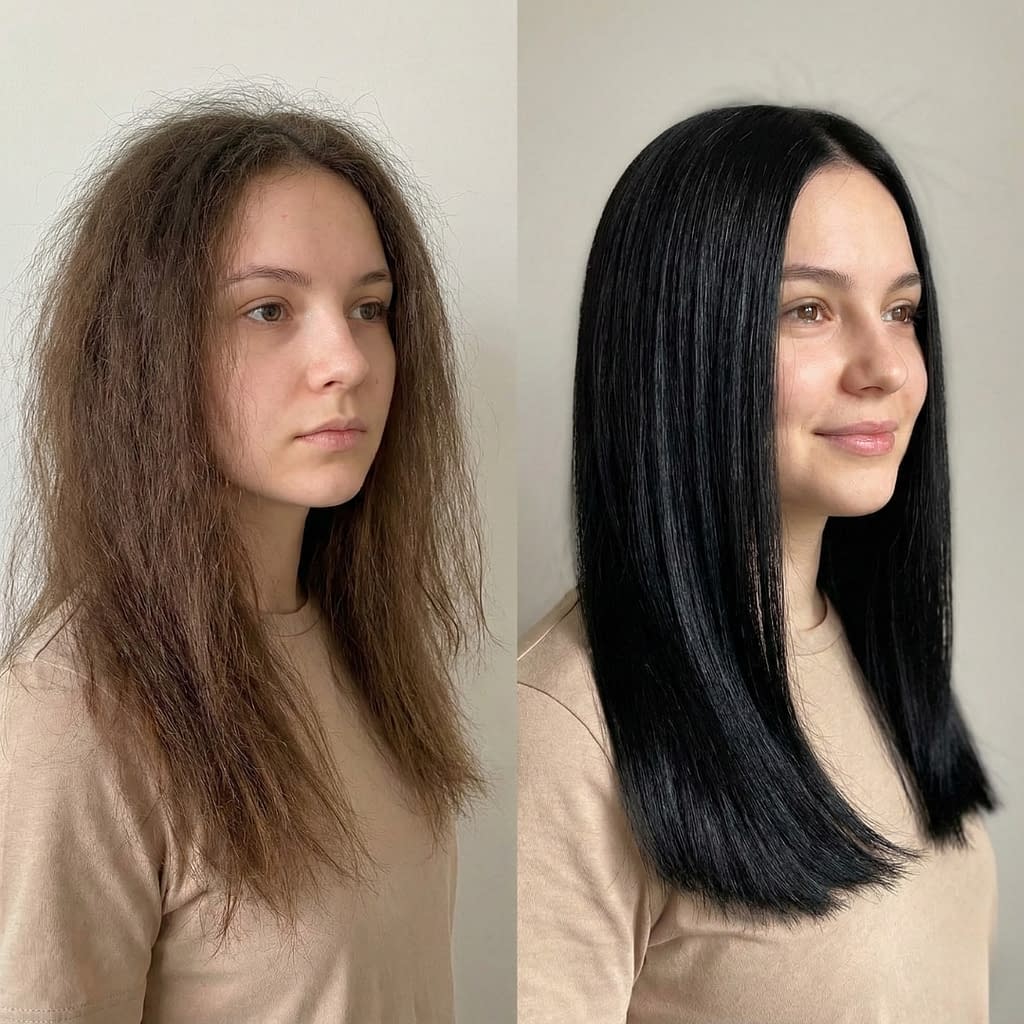
Some popular habits cause cumulative harm.
Mistakes to avoid:
- Daily heavy washing and stripping of natural oils.
- Excessive heat styling without protection.
- Layering many silicone-based products that create buildup and weigh hair down if not clarified occasionally.
- Aggressive brushing on wet hair — wet hair is weaker; detangle gently with fingers or a wide-tooth comb.
- Using very hot tools — choose lower heat and slower strokes to reduce damage.
Instead, favor protective, restorative practices: less heat, targeted treatments, proper cleansing, and gentle handling.
Final Words
Asian haircare secrets are not a single trick — they’re a philosophy: protect the cuticle, nourish the shaft and scalp, and keep routines gentle and consistent. Start by assessing your hair type, then pick two core rituals to adopt (weekly oil treatment and a fermented rice-water rinse are great starters). Pair those with a gentle wash schedule, scalp massage, heat-free styling, and a hair-nourishing diet. Over weeks and months you’ll notice smoother texture, more manageable strands, and a natural glossy shine that lasts.


