

Good posture doesn’t need to feel like punishment or a daily chore. Tiny, smart changes to how you sit, stand, breathe and move — plus a few unobtrusive environmental tweaks — let your body find a more aligned, confident position almost automatically. This post explains why posture matters, what actually causes slouching, and gives realistic, gentle, step-by-step actions you can fold into everyday life so posture improves with almost zero pain or effort.
Read this like a cheat-sheet for posture: realignment by design, not by willpower. Try a few ideas for a week and keep the ones that feel easy — consistency wins here, not intensity.
Why Good Posture Matters More Than You Think
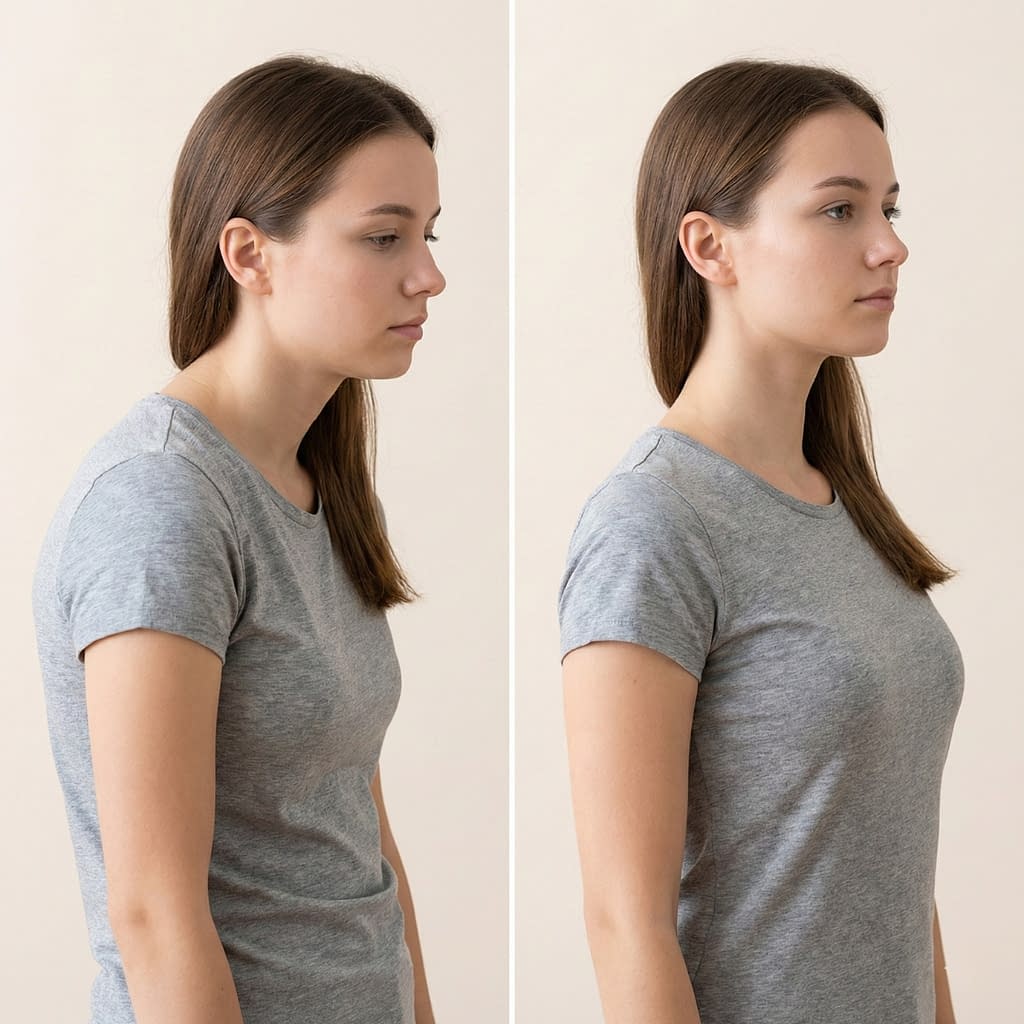
Posture affects more than just how you look in photos. When your head, spine and pelvis align, you use muscles efficiently, reduce strain on joints and tendons, breathe better, and usually feel more alert and confident. Poor posture places extra load on your neck and lower back, tightens chest muscles, restricts deep breaths, and can even worsen headaches and energy levels over time. Fixing posture isn’t vanity — it’s a simple way to reduce daily aches, move with less fatigue, and look more poised without effort.
Practical quick wins
- Better posture reduces neck and shoulder tension.
- An aligned spine helps you breathe deeper and more calmly.
- Small shifts in posture give a visible confidence boost — a tiny win that reinforces the habit.
Understanding the Common Causes of Poor Posture
Posture slips for predictable reasons: long periods sitting, weak mid-back and core muscles, tight hips and chest, bad ergonomics, stress (which tenses the shoulders forward), and habits like looking down at phones. None of these are moral failures—they are modern environment problems. The good news: they respond to small, repeated changes.
Common culprits and easy fixes
- Hunched shoulders from phone use → lift phone slightly, practice quick shoulder-release micro-movements.
- Slumped lower back from long sitting → add a small lumbar support or pillow and stand up briefly every 30–45 minutes.
- Weak mid-back / core → add micro-movements and low-effort holds (see “Stretching and Micro-Movements”).
- Tight chest muscles → short doorway chest opening for 30–60 seconds a few times daily.
How Posture Affects Your Health and Appearance

Health: chronic slouching increases the workload on spinal discs and posterior muscles, which can lead to pain and fatigue. Good alignment spreads forces evenly through the skeleton so muscles don’t overwork.
Appearance: when you lift your head and open the chest just a little, your shoulders sit back, neck looks longer, and your whole silhouette looks more energetic and confident. These visual changes are immediate and require almost no effort if you build them into daily habits.
What to expect quickly
- Instant: a small posture correction will make you look taller and more alert.
- Short term (days): less neck strain and easier breathing when you repeat gentle posture cues.
- Medium term (weeks): muscle tone improves and corrections feel more natural.
The Role of Muscle Strength and Flexibility
You don’t need a gym membership. Posture is mostly about balance: the right muscles being active at the right time and tight muscles letting go. The mid-back (thoracic extensors), glutes, and deep core muscles provide stability; the chest and hip flexors are commonly tight and need gentle lengthening.
Smart approach
- Build micro-strength: short holds and frequent low-intensity activations help more than long, hard workouts.
- Prioritize flexibility where you feel tight (chest, front of shoulders, hip flexors).
- Use movement variety: sitting, standing, walking, and light mobility all help the nervous system learn better posture.
Simple Daily Adjustments That Correct Posture Naturally

Tiny habits > big workouts. Try to fold these into your day:
Morning posture tune (1–2 minutes)
- Stand tall with feet hip-width.
- Imagine a string lifting you from the crown of your head.
- Draw shoulders down and back gently (not pinched).
- Take three slow nasal breaths while keeping this gentle lift.
Phone and reading habit
- Bring material to eye level (prop phones or books on a pillow) instead of bending your neck down.
- Use a small sticky note on your screen that says “chin tuck” as a gentle reminder to bring the head back.
Micro-break rule (every 30–45 minutes)
- Stand, inhale tall, exhale and roll shoulders back, take one step and reset. This interrupts slouch without effort.
Desk and Sitting Habits That Improve Alignment
Sitting is the modern posture trap; make small ergonomic shifts.
Chair and desk set-up
- Seat height: feet flat, knees roughly level or slightly lower than hips.
- Lumbar support: a small rolled towel or a low cushion behind the lower back restores the gentle inward curve.
- Screen height: top of screen at eye level so your gaze is slightly down and neck is neutral.
- Keyboard and mouse: close enough so elbows rest lightly at your sides.
Effortless sitting routine (step-by-step)
- When you sit, place both feet on the floor and feel the back of your pelvis on the chair.
- Tuck your chin briefly (imagine lengthening the back of your neck) and let shoulders relax down.
- Keep hips slightly higher than knees if possible — a small wedge or raising the chair helps.
- If you start to slouch, stand quickly for 20–30 seconds: this resets muscle tone.
Standing and Walking Tips for Effortless Posture
Standing and walking well is low-effort with small cues.
Stand tall, no strain (momentary check)
- Feet hip-width, knees soft (not locked).
- Slight pelvic tilt to align spine (imagine a bowl of water held level on your pelvis).
- Shoulders relaxed back, chin neutral.
- Breathe into the belly.
Walking with ease
- Keep head up and eyes forward (not down at the ground).
- Swing arms naturally; this helps counterbalance the torso.
- Take slightly longer strides than shuffling; it opens the chest and recruits glutes for natural support.
Practical habit
- When waiting in line or on a call, practice the stand tall cue—this turns idle time into posture practice.
Breathing Techniques That Support Proper Alignment

Breathing well encourages a stable core and relaxed shoulders.
Diaphragmatic breath (easy step-by-step)
- Sit or stand tall.
- Place one hand on your belly and one on your chest.
- Breathe in slowly through the nose, aiming to move the belly outward while the chest remains fairly still.
- Exhale through the nose to a natural emptying.
- Repeat 6–8 times once or twice daily and use this pattern whenever you notice tension.
Why it helps
- Diaphragmatic breathing reduces neck/shoulder tension and naturally encourages a neutral spine because the diaphragm connects to core stability.
Stretching and Micro-Movements Without Pain
You can “train” posture with tiny, painless movements done often.
Micro movements you can do anywhere (20–60 seconds each)
- Shoulder rolls: slow backward rolls x8, then forward x8.
- Doorway chest opener: stand in a doorway, place forearms on the frame and lean slightly forward until you feel a gentle stretch across the chest for 20–30 seconds.
- Hip flexor half-lunge: kneel one knee down, other foot forward, shift hips forward slightly for a gentle front-of-hip stretch.
- Glute squeeze: while sitting, squeeze glutes lightly for 5–10 seconds, release; repeat 8–10 times. This activates the hip/back support without heavy effort.
- Thoracic extension over a rolled towel: place a small rolled towel horizontally under upper back and lie back briefly, support head with hands, breathe—keep it gentle.
Micro-strength holds (no gym needed)
- Wall slide hold: stand with your back to a wall, arms in a “goal post” position, slide arms up and down keeping contact with wall; hold top for 5 seconds, repeat 5 times. Builds mid-back endurance gently.
Do these often. Short, repeated practice beats long infrequent sessions for posture.
Using Everyday Items to Train Posture Subconsciously
Use your environment to cue posture without thinking.
Subconscious training ideas
- Put a thin book under your phone when you use it so you naturally lift your gaze a little.
- Place a small lumbar roll on your office chair so your body “sits” correctly automatically.
- Swap a low back cushion for a slightly firmer one to launch the upper body into better alignment.
- Use a standing desk for part of the day — alternating sitting and standing distributes load without extra effort.
- Wear a gentle reminder band (not a brace) on your wrist — when you notice it, do a quick posture check.
These tweaks change your environment so your body aligns without deliberate effort.
Common Posture Mistakes That Make Problems Worse
Avoid these counterproductive habits.
What to stop
- Locking knees when standing — makes spine brittle and leads to sway.
- Slumping shoulders forward while sitting — allows chest to tighten and breathing to shallow.
- Looking down at screens constantly — strain accumulates.
- Holding tension in jaw or shoulders — subconscious stress tightening ruins alignment.
- Compensating with a “hyper-erect” posture — stiffness is not healthy; aim for relaxed upright.
If a correction feels painful, scale it back—pain is a sign you’re forcing something.
How to Maintain Posture Without Constant Thinking
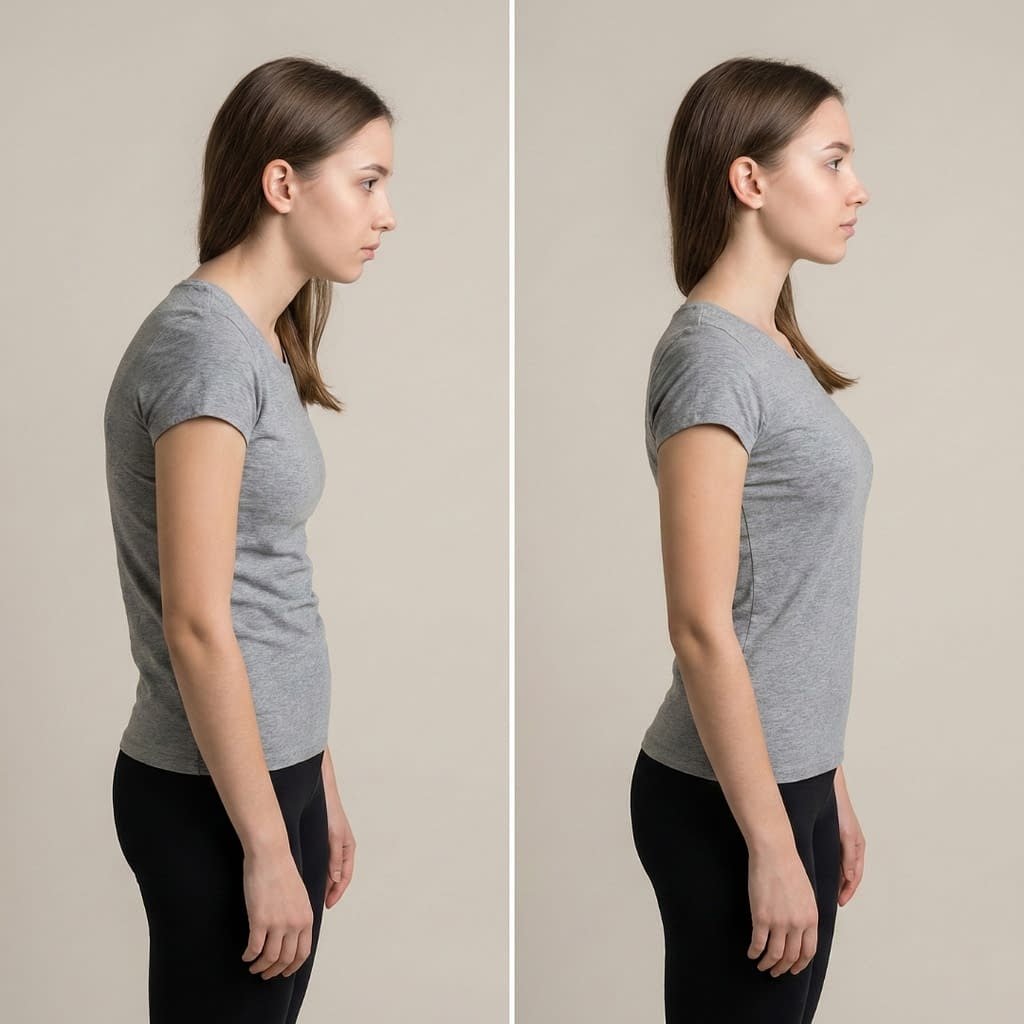
Make posture automatic with simple rules.
Automatic maintenance plan
- Micro reminders: set 4 gentle phone alarms a day labeled “posture” — stand, inhale tall, exhale and soften shoulders. This builds habit without long effort.
- Pair posture checks with routine activities: each time you brew coffee or get up for water, do a 10-second posture reset.
- Keep it enjoyable: good music while moving, or standing during a favorite podcast episode. Positive associations stick.
- Gentle novelty: change your sitting surface occasionally (stability ball for 10–20 minutes) to keep core engaged lightly.
Aim for systems, not willpower.
Quick Posture Checks You Can Do Anywhere
Portable posture tests to remind you and reset quickly.
One-minute posture reset
- Stand: feet hip-width, breathe in, tuck chin slightly, draw shoulders down and back, soften knees, and hold for 30 seconds.
- Sitting reset: place both feet flat, feel your sit bones, lift the sternum slightly, relax shoulders.
- Walking check: take three conscious steps with eyes forward, notice heel-to-toe roll and arm swing.
Use these anytime you feel stiff or notice tension — they are fast and effective.
Final Words
Improving posture without pain or effort is entirely possible when you redesign tiny parts of your day: subtle posture cues, small environment changes, frequent micro-movements, and gentle breathing practice. This approach honors how people actually live — it doesn’t demand long workouts or strict discipline. Start by picking two easy changes (a morning posture tune and a 30-second micro-break every 45 minutes), do them for a week, and add more as they become effortless. Over time your body will learn the new, healthier default — and you’ll stand, walk, and breathe better with almost no extra effort.


