

Thin-looking hair can knock your confidence, even when your hair is healthy. The good news: fullness is often about styling, cut, scalp health, and a few smart habits — not length or extensions. This guide walks you through everything that helps hair appear thicker and feel bouncier, with step-by-step routines, styling techniques, product guidance, natural remedies, and lifestyle tips you can start using today.
Why Hair Volume Matters
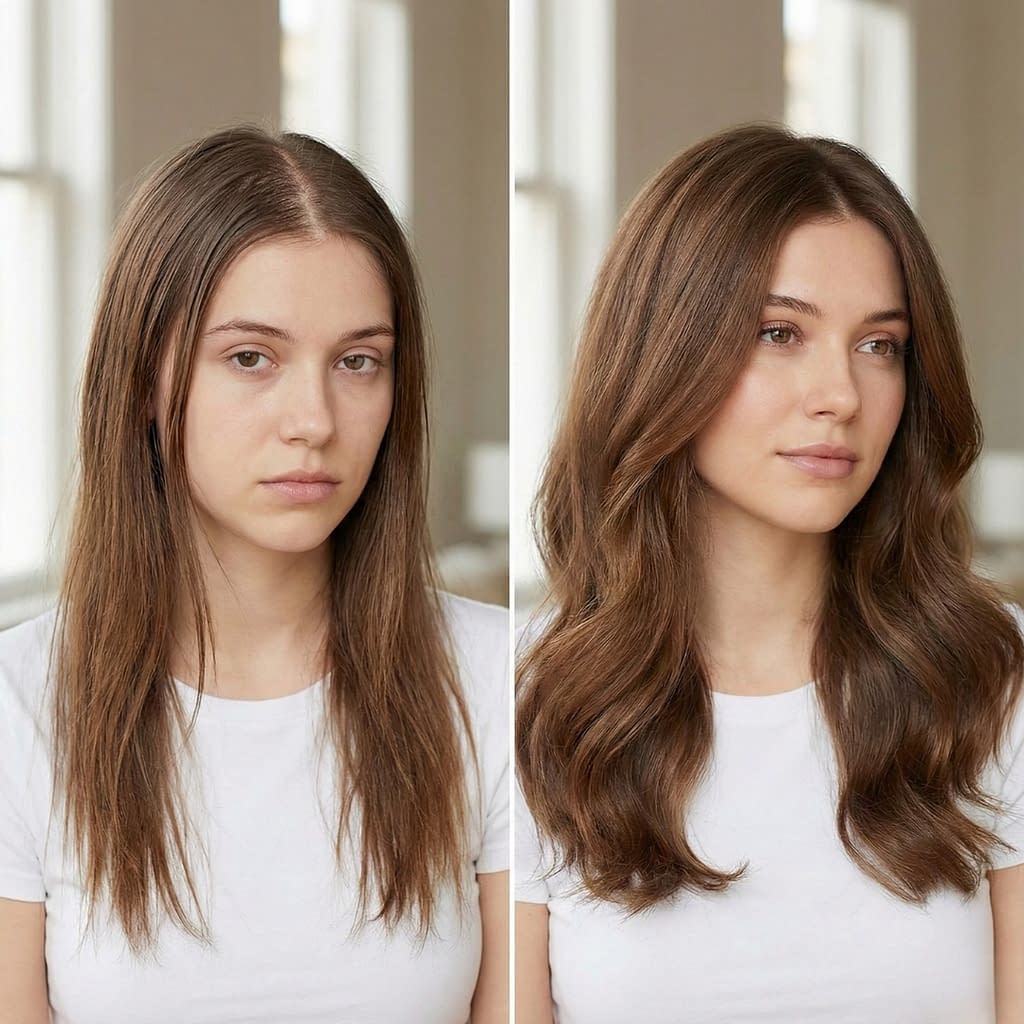
Volume affects how youthful, healthy, and put-together hair looks. Hair with body reflects light better, moves more, and frames your face in a flattering way. Even a small increase in perceived thickness can dramatically change your overall appearance. Volume also makes styling easier — layers hold shape, curls look fuller, and updos feel more luxurious.
Think of fullness as a combo of two things:
- Per-hair thickness (genetics, health) — some things we can support but not fully change.
- Perceived density and lift (cuts, styling, product, scalp health) — this is where many effective changes live.
You can make meaningful, visible improvement without adding hair — by working smarter with what you have.
Understand Your Hair Type and Why It Appears Thin
Knowing your hair type tells you which techniques will help most.
Quick hair-type checklist
- Fine hair: each strand has a small diameter. Fine hair can be limp and needs lightweight products.
- Medium hair: most common — balances structure and body.
- Coarse hair: thicker strands that may be heavy but can look less dense if very straight or damaged.
- Straight vs wavy vs curly: straight hair lies flatter against the scalp; waves and curls add natural volume if styled properly.
- Density vs thickness: density = how many hairs per square inch; thickness = diameter of each strand. Low density plus fine strands looks thinnest.
Why hair looks thin (common causes)
- Overconditioning/ heavy products that weigh hair down.
- Buildup on scalp and strands (styling products, oils, pollution).
- Hair breakage and split ends reducing visible fullness.
- Scalp health problems (dandruff, excess oil, poor circulation).
- Haircut that removes too much weight or sits flat at the roots.
- Genetics and age-related miniaturization (seek professional advice if you suspect medical hair loss).
How to use this info: pick strategies that solve the true problem — e.g., fine hair needs lighter products and root lift; curly hair needs definition and shrinkage control.
Proper Hair Care Routine for Fuller-Looking Hair
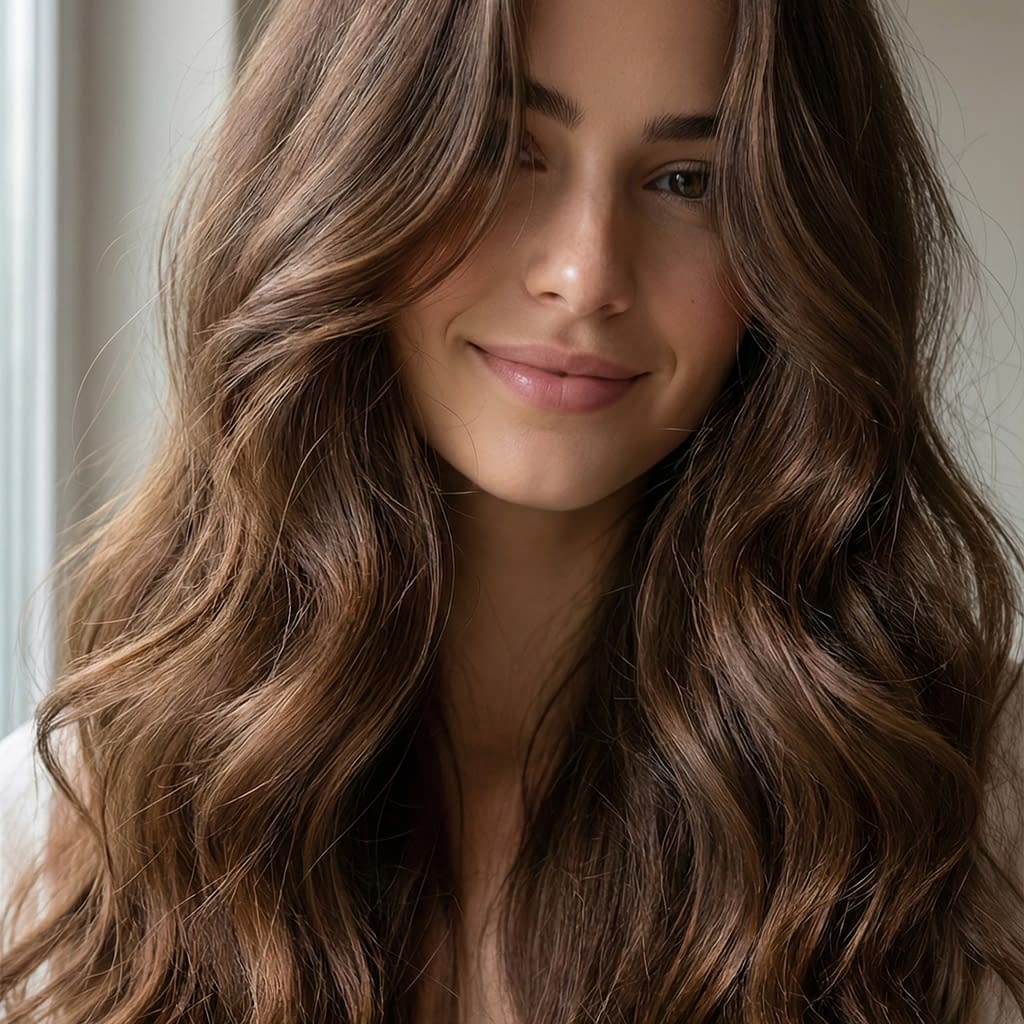
Consistency matters. A routine that protects strand integrity and reduces weight will maintain fullness.
Daily & weekly routine (step-by-step)
Daily
- Avoid heavy product accumulation: use a minimal amount of styling product at the roots.
- Brush smartly: use a wide-tooth comb on wet hair and a boar/synthetic mix brush on dry hair to distribute oils without breaking strands.
- Protect from heat: always use a heat-protectant spray before styling.
2–3× per week (washing frequency):
- Shampoo focusing on the scalp — concentrate the lather on roots where oil & buildup live.
- Conditioner: apply only to mid-lengths and ends; avoid the scalp on fine or low-density hair. Leave for 30–60 seconds, rinse with cool water to close cuticle.
Weekly
- Clarify once weekly (or biweekly for heavy product users) with a gentle clarifying shampoo to remove buildup that flattens hair.
- Deep treatment once a week (mask or protein/lightening treatment depending on needs) — use on lengths, not root area.
Monthly
- Trim every 6–10 weeks to remove split ends that make hair look stringy and thin.
Why this works: less weight at the roots + clean, healthy shaft = more lift and better bounce.
Shampoo and Conditioner Tips for Volume
The right pair makes a big difference.
How to choose & use
- Choose a volumizing or lightweight shampoo — look for “volumizing,” “body,” or “fine hair” labels. Avoid shampoos with heavy emollients if you need root lift.
- Condition selectively: choose a lightweight conditioner; never apply it to the roots. For very fine hair, consider a leave-in spray only on ends.
- Rinse technique: after conditioning, finish with a cool rinse — it helps seal cuticles and improves shine which makes hair reflect light and appear fuller.
- Clarify smartly: use a clarifying product weekly if you use many styling products, hairsprays, silicones, or dry shampoo. Don’t over-clarify — it strips natural oil and causes breakage.
Application step-by-step
- Wet hair thoroughly with warm water.
- Apply a coin-size amount of shampoo to the scalp, massage with fingertips (not nails) for 20–30 seconds.
- Rinse fully.
- Apply conditioner from mid-length to ends for 30–60 seconds; comb through with fingers.
- Rinse with cooler water.
Tip: if you have thin but oily hair, try shampooing every other day and using conditioner less frequently to avoid collapsed roots.
Scalp Care to Promote Healthy Hair Growth
A healthy scalp = stronger hair appearance and better lift.
Scalp routine (step-by-step)
- Massage during shampooing: 60–90 seconds of gentle circular fingertip massage stimulates blood flow and helps product penetration.
- Scalp exfoliation: use a gentle scalp scrub or a shampoo with mild phys/chem exfoliant once weekly to remove dead skin cells and buildup.
- Avoid tight hats/ponytails that stress hair follicles and cause traction.
- Treat flaking or itch promptly — medicated shampoos for dandruff or consultation with a dermatologist if needed.
- Topical boosters: look for serums with caffeine, niacinamide, peptides, or minoxidil (only when medically indicated) — these can help scalp health and support miniaturized hair. Follow product instructions.
Daily quick massage: 2 minutes of scalp massage while applying a leave-in tonic or before bed increases microcirculation and can support long-term hair health.
Caveat: if you notice sudden, patchy, or rapid hair loss, see a clinician — it may be medical.
Blow-Drying and Styling Techniques That Add Fullness

Heat styling done correctly gives dramatic root lift and long-lasting volume.
Step-by-step blow-dry for max volume
- Towel-blot hair gently to remove excess water — don’t rub.
- Apply heat protectant and a root-lift mousse or spray (lightweight formula). Focus product at the roots.
- Pre-dry to ~80% with your head upside down or using fingers at roots to create initial lift.
- Section hair: clip the top and work in small sections at the crown.
- Use a round brush (medium-to-large) and direct airflow from the dryer down the hair shaft but lift the roots upward as you dry with the brush. Hold heat a few seconds then blast with a cool shot to set the shape.
- Finish with cool air over the roots to lock in volume.
- Style lightly: use a texturizing spray or light hairspray focused at the roots; run fingers through to break stiffness — avoid heavy sprays at ends.
Alternative methods
- Velcro rollers: warm the hair slightly with a dryer, roll at the crown, cool fully and remove for soft, long-lasting lift.
- Root-teasing: gentle backcombing at the base in small sections only; smooth a top layer over to hide teasing. Don’t overdo it to avoid breakage.
Heat tip: keep dryer on medium heat and keep tool moving to minimize damage.
Haircuts and Layers That Make Hair Look Thicker
The cut is one of the most powerful volume tools.
Cuts that add perceived fullness
- Blunt ends: a blunt finish at the ends gives the visual impression of density — avoid too many long, razor-thinned layers if you need more body.
- Strategic layers: short layers at the crown add lift; long layers throughout remove weight at ends but keep volume on top. Ask your stylist for “face-framing” and “crown-lift” layering.
- Textured bob or lob: short-to-medium lengths sit away from the head and visually multiply density.
- Pixie cuts: for many fine textures, a short cut with volume on top reads very full.
- Curtain bangs or soft fringe: bangs can create the illusion of thicker hair up front and add structure.
How to talk to your stylist
- Explain your goal: “I want more body at the crown and thicker-looking ends.”
- Ask for a demo of how it will look when styled — see the blow-dry result.
- Request minimal thinning with razors at the ends if you need weight; razors often make fine hair look stringy.
- Bring photos of styles you like and of your current hair straight, wavy, and styled.
A good cut increases starting lift — styling then maintains it.
Hair Products That Enhance Volume Without Damage
Choose lightweight, effective products and use them strategically.
Product categories and how to use them
- Root-lifting sprays / mousses: apply to damp roots before blow-drying. Use sparingly.
- Volumizing powders / texturizing sprays: sprinkle at roots on dry hair and massage for instant lift; great for second-day hair.
- Thickening sprays / keratin boosters: coat the hair shaft to temporarily increase strand diameter — check for non-sticky formulations.
- Sea-salt sprays / lightweight texturizers: add body and separation for wavy, beachy volume.
- Dry shampoo: excellent for soaking up excess oil and adding texture at the roots — use in moderation to prevent buildup.
- Lightweight conditioners / leave-ins: protect lengths without weighing down roots.
How to layer (step-by-step)
- On damp hair, apply a lightweight leave-in if needed on mid-lengths.
- Use a small amount of root-lift mousse/spray at the roots.
- Blow-dry with lift technique.
- On dry hair, finish with a texturizer or volumizing powder at the crown and style with fingers.
Avoid heavy oils, butters, or thick creams near the scalp — they collapse volume quickly.
Natural Remedies for Boosting Hair Body and Bounce
Natural supports can help hair feel healthier and get a little more body.
Safe, helpful DIY approaches
- Rice water rinse: diluted, fermented rice water is a seasonal trend for shine and temporary strengthening; use as a rinse after conditioning, not daily (1× week). Rinse thoroughly.
- Aloe vera + castor oil (light use): aloe soothes scalp; castor oil may support thickness but is heavy — apply to scalp in tiny amounts and rinse next day, or use on ends only.
- Egg white mask: protein temporarily firms strands (apply only to lengths, rinse after 10–15 minutes). Avoid if you have sensitivity or open scalp wounds.
- Apple cider vinegar final rinse (diluted): 1–2 tbsp in a cup of water after shampooing can clarify and add shine, which helps hair look healthier and fuller. Rinse after a minute and condition ends.
- Scalp massage with light oil: a 2–3 minute nightly scalp massage with a few drops of jojoba or squalane can improve circulation without heavy residue.
Use natural methods sparingly and rinse thoroughly — buildup undoes volume gains.
Diet and Lifestyle Habits That Support Hair Thickness
What you eat and how you live influence hair health over months.
Diet & lifestyle checklist
- Protein: hair is protein — eat adequate lean protein daily (eggs, fish, poultry, legumes).
- Omega-3s: support scalp health (salmon, chia seeds, walnuts).
- Iron & zinc: deficiencies show as thinning — include leafy greens, beans, red meat if appropriate, or check levels with your doctor.
- Biotin and B vitamins: support hair health; deficiency is rare, but B-complex can help if diet is limited.
- Vitamin D: low levels correlate with hair issues — check and supplement if needed.
- Hydration: drink throughout the day — hydrated cells mean fuller-looking shafts.
- Sleep & stress: chronic stress shortens hair growth phase; target 7–9 hours and use stress reduction practices.
- Exercise: boosts circulation and scalp perfusion.
If you suspect nutritional deficiency, consult a healthcare provider for tests before starting broad supplementation.
Avoiding Common Mistakes That Make Hair Look Flat
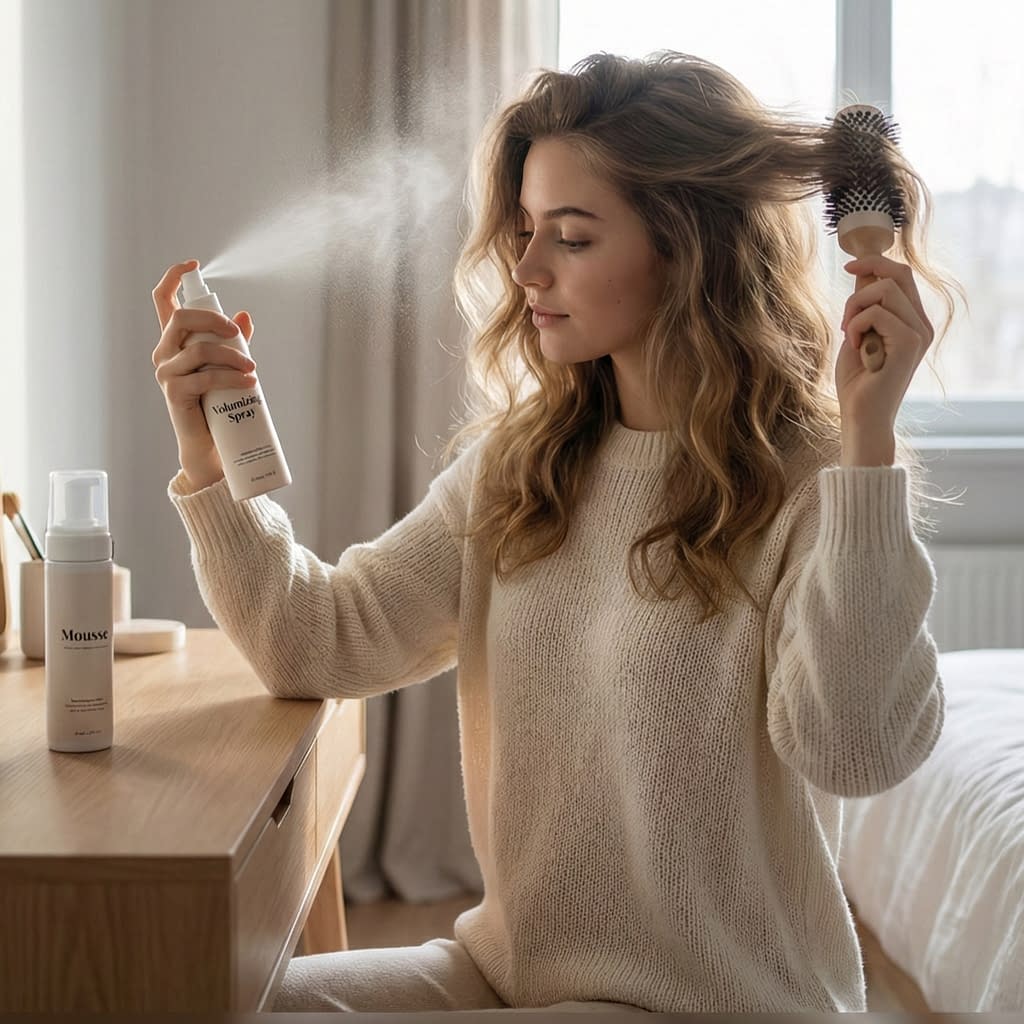
Small habits frequently sabotage volume.
Mistakes to stop doing
- Heavy conditioners near the scalp.
- Too many oils/serums applied at roots.
- Sleeping with damp hair — causes flattening and matting; loosely tie hair up or sleep on silk to reduce friction.
- Over-brushing wet hair — causes breakage.
- Over-washing or under-washing: both can make hair limp (find your sweet spot).
- Using product overload: too many products equal buildup and weight.
Correct these and you’ll reclaim a surprising amount of volume.
Quick Tricks for Instant Volume Before Events
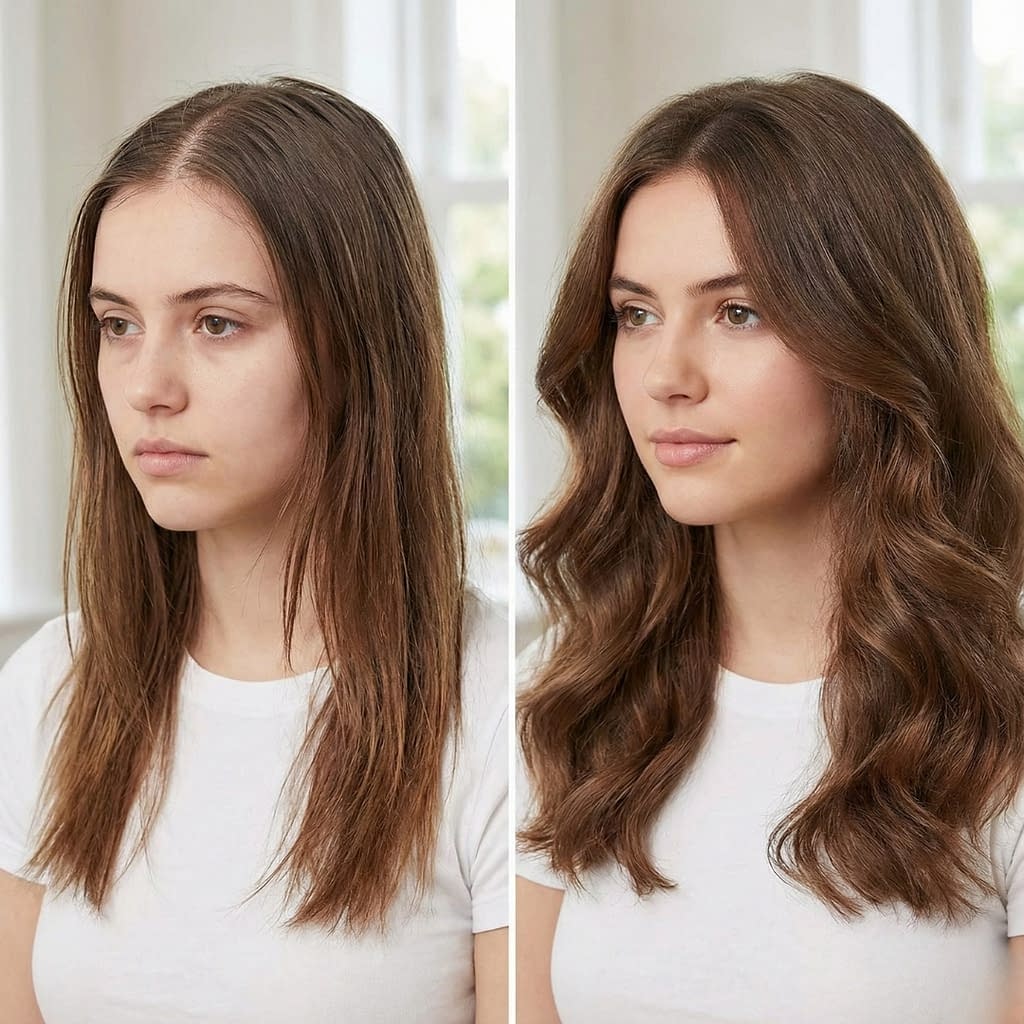
Need fast lift? These hacks are lifesavers.
Event-ready volume checklist (10 minutes)
- Dry shampoo at roots: spray and massage into the crown for instant lift.
- Blow-dry upside down for 60–90 seconds concentrating at the roots, then flip up and quick cool blast.
- Velcro rollers at the crown: warm slightly with dryer then leave 3–5 minutes while you do makeup. Remove and tousle.
- Texturizing powder: sprinkle a little at the crown and massage with fingers for immediate root separation.
- Small backcomb at the base: lightly tease 1–2 sections and smooth the top layer gently.
- Finish with light hairspray at 8–10 inches focused at roots.
These steps give visible lift without heavy products or time-consuming styling.
Final Words
Making hair look fuller is a combination of good maintenance, strategic cuts, smart product use, and styling technique. Clean, healthy hair with a cut that supports lift, a scalp that’s happy, and the right blow-drying and texturizing methods will visually multiply density and make your hair feel youthful and bouncy — all without extensions.
Start with a haircut that suits your texture, simplify your product routine to reduce weight, give the scalp gentle attention, and use targeted styling tricks for immediate lift. Over weeks to months, pairing that with good nutrition, sleep, and gentle care will deliver the most natural, low-maintenance fullness.


