

Mewing—training your resting tongue posture, jaw, and breathing—became a big trend online. People hope it’ll improve jawline definition, fix bite issues, or alter facial shape. Here’s a careful, practical, evidence-aware guide that shows what mewing is, what it probably isn’t, how to do it safely and consistently, and what realistic changes you can expect over months or years. I focus on safe habits you can actually start today and on when to see a professional.
Quick summary: proper tongue posture and nasal breathing are healthy habits worth learning. Claims that mewing will dramatically reshape adult bone structure are not supported by strong clinical evidence—so treat mewing as a long-term posture and breathing practice that may improve muscle tone, facial appearance subtly, and airway function in some people, rather than a guaranteed way to sculpt bone.
What Mewing Really Is (and What It Isn’t)
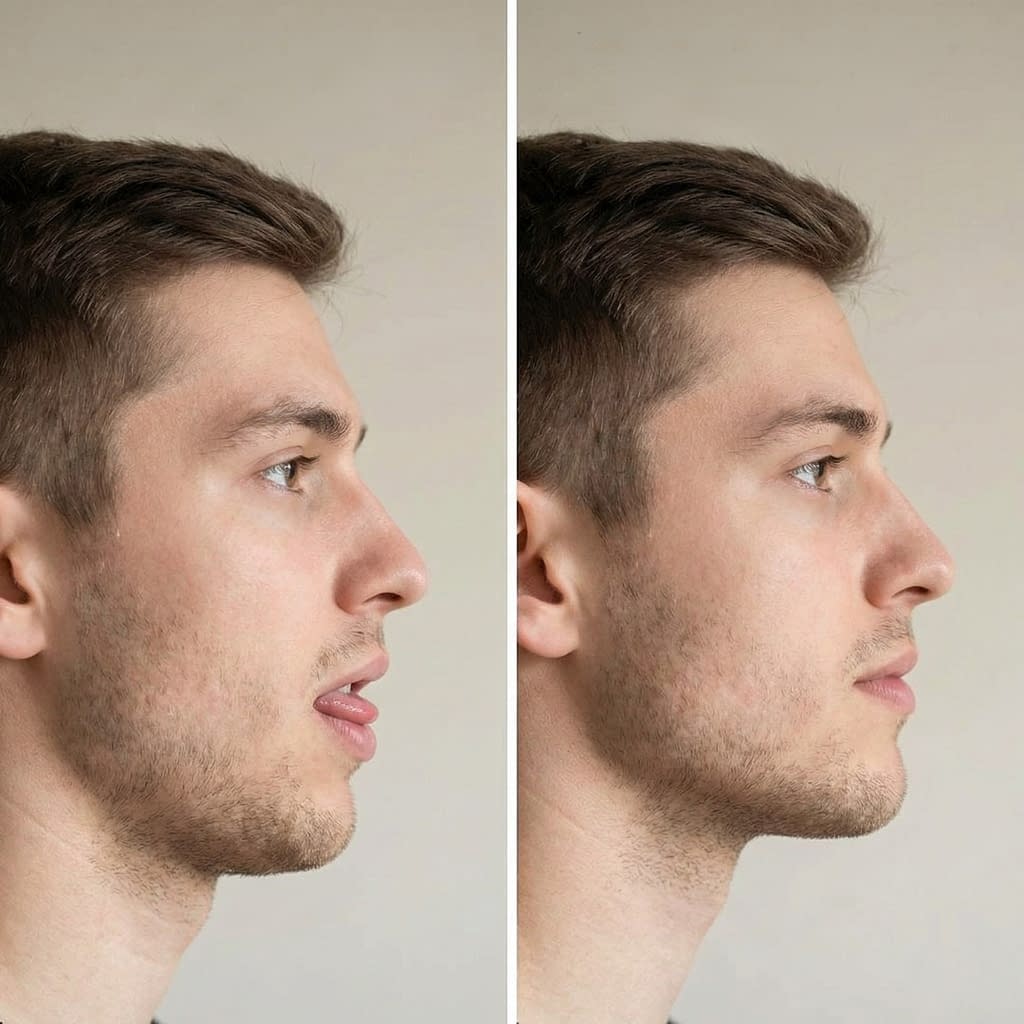
Mewing = consciously resting your entire tongue against the roof of your mouth (palate), keeping lips closed and breathing through the nose, with the teeth lightly together. Proponents claim this changes facial growth and jaw position over time.
What mewing is: a posture and breathing practice that trains tongue posture, encourages nasal breathing, and strengthens orofacial muscles. It’s related to orofacial myofunctional therapy used by specialists for certain swallowing, speech, or airway issues.
What mewing isn’t: a proven shortcut to rapidly reshape adult facial bones. Most orthodontic and craniofacial specialists caution that the evidence for mewing producing major bone changes in adults is weak or absent; skeletal changes are much more likely during childhood growth. If you need bite or jaw correction, professional orthodontic evaluation is the right path.
Understanding Proper Tongue Posture and Facial Structure
Where you rest your tongue influences forces inside the mouth. In children during growth phases, those forces can help shape dental arch width and palate development—but adult bones are largely matured and less responsive to mild pressure. Animal studies and clinical reviews show tongue volume/position affects growth during development, but translating that into adult bone remodeling is uncertain.
Practical takeaways:
- Tongue posture matters for oral comfort, swallowing pattern, and airway posture.
- Good tongue posture supports nasal breathing and may reduce mouth breathing-related issues.
- Expect muscle tone and posture improvements more reliably than structural bone changes in adulthood.
Why Consistency Matters More Than Force
Light, constant pressure and correct habits over months matter more than pressing hard for a few minutes each day. The tongue is a strong muscle: short, intense pushing won’t safely change bone and can cause jaw tension. Instead, aim for an everyday resting habit: comfortable, full-palate rest without strain. Orthodontic bodies warn that forceful or unsupervised attempts to reposition teeth or jaws can cause harm—so favor gentle, consistent practice.
Correct Tongue Placement: The Foundation of Proper Mewing
How to place your tongue at rest (step-by-step)
- Close your lips gently and let your teeth rest lightly together (not clenched).
- Slide the tip of your tongue to the area just behind your upper front teeth (but not touching the teeth). The tip may rest lightly on the gum ridge behind the incisors.
- Flatten the rest of your tongue so it makes broad contact with the roof of your mouth (palate) — not just the tip. You should feel a gentle suction or contact across the mid to back palate, not severe pushing.
- Keep your tongue relaxed — no hard straining. If you feel tension, back off until the posture feels natural.
- Practice holding this rest a few minutes at a time throughout the day until it becomes more automatic. Short frequent practice beats long forced sessions.
Why the “whole tongue” matters: broad contact distributes pressure and trains the muscle pattern, while only touching the tip is less stable and less effective as a resting posture.
How to Position Your Teeth, Jaw, and Lips While Mewing
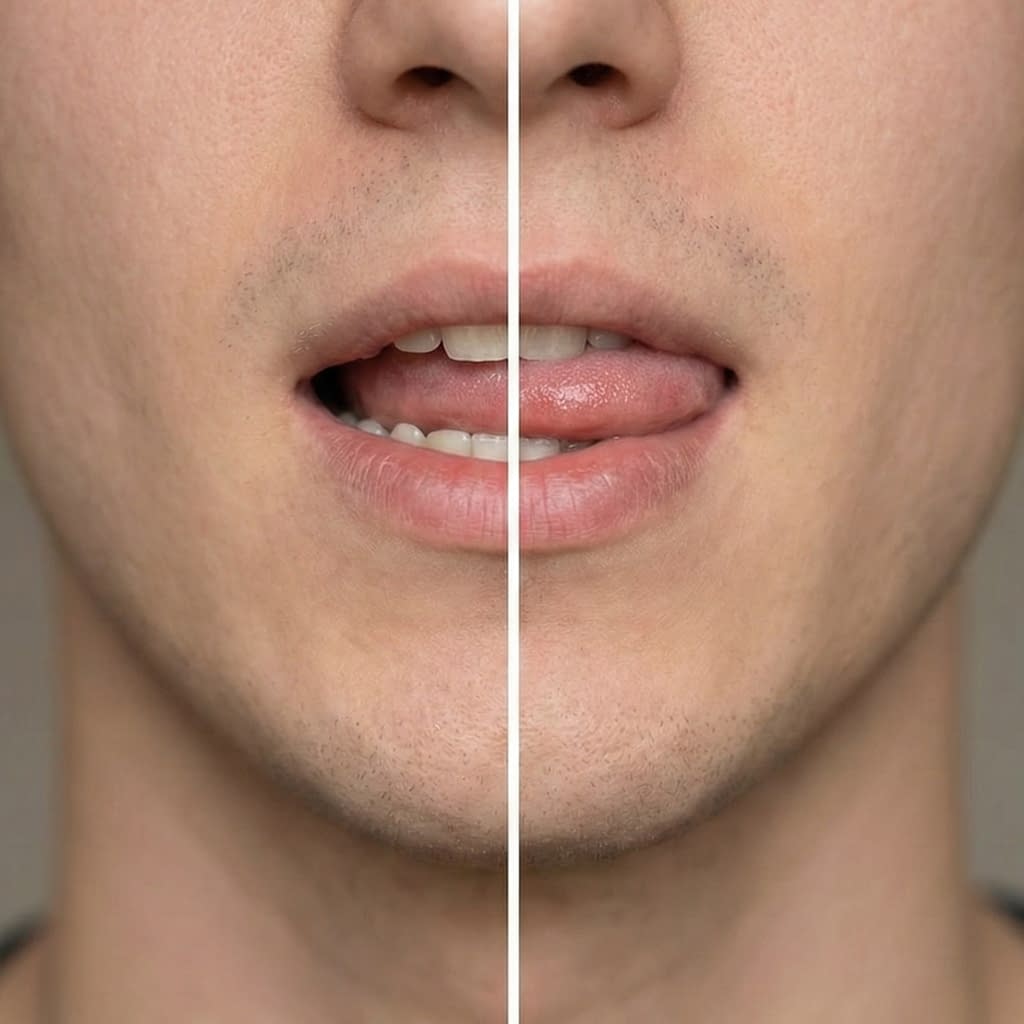
Gentle alignment basics
- Teeth: light contact or a small natural gap—do not clench. If you have a known bite problem, avoid forcing contact—ask a clinician first.
- Jaw: aim for a relaxed, neutral jaw position with no forward thrust. Imagine a small space of relaxed comfort, not a strained push forward.
- Lips: closed gently to encourage nasal breathing — no pursing or forcing. If you can’t close your lips comfortably, nasal breathing practice and orofacial therapy may help.
The goal is a calm, balanced posture—not forceful mandibular advancement. If jaw pain, popping, or discomfort develops, stop and consult a dentist/orthodontist.
Proper Head, Neck, and Body Posture for Best Results
Good mewing is whole-body posture, not just the tongue.
Posture checklist
- Chin level: avoid jutting chin forward. Imagine a gentle lengthening of the back of the neck (tuck the chin slightly, not aggressively).
- Spine: keep a neutral spine; sit/stand tall rather than slouched.
- Shoulders: relaxed, not hunched.
- Breathing: breathe through your nose (see breathing section) — chest should be relaxed; breathe from diaphragm.
Why posture helps: head-forward positions shorten the airway and make tongue-palate contact harder; a neutral spine and neck make the posture easier and reduce strain.
Step-by-Step Guide to Mewing Correctly
Daily practice routine you can follow
- Morning check (1–2 minutes): after waking, take a minute to find neutral posture and place your tongue on the palate comfortably. Breathe through your nose.
- “Micro-mew” cues: throughout the day, set phone reminders 6–8 times to check tongue rest for 20–60 seconds. Use the cue to relax jaw and maintain full-palate contact.
- Practice while doing low-focus tasks: watching TV, reading, or commuting (when not driving) are good times to practice posture.
- Integrate into activities: practice “mewing” while walking slowly, ensuring relaxed jaw and nasal breathing.
- Night habit: try to sleep with nasal breathing and lips closed. A chin-tuck pillow or sleeping posture that keeps the airway open may help—avoid mouth-breathing.
Progression: start with short, frequent checks and gradually increase the proportion of time you maintain the posture daily. The goal is habitual resting posture, not constant strain.
How to Breathe Properly While Mewing
Nasal breathing supports mewing and overall health.
Breathing step-by-step
- Breathe through the nose whenever possible; nasal breathing warms, filters, and humidifies air.
- Practice diaphragmatic breathing: inhale slowly through the nose, expand the belly slightly (not just the chest), then exhale slowly through the nose.
- If nasal congestion prevents nasal breathing, address that first—talk to a GP about allergies, nasal sprays, or ENT referral instead of forcing nasal breathing.
- Combine with tongue posture: once nasal breathing is comfortable, keep the tongue on the palate and breathe lightly through the nose.
Evidence links improved tongue posture and nasal breathing to better airway function in some groups, though mewing-specific claims remain unproven.
Common Mewing Mistakes That Limit Progress

Avoid these pitfalls
- Forcing the tongue too hard against the palate—creates tension and discomfort.
- Relying on mewing alone for major orthodontic problems—if you have crooked teeth, bite issues, or TMJ pain, seek a professional.
- Expecting rapid bone changes in adulthood—skeletal adaptation is unlikely without growth or clinical intervention.
- Ignoring breathing or posture—mewing works best with good posture and nasal breathing.
- Self-diagnosing complex problems online—if you have sleep apnea symptoms, jaw pain, or significant bite issues, talk to a clinician.
How Long It Takes to See Subtle, Realistic Changes
Realistic timeline
- Weeks to months: increased awareness, better tongue and breathing habits, small improvements in muscle tone and facial softness.
- Months to years: subtle changes in muscle tone, posture, and perhaps minor changes in soft-tissue contours that improve the way your face looks in profile and photos.
- Skeletal change: unlikely in fully grown adults without orthodontic or surgical intervention; most reliable bone changes happen during childhood/adolescence.
Be patient: small consistent daily gains add up. Track progress with photos (same angle, neutral expression) every 2–3 months rather than daily selfies.
Signs You’re Mewing Correctly (and Signs You’re Not)

Good signs
- Tongue rests easily against the palate without pain.
- Lips naturally close and nasal breathing becomes easier.
- No jaw or TMJ pain; relaxed facial muscles.
- Slight improvement in posture and a more defined, relaxed lower-face look in photos over months.
Bad signs (stop and reassess)
- Jaw pain, clicking, or headaches after practicing—reduce practice and see a professional.
- Teeth shifting unexpectedly or new bite discomfort—consult a dentist/orthodontist immediately.
- Persistent tension in neck or face—change tactics and seek guidance.
How Mewing Supports Facial Balance Over Time
What may improve
- Better cheek and lip tone from trained muscles.
- Slight soft-tissue changes (improved lower-face appearance) from posture and reduced mouth breathing.
- Improved nasal breathing and possibly better sleep quality in some people when mewing is combined with breathing work and orofacial therapy.
What’s unlikely
- Major reshaping of bone or jawline in adults purely from mewing. High-impact claims on dramatic bone remodeling are not supported by robust clinical evidence and are disputed by major orthodontic associations.
Daily Habits That Complement Mewing Results
Habits that help
- Practice nasal breathing and reduce mouth breathing.
- Improve sleep hygiene and treat nasal obstruction or allergies.
- Avoid soft foods exclusively—include chewing of varied textures to keep masticatory muscles active (but do not overdo).
- Maintain good posture: chin tucks, chest open, shoulders back.
- See an orofacial myofunctional therapist if you have swallowing, breathing, or speech pattern concerns.
What Mewing Can and Cannot Change Long-Term
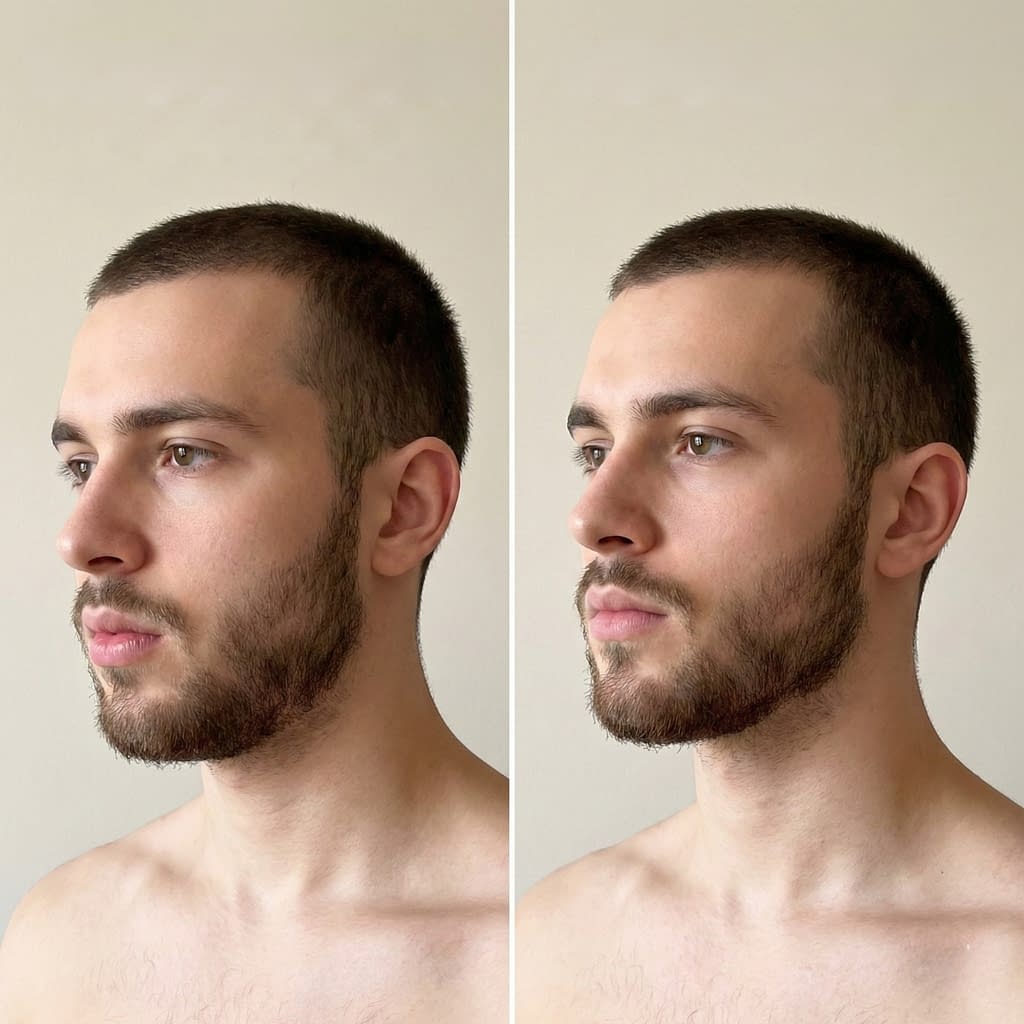
Can help
- Improve tongue posture, breathing patterns, and orofacial muscle tone.
- Potentially make subtle improvements to facial soft-tissue appearance and symmetry when practiced consistently with healthy lifestyle habits.
Cannot reliably do
- Guarantee large skeletal remodeling or replace orthodontic treatment or surgery in adults. If your goal is major bite realignment or jaw correction, consult an orthodontist or oral/maxillofacial surgeon.
Final Thoughts
Mewing is a low-risk, posture- and breathing-focused practice that’s worth trying for improved tongue posture, nasal breathing, and muscle tone—especially if you pair it with good posture and healthy habits. Be realistic: in adults, expect subtle, gradual changes in soft tissue and muscle tone rather than dramatic bone reshaping. Avoid forceful techniques, stop if you get pain, and talk to a dentist, orthodontist, or orofacial myofunctional therapist if you have dental, jaw, or breathing concerns. Major claims about mewing’s power to remold adult bone are not supported by robust clinical evidence; professional assessment is the safe path for structural change.


