

Winter doesn’t automatically stop sweat. Hands and feet can still get clammy in cold months — especially when you move between cold outdoors and heated indoors, wear heavy boots, or if your body runs a little hot under layers. This guide gives clear, practical, low-effort steps you can use today: daily hygiene, sock and shoe choices, topical fixes (including when to try antiperspirants), gentle natural options, easy foot/hand care rituals, diet and lifestyle tips, and when to see a professional. Read the sections that matter to you and pick 2–3 changes to try this week.
Why Sweating Can Still Happen in Winter
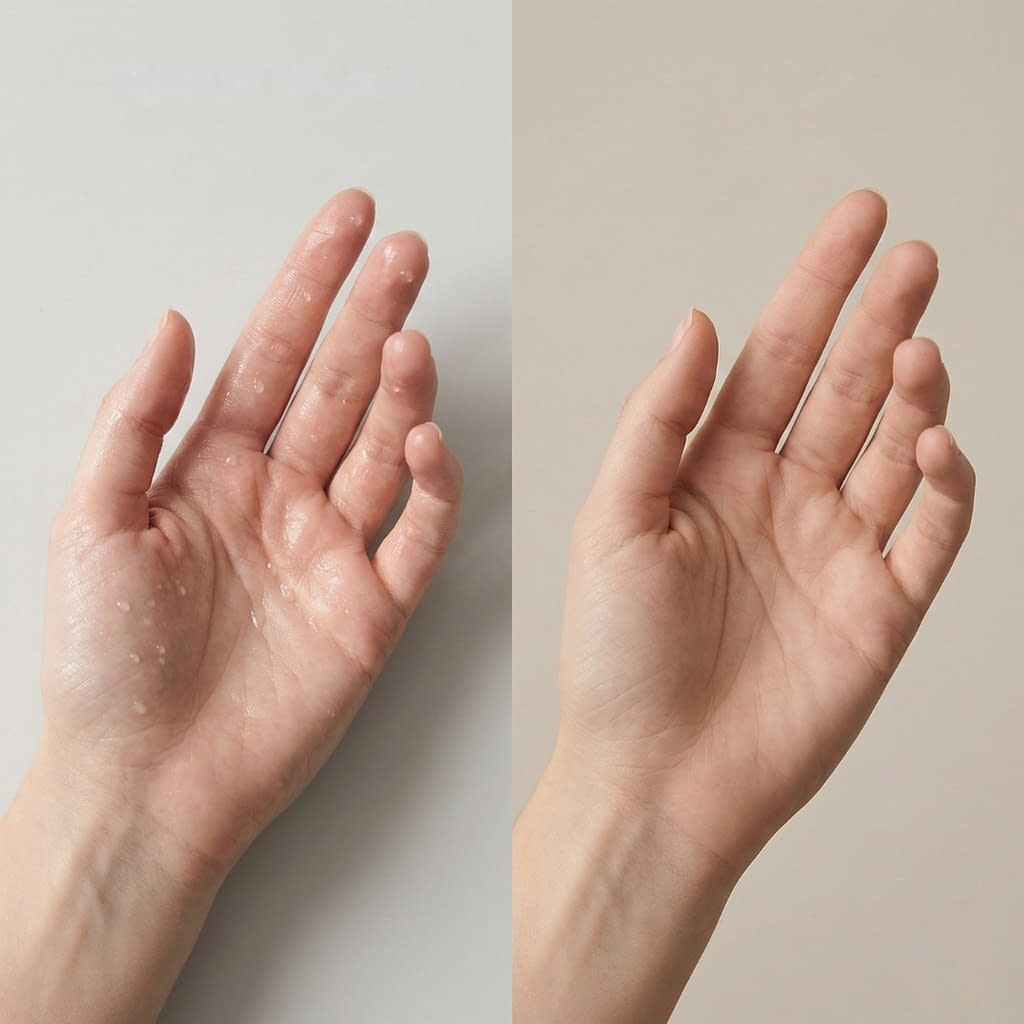
Sweat is your body’s cooling tool, but it’s also triggered by temperature swings, activity, emotion and footwear environment. Walking into a warm, crowded room after being outside in the cold, wearing insulated boots, or even nervousness while presenting or shaking hands can make palms and soles sweat. Feet also sweat when insulation traps heat and moisture inside shoes — winter boots are warm, and that warmth plus friction causes sweating even though the air outside is cold.
Practical takeaway: manage micro-climates (the tiny environment inside your shoes and gloves) and reduce rapid temperature swings where you can.
Understanding Hyperhidrosis: When Hands and Feet Sweat Too Much
Some people have focal hyperhidrosis — a medical tendency to sweat excessively on palms (palmar) and soles (plantar). If your sweating is frequent, very heavy (dripping or soaking through socks), or it limits daily life, it may be more than normal seasonal sweating and is worth medical attention. For persistent problems that don’t respond to simple self-care, NHS guidance recommends seeing a GP, especially if it’s lasted 6+ months or affects your work and relationships.
When to seek help sooner: if sweating is sudden, asymmetric, accompanied by weight loss, fever, or other changes — these could signal an underlying condition and need a doctor’s evaluation.
How Temperature and Moisture Affect Your Extremities
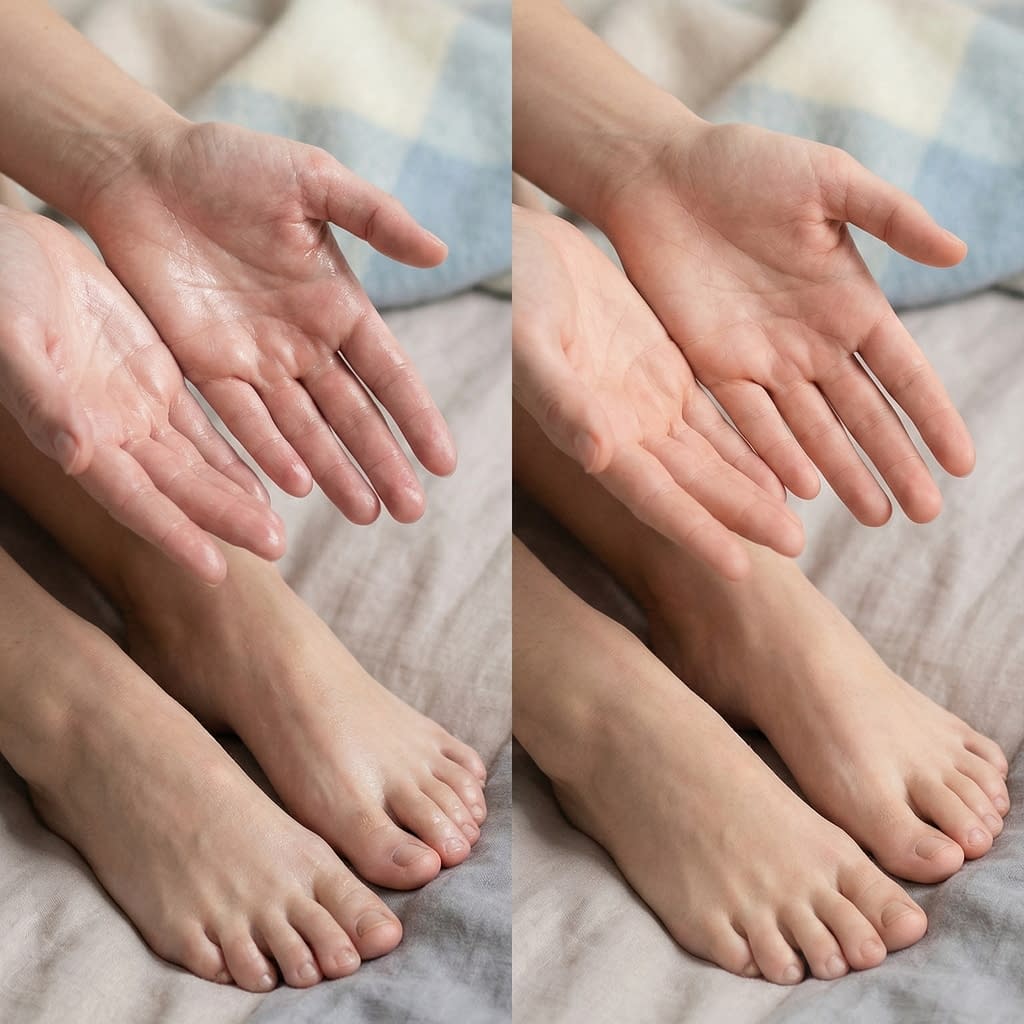
Hands and feet react to both ambient temperature and trapped moisture. Key points:
- Cold air triggers vasoconstriction (blood vessels narrow) outdoors, but moving into warmth makes blood flow increase and glands activate.
- Heated indoor spaces, thick socks, and insulated boots raise local foot temperature and hold moisture — the combination leads to sweating and discomfort.
- Sweaty skin + darkness + warmth = higher chance of odor and fungal issues, so control moisture early.
Practical tweak: plan for layers you can remove immediately when you come indoors (thin liners + removable socks) so the “warmth trap” is limited.
Daily Hygiene Habits to Keep Hands and Feet Dry
A consistent, gentle hygiene routine reduces sweat, odor, and skin problems.
Morning & evening routine (step-by-step)
- Clean: wash hands and feet daily with a gentle cleanser; for feet make sure to wash between toes. Pat completely dry — don’t just wipe.
- Dry: use a clean towel and, for toes and finger webs, press dry or use cotton swabs to remove moisture. Microorganisms love damp crevices.
- Powder (optional): at the start of the day, dust a very light layer of talc-free absorbent powder or cornstarch-based foot powder on feet or palms to reduce initial dampness.
- Rotate shoes and gloves: don’t wear the same shoes two days in a row — give them 24–48 hours to air out.
- Night care: let feet breathe at home barefoot when safe — this simple habit reduces constant humidity buildup.
Small habit: keep a thin microfiber towel in your bag for quick drying after being outside or after public handwashing.
Choosing the Right Socks and Footwear for Winter
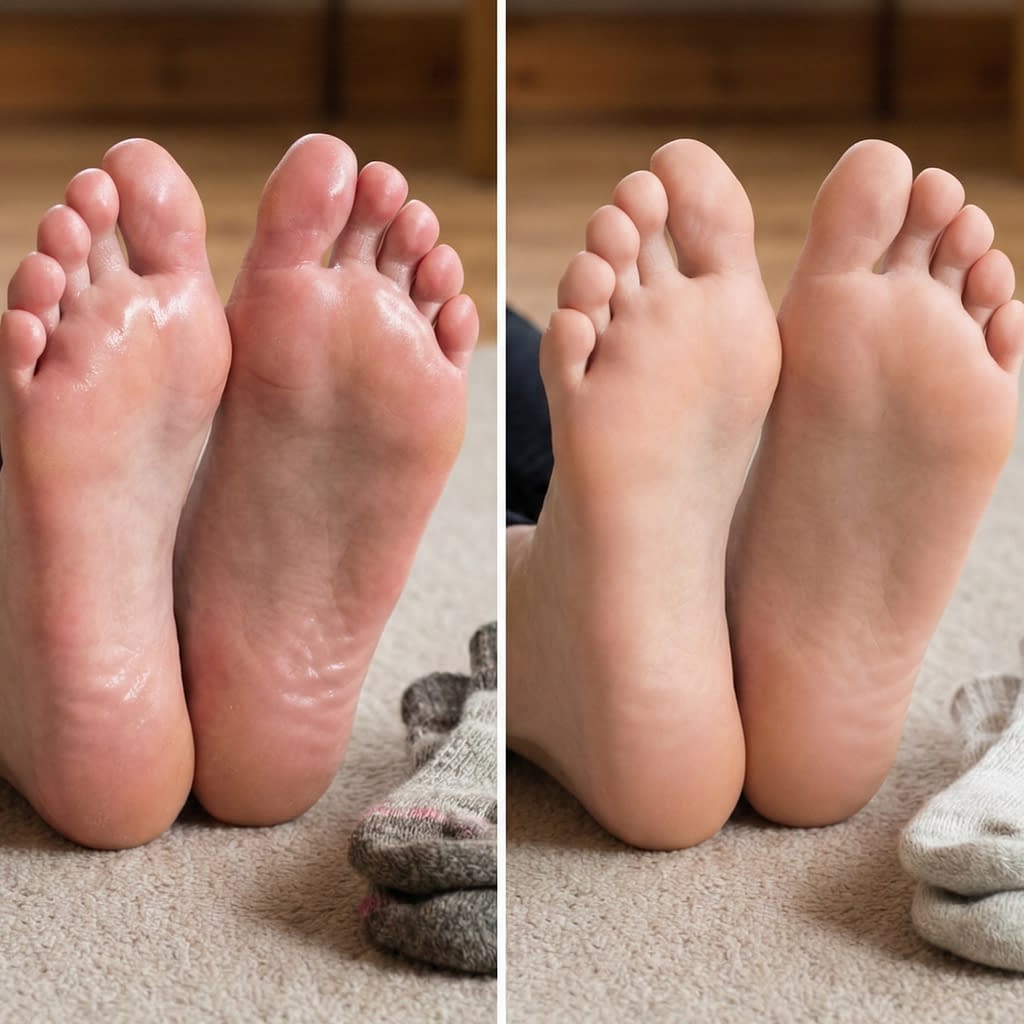
The right socks + shoes control the microclimate so sweating is reduced without losing warmth.
How to pick them (step-by-step)
- Use moisture-wicking base socks (merino wool or bamboo blends) next to the skin to pull sweat away. Merino regulates temperature and resists odor; bamboo is soft and breathable. Avoid heavy 100% cotton against the skin — it traps moisture.
- Add an insulating mid-layer if needed (thin wool blend), not extra cotton layers.
- Choose winter shoes with breathable linings and a removable insole — they dry faster when taken out overnight.
- Rotate: keep at least 2–3 shoe pairs in rotation so each pair can dry fully between wears.
- For palms: if you wear gloves, pick liners made of moisture-wicking fabrics; for tasks where you need grip, try gloves with partial ventilation or leather that breathes.
Practical test: after a walk, remove socks and check whether they feel damp; if they’re wet, try a different material or a liner.
Materials That Reduce Sweat and Odor
Best materials to look for:
- Merino wool: naturally moisture-wicking, temperature-regulating and odor-resistant — great for socks and glove liners.
- Bamboo blends: breathable and soft for liners and everyday socks. (Often blended with synthetics for durability.)
- Technical synthetics (Coolmax, polyester blends, Drymax): engineered to wick moisture; excellent for athletic and hiking socks.
- Avoid 100% cotton next to the skin when you’ll be active or wearing boots for long stretches.
Tip: look for socks with antimicrobial-treated yarns (silver or copper) if odor and microbe control matter — they don’t stop sweating but reduce smell.
Topical Remedies That Help Control Excess Sweat
Topical antiperspirants for palms and soles are effective tools — many contain aluminum salts that temporarily block sweat ducts.
How to use topical antiperspirants safely (step-by-step)
- Choose a product formulated for hands/feet (often stronger than underarm antiperspirant). Aluminum chloride hexahydrate is among the most effective active ingredients used in antiperspirants.
- Night application method (commonly recommended): apply to clean, dry skin right before bed; leave overnight; wash off in the morning. This timing improves efficacy and reduces irritation. (Follow product instructions.)
- Start with lower frequency (every other night) to assess skin tolerance, then increase to nightly if tolerated; if irritation occurs, reduce use or stop.
- Important: do not apply to broken or irritated skin. For sensitive skin, dilute or use gentler options and consult a pharmacist if uncertain.
- For persistent palmar/plantar hyperhidrosis, clinicians may recommend iontophoresis, prescription topical formulations, or other treatments — your GP or dermatologist can advise.
Safety note: some people experience stinging or irritation; stop if your skin reacts badly.
Natural Ingredients to Prevent Sweating Without Irritation
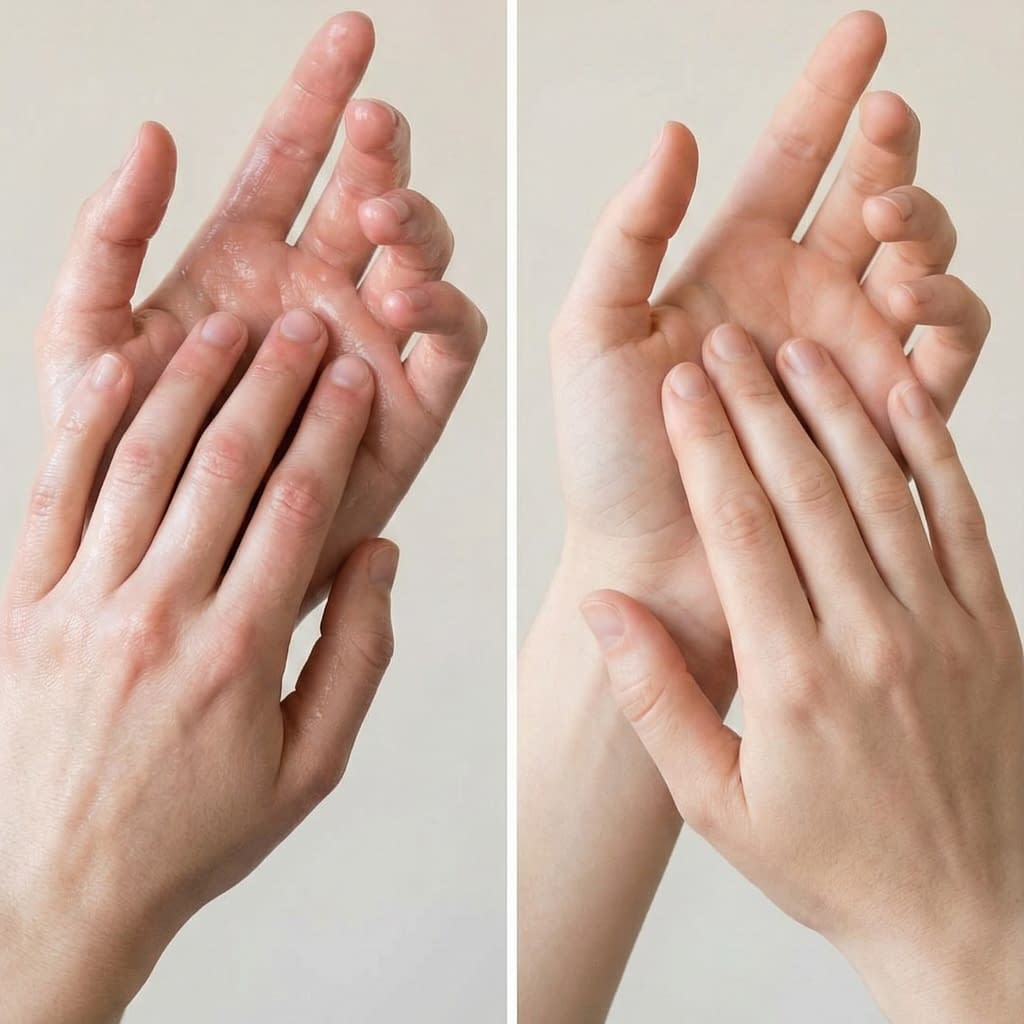
If you prefer gentler, natural measures, try these carefully (patch-test first):
- Witch hazel: a light astringent that can reduce surface moisture and soothe skin — dab between toes or palms after drying.
- Baking soda: absorbent and alkalizing; a light dusting can help absorb moisture and neutralize odor (don’t overdo it; may irritate sensitive skin).
- Sage or green tea: both have mild astringent and antioxidant effects; a cooled tea rinse for feet can be soothing (soak briefly then dry).
- Cornstarch or arrowroot powder: gentle absorbents you can mix with a few drops of tea tree oil (very diluted) for odor control — avoid applying to broken skin.
Remember natural doesn’t always mean non-irritating — always patch-test and avoid essential oils undiluted between toes or on palms.
Foot Soaks and Hand Care Tips for Winter Dryness
Winter can bring dryness and cracked skin as well as sweating — balance moisture control with gentle care.
Hand & foot soak options (step-by-step)
- Gentle salt soak for feet: 1/2 cup Epsom salt in warm (not hot) water — soak 10–15 minutes to relax and mildly exfoliate; pat dry and moisturize (apply a thin moisturizer, then a breathable sock if you want warmth).
- Vinegar soak for odor control: 1 part apple cider vinegar to 2–3 parts water — soak 5–10 minutes for antimicrobial action, rinse and dry thoroughly (don’t use on cracked skin).
- Moisturize after soaking: use a light, non-greasy lotion during the day and a thicker emollient (petrolatum or heavier cream) at night to repair winter dryness. Avoid heavy daytime moisturizers if sweating is active — use them at night instead.
- Hand care: after washing, dry completely. Apply a barrier balm at night if hands are cracked; during the day, use an absorbent powder if palms sweat.
Balance note: do not over-soak — excessive soaking can strip natural oils and worsen dryness long-term.
How to Manage Sweating During Daily Activities
Practical, low-effort strategies to use on the go:
- Carry a small absorbent towel or handkerchief to dry palms quickly after public handwashing or entering a warm room.
- Change socks midday if you’ll be active (easy with commuter shoes and a spare pair).
- Use breathable footwear indoors (slippers with wool liners) rather than wearing outdoor boots all day.
- For meetings or presentations, keep a thin note card or tissue in your hand to discreetly catch sweat and reduce anxiety about clammy palms — psychological comfort reduces sympathetic sweating.
- If stress triggers sweating, quick breathing (5 slow nasal breaths) calms the nervous system.
Small habits like these massively reduce social stress and keep skin drier.
Diet and Hydration Habits That Influence Sweating
Food and drink affect your baseline sweat rate and body temperature.
Practical nutritional tips
- Hydrate consistently — paradoxically, dehydration can make you feel hotter and more prone to sweating in short bursts. Sip water across the day.
- Cut back on trigger foods if you suspect they matter: very spicy food, excessive caffeine, or high-alcohol intake can increase sweating in sensitive people.
- Maintain steady blood sugar: erratic spikes may stimulate sympathetic responses in some individuals.
- Focus on anti-inflammatory foods (leafy greens, omega-3s) if you notice sweating worsens with inflammation or stress.
If you suspect endocrine causes (thyroid issues, menopause), discuss with your GP — those need medical assessment.
When Excessive Sweating Needs Professional Advice
See a GP or dermatologist if:
- Sweating is so heavy it soaks socks/shoes or drips from palms regularly.
- It’s lasted for more than 6 months and disrupts daily life.
- It’s sudden, asymmetric, or comes with other symptoms (weight loss, fever, palpitations).
- You’ve tried over-the-counter measures and topical antiperspirants and nothing helps.
Professionals can offer iontophoresis, prescription antiperspirants, botulinum toxin (sometimes used), or in severe cases surgical options — and can check for underlying causes.
Common Mistakes That Make Sweating Worse in Winter
Avoid these common errors:
- Wearing heavy cotton socks/liners that trap moisture next to skin.
- Keeping the same pair of shoes or boots on multiple days without airing them.
- Using overly greasy daytime moisturizers inside socks — they increase humidity.
- Rubbing between toes vigorously when damp — it can cause breakdown and fungal problems.
- Relying on perfume or strong fragrances to mask smell; that doesn’t stop moisture and can irritate sensitive skin.
Fixing these mistakes is often the fastest route to relief.
Final Words
Stopping hand and foot sweating this winter is about controlling the tiny environments around your extremities, not freezing yourself. Start with simple changes: switch to moisture-wicking liners (merino or bamboo), rotate shoes, dry skin thoroughly, try a topical antiperspirant (night application) if sweating is heavy, and add gentle natural measures like witch hazel or short tea soaks. If sweating is severe, persistent, or affecting your life, see a GP — effective medical treatments exist. Pick 2 of the small changes above, try them for two weeks, and tweak from there.


