

Stretch marks can feel stubborn and personal, but you don’t need harsh chemicals or expensive procedures to improve their appearance. With consistent, skin-smart habits — hydration, gentle exfoliation, targeted massage, nutrition that supports collagen, and a few do-it-yourself treatments — most people can soften the color and texture of stretch marks and make them less noticeable over time. This post explains what stretch marks are, which natural approaches can help (and what to expect), and gives step-by-step routines, DIY recipes, and practical timelines so you can build a sustainable plan that fits your life.
What Are Stretch Marks and Why Do They Appear?
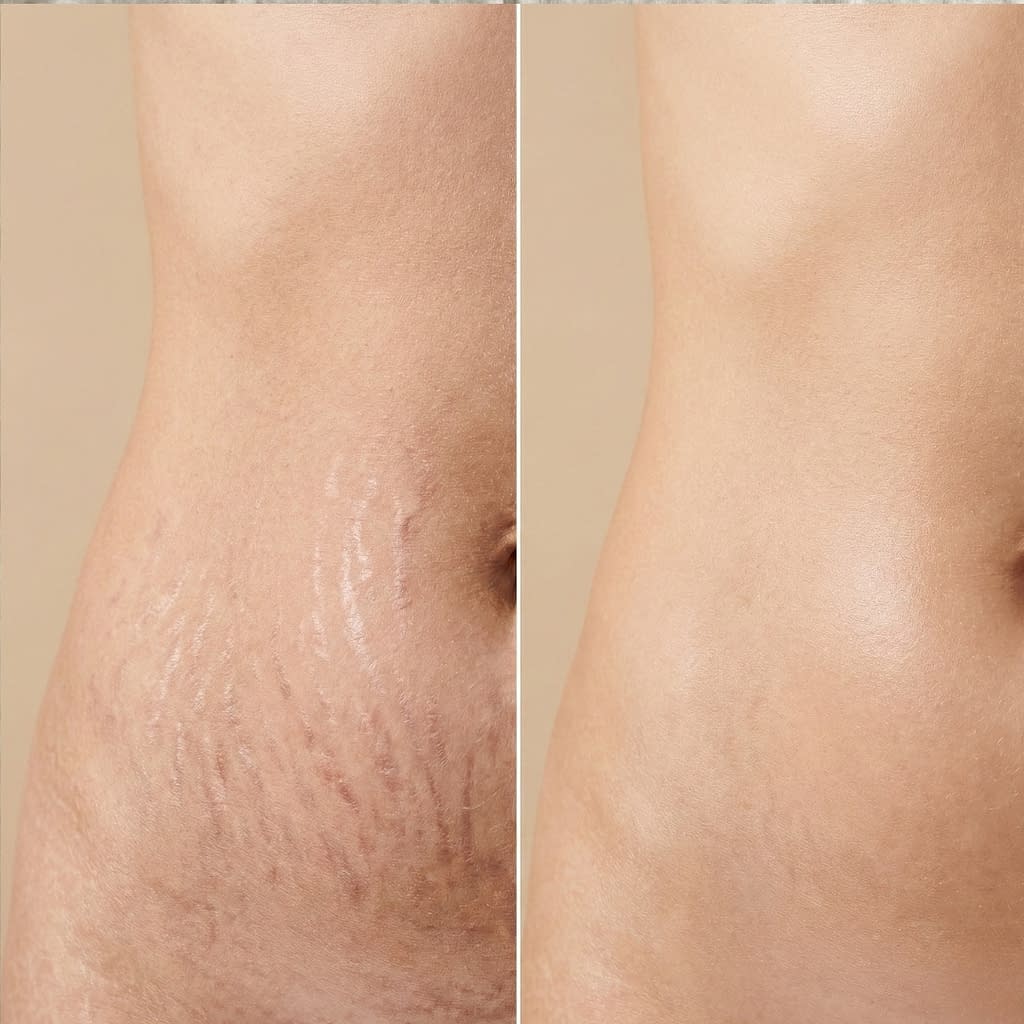
Stretch marks (striae) are lines that form when the skin stretches or shrinks quickly. They begin as reddish, pink, or purple streaks and often fade to a silvery-white over time. Biologically, they’re caused by tearing or alteration of the dermis — the skin layer that contains collagen and elastin — so the surface layer shows linear scars.
Common triggers:
- rapid growth or weight gain (teen growth spurts)
- pregnancy and postpartum body changes
- rapid muscle gain from intense training
- hormonal changes (corticosteroids, certain endocrine conditions)
- genetics (some people are simply more prone)
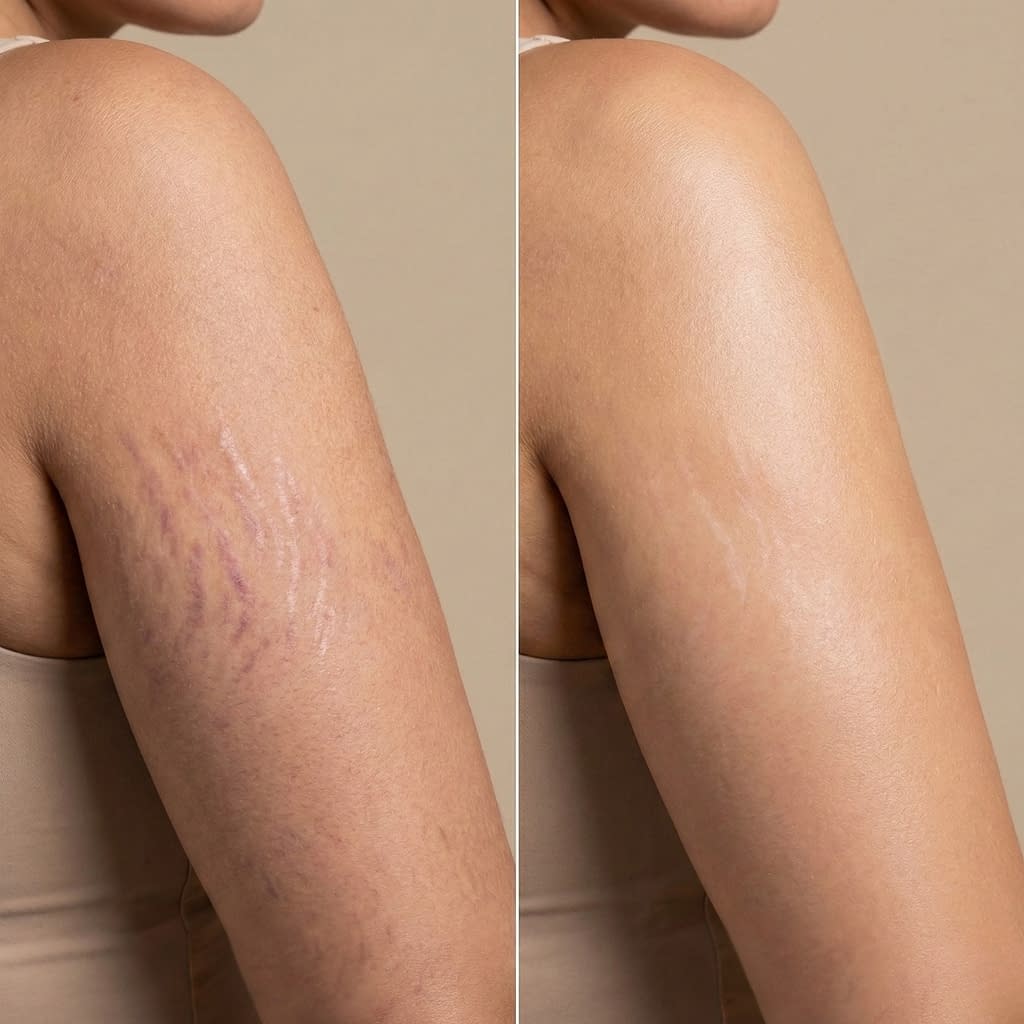
Important to know: new (red/purple) stretch marks are more responsive to topical and massage therapies; older, whitish stretch marks are slower to improve because the dermal remodeling has completed. Natural approaches aim to improve skin elasticity, boost repair, and visually soften color and texture — they rarely “erase” stretch marks completely, but often make them far less noticeable.
Can Stretch Marks Be Reduced Naturally? What to Expect
Yes — many natural measures can reduce visibility, but realistic expectations are critical.
What natural care can do:
- hydrate and plump surrounding skin so marks blend in more
- fade redness and discoloration over time
- smooth texture and reduce roughness with exfoliation and massage
- stimulate mild collagen and elastin production through topical nutrition, retinoid alternatives, and mechanical stimulation (massage, gua sha)
What natural care usually cannot do alone:
- completely remove old, deep white stretch marks (those often need professional treatments such as lasers, microneedling, or medical-grade resurfacing for dramatic change)
Timeline to expect:
- Immediate (days–2 weeks): skin feels more hydrated, improved surface smoothness
- Short term (4–12 weeks): reduced redness, softer texture, beginning of visual fading for newer marks
- Long term (3–12+ months): gradual fading and remodeling — greatest improvements seen with consistent care over months
Bottom line: start early (newer marks respond better), be consistent, and combine topical, mechanical, and dietary strategies for the best natural outcome.
Start With Proper Skin Hydration
Hydrated skin looks healthier and camouflages marks. A simple daily hydration protocol:
Daily skin hydration routine (AM & PM)
- Gently cleanse the area with a mild, pH-balanced body wash. Avoid harsh soaps that strip oils.
- Pat dry — never rub aggressively. Leave skin slightly damp.
- Apply a humectant serum (if available) — something with glycerin or hyaluronic acid — to attract and hold moisture. Use a pea-sized amount for an area like the belly or hips.
- Seal with an emollient/occlusive moisturizer to lock the moisture in. Choose creams or butters (see oils/butters below). Apply at least once daily, better twice (AM and PM), or immediately after showering.
- Massage gently while applying — this boosts circulation and helps the product penetrate (see massage section).
Practical product tips:
- For daytime use lighter creams or lotions; at night switch to a richer cream or oil.
- Look for products labeled “for stretch marks” or containing ceramides and niacinamide to support barrier repair.
Natural Oils That Help Fade Stretch Marks
Oils and butters won’t erase stretch marks, but they improve skin texture, increase pliability, and make marks less visible. Commonly used oils and why:
- Rosehip oil — rich in essential fatty acids and naturally occurring vitamin A precursors; prized for helping texture and pigmentation.
- Coconut oil — good occlusive, penetrates easily, reduces water loss.
- Sweet almond oil — lightweight, good for daily massage.
- Argan oil — antioxidant-rich and nourishing.
- Olive oil — emollient and inexpensive; use for massage.
- Shea butter & cocoa butter — thicker butters that lock in moisture and are traditional post-pregnancy staples.
- Vitamin E oil — popular for scarring; may be used diluted. (Patch test first; some people react.)
How to use oils (daily)
- Warm 1–2 tsp of oil in your hands.
- Massage using long upward strokes over the stretch marked area for 3–5 minutes (see massage technique).
- For night care, apply a thicker layer and cover with soft clothing if it transfers.
- Combine oils: a 70/30 blend of carrier oil (sweet almond) + targeted oil (rosehip) gives nourishing but not too heavy feel.
Safety note: avoid essential oils neat over large areas; dilute if using. If pregnant, check with your provider about any topical agents (most carrier oils are safe, but avoid high-dose retinoids or certain essential oils).
DIY Remedies for Stretch Mark Reduction

Simple, low-risk at-home recipes you can make with pantry/beauty-grade ingredients. Patch test before first full use.
- Rosehip + Jojoba Repair Serum
- 15 ml jojoba oil (carrier)
- 5 ml rosehip oil
- 1 drop vitamin E oil
- Mix into a small bottle, apply 1–2 drops and massage nightly.
- Aloe + Coconut Oil Soothing Gel (hydration + calming)
- 2 tbsp pure aloe vera gel
- 1 tsp fractionated coconut oil
- Mix and apply twice daily. Aloe supports skin hydration and has soothing polysaccharides.
- Brown Sugar + Olive Oil Exfoliant (use weekly)
- 2 tbsp brown sugar
- 1 tbsp olive oil
- Massage gently in circular motions for 1–2 minutes, rinse. This improves surface texture (see exfoliation).
- Coffee + Coconut Scrub for Circulation (use weekly)
- 2 tbsp finely ground coffee
- 1 tbsp coconut oil
- Massage 1–2 minutes and rinse — coffee stimulates circulation and exfoliates.
- Collagen-Boosting Topical Mask (occlusive)
- 1 tbsp mashed avocado + 1 tsp honey + 1/2 tsp olive oil
- Apply 10–15 minutes then rinse. Avocado provides healthy fats and vitamins.
Notes: these are supportive — consistent use matters more than any single recipe.
Exfoliation Techniques to Improve Skin Texture
Removing dead skin improves texture and allows active ingredients to penetrate better. Use gentle methods — the skin with stretch marks can be sensitive.
Options & frequency:
- Mechanical (physical) exfoliation: sugar scrubs, soft body brush, konjac sponge. Use 1× weekly for most skin types. Avoid harsh salt scrubs or stiff brushes on newly formed or inflamed marks.
- Chemical exfoliation: mild AHA products (lactic acid is gentle) can speed surface renewal. Use a low-strength AHA body lotion 1–2× weekly. Start slow and patch test.
- Dry brushing: increases circulation and lymphatic flow; do before shower in gentle upward strokes, 2–3× per week.
Step-by-step sugar scrub (weekly)
- In shower, wet skin. Mix 2 tbsp brown or white sugar + 1 tbsp oil.
- Gently massage for 60–90 seconds, always in the same direction (upward or along muscle lines).
- Rinse and apply moisturizer while skin is damp.
Cautions:
- Don’t exfoliate inflamed or broken skin.
- After chemical exfoliation avoid sun exposure and always use SPF the next day.
Massage Methods That Improve Blood Circulation

Massage increases blood flow and may encourage remodeling by gently stimulating fibroblasts. Do it consistently.
Daily massage routine (5 minutes)
- Apply oil or cream to the area.
- Use long strokes along the length of the tissue (for abdomen, stroke upward from pubic bone toward belly button, then toward ribs). Repeat 10 strokes.
- Use circular kneading with fingertips to the mark area for 2 minutes (small clockwise and counterclockwise circles).
- End with light tapping (percussive stimulation) for 30–60 seconds to boost circulation.
- Finish by covering area with moisturizer or oil — press gently to help absorption.
Tools you can use:
- Gua sha (gentle, glide—not aggressive scraping) — use with oil and slow strokes toward lymph nodes.
- Soft silicone body massager or handheld jade roller — use delicately.
Frequency: daily (or at least 3–5× per week) for best results. Avoid aggressive deep tissue massage over newly formed purple/red stretch marks.
Boost Collagen to Repair Stretch Marks
Collagen is the structural protein that gives skin strength; boosting collagen synthesis supports dermal remodeling.
Topical and dietary approaches:
- Topical vitamin C (ascorbic acid) helps collagen production and brightens pigmentation. Use a stable body serum or cream with vitamin C on stretch-marked areas. Apply once daily (AM) and pair with sunscreen.
- Retinoid alternatives: topical retinoids (prescription tretinoin) can stimulate collagen and are used by dermatologists — do not use during pregnancy and consult a provider. For a natural alternative, topical bakuchiol (plant derived) is well tolerated and may support similar pathways.
- Peptides: some body creams contain peptides that signal collagen synthesis — use as directed.
- Collagen peptides supplement: oral hydrolyzed collagen + vitamin C has supportive research for skin elasticity for some people (take per product directions; discuss with clinician if pregnant or nursing).
Practical plan:
- AM: gentle cleanse → vitamin C body serum or cream → moisturizer + SPF on exposed areas.
- PM: gentle cleanse → peptide cream or bakuchiol product → rich moisturizer.
- Consider consulting a dermatologist for prescription-strength options if acceptable.
Best Home Ingredients for Skin Elasticity
Ingredients with supportive evidence or long-standing use:
- Vitamin C (topical): antioxidant, collagen booster.
- Niacinamide: improves barrier, evens tone.
- Hyaluronic acid: hydration and plumping.
- Peptides: support collagen signaling.
- Centella asiatica (cica): soothing, supports collagen and repair.
- Aloe vera: hydrating and calming.
- Rosehip oil: fatty acids and provitamin A for texture.
- Shea/cocoa butter: occlusive, soften skin texture.
How to layer: lighter actives (vitamin C, hyaluronic acid) first, followed by peptides or oils, and finish with an occlusive moisturizer to lock everything in.
Nutrition Tips for Healthier, More Elastic Skin
What you eat matters. Collagen production requires specific nutrients.
Daily nutrition checklist
- Protein every meal (eggs, fish, poultry, tofu, legumes) — amino acids are collagen building blocks.
- Vitamin C (citrus, strawberries, bell peppers) — essential cofactor for collagen synthesis.
- Zinc & copper (pumpkin seeds, nuts, shellfish) — cofactors for skin repair.
- Omega-3 fats (salmon, flaxseed, walnuts) — reduce inflammation and support barrier function.
- Antioxidants (berries, green tea, leafy greens) — protect fibroblasts from oxidative damage.
- Hydration: aim for steady water intake — skin cells need water to function and repair.
- Collagen peptides (optional): many people use hydrolyzed collagen 5–10 g daily + vitamin C for months — some evidence suggests modest improvements in elasticity.
Lifestyle impact:
- Avoid smoking and limit high sugar/processed food intake (glycation damages collagen).
- Maintain steady, gradual weight management — rapid weight fluctuations increase stretch mark risk.
Daily Habits That Prevent Stretch Marks From Worsening
Prevention and maintenance are as important as treatment.
Daily prevention habits
- Moisturize daily especially when pregnant, dieting, or lifting weights.
- Control rate of change — aim for gradual weight changes when possible; follow a nutrition/training plan that avoids extreme gain.
- Use SPF on exposed areas (UV can worsen pigment contrast).
- Avoid topical corticosteroids over large areas unless prescribed and supervised.
- Practice gentle skincare — avoid harsh peels or aggressive exfoliation over fresh marks.
- Stay active to support circulation and maintain healthy skin.
How Long Does It Take to See Results?
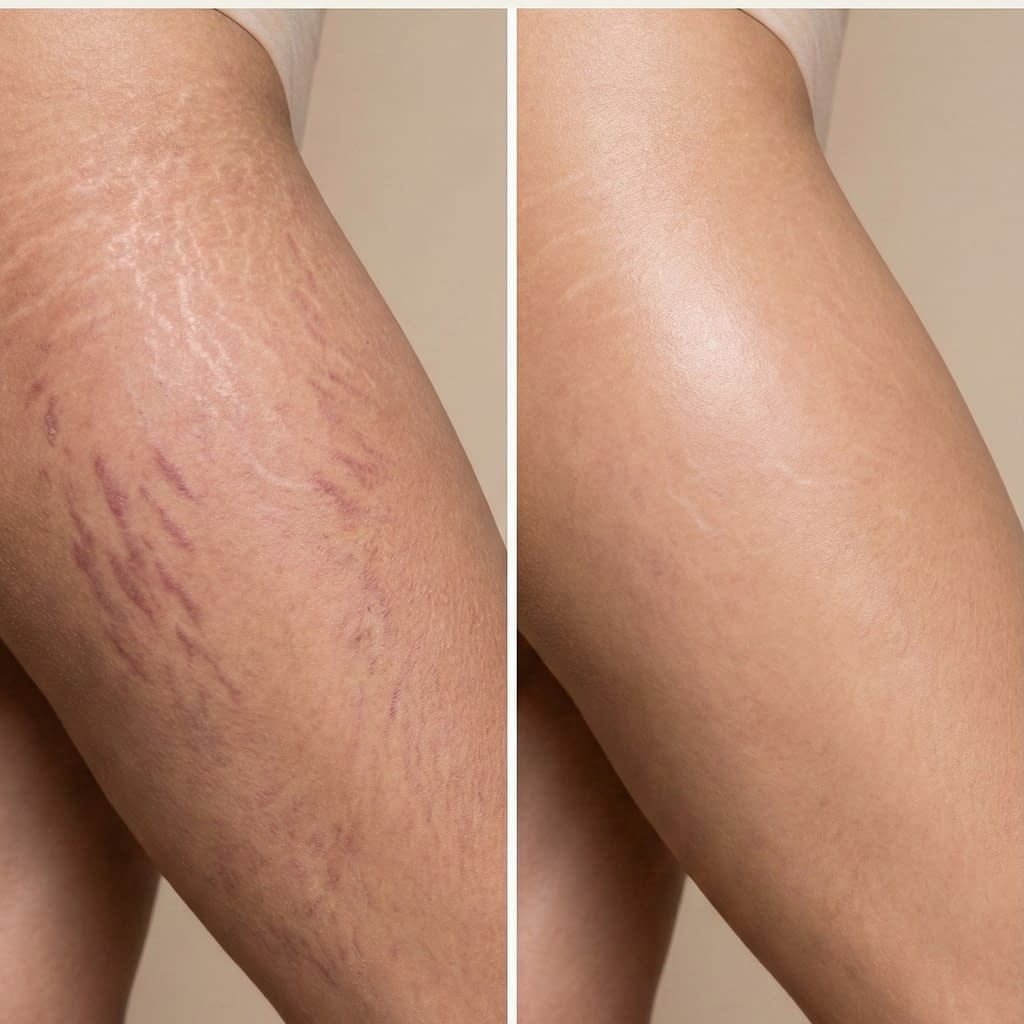
Realistic timelines:
- Immediate: improved hydration and smoother look after the first week of consistent moisturization.
- 4–8 weeks: color (red/purple) can start to fade; texture improves with regular exfoliation and massage.
- 3–6 months: noticeable softening and blending of stretch marks for many people, especially for newer marks.
- 6–12+ months: continued gradual improvement; older white stretch marks will usually show modest fading and softening but may not disappear without medical treatments.
Keep a photo diary: take consistent “before” photos under the same lighting every 4–6 weeks — slow changes are easier to measure visually this way.
Common Mistakes That Slow Down Progress
Avoid these pitfalls:
- Inconsistency: sporadic application won’t produce change — make a simple daily routine and stick to it.
- Over-exfoliation: too much scrubbing damages barrier and inflames skin, making marks more prominent.
- Expecting overnight results: remodeling takes time. Impatience leads to trying many conflicting methods at once.
- Using harsh actives during pregnancy: avoid retinoids and some strong actives when pregnant/nursing — consult your provider.
- Ignoring sun protection: UV exposure can darken stretch marks and make them more visible.
- Relying on a single product: best results come from combining hydration + massage + nutrition + gentle exfoliation.
Final Words
Reducing stretch marks naturally is a patient, multi-pronged effort: hydrate and protect your skin, stimulate circulation and gentle renewal with massage and exfoliation, nourish the body for collagen production, and use targeted topical ingredients (vitamin C, peptides, rosehip, hyaluronic acid) consistently. Newer marks respond best, but with steady care even older marks can soften and become much less noticeable.
If stretch marks are recent or you want faster, stronger results, consult a dermatologist — professional options (microneedling, fractional lasers, prescription retinoids) can be combined with your natural routine safely under guidance. Above all, be kind to your body while you care for it: small daily habits stack into big improvements over time.


