

Hard water is one of those sneaky, everyday culprits that can silently wreck your hair: minerals build up, moisture gets blocked, styling looks dull, and the scalp can feel irritated. The good news is that hard-water damage is fixable — often with a few smart products, consistent habits, and a little home testing. This guide is written for men who want practical, no-nonsense steps: how to diagnose hard-water damage, immediate fixes you can do today, weekly and monthly treatments that rebuild hair health, long-term solutions (filters, softeners), and the grooming habits that reduce future damage.
Read straight through or jump to the section you need — every heading below includes clear, step-by-step actions you can start right away.
What Hard Water Does to Hair (Men’s Guide)

Hard water contains dissolved minerals — primarily calcium and magnesium, sometimes iron — that interact with shampoo, conditioner, and your hair fibers. Over time those minerals:
- Build a crusty film on the shaft (you’ll notice hair feels stiffer or rough).
- Reduce lather and rinse, so shampooing feels less effective and you may shampoo more often (which worsens dryness).
- Make color appear duller and reduce shine.
- Cause tangles and dryness, because the cuticle won’t lie flat.
- Irritate the scalp for some people (flake-like residue, itch).
For short hairstyles or fades, you might notice loss of natural softness and volume; for longer hair, ends feel straw-like and styles don’t hold. The good news: removing mineral buildup and rebuilding moisture quickly improves texture and manageability.
How to Tell If Hard Water Is the Cause of Your Hair Problems
Look for these signs before assuming another cause:
- Sudden change after you move or change water supply. If your hair was fine and then felt stiff/dull after switching apartments or neighborhoods, hard water is likely.
- Soap scum on shower walls or a white film on faucets. Visible mineral deposits in the bathroom are a big clue.
- Hair that never feels fully rinsed — shampooing produces little lather and you get that coated or sticky feel.
- Muted color or loss of shine even with healthy care.
- Scalp residue or flaky feeling that doesn’t respond to regular dandruff shampoo.
If several of these apply — especially the water-deposit clues — treat hard water first before investing in expensive styling products.
The Science of Mineral Buildup: Why Hair Feels Stiff, Dull, or Dry
Here’s the brief chemistry: calcium and magnesium ions react with the surfactants in shampoo and with natural hair proteins. Instead of washing away, the minerals form an insoluble layer on the hair surface. That layer:
- Prevents moisture from penetrating the hair shaft.
- Raises friction between strands (more tangles).
- Reflects light poorly, so hair looks matte and dull.
- Can interact with iron (if present) to cause discoloration or rust-colored deposits.
Removing that mineral film requires chelation or acid rinses that dissolve the minerals without stripping the hair’s natural oils — done carefully, you’ll restore softness and shine.
Simple At-Home Tests to Check Your Water Hardness
You don’t need to wait for a utility report. Try these quick tests:
- Soap Lather Test
- Wet a small area of your skin and apply a little liquid soap.
- Try to lather: if it resists foaming and leaves a slimy film, your water is probably hard.
- Glass Jar Test
- Fill a clear jar with tap water and add 2–3 drops of dish soap.
- Shake. If a lot of suds form and water stays clear → softish water. If suds are minimal and the water looks cloudy or film-y → hard water.
- Visual Bathroom Check
- Look for white/gray deposits on faucets, shower heads, or tiles. That deposit is mineral scale.
- Kits & Local Reports
- If you want numbers, pick up a water hardness test strip (home improvement stores) or check your municipal water quality report online. Hardness is usually reported in ppm (mg/L) or grains per gallon (gpg). Over ~120 mg/L (7 gpg) is moderately hard and up.
These quick tests help you decide whether to pursue chelating clarifiers and filters.
Immediate Steps: How to Rinse and Reset Your Hair Today
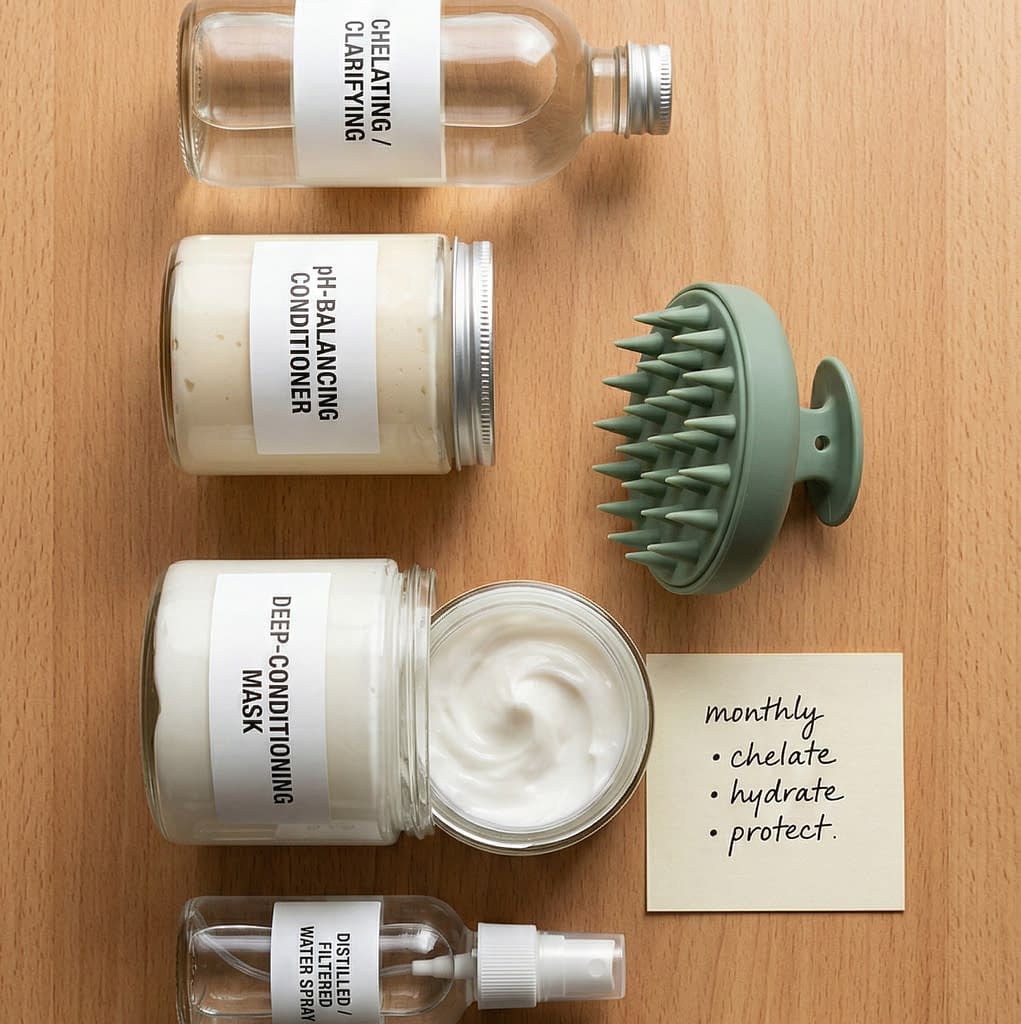
If you suspect hard water and want immediate improvement, follow this short rescue routine now:
- Clarify with a Chelating Shampoo
- Use a chelating or clarifying shampoo (one that says “chelating,” “removes mineral buildup,” or contains EDTA on the label).
- Massage gently into the scalp, let sit 2–5 minutes (follow product directions), then rinse well. This loosens mineral film.
- Acid Rinse (DIY apple-cider vinegar rinse)
- Mix 1–2 tbsp apple cider vinegar (ACV) or distilled white vinegar with 16 oz (500 mL) water. Pour over hair after shampoo, leave 1–2 minutes, then rinse lightly. ACV helps dissolve minerals and closes cuticles. (See safety notes below.)
- Tip: If you have colored hair, test a small area first and use a milder mix (1 tsp per cup). If you’re unsure, skip the DIY and choose a commercial pH-balancing spray.
- Deep Condition
- Apply a rich conditioner or mask focused on ends and leave 3–10 minutes to restore moisture lost to the minerals. Rinse with the coolest comfortable temperature to help cuticles lie flat.
- Dry and Evaluate
- Towel-dry gently, air-dry if possible, and note the difference. If hair feels smoother and shinier, the mineral film has come off; repeat weekly until normal.
Safety note: Vinegar is acidic and effective but can irritate sensitive scalps or affect certain dyes. If you have an irritated scalp or recently chemically treated hair, consult a stylist. Always dilute vinegar and rinse thoroughly.
Clarifying Shampoos and Chelating Treatments — What to Use and How Often
A clarifying/chelating product removes buildup of minerals and styling residue. Use them wisely.
How to choose and use:
- Pick a chelating shampoo that specifically mentions mineral or hard-water removal; these often include chelators (EDTA-type ingredients) which bind minerals and rinse them away.
- Use frequency: start once per week for damaged or dry hair. If water is very hard and you swim in pools (which add minerals/chlorine), you may need 1–2× weekly until build-up is cleared, then reduce to once every 2–4 weeks for maintenance.
- Application steps: shampoo twice — first to loosen oils and dirt, second to let the chelator work. Leave on for recommended time (usually 1–3 minutes) before rinsing.
- Follow with an acid rinse or pH-balancing conditioner to reseal cuticles.
- Avoid daily clarifiers — overuse will remove natural oils and dry hair.
If you have a professional barber or stylist, ask them to clarify in-salon once a month for heavier cases — they can use stronger, controlled treatments safely.
Apple Cider Vinegar and Acid Rinses: When and How to Use Them Safely
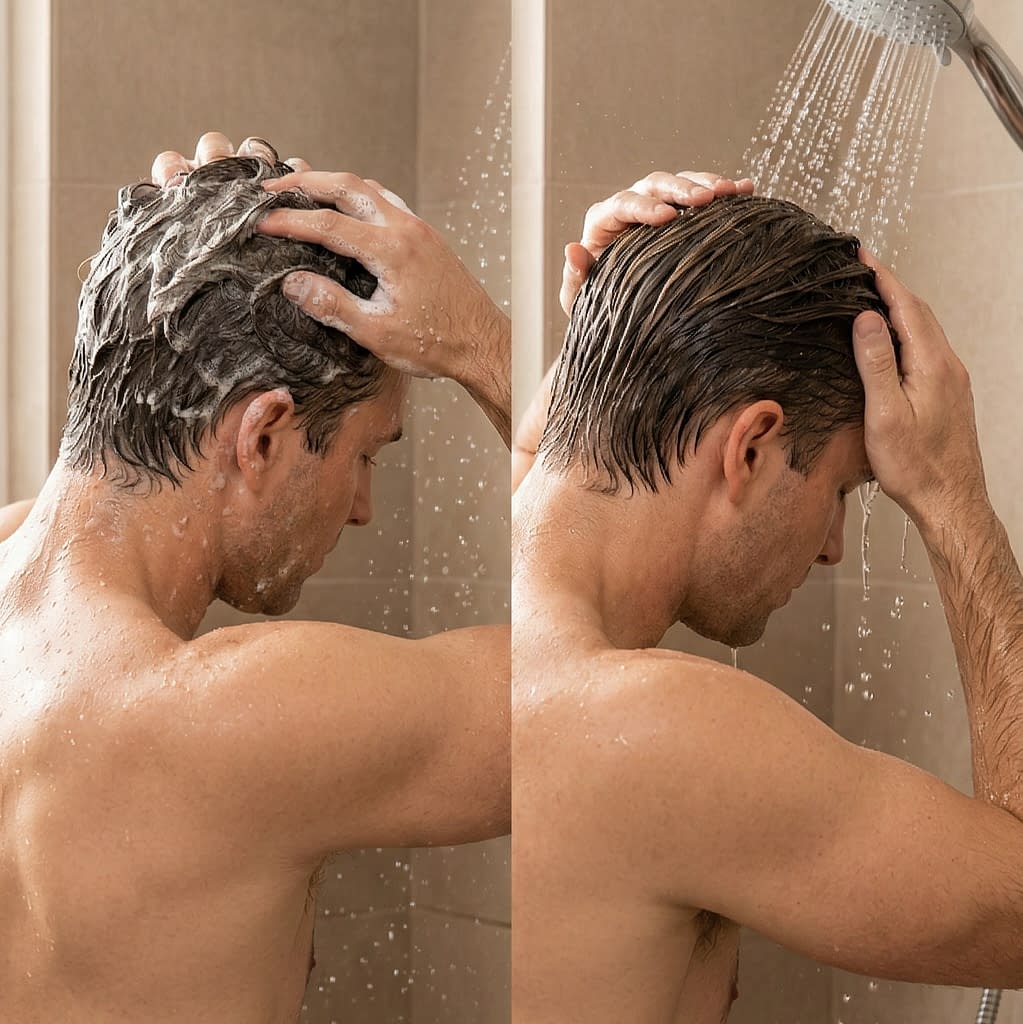
ACV and other mild acids help dissolve mineral deposits and restore the hair’s slightly acidic pH (around 4.5–5.5), which smooths cuticles.
Safe ACV rinse method
- Dilute well: 1–2 tablespoons ACV + 16 oz (500 mL) water. For sensitive scalps or dyed hair use 1 tsp per cup.
- Apply after shampoo: pour over hair evenly, massage into lengths (not a vigorous scalp scrub), leave 1–2 minutes, then rinse lightly with cool water.
- Frequency: 1× per week to start, then 1–2× monthly for maintenance.
- Alternative: commercial pH-balancing sprays with citric acid or gluconolactone are gentler and more predictable if you’re nervous about DIY.
Warnings & tips
- Avoid ACV on irritated skin, open wounds, or raw scalps.
- If your hair is color-treated, test a small strand before full use.
- Rinse well — lingering vinegar smell disappears with thorough rinsing; blot-dry afterwards.
ACV is cheap and effective, but used wisely — don’t overdo it.
Deep-Conditioning and Protein Treatments to Rebuild Texture
After mineral removal, rebuild moisture and structure.
Step-by-step treatment plan
- Use a deep-conditioning mask (rich in humectants like glycerin and emollients like oils/plant butters) once a week for dry or damaged hair. Apply to mid-lengths and ends, leave 10–20 minutes (cover with a shower cap or warm towel), then rinse.
- Protein treatments (with hydrolyzed keratin, silk, or collagen peptides) are useful if hair feels overly limp and weak. Use a light protein treatment every 4–6 weeks. Too much protein makes hair brittle; balance with moisture masks.
- Follow with a leave-in conditioner to restore daily softness.
- For men with short hair: use lighter conditioners and shorter leave-in time to avoid weight; still do deep-conditioning fortnightly if hair feels dry.
If you’re unsure about protein vs moisture balance, start with moisturizing masks and add a single protein session to see how hair responds.
Leave-In Conditioners and pH-Balancing Sprays for Daily Protection
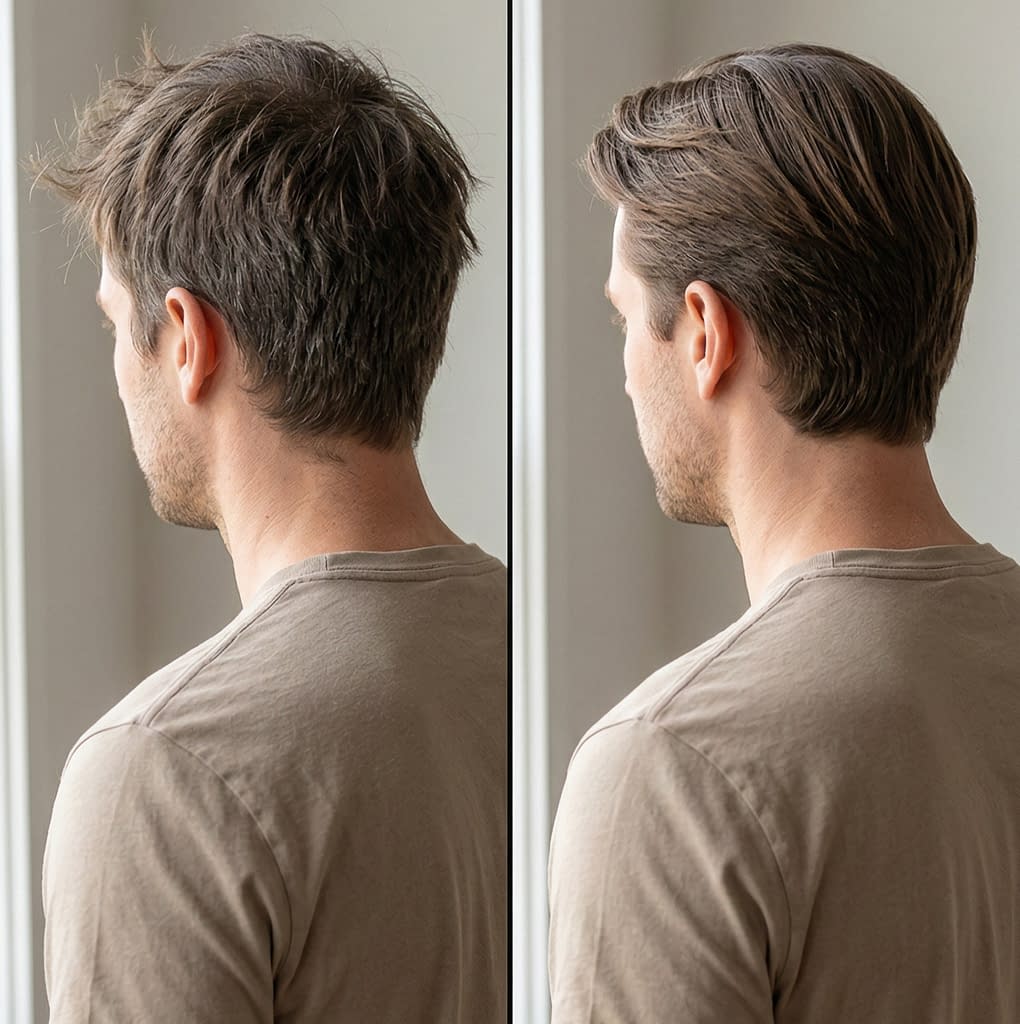
Daily protection keeps minerals from sticking back on.
How to use daily products
- Leave-in conditioners: apply a small amount to damp hair focusing on mid-lengths and ends. They add a thin protective layer and make hair easier to manage. For short hair, a pea-sized amount spread evenly is usually enough.
- pH-balancing sprays: use a spray formulated to rebalance pH after washing, which helps cuticles lie flat and reduces mineral adherence. Lightly mist after towel-drying.
- Anti-deposit sprays (commercial) exist that create a film that resists mineral binding — use as per label if you live in very hard-water areas.
Daily leave-ins keep the hair surface smoother so future mineral buildup is less aggressive.
Shower Filters, Softeners, and Other Long-Term Water Solutions
If hard water is a long-term issue, consider installing water treatment.
Options & considerations
- Showerhead filters (activ/charcoal + ion-exchange) — inexpensive, easy to install, reduce chlorine and some minerals; good first step. Replace cartridges per manufacturer guidance.
- Whole-house water softeners (ion-exchange systems) — swap calcium and magnesium for sodium or potassium; highly effective but pricier and may require professional installation and maintenance. They protect hair, skin, and plumbing.
- Showerhead-mounted softeners vs filters: softeners actually change ion content; filters mostly reduce chlorine and improve odor/taste; choose based on test results and budget.
- Portable solution for renters: inexpensive shower filters or a filtered bath bucket can help.
- Maintenance: keep showerheads clean — scale clogs can trap minerals and redistribute them onto hair.
If you’re unsure which option is right, a local plumber or water treatment specialist can advise based on your water hardness reading.
Styling and Grooming Habits That Reduce Further Damage
Small daily choices make a big difference.
Practical grooming tips
- Rinse with filtered water if possible (final cold rinse) after washing.
- Avoid daily shampooing in very hard water; use gentle co-washing or a mild cleanser between clarifying washes.
- Use lighter styling products in hard water — heavy greases trap minerals and worsen buildup.
- Blot dry instead of rubbing to minimize friction on roughened cuticles.
- Limit heat styling until hair is restored; high heat on already rough cuticles causes more damage.
- Comb from ends up with a wide-tooth comb to reduce breakage.
- If you swim in pools (chlorine + minerals): wet and saturate hair with clean water and apply a leave-in before entering water; rinse and clarify immediately after.
These habits reduce new mineral deposition and speed repair.
Diet, Hydration, and Supplements That Support Hair Recovery
Healthy hair starts from the inside as well as the outside.
Nutrition & hydration plan
- Hydrate consistently — water supports scalp circulation and follicle health.
- Protein-rich foods help repair hair structure (eggs, fish, lean meats, legumes).
- Omega-3 fats (fatty fish, flaxseed, walnuts) support scalp health and shine.
- Vitamins & minerals: iron, zinc, biotin, vitamin D and B vitamins support hair growth; consider a balanced multivitamin if your diet lacks variety.
- Speak to a clinician or parent/guardian before starting any supplement — tests for iron deficiency or thyroid problems may be more helpful than random supplementation.
A balanced diet accelerates visible recovery and reduces breakage over months.
DIY Fixes vs. Salon Treatments: When to DIY and When to See a Pro
Know when to save money and when to get professional help.
DIY — use these when:
- You have mild-to-moderate buildup and want to try clarifying + ACV rinse + deep masks.
- You have short hair and simple needs (texture smoothing and shine).
- You want to try a shower filter before committing to a whole-house softener.
See a pro when:
- Buildup is severe (stiff, straw-like hair that doesn’t respond to clarifying).
- You’re color-treated or chemically treated — professionals can use safe in-salon chelators and bond-repair systems.
- You want a long-term plan (salon-quality bond-building treatments, professional smoothing) or you prefer an expert diagnosis.
- Salon pros can apply stronger chelation and follow with professional protein/bond treatments (e.g., salon bond-repair systems) that are faster and safer than DIY.
If you go to a salon, bring photos and explain you suspect hard-water damage so they can select the correct protocols.
Maintenance Plan: Weekly and Monthly Routines to Keep Minerals Away
A simple routine keeps your progress.
Weekly plan
- 1× chelating or clarifying shampoo (as needed)
- 1× acid/pH rinse (ACV dilute or product) after clarifying
- 1× deep-conditioning mask (moisture)
- Daily leave-in or pH spray after washing
Monthly plan
- 1× protein treatment or salon bond-repair session if hair feels weak
- Check showerhead for scale and clean if needed
- Replace shower filter cartridge if using one
Adjust frequency by hair response: if hair dries out, reduce chelifiers and increase moisturizing masks; if heavy deposits return, increase clarifier frequency briefly.
Common Mistakes That Make Hard-Water Damage Worse
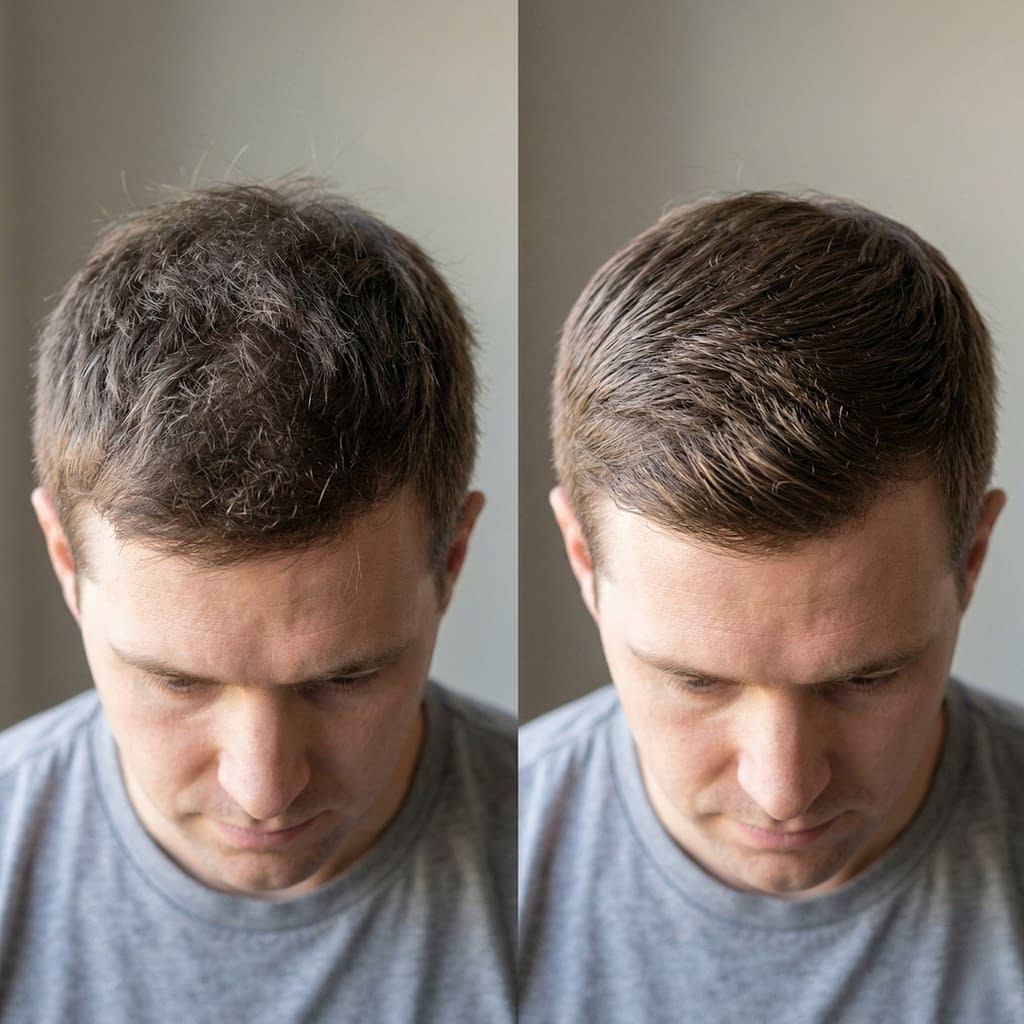
Avoid these missteps.
Mistakes to avoid
- Over-clarifying — do not use strong clarifiers daily.
- Using heavy oils & waxes as a “fix” — they can trap minerals and make the problem worse.
- Ignoring water treatment — only changing products often won’t fully solve mineral issues.
- Skipping pH-balancing after chelation — hair cuticles stay raised and rough.
- Using very hot water — increases mineral deposition and raises cuticle lift; rinse with cooler water to finish.
Fix the root (water) and then tune products — that’s the fastest path to recovery.
Final Words
Hard-water hair damage is common and fixable. Start with diagnosis (simple tests), remove mineral buildup using chelating shampoos and gentle acid rinses, rebuild moisture and structure with targeted deep-conditioning and occasional protein treatments, protect daily with leave-ins and pH sprays, and consider a shower filter or whole-house softener for a long-term fix. Adjust your grooming habits (less frequent clarifying, lighter styling products, cooler rinses), eat and hydrate well, and consult a barber or stylist for stubborn cases or professional bond-repair treatments.


