

A well-shaped beard changes everything — it frames your face, sharpens your jawline, and instantly makes you look more put-together. But professional-looking beard shaping isn’t only for barbers: with the right tools, a little technique, and a few repeatable habits you can shape, maintain, and style your beard at home like a pro. Below you’ll find clear, practical steps for deciding what suits your face, trimming and defining lines, blending mustache and beard, keeping symmetry, caring for the hair and skin underneath, and avoiding the most common mistakes. Read it once, then bookmark it — this is the routine you’ll return to every few weeks.
Why Proper Beard Shaping Makes a Big Difference
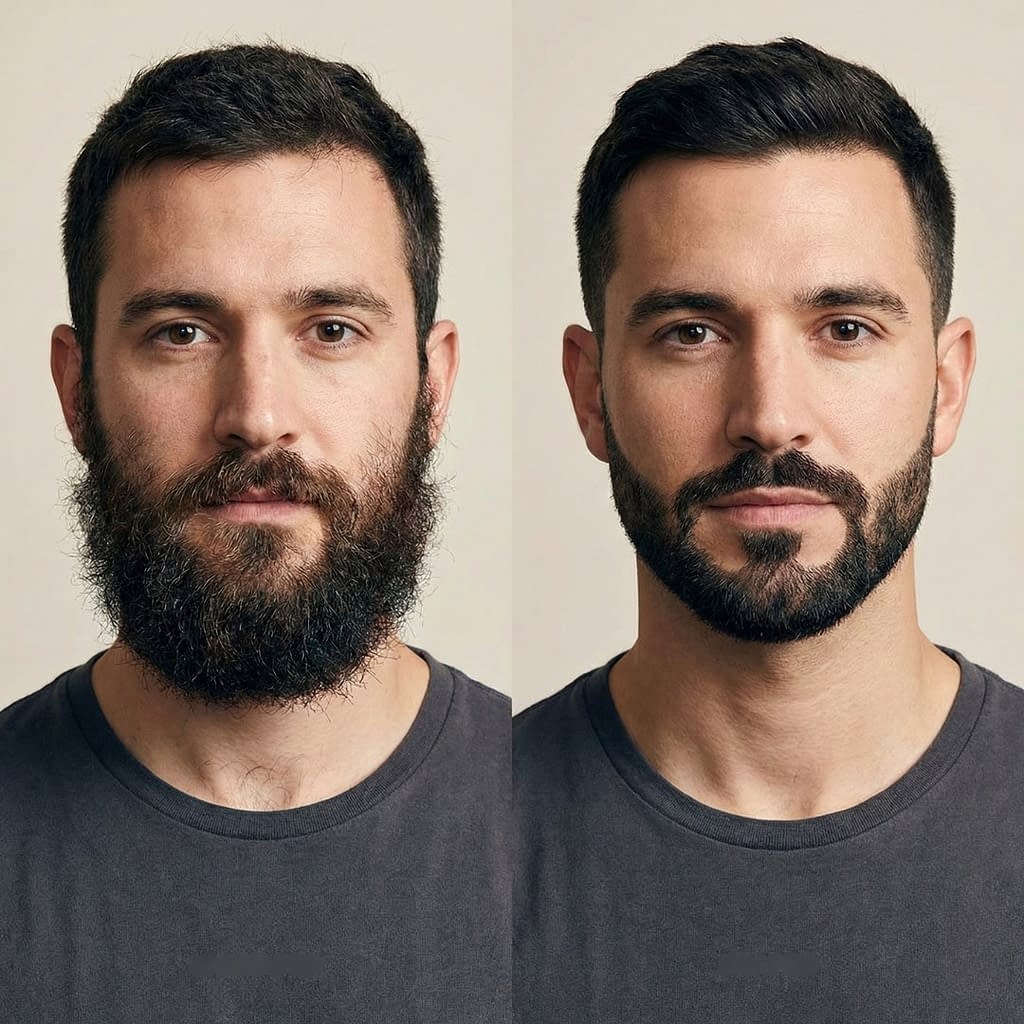
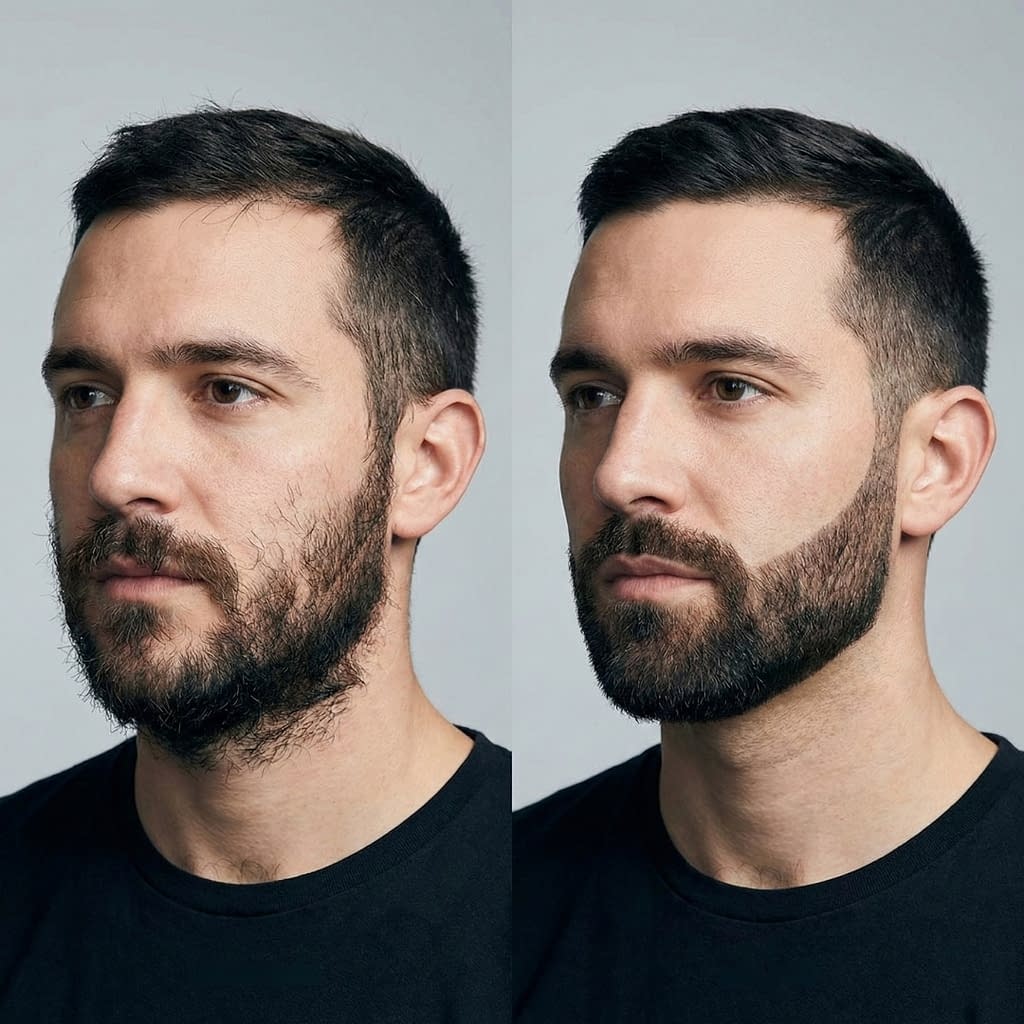
A beard that’s shaped well does three things at once: it balances your face proportions, hides (or highlights) features you want to downplay or amplify, and gives an overall impression of grooming and intention. Even a short stubble looks sloppy without clean cheek and neckline definition, while a longer beard with poorly defined lines can look unkempt. Shaping makes the difference between “I woke up like this” and “I look put-together on purpose.” Beyond aesthetics, a properly shaped beard is healthier: trimming removes split ends, shaping prevents ragged growth that traps dirt, and regular care reduces itch and flaking.
Understanding Your Face Shape Before Shaping Your Beard
Knowing your face shape helps you choose the lines and proportions that flatter you.
How to check (quick):
- Look straight into a mirror and trace the outer border of your face mentally: is it round, square, oval, diamond, heart, or long (rectangular)?
Beard goals by shape: - Oval: balanced — most styles work. Aim for subtle shaping to keep proportions.
- Square: soften a strong jaw with rounded beard edges or keep a short boxed beard to preserve masculinity.
- Round: create length with longer goatee/chin area and trimmed sides to slim the face.
- Rectangular/long: avoid extra length at the chin; keep fuller sides to shorten appearance.
- Heart: balance a narrow chin with fullness at the jawline and slightly shorter chin length.
- Diamond: widen the chin area slightly and keep moderate cheek fullness.
Tip: take a selfie head-on and in profile — small differences show up clearer in photos and help you plan where to add volume or reduce it.
Choosing the Right Beard Style for Your Face
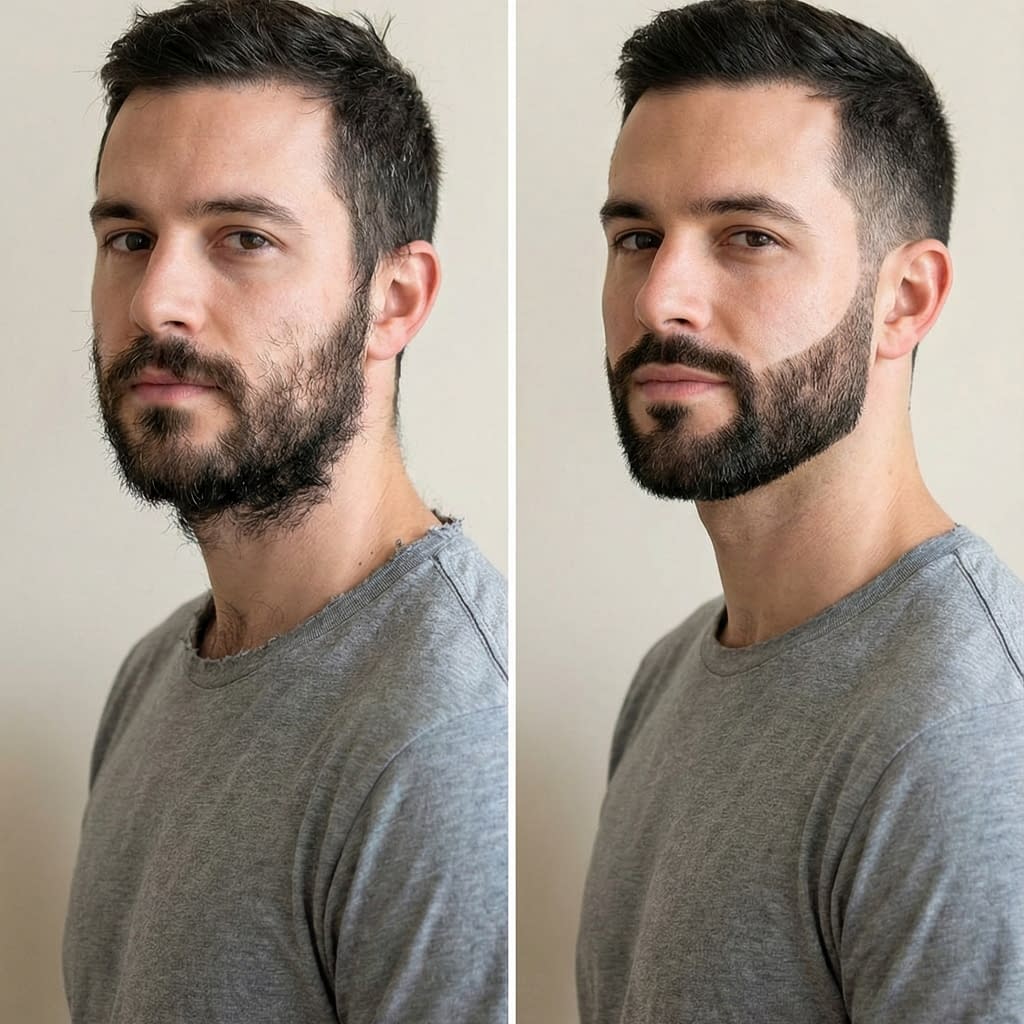
Pick a style that fits your lifestyle, hair density, and face shape.
Practical options:
- Stubble (light / heavy): low maintenance, great for most face shapes; trim every 3–7 days.
- Short boxed beard: neat, professional, easy to maintain — keep the cheeks and neckline defined.
- Full beard: needs more care, suits square/oval faces; trim for shape and remove stray hairs regularly.
- Goatee / anchor: ideal for rounding or lengthening the lower face.
- Beard with faded sides (skin fade): modern, clean — requires clippers and some skill or a barber visit.
Choose something realistic: if your growth is patchy, short, tailored styles or stubble often look far better than forcing a long beard.
Essential Tools You Need for Professional Beard Grooming
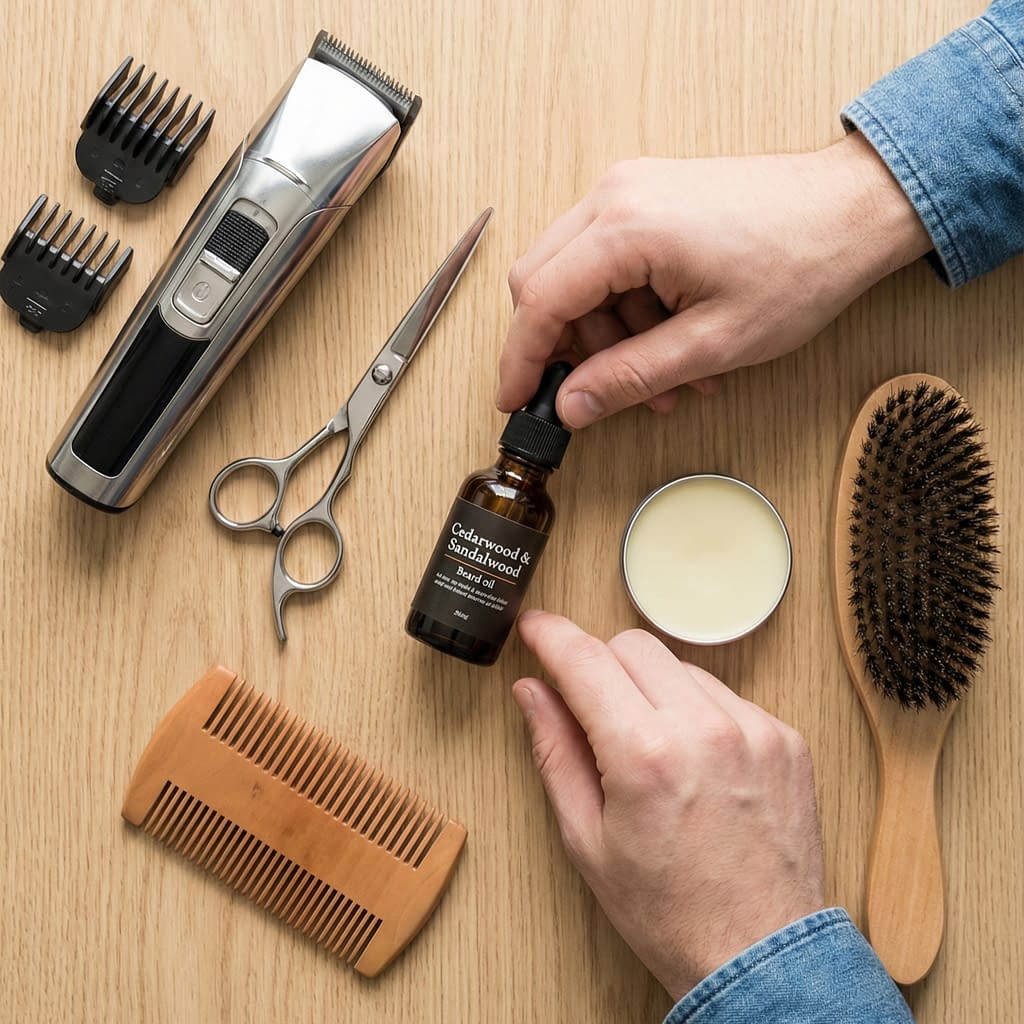
You don’t need a salon, but quality tools matter.
Toollist and why:
- Adjustable beard trimmer with multiple guards (0.5–12 mm) — for overall length control.
- Barber scissors — for precise snips and trimming flyaways.
- Fine-toothed comb / beard comb — for detangling and aligning hair before cuts.
- Razor or precision trimmer for cheek lines and neckline definition (choose what you’re comfortable using).
- Boar-bristle brush — helps distribute oils, trains hair direction, and reduces frizz.
- Beard oil and beard balm — oil for daily hydration, balm for control and light shaping.
- Mirror set-up: a large wall mirror plus a smaller handheld/angled mirror to check under the jaw/neck.
- Aftercare products: gentle cleanser, moisturizer, and small bottle of antiseptic/aftershave for any nicks.
Investing in one good trimmer and a pair of barber scissors is the single best purchase for home shaping.
Step-by-Step Guide to Trimming and Shaping Your Beard
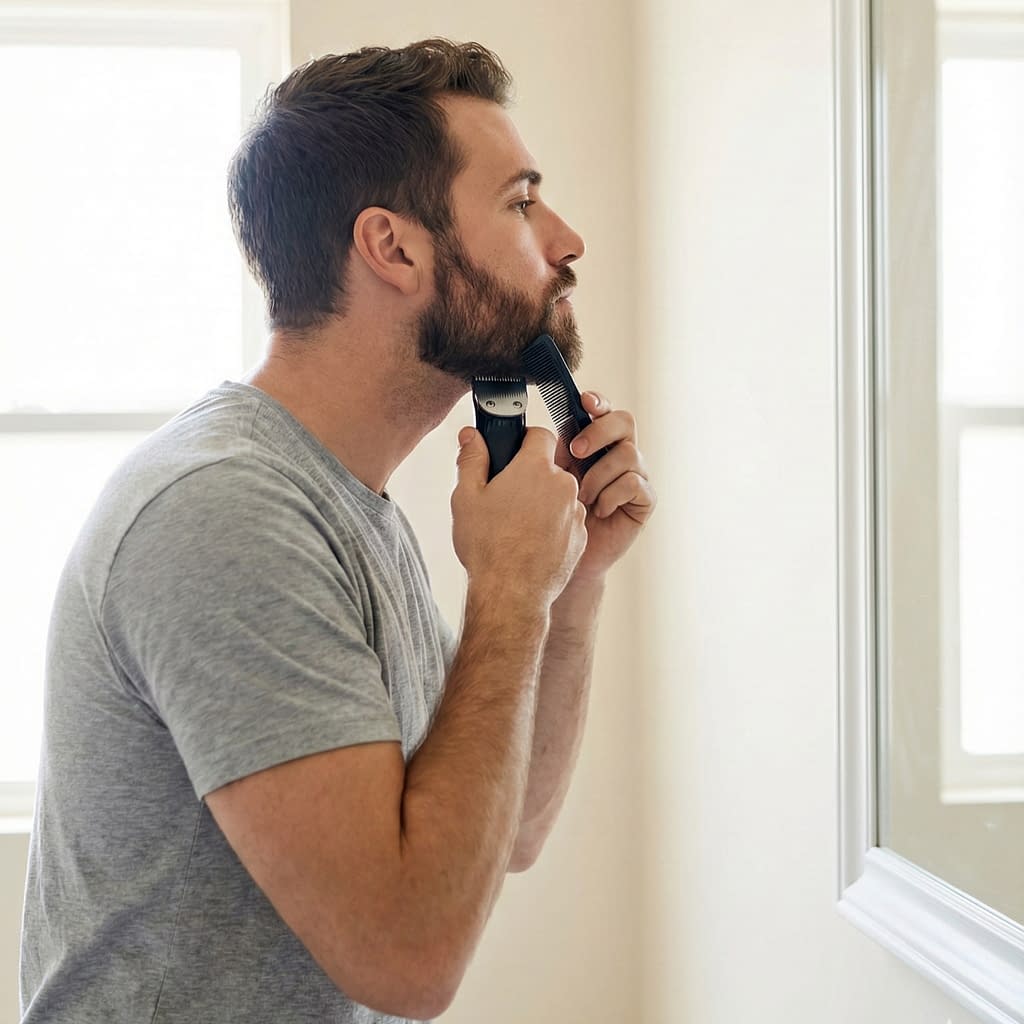
This is a repeatable home routine that covers most beard types.
Preparation
- Wash your beard with warm water and beard shampoo — clean hair is easier to cut. Pat dry, leaving slightly damp for better control. Comb through to remove tangles.
Step-by-step trim
- Set the overall length: attach a longer guard to your trimmer (start longer than you think) and run upward strokes to remove bulk. Work symmetrically on both sides.
- Define the cheeks: using a precision trimmer or razor, clean the area above your desired cheek line (see next section for cheek line shapes). Use your comb to map the line if unsure.
- Shape the neckline: tilt your head up, find the point where your neck meets the underside of your jaw (about 1–2 finger-widths above the Adam’s apple is a common guideline) and trim everything below that into a clean curve. Blend the lower edge with a lighter guard for a natural fade.
- Tidy the mustache: comb mustache down and trim the top of the lip so hairs don’t cover the mouth; use scissors for precision or the trimmer without guard.
- Trim with scissors: for length variation and scissor-over-comb technique: lift sections and snip long, stray hairs to maintain natural volume.
- Refine and blend: remove harsh lines by fading the side cheeks slightly or using scissors to soften edges. Look at the face from different angles and in good light.
- Final grooming: apply beard oil and comb through; finish with a small amount of balm for hold if you want a polished look.
Pro tip: take short breaks to check symmetry and step back from the mirror. It’s easier to remove more hair than to add it back.
Defining Necklines and Cheek Lines Correctly
Clean lines are what make a beard look intentional.
Neckline (how to find it)
- Visual method: place two fingers above your Adam’s apple — the top of the fingers mark the upper limit of the neck; trim everything below that into a neat curve or horizontal line that angles up toward the jaw. Avoid a neckline that’s too high — it makes the beard look like a goatee.
Cheek line (options)
- Natural curve: follow the hair that grows on the cheek; remove stray hairs above a soft curve for a natural look.
- Sharp defined line: create a slightly diagonal line from about mid-cheek toward the corner of the mouth for a more sculpted look (use a precision trimmer or razor).
- Lowered line (fatter cheeks): lower the cheek line slightly and trim carefully to thin cheeks.
Technique (step-by-step)
- Use a comb to map the line and keep symmetry.
- Trim small sections above the desired line with a precision trimmer or razor — small strokes, not one big swipe.
- Step back frequently and compare both sides in the mirror.
How to Handle Mustache Shaping and Blending
The mustache bridges the beard and mouth — doing it wrong ruins the whole look.
Mustache steps
- Comb mustache hair down over the lip. Trim the bottom so it meets the top of your lip or just slightly above it for a neat appearance.
- For a blended look, trim the area where mustache meets beard so hair length and density transition smoothly. Scissor work is best here.
- If you want a styled mustache, use a small wax or balm to shape ends or create a light curl. Keep daily trimming light to prevent overgrowth onto the mouth.
Using Clippers vs. Scissors: Pros and Cons
Both have places in a pro routine.
Clippers
- Pros: fast, consistent length, good for bulk removal and fades.
- Cons: less precise around small stray hairs and shaping delicate transitions.
Scissors
- Pros: precision control, great for texturizing and removing individual long hairs, safer near skin for detailed work.
- Cons: slower, requires steady hand and a comb technique.
Pro approach: remove bulk with clippers, add shape and texture with scissors.
Maintaining Symmetry for a Polished Look
Symmetry trick
- Use visual reference points: corners of the mouth, bottom of the nose, outer corners of the eyes and jawline.
- Trim one side a little, then match the same movements on the other side. Move in small, equal strokes.
- Use a handheld mirror to inspect the jawline and neck from different angles. Photos help—take a front and profile pic after trimming to check balance.
If something looks off, resist the temptation to over-correct; step away, then return with fresh eyes.
Daily Beard Care Routine for Soft, Healthy Hair
Daily habits keep your shape and skin healthy.
Morning & night routine
- Daily: comb/brush beard and apply 2–4 drops beard oil into palms, rub through the beard to moisturize skin and hair.
- 2–3× per week: shampoo with beard-specific cleanser (or gentle face wash) and condition to prevent dryness.
- Weekly: use a balm or light leave-in conditioner for styling and control.
- Night: a brief comb-through before bed keeps hair lying correctly; use a small amount of oil if skin is dry.
Skin care under the beard
- Gently exfoliate or use a mild cleanser to avoid clogged follicles and itch. Keep the skin moisturized; beard oils designed with jojoba or argan are closest to natural skin oils.
Products That Help Keep Your Beard Groomed and Shiny
What to look for
- Beard oil: lightweight carrier oils (jojoba, argan) and a minimal, non-irritating scent.
- Beard balm: for control and light hold (beeswax or shea butter base).
- Beard wash: sulfate-free cleanser made for facial hair.
- Conditioner / leave-in: for softening coarse hair.
- Matte paste or wax: if you style your beard into shapes.
Avoid heavy perfumed products if you have sensitive skin or work where strong scents are a problem.
Common Mistakes That Ruin Beard Shape
Watch out for these traps
- Trimming too much at once — go conservatively.
- Using the same single clipper guard for the whole face — you’ll lose natural contours.
- Cutting a neckline too high — makes your beard look chopped.
- Skipping skin care underneath — flaky skin and acne ruin a good beard.
- Ignoring stray mustache hairs over the lip — they make a beard look messy quickly.
If you’re nervous, take off less than you plan—trim again in a week. Frequent small trims > rare big changes.
How Often You Should Trim and Shape Your Beard
Maintenance schedule
- Stubble: 3–7 days to keep even.
- Short boxed beard: every 7–14 days for shape and neckline.
- Medium-length beard: 2–4 weeks for tidy shape and split-end removal.
- Long beard: every 4–6 weeks for major shaping, with small touch-ups every 1–2 weeks for stray hairs.
Replace blades and sharpen scissors regularly — dull tools cause pulling and uneven cuts.
Final Words
Shaping your beard like a pro is a mix of planning, proper tools, careful technique, and consistent care. Start by choosing a style that suits your face and growth pattern, invest in a good trimmer and a pair of barber scissors, and follow a simple routine: clean, trim conservatively, define cheeks and neckline carefully, and nourish daily with oil and occasional balm. Remember: symmetry, small steps, and regular maintenance beat dramatic, risky maneuvers


