

A sagging neck can sneak up on you — one day your profile looks familiar, the next the skin under your chin and along your jaw feels looser, crepey, or shows faint bands. Good news: while aging and genetics play a role, many simple, natural daily habits and targeted practices can firm the neck area, improve texture, and restore a lifted appearance over time. This guide gives you a practical, step-by-step routine plus deeper explanations so you can treat your neck the way it deserves: gently, consistently, and intelligently.
Below you’ll find why neck skin sags, how the neck is built, and step-by-step instructions for hydration, sun protection, exercises, massage, DIY remedies, diet, sleep habits, and when to consider professional help. Read, pick what feels realistic, and commit — small daily wins add up.
Why Neck Skin Sags and How to Address It Naturally
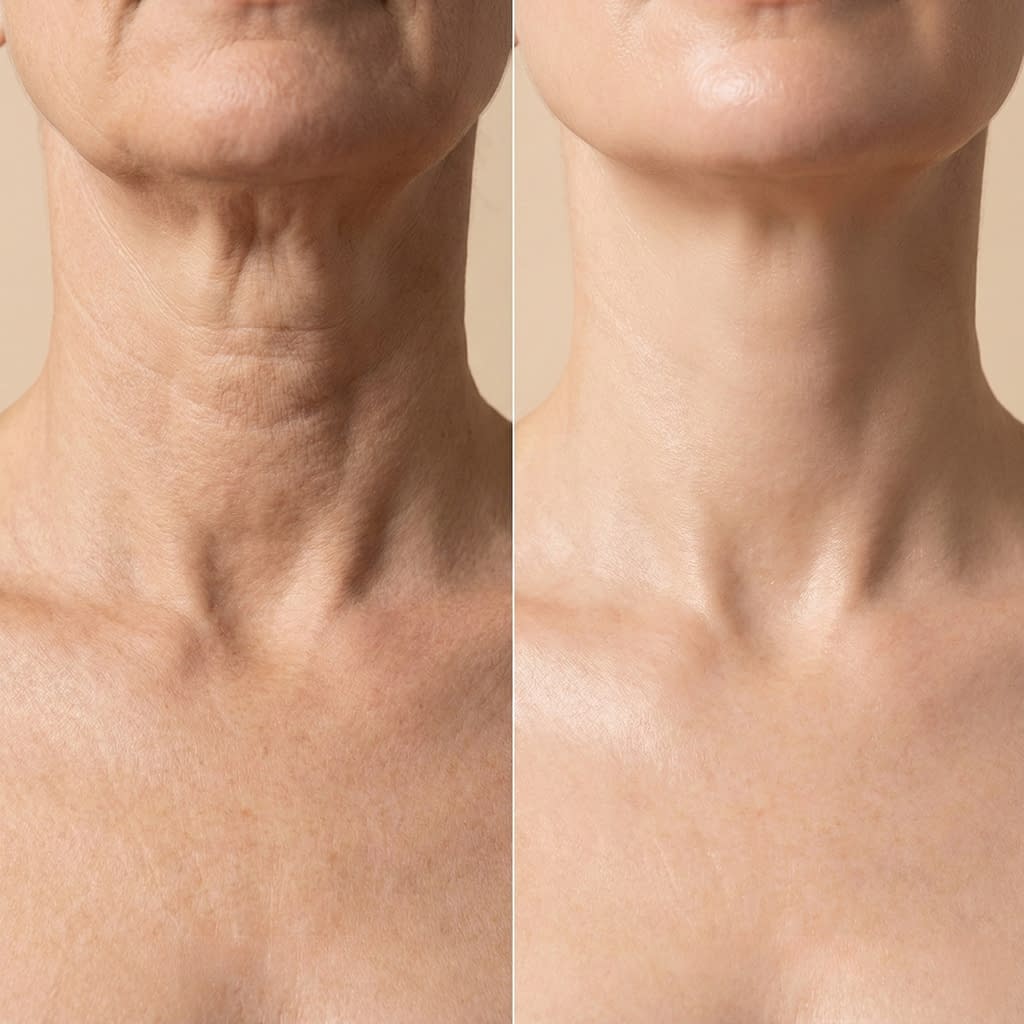
What causes that loose, crepey neck skin? Understanding the “why” helps you choose the right, natural fixes.
Main causes
- Aging and slower collagen production. Collagen and elastin decline with time; skin thins and loses bounce.
- Sun damage (photoaging). UV breaks down collagen and causes pigmentation and thin, leathery texture.
- Weight fluctuations. Rapid loss can leave excess stretched skin; weight gain and loss cycles weaken elasticity.
- Poor posture. “Tech neck” — forward head posture — stretches neck skin and weakens supporting muscles.
- Lifestyle habits. Smoking, dehydration, poor sleep, and nutrient-poor diets accelerate loss of firmness.
- Gravity and genetics. Some people are genetically predisposed to early laxity; gravity eventually affects everyone.
How to address these naturally (big picture)
- Protect from sun, hydrate, nourish collagen via food and topical actives, strengthen muscles with targeted exercises, and improve circulation via massage and gentle exfoliation.
- Consistency matters: treat the neck daily for months to see meaningful change.
Quick daily checklist (doable at home)
- Sunscreen every morning on neck.
- Moisturize morning + night (include product with hyaluronic acid or natural oils).
- 5–10 minutes of neck exercises or facial yoga 4–6 times/week.
- 2–3 massage minutes nightly to boost circulation.
- Eat protein-rich, antioxidant-rich foods and drink water.
Understand the Anatomy of Your Neck
Knowing what’s under the skin helps you target the right approach.
Key components
- Epidermis & dermis: skin layers containing collagen, elastin and moisture-binding molecules (e.g., hyaluronic acid).
- Subcutaneous fat: gives volume but can shift with age/weight changes.
- Platysma muscle: a thin sheet spanning jawline to chest; its tone influences neck contour.
- Deep connective tissue and fascia: support structure that weakens over time.
What changes with age
- Collagen & elastin decline. Dermis thins and loses tensile strength.
- Muscle laxity. Platysma can weaken or develop vertical bands.
- Volume loss. Fat redistribution creates hollows or jowling.
- Skin surface changes. Thinning + sun damage = fine lines, creping, hyperpigmentation.
How that guides your routine
- Strengthen the platysma and surrounding muscles with targeted exercises.
- Stimulate circulation and collagen via massage, face yoga, and topical peptides/hydrators.
- Prevent further breakdown with sunscreen and antioxidants.
Keep Your Neck Skin Hydrated
Hydration immediately improves texture and plumps fine lines. Focus on both topical and internal hydration.
Topical strategy (step-by-step)
- Cleanse gently: use a mild, non-stripping cleanser. Avoid harsh scrubs that thin skin.
- Apply a hydrating serum: look for hyaluronic acid (attracts water), glycerin, or panthenol. Pat, don’t rub.
- Seal with moisturizer: creams or facial oils lock in moisture. At night, a richer cream or oil (rosehip, jojoba, squalane) helps repair barrier.
- Add retinoid (carefully): once or twice weekly start low-strength retinol at the jawline if your skin tolerates it (helps collagen over months). Use sunscreen daily if you use retinoids.
- Layering tip: serum → moisturizer → oil (if needed) for extra barrier support.
Internal hydration
- Drink water throughout the day; aim for consistent intake (listen to thirst + urine color).
- Eat hydrating foods: cucumbers, oranges, watermelon, leafy greens.
Simple home recipe for extra moisture (night mask)
- Mix 1 tsp aloe vera gel + ½ tsp honey + 1–2 drops of rosehip oil. Apply thinly to neck for 10–20 minutes, then gently pat in or rinse. Use 1–2x weekly.
Sun Protection for a Firmer Neck
Sun is one of the fastest ways to accelerate sagging and crepey texture. Treat the neck like the face.
Step-by-step sun defense
- Apply broad-spectrum SPF 30+ daily to neck and chest every morning. Don’t skip cloudy days.
- Reapply every two hours if you’re outdoors, sweating, or swimming.
- Wear physical barriers: wide-brim hats and clothing with UPF for extended outdoor time.
- Avoid peak sun hours: if possible, seek shade 10 a.m.–4 p.m.
- Use antioxidant serums (vitamin C) under your sunscreen to neutralize free-radical damage.
Extra tips
- When applying sunscreen on neck, extend down to the chest (décolletage) — these areas also show sun damage.
- If you have pigmentation or sunspots, adding a topical vitamin C or niacinamide can help fade them over time.
Neck Exercises to Tone and Lift the Skin
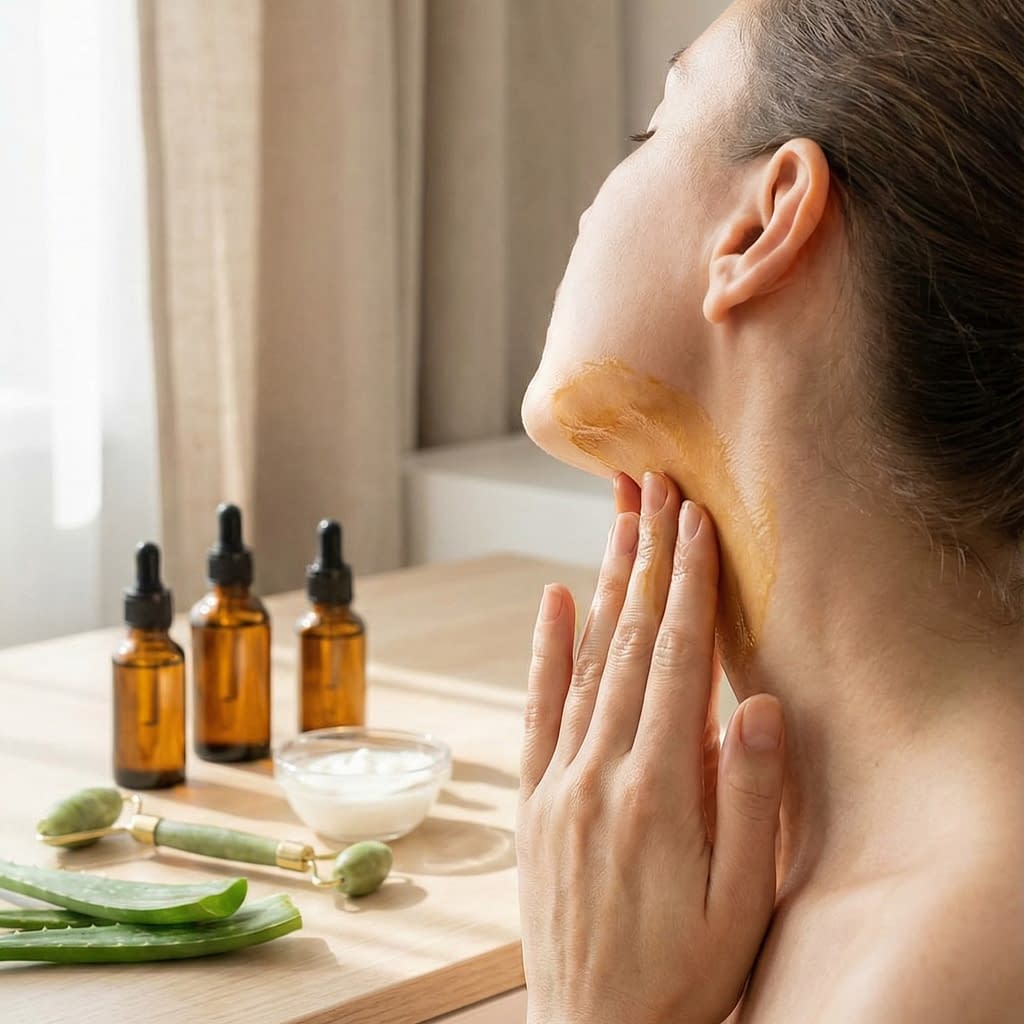
Targeting the platysma and neck-supporting muscles can tighten the area and improve contour. Do these 4–6 times per week, 5–10 minutes per session.
Exercise routine (step-by-step)
- Chin Tucks (posture reset) — 2 sets of 10–15
- Sit upright. Tuck your chin straight back (as if making a double chin) without tilting. Hold 5 seconds. Relax. Repeat.
- Platysma Tightener — 3 sets of 8–12
- Open mouth wide, pull lower lip over lower teeth, and tighten the muscle from jaw to neck. Hold 5 seconds and release.
- Neck Lift (lying) — 3 sets of 10
- Lie on your back without a pillow. Lift head slightly (about 2–3 inches), feel the front neck engage, hold 3–5 seconds. Lower gently.
- Head Tilt Resistance — 2 sets of 10 per direction
- Place your palm on forehead. Gently push the head into your hand without moving it; hold 5 seconds. Repeat with hand behind head resisting extension.
- Jawline Sculpter (tongue to roof) — 2 sets of 10
- Press tongue to roof of mouth and hum or make an “mmm” sound; while doing so, smile slightly to feel muscles under jaw engage. Hold 5–7 seconds.
Guidelines
- Breathe normally, avoid neck strain.
- Start gently — discomfort is not gain; stop if you feel pain.
- Track progress with photos every 4–6 weeks.
Facial Yoga and Massage Techniques
Massage increases circulation, lymphatic drainage, and helps remodel collagen over time. Combine with gentle facial yoga for best results.
Daily massage routine (5 minutes)
- Warm up: apply a few drops of oil (jojoba, sweet almond, or rosehip) to neck.
- Upward strokes: using palms, glide from collarbone to jawline with light to medium pressure — 10 times.
- Pinch & lift: with thumb and index finger, gently pinch along jawline and lift upward — 8–10 passes.
- Ring-finger circles: use ring fingers to make small clockwise circles along both sides of the neck (under jaw & under ear) for 30 seconds.
- Platysma sweep: place index and middle finger at jawline and sweep downwards along the neck to the clavicle 10 times to encourage lymphatic drainage.
Facial yoga moves (3–5 minutes)
- The O: Make an exaggerated “O” with your mouth, place index fingers lightly on each side of the neck and stroke downward while holding the “O” for 8–10 seconds. Repeat 3 times.
- The Kiss the Ceiling: Tilt head back, pucker lips as if kissing the ceiling. Hold for 5–10 seconds, relax. Repeat 10 times.
Tips
- Massage should be gentle — too much pulling can stretch the skin.
- Use upward motions predominantly to counter gravity.
- Do at night to combine with your skincare routine.
Natural Remedies for Neck Firming
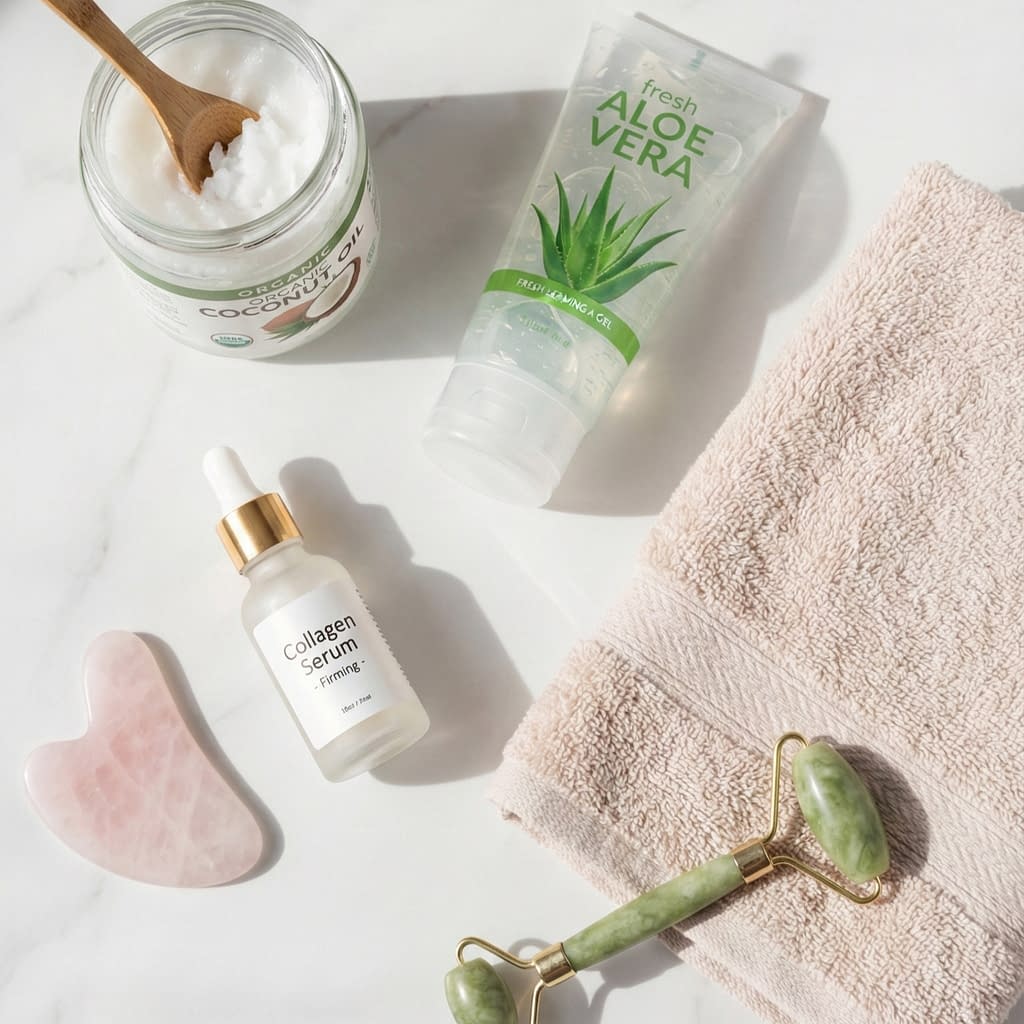
DIY masks and gentle exfoliation can support texture and tone. Use 1–3 times weekly.
Safe DIY recipes
- Egg white + honey tightening mask
- Whisk one egg white until slightly frothy, mix with 1 tsp honey. Apply thin layer to neck, avoid jaw hairline if you’re sensitive. Let dry 10–15 minutes, rinse with cool water. Egg whites temporarily tighten skin and honey soothes. Use weekly.
- Aloe vera + vitamin E
- Mix fresh aloe gel with a capsule of vitamin E (pierce capsule). Apply for 15–20 minutes; rinse or leave a thin layer overnight. Use 2–3x weekly.
- Coffee scrub (gentle)
- Mix used coffee grounds with a little coconut oil and honey. Gently exfoliate neck in light circular motions for 30–60 seconds, then rinse. Coffee contains caffeine which can temporarily plump and improve circulation. Do weekly.
- Green tea compress
- Brew strong green tea, chill, and soak a cloth to lay on neck 10 minutes — antioxidant boost and soothing.
Safety notes
- Patch test everything on inner forearm first.
- Avoid harsh physical exfoliation on thin neck skin — use very gentle scrubs.
- If you have active skin issues (eczema, rosacea), consult a dermatologist before DIY.
Healthy Diet and Hydration for Skin Elasticity
What you eat fuels collagen, repair, and hydration.
Dietary guidelines (step-by-step)
- Eat high-quality protein every day. Bone broths, fish, poultry, beans, and tofu provide amino acids for collagen.
- Consume vitamin C–rich foods. Citrus, berries, bell peppers, broccoli — vitamin C is vital for collagen synthesis.
- Include healthy fats. Fatty fish, walnuts, flaxseed, and olive oil for cell membrane health and skin plumpness.
- Antioxidants: colorful fruits and vegetables combat oxidative damage.
- Zinc & copper: nuts, seeds, shellfish help collagen cross-linking.
- Limit sugar & refined carbs: glycation from excess sugar damages collagen and elastin.
- Hydration: aim for steady water intake; include hydrating foods (soups, smoothies).
Supplements (optional)
- Collagen peptides, vitamin C, and omega-3 supplements can be supportive for some people. Talk with a healthcare provider before starting any supplement.
Avoid Habits That Accelerate Sagging
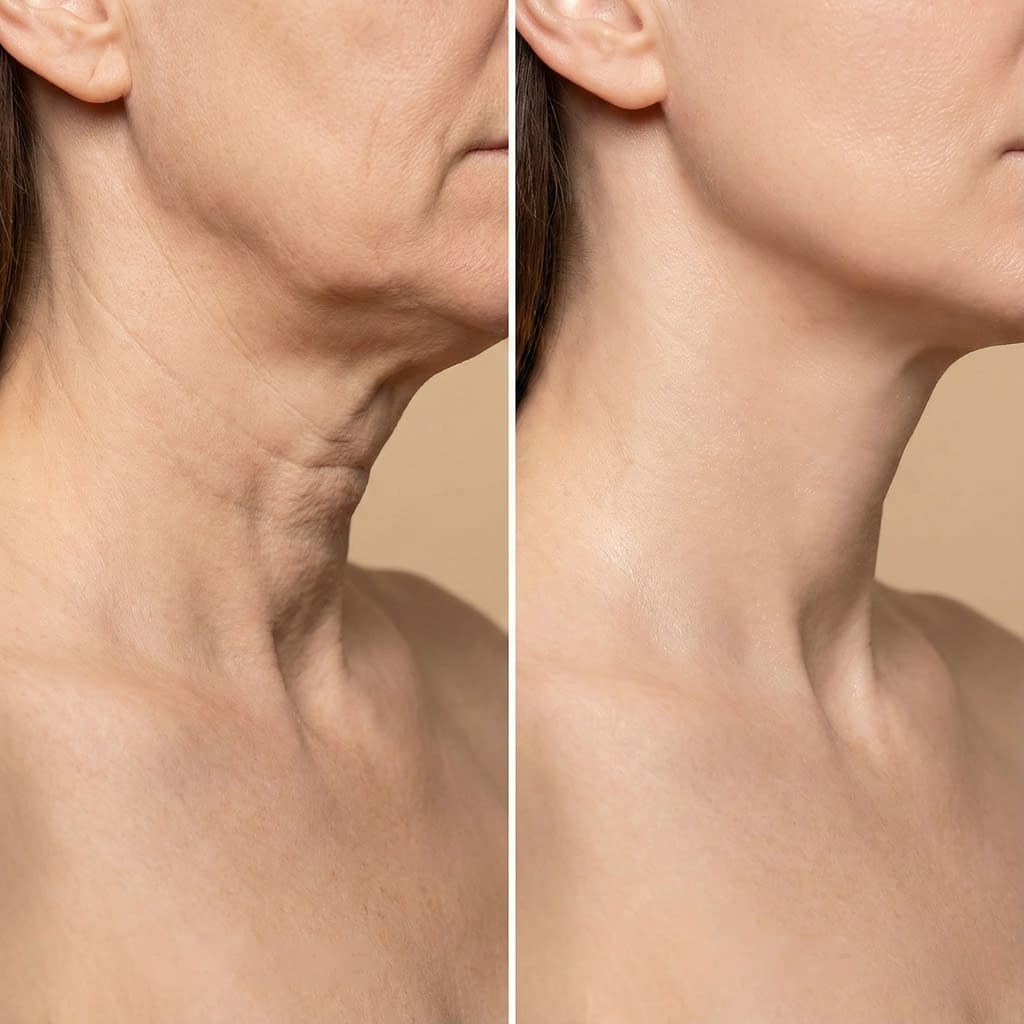
Change these habits to protect skin elasticity.
- Poor posture (tech neck): set reminders to lift your phone, tuck chin in, and take posture breaks.
- Excessive sun exposure: avoid tanning and use protective clothing + SPF.
- Smoking: accelerates collagen breakdown; quitting slows progression.
- Rapid weight loss: aim for gradual weight changes; strength training helps maintain tone.
- Sleeping face down: may crease and stress neck skin — sleep on your back or side with a silk pillowcase.
How to build better habits (small wins)
- Start with one habit for 14 days (e.g., sunscreen daily) then layer another.
- Use phone posture reminders and a simple neck-exercise alarm twice daily.
Nighttime Care for Your Neck
Night is when repair happens; use it.
Night routine (step-by-step)
- Double cleanse if wearing SPF/makeup. Use a gentle cleanser.
- Apply a treatment serum: retinol (if tolerated) 2–3 nights/week; hyaluronic acid nightly.
- Moisturize richer at night: choose a cream with peptides, niacinamide, or oils that support barrier repair.
- Light massage: 1–2 minutes of upward strokes and lymphatic sweeps after moisturizer to boost absorption and circulation.
- Sleep position: try to sleep on your back with a slightly elevated head if you tend to snore or have heavy drooping; avoid high-collar constrictive pillows.
- Consistency: use the same neck routine nightly for best results.
Products to consider (ingredients, not brands)
- Hyaluronic acid, peptides, niacinamide, squalane/rosehip oil, gentle retinol. Avoid fragranced, drying products overnight.
When to Consider Professional Treatments
If you’ve tried consistent at-home care for 6–12 months and still have stubborn laxity, professionals offer options. Consider a consultation with a board-certified dermatologist or plastic surgeon to discuss:
Non-invasive / minimally invasive options
- Radiofrequency (RF) skin tightening — heats deep layers to stimulate collagen.
- Ultrasound treatments (e.g., microfocused ultrasound) — targets deeper support structures.
- Microneedling (sometimes with PRP) — stimulates collagen remodeling.
- Laser resurfacing — improves texture and tone.
- Injectables/fillers — restore lost volume and smooth contour.
- Botox-type injections — can soften platysmal bands in select cases.
Surgical options
- Lower face/neck lift — the most durable, but involves downtime and higher cost. Best for advanced laxity.
Safety & decision guide
- Always get an in-person consult with a qualified, board-certified professional. Ask for before/after photos and clear explanation of risks, downtime, and expected results. Try conservative, non-invasive options first unless surgical correction is clearly indicated.
Final Words
Tightening a saggy neck naturally is a marathon, not a sprint. The most effective approach pairs daily protective and nourishing habits (sunscreen, hydration, good sleep, healthy diet) with regular, targeted actions (neck exercises, massage, and topical care). Small morning and evening rituals — sunscreen, a hydrating serum, gentle upward massage, and 5–10 minutes of exercises a few times a week — compound over months to produce visible improvements in texture and firmness.
Start with one or two changes you can realistically maintain and build from there. Track progress with photos every 4–8 weeks, be patient, and celebrate the small wins: smoother texture, less creping, improved posture, and a more confident profile. If progress stalls after consistent effort, a consult with a dermatologist will help you choose safe, effective in-office options.
You don’t need perfect skin to feel great — just consistent, kind care.


