

Cold sores (fever blisters) are uncomfortable, inconvenient, and — because they show on the face — can feel embarrassing. The good news: with fast, sensible action you can reduce pain, shorten healing time, and lower the risk of spreading the virus. This guide explains what cold sores are, how to catch an outbreak early, practical first-aid steps, proven home remedies, smart hygiene, when to see a doctor, and how to recover without scarring. Follow the step-by-step tips and you’ll give the sore the best possible chance to heal quickly and cleanly.
What Are Cold Sores and What Causes Them
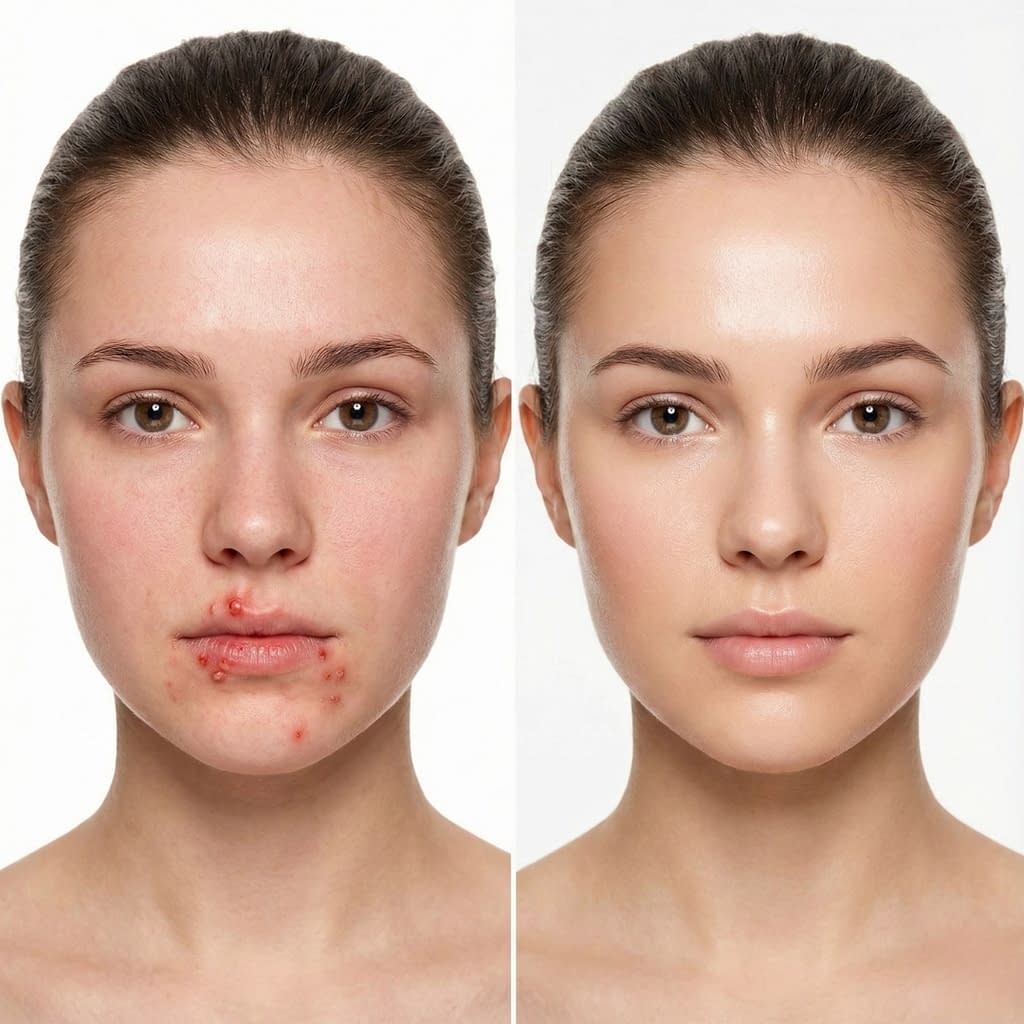
Cold sores are caused by the herpes simplex virus type 1 (HSV-1) — a very common virus. After a first infection, the virus retreats into nerve ganglia and can reactivate later, producing cold sores in the same facial area.
Key things to know:
- Cold sores typically start as tingling or burning, then a blister forms, which eventually breaks, crusts, and heals.
- The full cycle usually lasts 7–14 days; early treatment shortens it.
- HSV-1 is contagious — the virus spreads by direct contact (kissing, sharing cutlery, towels, lip products) particularly when a blister is present.
- Some people get occasional recurrences; others have them rarely.
Understanding the viral nature helps guide early treatment, hygiene, and prevention.
Early Warning Signs: How to Catch an Outbreak Quickly
Catching an outbreak when it first starts gives you the biggest chance to shorten it.
Recognize prodrome (first-stage) signs:
- Tingling, itching, or burning sensation at the lip border (often 6–24 hours before a visible lesion).
- Redness or mild swelling in a small area.
- Mild flu-like symptoms in some people (fatigue, low fever) — more common with first-ever infection.
Step-by-step early response (first 0–24 hours)
- At the first tingle, stop any social contact that could transmit (no kissing, sharing utensils, lip products).
- Wash hands thoroughly and avoid touching the area.
- Start an over-the-counter topical antiviral cream or patch if available (see OTC section). Early topical use is more effective than later.
- Use a cold compress in short cycles (see cold compress section) to reduce swelling and numb pain.
- If you have prescription antiviral pills for recurrences, contact your clinician quickly — early oral antivirals help most when started immediately.
Early detection + prompt action = faster resolution and less pain.
Common Triggers to Avoid During an Outbreak
Knowing and avoiding triggers reduces recurrence risk and may limit severity.
Common triggers:
- Sun/UV exposure (especially without lip SPF).
- Emotional or physical stress.
- Fever or illness (respiratory infections).
- Hormonal changes (periods).
- Trauma to the lip (chapping, dental work, cosmetic procedures).
- Immunosuppression (illness, some medications).
Practical avoidance steps
- Sun protection: use a lip balm with SPF 30+ and regular face sunscreen on the lip border.
- Manage stress: prioritize sleep and basic stress-reduction (deep breathing, walk).
- Avoid lip trauma: skip harsh exfoliation, peels, or waxing around the mouth during risk periods.
- When sick: extra caution with hygiene — you may be more likely to reactivate.
- If dentally triggered: let your dentist know you have a history of cold sores — they may protect you around procedures.
Trigger management reduces the frequency and intensity of future episodes.
First Steps to Take When a Cold Sore Appears
A calm, methodical first-aid approach helps control pain and spread.
Immediate steps (0–48 hours)
- Wash hands thoroughly before and after touching near the sore.
- Avoid touching the sore; if you must touch it (apply treatment), wash hands immediately.
- Apply a cold compress (see method below) to reduce swelling and pain.
- Use an OTC topical antiviral or protective balm — start as soon as possible.
- Prevent spread: avoid kissing, oral sex, sharing food/cups/lip balm/towels until fully healed.
- Keep the area clean and dry; gently dab with sterile saline if needed.
- Consider oral pain relief (acetaminophen or ibuprofen) for pain and inflammation, following dosing instructions.
If you tend to get severe or frequent outbreaks, contact your healthcare provider about early prescription antiviral therapy.
Over-the-Counter Options: What Helps and What to Know
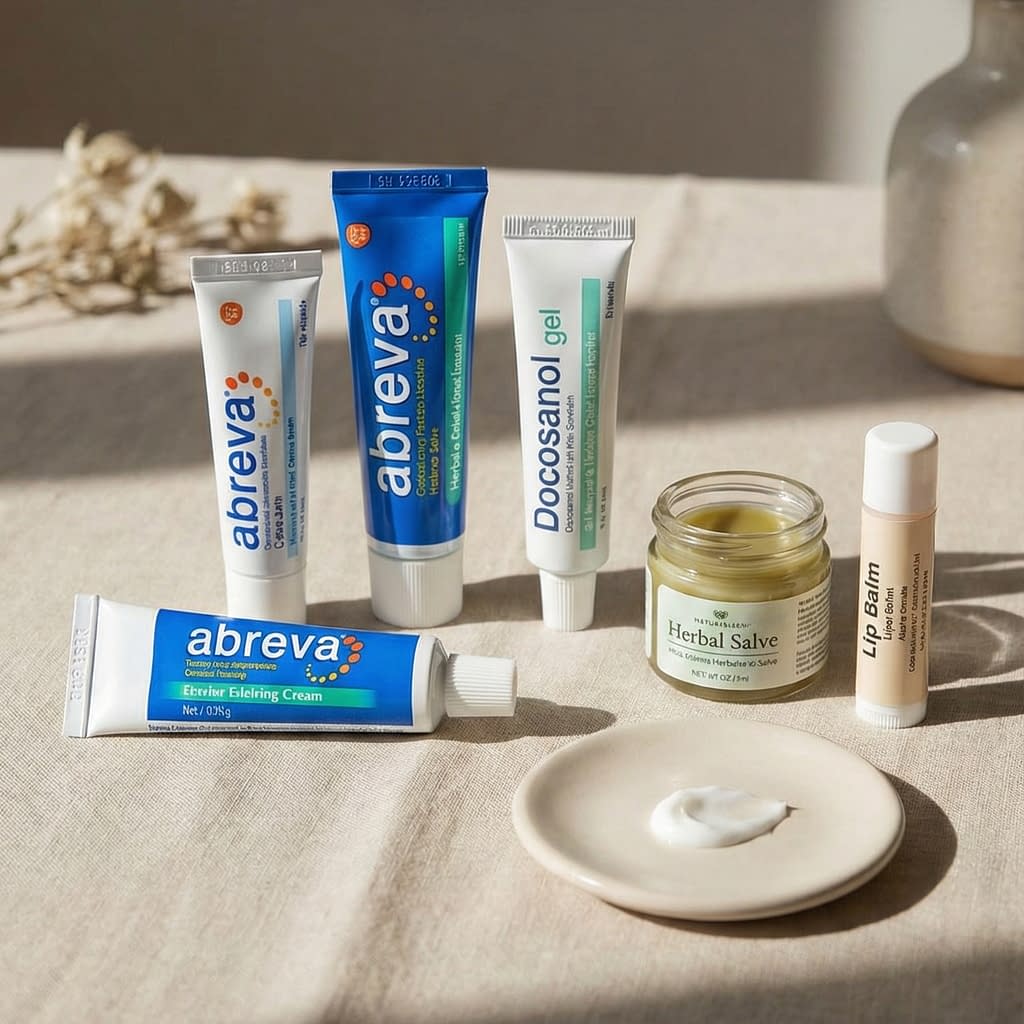
OTC products don’t cure HSV but can reduce discomfort and may modestly shorten healing if used early.
Useful OTC options
- Docosanol 10% cream (Abreva® in many regions): topical antiviral that can shorten healing when applied at first signs (follow instructions).
- Topical analgesic creams/ointments with benzocaine or lidocaine can numb pain; use sparingly and avoid if you have sensitive skin or allergy.
- Barrier balms: petroleum jelly or zinc oxide-based creams protect the wound from further irritation and cracking.
- Hydrocolloid patches designed for cold sores absorb moisture, protect the lesion from contact, and discourage picking — they can speed flattening and reduce transmission risk.
- Antibacterial cleansers are not generally needed unless secondary infection is suspected.
How to choose & use
- Start topical antiviral at prodrome or immediately on first blister for best effect.
- Apply as directed — typically multiple times per day.
- Stop anesthetic creams if they sting or you get irritation.
- Patches: apply to clean, dry skin and replace per package instructions; they help hide the sore and reduce contact.
OTC aids are helpful but contact a clinician for severe or frequent outbreaks.
Proven Home Remedies That Soothe and Speed Healing
Several home measures offer symptom relief and help maintain a clean environment for healing. Use these as complements to OTC or prescription treatment.
Recommended home remedies
- Cold compress / ice: reduces pain and swelling (short cycles — see below).
- Aloe vera gel: cooling, moisturizing, and soothing — apply pure aloe to the area.
- Petroleum jelly: keeps the sore moist and protects skin from cracking; great overnight.
- Honey (medical-grade Manuka if available): mild antimicrobial and moist-healing agent — dab sparingly and rinse after short contact if you’re prone to stickiness or lip irritation.
- Green tea compress: cool, steeped green tea bag applied to the area for 5–10 minutes can soothe inflammation (tea has polyphenols).
- L-lysine supplements: some people find oral lysine reduces recurrence frequency; evidence is mixed — discuss with a clinician, especially if on medication.
How to use safely
- Patch test any topical natural product first if you have sensitive skin.
- Keep applications brief and avoid combining multiple home remedies at once to reduce irritation.
- Use clean tools (cotton swabs, sterile gauze) when applying products.
These remedies reduce discomfort and protect the area while the immune system clears the virus.
How to Use Cold Compresses and Ice Safely
Cold therapy is one of the simplest and most effective ways to reduce pain and swelling, especially in the early stage.
Cold compress technique
- Wrap an ice cube or a small bag of frozen peas in a clean thin cloth or paper towel — never apply ice directly to skin.
- Apply to the sore for 5–7 minutes, then remove for 1–2 minutes; repeat the cycle 2–3 times.
- Repeat every few hours on the first day if needed for pain reduction.
- Stop if the skin becomes numb, blotchy, or painful from cold.
Why it helps: constricts blood vessels, reduces inflammatory swelling, and numbs pain receptors. Do not overuse — prolonged cold exposure can damage delicate skin.
Topical Treatments: Applying Balms and Barrier Protectants
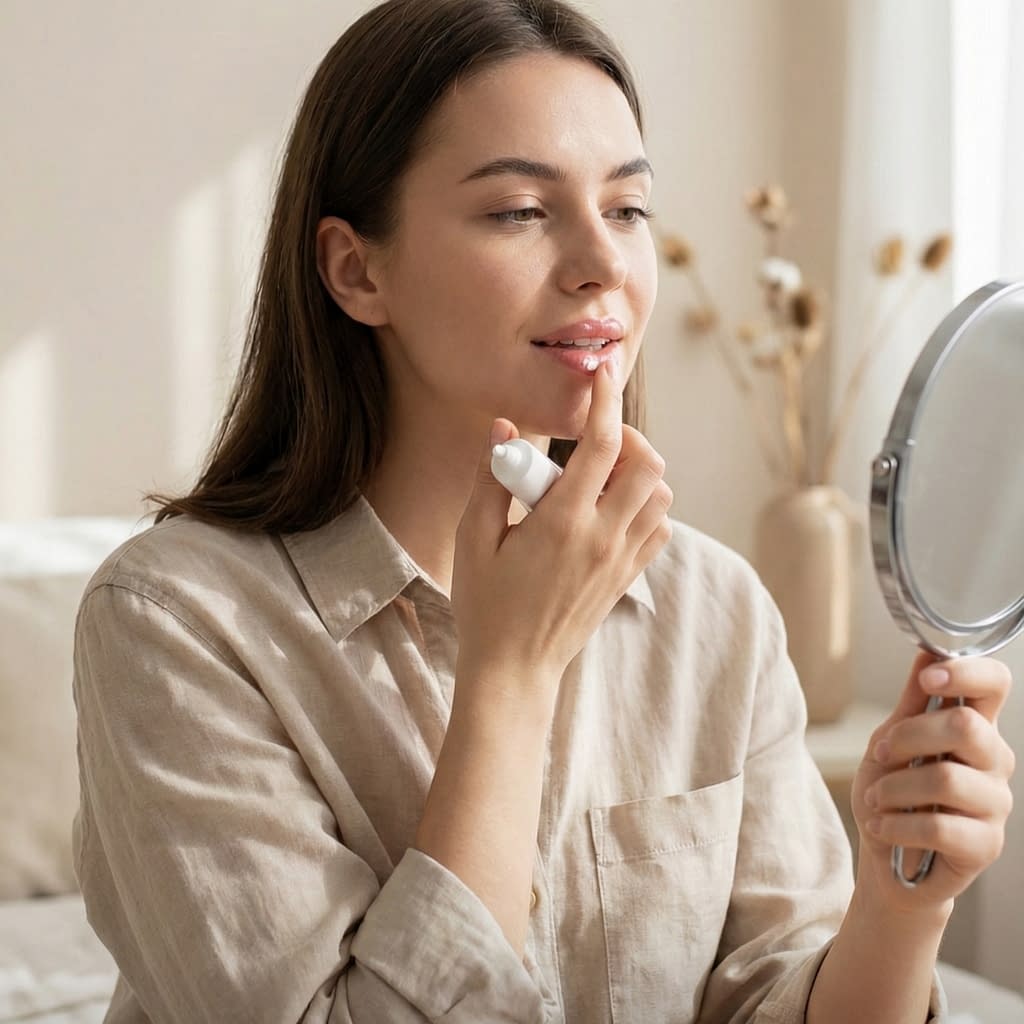
Protecting the lesion while it heals reduces cracking, bleeding, and secondary infection.
Topical application tips
- Clean the skin gently with lukewarm water or sterile saline and pat dry.
- Apply a thin layer of petroleum jelly or barrier balm to prevent crusting and reduce pain from dryness; repeat frequently, especially before meals and at night.
- If using antiviral cream, apply as directed (often every 3–4 hours) — wash hands before and after.
- Use hydrating lip balms with SPF during the day to protect the area from UV (UV exacerbates outbreaks).
- Hydrocolloid patches: place on clean dry skin; they protect, absorb fluid, and lower spread risk.
Avoid greasy or fragranced cosmetics that can irritate the lesion. If you wear makeup, use single-use cotton swabs to apply and discard to avoid contamination.
Pain Relief and Reducing Swelling at Home
Beyond cold compresses, several simple steps help manage discomfort.
Pain & swelling control plan
- Oral analgesics: acetaminophen or ibuprofen according to package dosing reduce pain and inflammation.
- Topical anesthetics: benzocaine or lidocaine ointments can numb pain for short periods (use per product directions; avoid prolonged or excessive use).
- Avoid spicy, acidic, or very hot foods that sting the sore.
- Drink through a straw if a sore is painful on the lip border and you need to avoid contact.
- Keep lips lubricated with petroleum jelly to reduce cracking pain.
If pain becomes severe or is accompanied by spreading redness or fever, seek medical attention — these can be signs of a secondary infection.
Hygiene and Containment: Prevent Spreading to Others
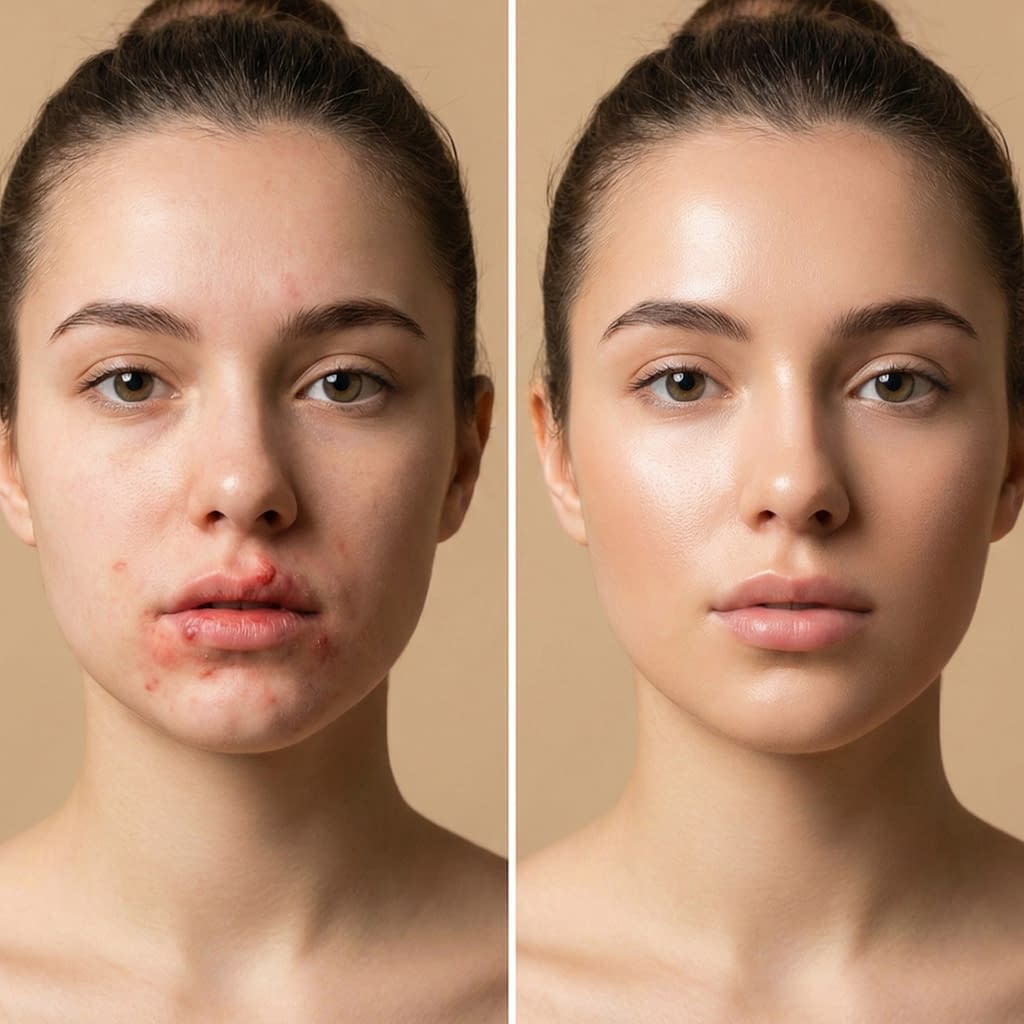
HSV is contagious from the early prodrome through the crusting stage. Containment reduces spread.
Containment checklist
- Avoid intimate contact: no kissing or oral sex until the sore is fully healed and crust is gone. HSV can infect genitals and eyes.
- Don’t share personal items: avoid sharing towels, cups, utensils, lipstick, lip balm, lipstick applicators, or razors.
- Hand hygiene: wash hands thoroughly after touching near the sore or applying treatment. Use alcohol-based sanitizer if handwashing isn’t available.
- Face masks/covering: optional for added precaution when close contact with others is unavoidable.
- Avoid touching your eyes: if you touch the sore, wash hands — HSV can cause serious eye infections (herpetic keratitis).
- Laundry: wash towels and pillowcases after an active sore, especially if the sore leaked fluid. Use hot water and avoid sharing until healed.
Containment protects family, partners, and yourself from autoinoculation to new sites.
When to Seek Medical Care or Prescription Antivirals
Prescription antivirals and medical care are appropriate when outbreaks are severe, frequent, or in vulnerable people.
When to see your clinician
- First-ever cold sore (primary infection) — may need evaluation.
- Frequent recurrences (e.g., more than 4–6 per year) — oral suppressive therapy may be offered.
- Large, painful, or spreading sores that do not start to improve after 48–72 hours of home care.
- Lesions near or in the eye, or any eye symptoms (seek urgent ophthalmology).
- If you’re pregnant, immunocompromised, or have eczema (higher risk of severe HSV).
- If you develop fever, extensive swelling, or signs of bacterial infection (increasing redness, warmth, pus, spreading streaks).
Prescription options
- Oral antivirals (acyclovir, valacyclovir, famciclovir) shorten duration and reduce severity when started within the first 48–72 hours — sometimes offered as episodic or suppressive therapy.
- Dermatology or primary care can advise on dosing and duration and check for complications.
Act early: antivirals are most effective when started at the prodrome or first blister.
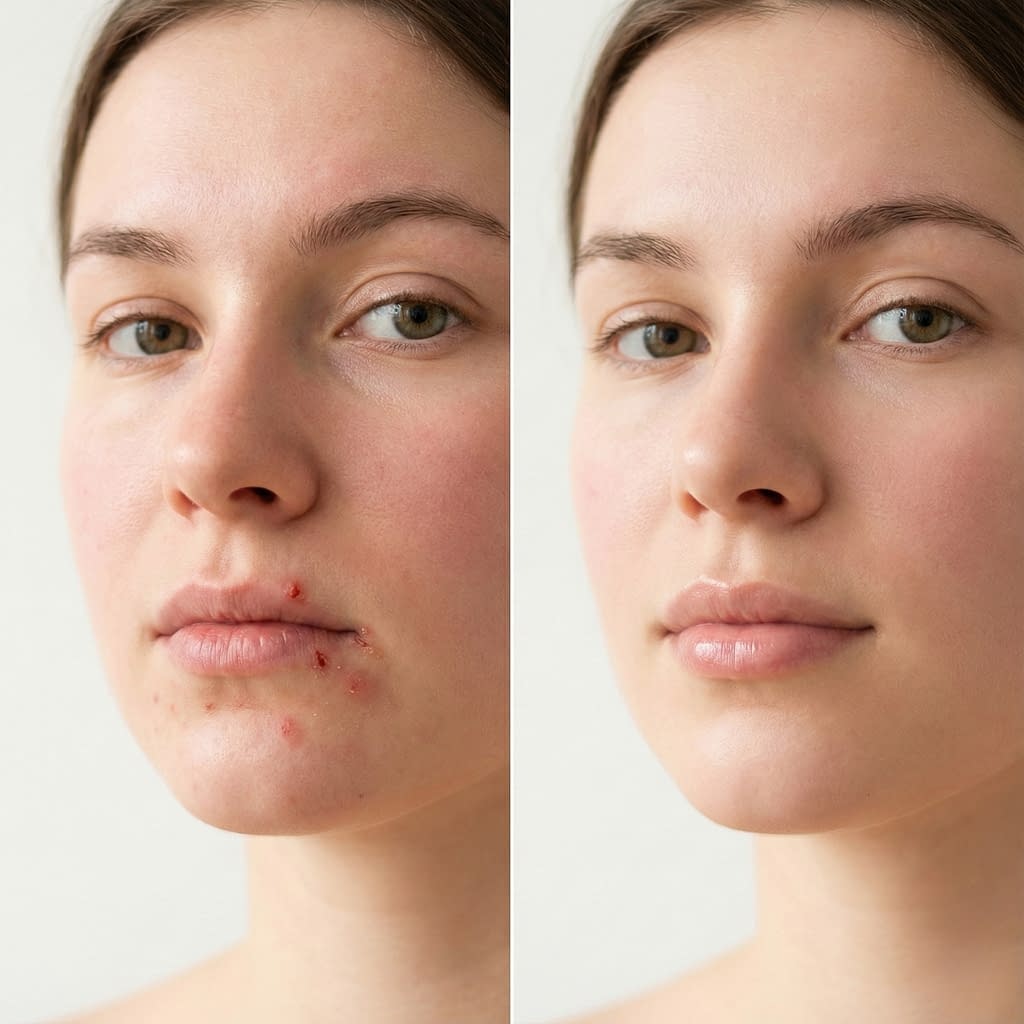
Recovery Care: Scab Management and Reducing Scarring
How you treat the sore while it crusts influences scarring and pigment changes.
Recovery & scab care
- Do not pick at scabs. Picking slows healing and increases scarring risk and viral spread.
- Keep the area moist with petroleum jelly to prevent hard crusts that crack. Reapply often.
- Use sun protection on healed or healing sites — UV can darken scars (post-inflammatory hyperpigmentation).
- Gentle cleansing daily keeps the wound free of debris.
- After full healing, if pigment or texture changes persist, dermatologist options include topical lighteners (for dark marks), retinoids, or procedures later on.
Patience matters: most scabs heal cleanly without scars when untreated and kept protected.
Long-Term Prevention: Lifestyle, Stress, and Immune Support
Reducing recurrence often requires lifestyle and trigger management.
Prevention strategies
- Sun protection: lip SPF daily and avoid excessive unprotected sun exposure.
- Stress management: sleep, relaxation techniques, and regular exercise help immune balance.
- Healthy habits: balanced diet, adequate hydration, and avoiding smoking.
- Trigger awareness: keep a diary to identify patterns (UV, menstruation, certain foods, fatigue).
- Consider suppressive antivirals if outbreaks are frequent — discuss pros/cons with your clinician.
- Vaccination research: while no standard vaccine for HSV-1 prevention is routine, stay informed about new developments through your clinician.
A lifestyle that strengthens immunity and avoids triggers reduces both the frequency and severity of recurrences.
Frequently Asked Questions About Cold Sore Care
Q: Can I pop a cold sore?
A: No. Popping or picking spreads virus, increases pain, and raises scarring risk.
Q: How long am I contagious?
A: From prodrome (tingle) through the blister, weeping, and until fully healed — typically up to 7–14 days.
Q: Does sunscreen really help?
A: Yes — UV is a common trigger. Use lip balm with SPF and sunscreen on the upper lip border.
Q: Are oral antivirals safe?
A: Generally yes for most people; they are commonly used short-term. Discuss with your clinician if you have kidney issues, are pregnant, or take interacting meds.
Q: Can cold sores infect other body parts?
A: Yes — autoinoculation is possible (eyes, genitals). Avoid touching sores and then touching other areas.
Q: Will cold sores go away on their own?
A: Yes, most resolve without treatment, but early antivirals shorten duration and home care reduces pain and spread.
Final Words
Cold sores are common and usually manageable at home if you act fast. The most important tactics are early detection, rapid application of antiviral/topical measures, careful hygiene to avoid spread, and sensible symptom control (cold compresses, barrier balms, pain relief). If outbreaks are severe, frequent, or in high-risk situations (pregnancy, eye involvement, immunosuppression), seek medical care — prescription antivirals and medical guidance make a big difference. With the right approach you can reduce pain, shorten healing time, and protect the people around you.


