

Sweat, tight straps, and repeated rubbing — gym life is great for gains, not so great for skin. Workout-equipment rashes (chafing, friction dermatitis, or contact irritation) are super common, but the good news is they’re usually easy to treat and prevent with the right routine. Below is a practical, no-nonsense guide that explains what causes these rashes, exactly how to soothe them fast, and the long-term habits that keep your skin comfortable while you train.
Why Workout Equipment Can Irritate Your Skin
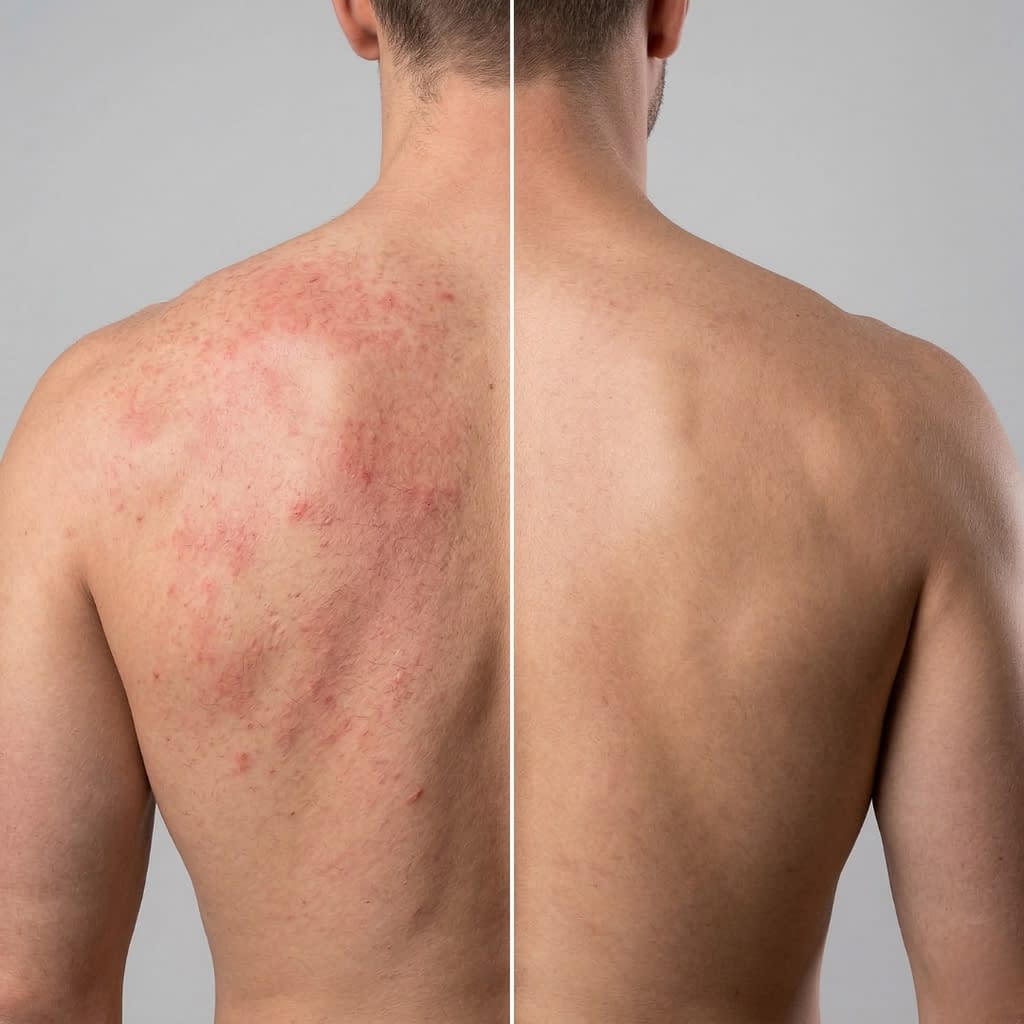
Gym gear presses hard against your skin, and when that pressure is combined with sweat, movement, and bacteria you get a perfect recipe for irritation. Several things make equipment-rash likely:
- Repeated friction from straps, padding, or seams.
- Moisture (sweat) that softens the skin and makes it more fragile.
- Heat and trapped moisture that let bacteria and yeast grow.
- Dirty equipment that carries microbes or leftover detergent.
- Tight or coarse fabrics that rub and remove the skin’s protective oils.
Simple changes — cleaner gear, dryer skin, gentler fabrics — go a long way toward preventing problems.
What Is Workout Equipment Rash? Common Causes Explained
“Workout equipment rash” is an umbrella term that includes:
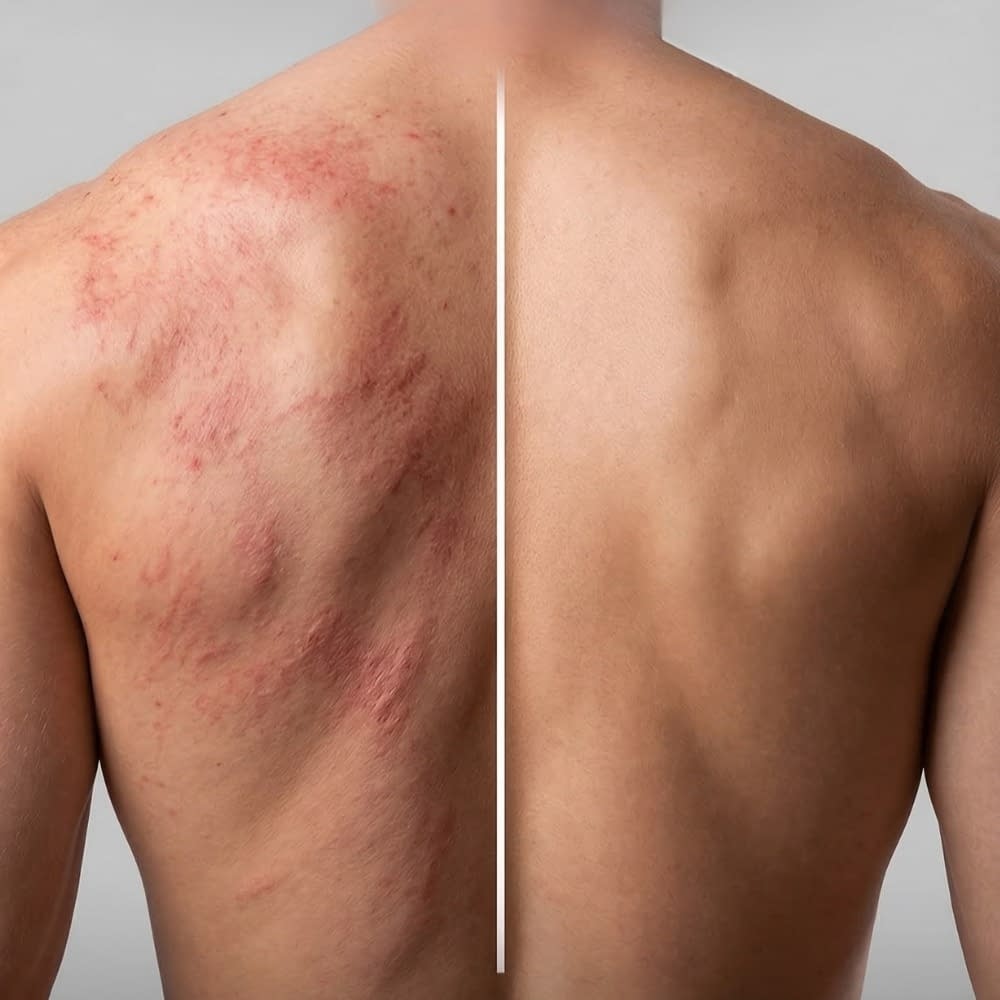
- Chafing — raw, red irritation where skin rubs against skin or fabric.
- Friction dermatitis — more chronic irritation from repeated rubbing; skin can thicken or flake.
- Contact irritation — reaction to a material (foam, glue, dye) in a strap or pad.
- Infectious rashes — secondary bacterial or fungal infections that can develop when broken skin is exposed to microbes.
Common culprits: backpack straps, weight belt edges, treadmill handrails, barbell pads, rower handles, and rough seams inside clothes.
Friction, Sweat, and Bacteria: The Main Triggers
These three factors combine to cause most gym rashes:
- Friction physically abrades the stratum corneum (outer skin layer).
- Sweat softens the skin and increases slipperiness, so friction effects happen faster.
- Bacteria and yeast thrive in warm, damp conditions — once skin is broken, microbes can invade and prolong or worsen the rash.
Address all three (reduce friction, keep skin drier, and minimize microbes) to fix the issue.
Common Areas Where Gym Rashes Appear
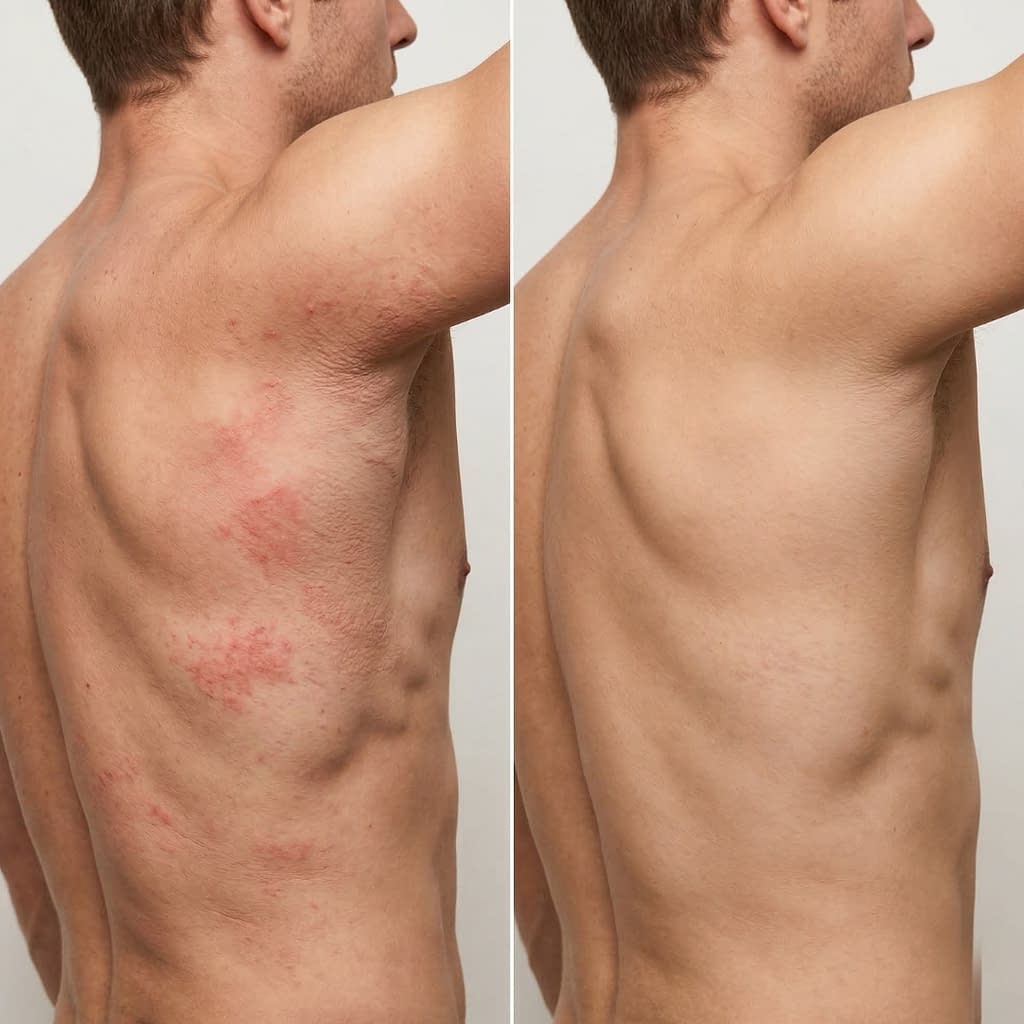
Look out for rashes in these high-contact areas:
- Shoulders and traps (backpack straps)
- Under the arms (tight armholes or straps)
- Lower back and hips (weight belts, barbell pads)
- Inner thighs and groin (bike seats, friction from shorts)
- Hands and palms (barbells, rowers)
- Around the chest/under-bust (sport bras, straps)
Knowing the spot helps you choose the right fix (padding, padding removal, or clothing swap).
How to Identify the Difference Between a Rash, Chafing, and Infection
Quick self-check to choose the right next step:
- Chafing / friction: red, raw, tender skin in the friction zone; usually improves with rest and barrier care.
- Irritant contact dermatitis: more diffuse redness and dryness where a material rubbed; may itch or sting but isn’t usually pus-filled.
- Infection (bacterial or fungal): look for increasing pain, spreading redness, warmth, yellow or green pus, blisters, or a rash that won’t improve after a few days. Fungal rashes often have defined edges and may itch intensely.
If you see signs of infection (pus, fever, spreading redness), stop home care and get evaluated — if you’re under 18, tell a parent/guardian and a clinician right away.
Immediate Steps to Soothe Irritated Skin
When a rash appears, act fast and gentle — don’t scrub or keep training through it.
Step-by-step emergency care:
- Stop the irritating activity and remove the offending gear.
- Rinse the area with cool or lukewarm water and a very gentle, fragrance-free cleanser to remove sweat and bacteria — no scrubbing.
- Pat dry with a clean towel; don’t rub.
- Apply a cooling compress (clean cloth soaked in cool water) for 5–10 minutes to reduce heat and pain.
- Apply a thin layer of a protective emollient — a fragrance-free petroleum jelly (petrolatum), zinc oxide paste, or a barrier cream — to protect raw skin and reduce further friction.
- Wear loose clothing and avoid straps that press on the area until it improves.
If the area looks open or heavily weeping, cover with a sterile non-stick dressing and seek medical advice.
Gentle Cleansing and Proper Hygiene After Workouts
Cleansing is essential — but do it gently.
Daily after-workout routine:
- Shower as soon as possible after sweating using lukewarm water and a mild soap or syndet (soap-free) cleanser. Focus on the irritated areas gently.
- Dry thoroughly — moisture trapped in skin folds fuels microbes. Use a clean towel and consider a hair dryer on cool setting for hard-to-reach folds (keep distance).
- Change out of damp clothes immediately. Avoid reusing sweaty tops or straps before washing.
- Rotate gym gear — have at least two shirts/towels so you aren’t reusing damp fabric day after day.
Good hygiene removes the sweat that feeds irritation and microbes.
Ingredients That Calm Inflammation and Speed Healing
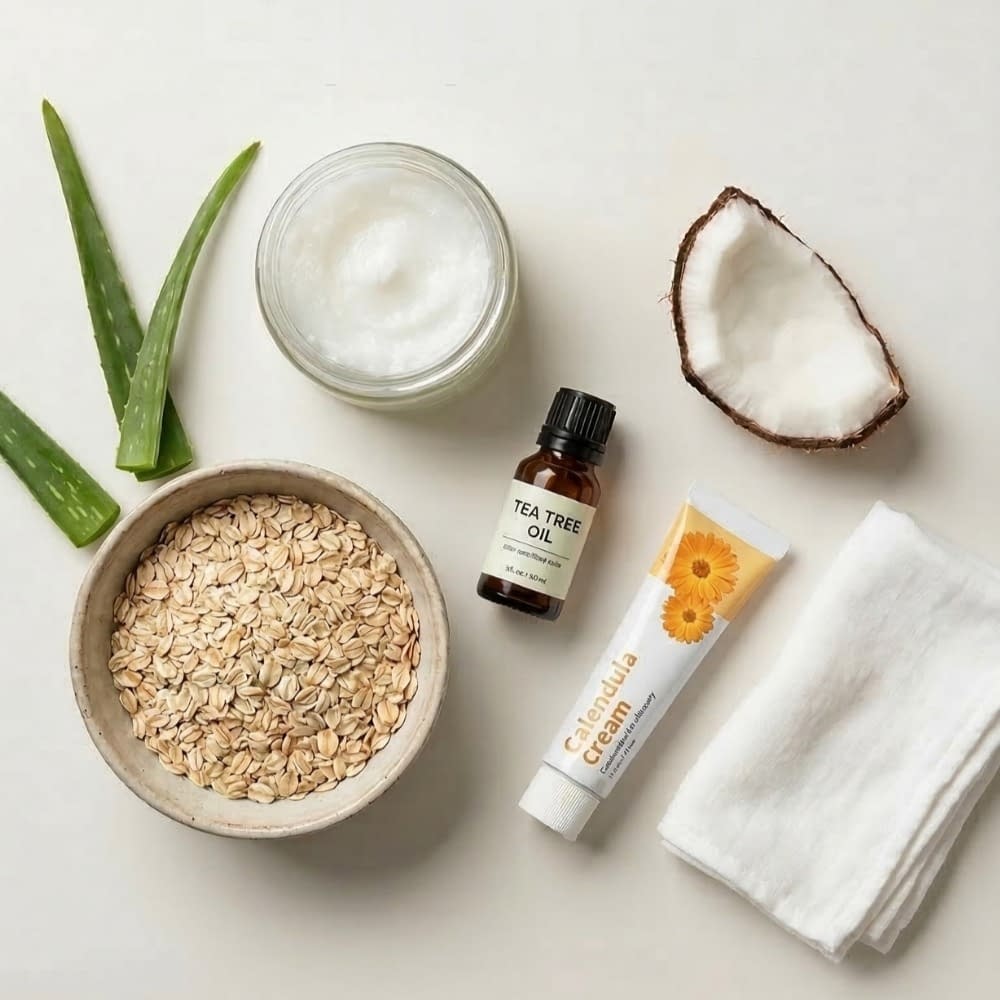
The right topicals help recovery and prevent worse problems.
Useful, easy-to-find ingredients:
- Petrolatum (petroleum jelly) — best first-line barrier product for raw chafed skin; prevents further friction and keeps moisture in.
- Zinc oxide — soothing, protective, and mildly antiseptic; good for chafed areas.
- Colloidal oatmeal — anti-itch and anti-inflammatory; available in creams and bath products.
- Aloe vera — cooling and soothing for mild irritation (use pure gel, fragrance-free).
- Hydrocortisone 1% cream — for short-term itch and irritation control (use a few days max, and check with a parent/guardian or clinician if you’re under 18).
- Antibacterial cleansers (benzoyl peroxide wash for small infected spots) — use under guidance if signs of bacterial infection are present.
How to apply:
- Clean first, then apply a thin layer of petrolatum or zinc oxide 2–3× daily.
- For itching or inflammation, a short course of 1% hydrocortisone may help — don’t use steroids long-term without medical advice.
- If you suspect infection, get medical advice before using over-the-counter antiseptics alone.
Clothing Choices That Reduce Friction and Skin Irritation
The right fabrics and fit make a huge difference.
What to wear and why:
- Moisture-wicking, technical fabrics (polyester blends, nylon, merino) move sweat away and dry quickly.
- Compression gear carefully: compression shirts can reduce friction if they fit well, but tight or ill-fitting compression can increase pressure points — choose the right size.
- Seamless or flat-seam garments reduce rubbing on high-contact zones.
- Padded straps or soft covers: use neoprene pad covers for backpacks or weight belts to spread pressure.
- Avoid rough materials and metal trims that rub the skin.
When in doubt, choose looser, breathable options for training sessions where you know you’ll sweat a lot.
Cleaning Gym Equipment Before and After Use
Dirty equipment spreads microbes and residue that worsen rashes.
Quick cleaning routine:
- Wipe equipment before and after use with gym-provided disinfectant or your own alcohol-based wipe. Focus on handles, pads, and seats.
- Bring a personal towel to place between you and the equipment.
- Avoid using bench oil or creams on equipment (they leave residue that aggravates skin).
- If you use shared pads (barbell pad, foam), consider carrying your own small foam cover or wrap the area with a clean towel.
These small steps cut down bacterial transfer and chemical residues.
Preventing Sweat Buildup During Intense Workouts
Less sweat contact = less irritation.
Sweat-control tactics:
- Hydrate well to help regulate body temp.
- Use moisture-wicking headbands or wristbands to keep sweat off shoulders and neck.
- Take short breaks to towel off during long sessions — tiny pauses prevent continuous wet friction.
- Train in cooler areas when possible or use fans to speed evaporation.
- Consider pre-workout powders: a light dusting of cornstarch-free body powder (look for anti-chafing formulas) in high-friction zones can reduce rubbing; don’t overuse powders that cake into residue.
Managing sweat helps stop irritation before it starts.
Barrier Creams and Protective Products That Help
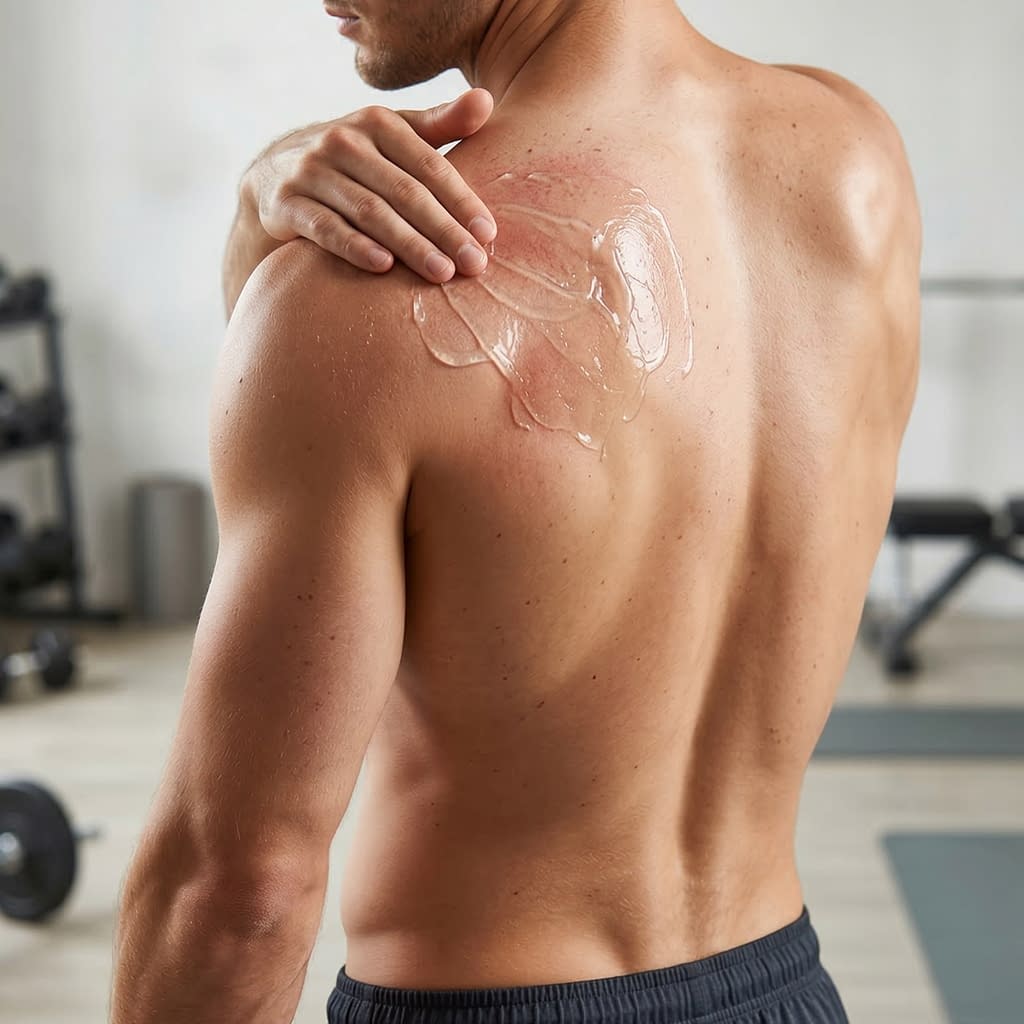
Barrier creams form a protective film that reduces friction and traps moisture.
Best options and how to use them:
- Petrolatum (Vaseline) — excellent for raw chafing; apply a thin coat before activity and after showers.
- Silicone-based barrier creams — long-lasting and less greasy; good under straps.
- Zinc oxide and diaper-rash-style pastes — best for very irritated spots.
- Anti-chafe balms (triethylhexyl, dimethicone products) — formulated for athletes and often come in stick form for easy application to thighs, underarms, or shoulders.
- Powder + cream combo: apply a thin cream and dust with a light anti-chafe powder to prolong protection.
Apply a protective product before heavy training sessions and reapply during long workouts if needed.
When a Rash Might Need Medical Attention
Get medical help if you notice any of these:
- Increasing pain, spreading redness, warmth, pus, or blisters (possible bacterial infection).
- Fever or feeling unwell with the rash.
- Rash that won’t improve after 5–7 days of careful home care.
- Recurrent or chronic rashes that don’t respond to basic prevention (a dermatologist can identify contact allergies or fungal infections).
- If you’re under 18, always tell a parent/guardian and ask for help seeing a clinician if symptoms get worse.
Doctors may prescribe oral or topical antibiotics, antifungals, or perform tests for allergic or other causes.
Long-Term Habits That Keep Your Skin Healthy at the Gym
Form habits that make irritation rare.
Sustainable habits:
- Shower after workouts and change into dry clothes.
- Rotate and wash gym clothes frequently (hot wash if allowed).
- Keep a personal towel and wipes in your bag for quick clean-ups.
- Pad pressure points — add soft covers to belts, straps, or handles.
- Choose breathable fabrics and the right fit for training.
- Carry a small first-aid kit: petrolatum, zinc paste, hydrocortisone 1% (short-term), and antiseptic wipes.
- See a dermatologist for persistent or repeated rashes — they can test for allergies, prescribe treatments, and rule out infections.
Consistent prevention keeps you training comfortably.
Final Words
Workout-equipment rashes are annoying but fixable. Treat them with calm, simple steps: clean and dry the area, protect it with a barrier product, switch to breathable clothes, clean the equipment you use, and manage sweat. Use soothing ingredients like petrolatum or zinc oxide for raw skin, and add hydrocortisone only briefly for itch if needed (and with adult/guardian oversight). If the rash looks infected, is spreading, or doesn’t improve after a few days of proper care, see a clinician — and if you’re under 18, involve a parent/guardian right away.


