

Your daily skincare choices add up. Some small habits speed up visible aging more than you realize — dullness, fine lines, loss of elasticity, hyperpigmentation, and texture changes all respond to what you do (or don’t do) every day. This post breaks down the most common, science-backed mistakes people make that accelerate aging, explains why they harm your skin, and — most important — gives clear step-by-step fixes you can start using today. The tone is practical: no gimmicks, just sensible routines and product-guidance that respect real skin biology.
Over-Cleansing or Using Harsh Cleansers
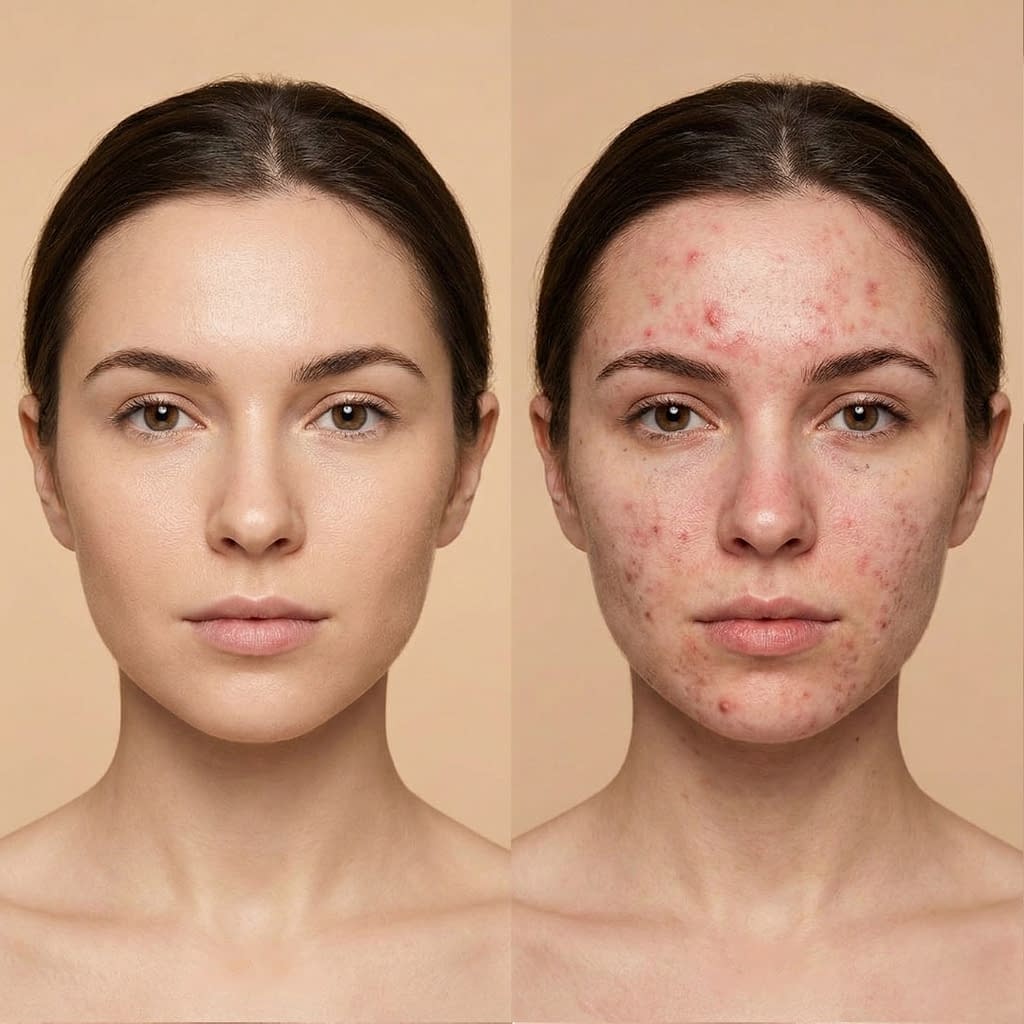
Why it ages you: Stripping cleansers remove more than dirt. They can deplete the skin’s natural lipids, damage the barrier, cause chronic dryness and inflammation, and trigger compensatory oil production — all of which make skin look rough, lined, and dull.
What to watch for
- Tight, squeaky-feeling skin after you rinse.
- Redness, flakiness, or increased breakouts after cleansing.
- Daily use of cleansers with sulfates (SLS/SLES) or strong fragrances on delicate facial skin.
Step-by-step fix
- Switch to a gentle, pH-balanced cleanser. Look for sulfate-free formulas with mild surfactants (cocamidopropyl betaine, sodium cocoyl isethionate).
- Double-cleanse only when needed. Use an oil/balm first only if you’ve worn heavy makeup or high-SPF mineral sunscreen; otherwise one gentle cleanse at night and a splash/soft cleanse in the morning is enough.
- Use lukewarm water. Hot water strips oils and accelerates transepidermal water loss.
- Pat dry — don’t rub. Preserve the moisture layer.
- Follow immediately with a hydrating serum or moisturizer to restore barrier lipids.
Product tips: choose cleansers with glycerin, ceramides, or panthenol for a gentler finish. Avoid alcohol-heavy toners as “cleansers.”
Skipping Sunscreen — The Biggest Age Accelerator
Why it ages you: Ultraviolet radiation (UVA + UVB) is the primary environmental driver of collagen breakdown, elastin damage, pigment formation, and skin thinning. Years of unprotected exposure is the single largest contributor to visible aging.
What to watch for
- Sunspots, uneven tone, and leathery texture.
- Fine lines and wrinkle formation, especially around eyes and mouth.
- Sagging and loss of firmness from collagen fragmentation.
Step-by-step fix
- Make SPF your first and non-negotiable step every morning. Use broad-spectrum SPF 30 or higher.
- Apply generously (about a nickel to face, additional for neck/chest). Don’t forget ears and the back of your neck.
- Reapply every 2 hours if you’re outdoors; use a powder or mist SPF for touch-ups over makeup.
- Layer physical protection: hats, sunglasses, shade, and UPF clothing when possible.
- Combine with antioxidants in AM (vitamin C, niacinamide) to neutralize incidental free radical damage.
Quick habit hack: keep your sunscreen next to your toothbrush or makeup so it becomes automatic.
Not Moisturizing Enough (or Using the Wrong One)
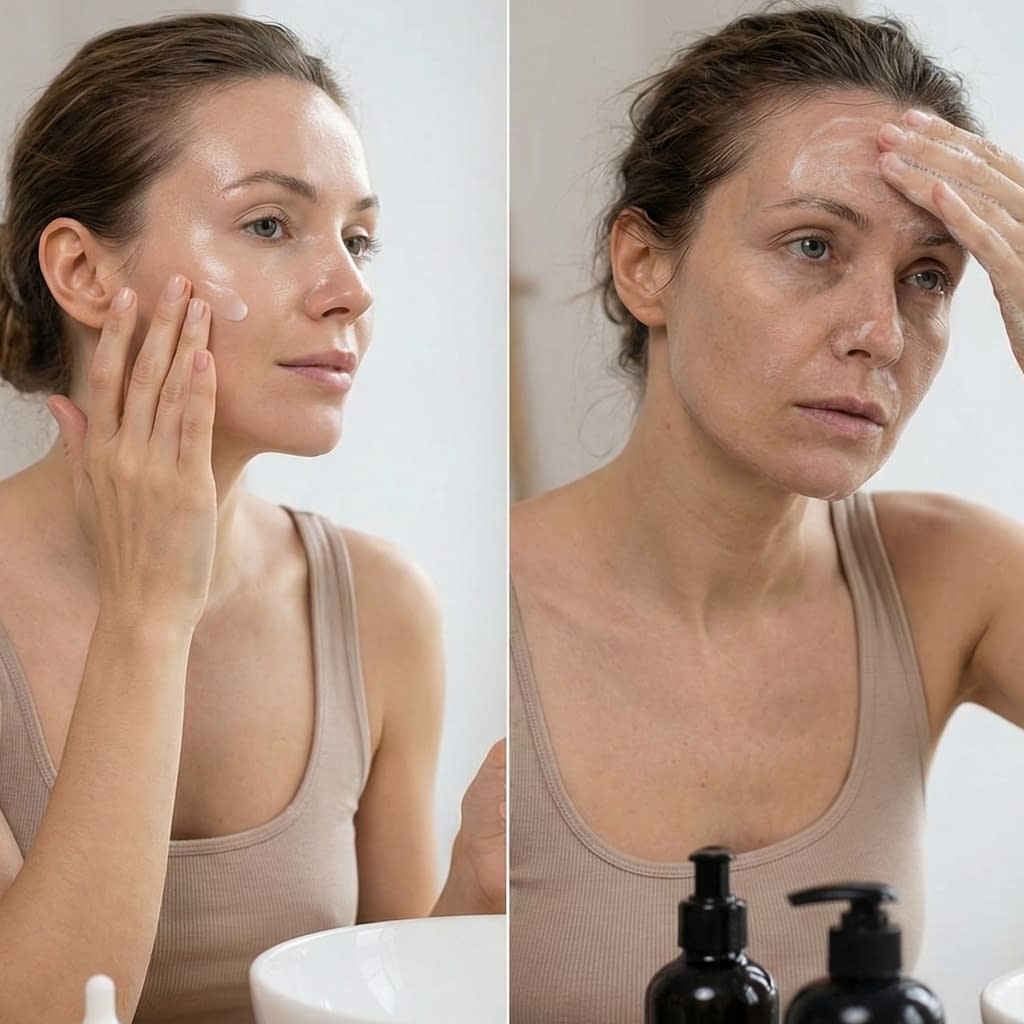
Why it ages you: Moisture keeps skin plump and minimizes the appearance of fine lines. A compromised barrier loses water faster; chronically dry skin accentuates creases and reduces light reflection — both aging cues.
What to watch for
- Tightness and flaking after washing.
- Makeup that looks cakey or emphasizes lines.
- Using heavy, comedogenic creams on oily/acne-prone skin (can cause breakouts) or a gel moisturizer that’s too light for dry skin.
Step-by-step fix
- Identify your skin type (dry, oily, combination, sensitive). This decides the texture you need.
- Use humectants + occlusives: hyaluronic acid/glycerin to pull water in; ceramides, fatty acids, or squalane as sealants.
- Apply to slightly damp skin after cleansing to lock in hydration.
- Use richer creams at night if you’re dry or live in cold climates. Use lightweight, non-comedogenic lotions if oily.
- Don’t skip the neck and décolletage — these thin areas show age early.
Ingredient cues: look for ceramides, niacinamide, hyaluronic acid, fatty acids, squalane. Avoid heavy petrolatum-based occlusives on acne-prone zones unless used as targeted sleeping balms.
Ignoring the Neck, Hands, and Chest Area
Why it ages you: Many people treat their face and forget surrounding areas. Neck, hands, and décolletage are thinner and show photodamage, texture changes, and volume loss earlier — they’re the real “age giveaway.”
What to watch for
- Sunspots on the chest and hands.
- Crepey neck skin and horizontal lines.
- Dry, wrinkled hands despite a smooth face.
Step-by-step fix
- Extend face SPF to neck and chest daily. Carry a small SPF for reapplication.
- Moisturize hands and neck daily. Use richer creams at night; consider retinol (low concentration) on the chest and neck if tolerated.
- Use hand treatments with AHAs or urea 1–2x weekly to improve texture.
- Wear gloves for chores to reduce chemical and water damage.
- Use targeted serums (peptides, niacinamide) on the neck and chest to support firmness.
Practical tip: apply products in long upward strokes from décolletage to jaw to ensure these areas get consistent care.
Sleeping With Makeup On
Why it ages you: Makeup traps pollutants and bacteria, clogs pores, and prevents overnight repair. It interferes with skin’s natural regenerative cycles, increases inflammation and can lead to breakouts and dullness.
What to watch for
- Clogged pores and blackheads.
- Increased irritation or recurring breakouts.
- Dull, rough texture over time.
Step-by-step fix
- Double-cleanse nights you wear makeup: oil/balm to dissolve makeup and SPF, then gentle water-based cleanser to remove residue.
- Keep micellar wipes for emergencies, but follow up with actual cleansing when possible.
- Make nighttime cleansing non-negotiable — set a routine (wash, serum, moisturizer) and keep products within reach.
- Travel kit: pack travel cleansers for late nights or times when you’re exhausted.
Behavioral trick: keep a “clean your face” sticky note on your bedside table until it becomes a habit.
Over-Exfoliating or Using Strong Actives Incorrectly
Why it ages you: Overuse of acids, physical scrubs, or combining powerful actives can disrupt the skin barrier, cause chronic inflammation, redness, sensitivity, and rebound pigmentation — all accelerating visible aging rather than fixing it.
What to watch for
- Burning, stinging, persistent redness.
- Flaking, chronic sensitivity, or compromised barrier.
- Increased pigmentation or breakouts after “purging.”
Step-by-step fix
- Follow concentration & frequency guidelines. Start low (PHA or lactic acid) and increase slowly. Typical beginner frequency: 1× per week. Normal tolerance: 1–3×.
- Avoid layering multiple strong actives (e.g., high-strength AHA + BHA + retinoid the same night). Instead, alternate nights.
- Use pH-appropriate products — products designed to be used together are generally formulated accordingly.
- Repair the barrier: after exfoliation, use moisturizers with ceramides and niacinamide.
- When irritated, stop actives and use barrier-repair routine until skin calms.
Clinical note: “Less is more” — consistent gentle exfoliation beats aggressive, infrequent peels for daily maintenance.
Using Too Many Products Without Understanding Ingredients
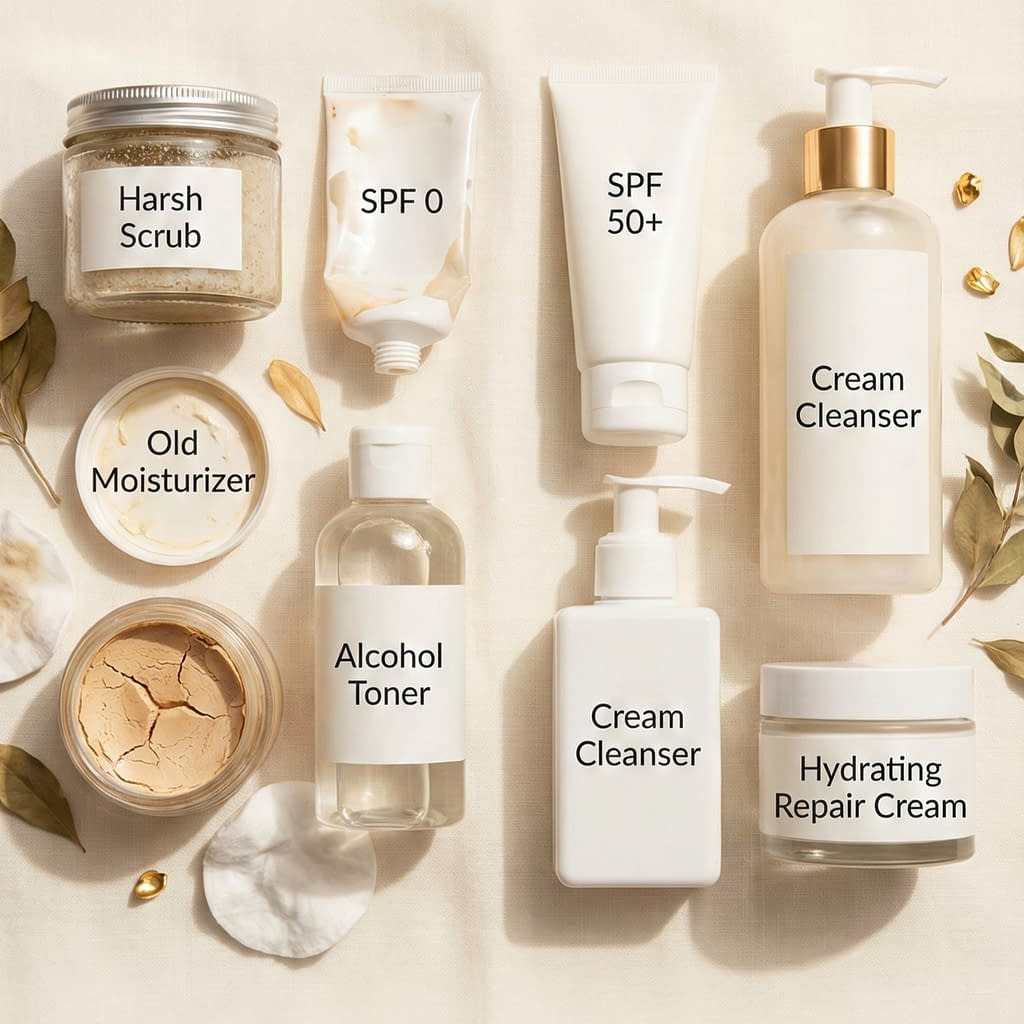
Why it ages you: Product-roulette increases the chance of interactions, irritation, and contradictory effects (one product stripping while another attempts to hydrate). Overcomplicated routines can damage the barrier and cause chronic inflammation — a driver of aging.
What to watch for
- Increasing sensitivity after adding multiple new products.
- Conflicting advice leading to simultaneous use of harsh ingredients.
- Wasting money on redundant products.
Step-by-step fix
- Simplify: cleanse → targeted serum (one or two actives max) → moisturizer → SPF (AM).
- Introduce new products one at a time, for 2–4 weeks, to see how skin responds.
- Read labels for active concentrations and avoid mixing acid retinols and strong acids initially.
- Prioritize evidence-backed ingredients (vitamin C, niacinamide, retinoids, SPF) over trendy complex lists.
- Keep a product log to track reactions and what works.
Rule of thumb: if two products claim to do the same thing (e.g., two brightening serums), use one well-formulated option rather than stacking.
Not Removing Sunscreen Properly at Night
Why it ages you: Many sunscreens, especially modern chemical or water-resistant formulas, cling to the skin. If not adequately removed, SPF can trap pollution, sebum and sweat, clog pores, and impair nighttime repair.
What to watch for
- Residual white cast or greasy film after cleansing.
- Breakouts in areas where SPF accumulates (hairline, jawline).
- Feeling like the skin isn’t “clean” at night despite a single wash.
Step-by-step fix
- Use an oil or balm cleanser first to dissolve sunscreen and makeup. Massage for 30–60 seconds.
- Follow with a gentle water-based cleanser (the second step removes residue).
- Use a cleansing brush or washcloth gently if you wear heavy makeup, but avoid over-scrubbing.
- Check with a toner or micellar wipe (optional) to confirm removal on high-SPF days.
- Never skip the second, water-based cleanse if you used sunscreen that day.
Tip: some sunscreens are easier to remove — if you struggle, try a different formula or oil-based cleanser.
Using Hot Water on Your Face
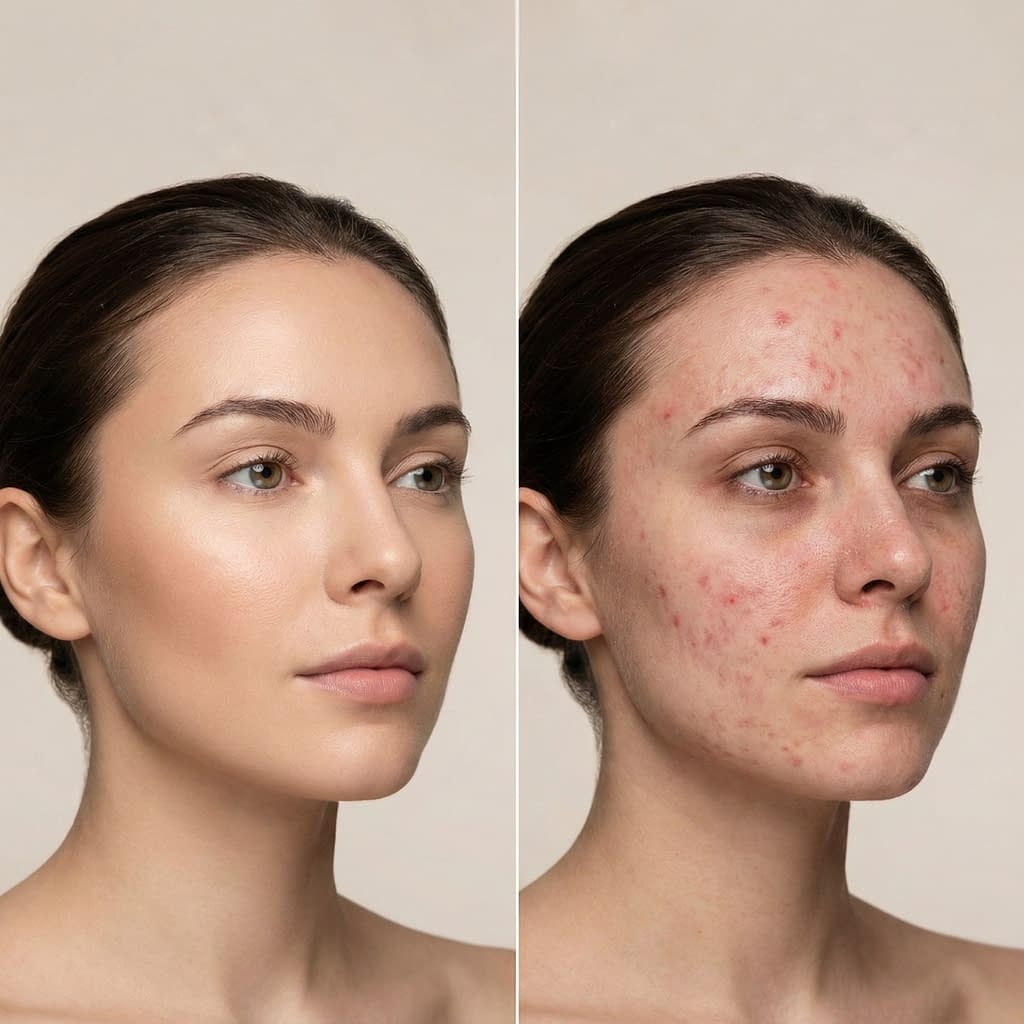
Why it ages you: Hot water increases transepidermal water loss, disrupts barrier lipids, dilates blood vessels (which can worsen redness), and dries the skin — long term this promotes loss of elasticity and accentuates lines.
What to watch for
- Flushed, red skin after washing.
- Persistent dryness or reactive skin.
- Broken capillaries or rosacea flare-ups with frequent hot showers.
Step-by-step fix
- Switch to lukewarm water for cleansing and rinsing. Test on your wrist if unsure.
- Finish with a brief cool rinse (optional) to close pores and boost circulation without stress.
- Limit shower time and avoid face-steaming too frequently.
- Moisturize promptly after the shower while skin is still slightly damp.
Lifestyle suggestion: set shower temperature slightly lower to save skin and energy.
Picking at Pimples and Irritated Skin
Why it ages you: Manual picking causes inflammation, increases risk of infection, and leads to post-inflammatory hyperpigmentation and scarring — long-lasting textural damage that ages the complexion.
What to watch for
- Dark marks and uneven texture where you picked.
- Scab formation or slow-healing lesions.
- Worsening breakouts after squeezing.
Step-by-step fix
- Hands-off rule: avoid picking; keep nails short and clean.
- Use spot treatments instead: 2% salicylic acid or benzoyl peroxide for active acne; azelaic acid for hyperpigmentation.
- If extraction is needed, see a professional (dermatologist/aesthetician) for sterile manual extraction.
- Treat marks: once a lesion has closed, use targeted brightening ingredients (niacinamide, azelaic acid, vitamin C) and sunscreen to reduce post-inflammatory pigment.
- Use hydrocolloid patches for early lesions — they absorb fluid and protect from touching.
Note: scarring may need professional help (microneedling, laser) if severe.
Neglecting Night Skincare and Repair Routine
Why it ages you: Nighttime is when skin performs repair and regeneration. Skipping repair-focused products (retinoids, peptides, or barrier-repair moisturizers) wastes this opportunity, slowing collagen synthesis and barrier recovery — factors that maintain youthful texture.
What to watch for
- Under-eye darkness and lackluster skin despite daytime care.
- No improvement in texture after months of daytime-only routine.
Step-by-step fix
- Establish a PM routine: remove SPF/makeup → gentle cleanse → active/targeted serum (retinol/peptides/azelaic) → hydrating serum (HA) → richer moisturizer or sleeping mask.
- Introduce retinoids slowly (1–2 nights/week, build up) and always pair with barrier repair.
- Consider targeted treatments: eye cream for under-eye hydration and peptides, neck cream for firming.
- Use occlusive treatments (sleeping masks or oils) once or twice weekly to boost overnight hydration.
Pro tip: consistency wins. Night routine adherence will show improvements in texture and resilience over months.
Forgetting Eye Cream or Under-Eye Care
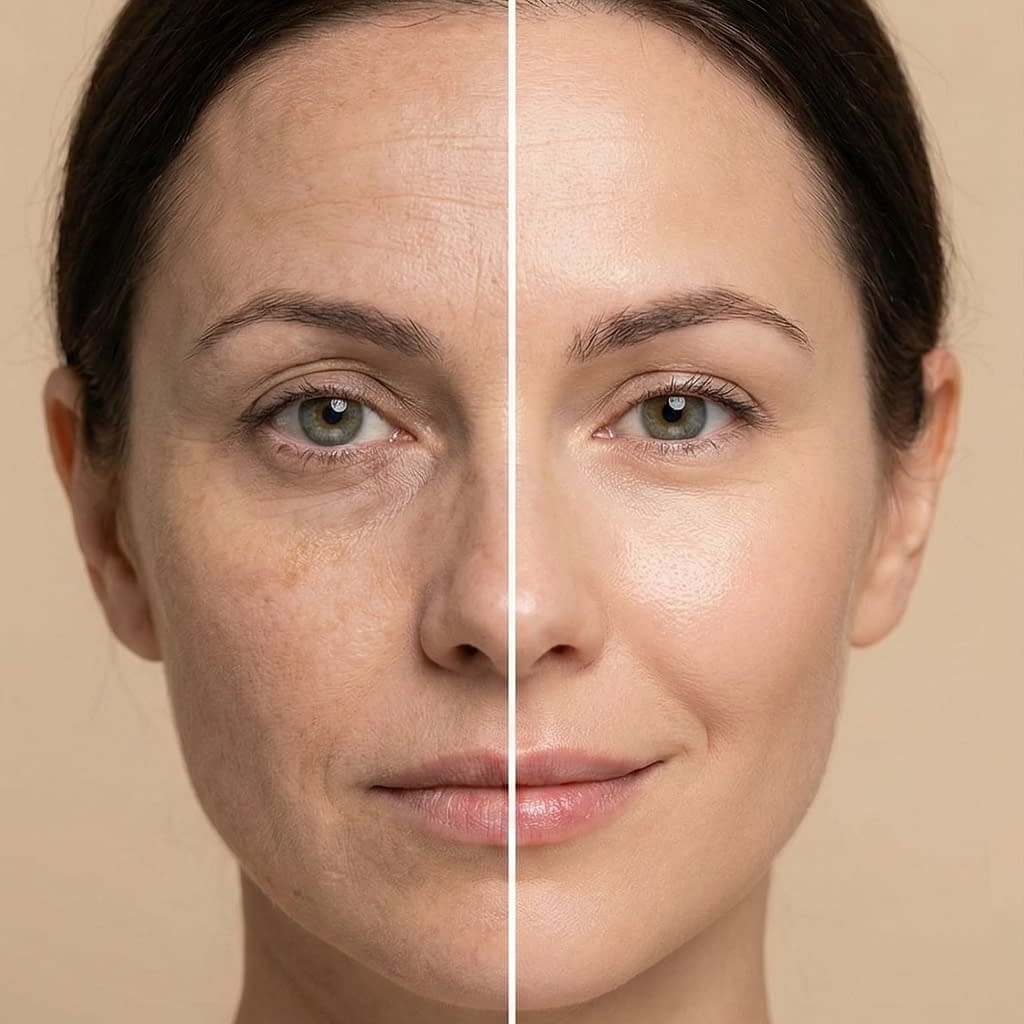
Why it ages you: The periorbital skin is thinner and shows dehydration, fine lines, and dark circles earlier than most facial areas. Neglecting it leaves the eyes looking tired and older.
What to watch for
- Crepey under-eye skin and fine lines.
- Persistent dark circles or puffiness.
- Makeup settling into creases.
Step-by-step fix
- Use an eye-specific hydrating treatment morning and night with peptides, caffeine (de-puffing), hyaluronic acid, or mild antioxidants.
- Pat, don’t rub: use your ring finger to gently tap product into orbital bone.
- Protect from sun: use sunglasses and SPF on orbital bone (don’t get mineral SPF in eyes).
- Address lifestyle causes: sleep, hydration, and allergy control (antihistamines, avoiding triggers) matter for puffiness/dark circles.
- For severe hollowness or deep lines, consult a dermatologist for in-office options (fillers, skin resurfacing).
Reminder: the best eye care is consistent hydration + sun protection.
Poor Diet, Low Hydration & Lifestyle Habits That Show on Skin
Why it ages you: Chronic inflammation from poor diet, dehydration, poor sleep, stress, smoking, and alcohol disrupts collagen synthesis, increases oxidative stress, and accelerates glycation — all of which visibly age skin.
What to watch for
- Dull, sallow complexion and increased lines.
- Puffy eyes or pronounced under-eye darkness.
- Slow wound healing and frequent breakouts.
Step-by-step fix
- Hydrate: aim for regular water intake tailored to your activity level (start with ~1.5–3 L daily depending on needs).
- Eat anti-inflammatory foods: vegetables, fruits, omega-3s, whole grains, lean proteins, and nuts.
- Limit sugar and refined carbs to reduce glycation of collagen.
- Sleep 7–9 hours nightly to support repair cycles.
- Manage stress via movement, mindfulness, or social support.
- Avoid smoking and minimize excess alcohol, both of which break down collagen and dehydrate skin.
Actionable start: replace one processed snack daily with a fruit or handful of nuts and add a short evening walk to improve circulation and sleep.
Final Words
A youthful-looking complexion is less about magical products and more about avoiding damaging habits while consistently adopting protective and reparative practices. Prioritize daily sunscreen, gentle cleansing, appropriate moisturizing, and a sensible nighttime repair routine. Avoid over-exfoliation, hot water, and the temptation to pick or layer too many actives. Extend care to the neck, hands, and décolletage, and support your skin from the inside with hydration, a nutrient-rich diet, sleep, and stress management.
Quick 4-week action checklist
- Week 1: Switch to a gentle cleanser; start daily SPF; add a moisturizing routine AM/PM.
- Week 2: Introduce gentle exfoliation once/week and an eye cream at night; remove makeup every night.
- Week 3: Add a nighttime targeted serum (retinol/peptide) 1–2× weekly and protect neck/decolletage with SPF.
- Week 4: Reassess product load; simplify; add weekly clay mask or hydrating mask depending on needs.
If you have persistent skin concerns (severe acne, rosacea, rapidly changing lesions), consult a dermatologist — many visible aging signs respond best to a combined at-home + professional approach. Start with the basics, be gentle, and give your skin time: healthy change builds steadily and shows with consistent care.


