

Combination skin — oily in some areas (usually the T-zone) and dry or normal in others (cheeks, temples) — can feel like you have two skin types at once. That makes a one-size-fits-all routine fail: heavy products clog the oily bits, while lightweight products don’t soothe the dry patches. This guide walks you through everything: how to map your face, what ingredients to use (and where), smart layering, multi-masking, sensible exfoliation, morning and evening step-by-step routines, and lifestyle habits that actually help balance your skin. The goal is a simple, repeatable routine that keeps shine under control, hydrates dry patches, and gives an even, healthy-looking complexion.
What Combination Skin Really Means
Combination skin usually shows as:
- Oily T-zone: forehead, nose, and chin produce more sebum — visible shine and larger pores.
- Normal/dry cheeks: skin can feel tight or show dry patches, fine lines, or flakiness.
- Variable sensitivity: some areas react to new actives while others tolerate them.
Why it happens: genetics + hormones + environment. Sebum production is uneven across the face and the skin barrier strength can differ by zone. Your job: treat each zone appropriately without over-correcting another area.
Realistic expectations: you won’t make your skin the same everywhere overnight, but with the right balance you can reduce shine, prevent breakouts, and keep dry patches soft and smooth.
How to Map Your Face: Identify Oily, Dry, and Normal Zones
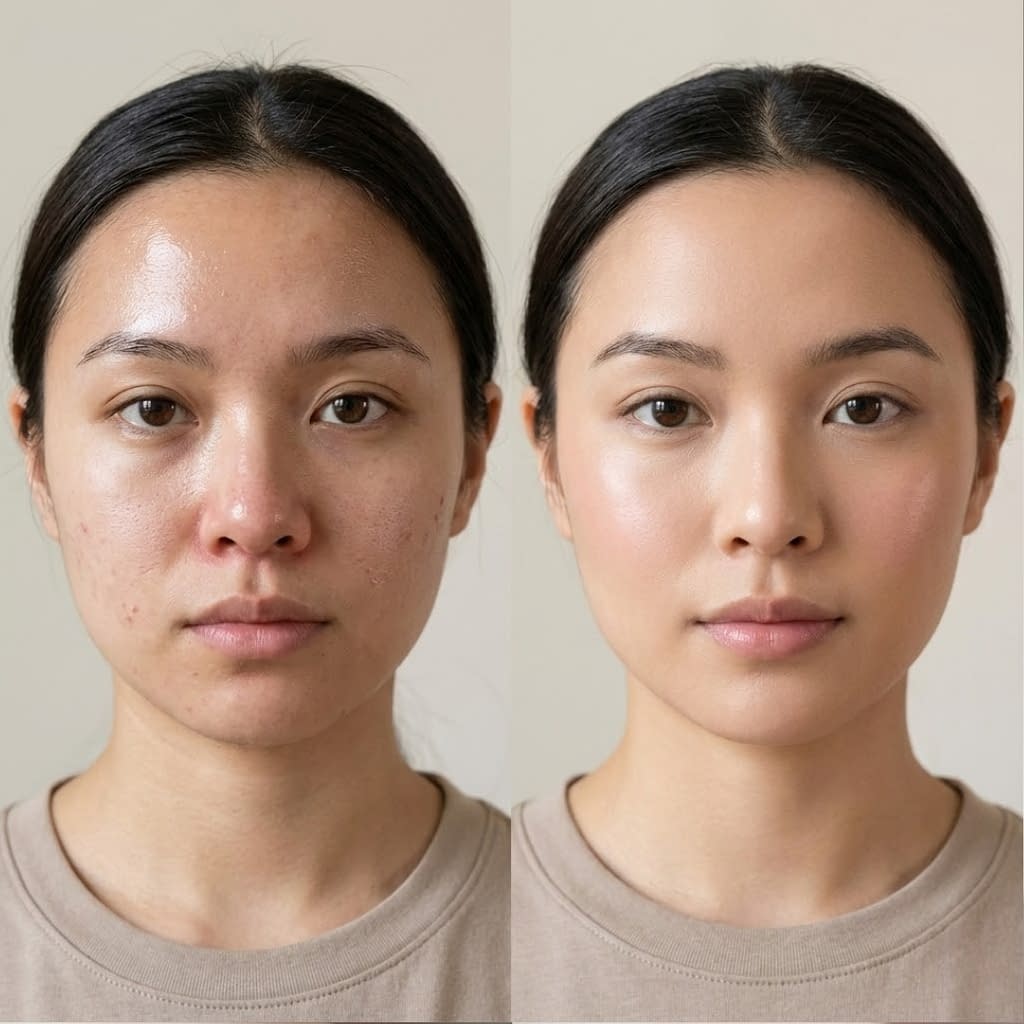
Simple mapping helps you know where to apply what.
Do this quick test (at home)
- Cleanse gently and go makeup-free for 30–60 minutes.
- Blot test: press a clean tissue on your forehead, nose, chin, and each cheek.
- If the tissue picks up oil from forehead/nose/chin but not cheeks → classic combination.
- Touch test: after 30 minutes, run fingers across cheeks and T-zone. Do cheeks feel tight but T-zone slick? Note areas of flaking or redness.
- Map on paper: draw a simple face and shade the T-zone (oily), mark dry patches and any areas prone to breakouts or sensitivity.
Keep a small note on when skin changes (season, stress, medications). This map informs targeted products: mattifying gel on the T-zone, richer cream on cheeks, spot treatment where needed.
Choose the Right Cleanser: Gentle but Effective
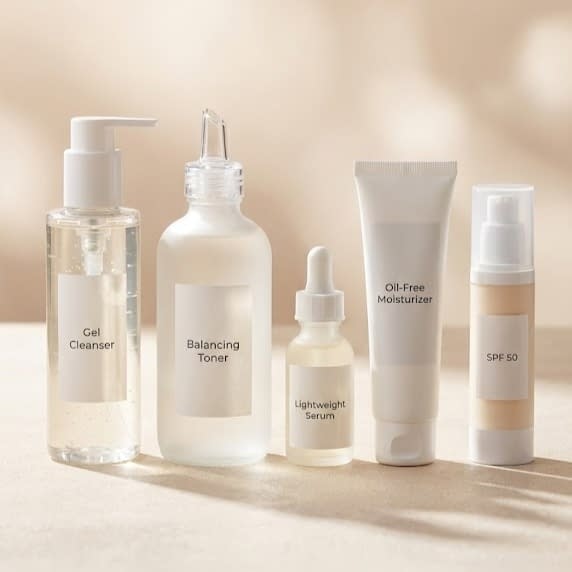
You need a cleanser that removes oil and pollution without stripping dry areas.
What to look for
- Sulfate-free (no harsh foaming agents like SLS).
- Mild surfactants (cocamidopropyl betaine, sodium cocoyl isethionate).
- Balancing ingredients: glycerin, niacinamide, panthenol for moisture; small amounts of salicylic acid help oily zones.
- Cream or gel texture: gels for oilier skin, creamy gels for combo skin.
Step-by-step cleansing
- AM: gentle cleanse or splash with lukewarm water if you’re very dry. If you wear SPF, use a light cleanser.
- PM: cleanse to remove SPF/pollution. If you wore heavy makeup or SPF, consider double cleansing: oil/balm first (dissolve sunscreen and oil), then a gentle gel or cream cleanser.
- Technique: lather with fingertips for 30–60 seconds, rinse with lukewarm water, pat dry. Never scrub.
Tip: avoid drying astringents on your cheeks — they make the skin produce more oil. If your T-zone is congested, a cleanser with 0.5–2% salicylic acid used a few times per week can help.
Tone Smart: Hydrating and pH-Balancing Toners for Combination Skin
A good toner restores pH and adds lightweight hydration without stripping oil.
Ingredients to seek
- Hydrators: glycerin, hyaluronic acid, panthenol.
- Soothers: aloe, chamomile, allantoin.
- Oil control (optional): low-strength niacinamide (2–5%) helps regulate sebum and minimize pores.
- Avoid: high-alcohol toners, heavy astringents or witch hazel with added alcohol.
How to use
- After cleansing, press a hydrating toner into skin with palms (don’t rub).
- Use a cotton pad only if you need to remove residue; pressing is better for hydration.
- If you have an oily T-zone, you can lightly apply a niacinamide-containing toner there and a purely hydrating toner on cheeks — or use a single, balanced toner and target treatments later.
Tip: pH-balancing toners help acid actives (vitamin C, AHA) work better and reduce irritation.
Targeted Treatments: Serums and Spot Solutions for Mixed Needs
Combination skin benefits from targeted serums rather than one large, heavy product.
Common actives — where to use them
- Hyaluronic acid (humectant): apply on the drier cheeks and overall to boost hydration.
- Niacinamide (2–5%): great for T-zone to reduce oil and for cheeks to strengthen barrier. Can be used all over.
- Salicylic acid (BHA): spot or light application on congested/oily areas (nose, chin). Use 0.5–2% formulations.
- Vitamin C (AM): brightens and protects; apply across face if tolerated, or just on cheeks if T-zone is breakout-prone.
- Retinoids (PM): use on areas needing renewal (avoid applying heavily on already dry, flaky patches). Start slow (1–2× week) and increase. Use moisturizer buffer if irritation occurs.
Step-by-step for targeted application
- After toner, apply hydrator (hyaluronic acid) lightly across the face.
- Apply lightweight serums: hyaluronic (damp skin) first, then thinner actives (niacinamide).
- Spot treat: put a pea-size of BHA product only on T-zone blemishes or congested areas. Use a q-tip if you want to be precise.
- Wait 30–60 seconds for serums to absorb before continuing to moisturizer (or mix carefully if products permit).
Tip: start with gentler % and fewer nights per week for retinoids or acids; patch test if needed.
Moisturize Strategically: Lightweight for the T-Zone, Richer for Dry Patches
Moisturizing combination skin well means zoning — different textures for different areas.
Product types
- Gel/gel-cream: lightweight, hydrating, mattifying (perfect for T-zone).
- Light cream or lotion: for normal areas.
- Rich cream or balm: for cheeks or winter months.
Two practical strategies
A. Two-product method (simplest)
- Use a light gel moisturizer all over the face (quick and low risk).
- Dab a richer cream onto dry patches/cheeks only — a pea-size amount warmed in fingers and pressed in.
B. Multi-moisturizer technique (for more control)
- Apply a hydrating serum across the face.
- Use a gel moisturizer for T-zone: dot on forehead, nose, chin and blend.
- Use a richer cream for cheeks/temple/neck: dot and press in gently.
- If you want less shine midday, blot the T-zone with a tissue or use a tiny amount of mattifying primer.
Layering rules
- Apply thinnest → thickest. Serums → lightweight moisturizer → richer moisturizer on dry areas.
- For daytime, seal with SPF as last step.
Tip: look for lightweight moisturizers containing ceramides and glycerin — they hydrate without grease. If you’re acne-prone, choose “non-comedogenic.”
Sunscreen Every Day: Non-Greasy Options That Won’t Clog Pores
SPF is essential but can feel heavy on combo skin — pick the right formula.
Good options
- Mineral SPFs (zinc oxide, titanium dioxide) in sheer or tinted formulas are often gentle.
- Light chemical/SPF liquids: modern formulations are lightweight and fast-absorbing.
- Gel-SPFs: ideal for oilier T-zone.
- Tinted SPF: evens tone and reduces the need for heavier makeup.
How to apply
- AM final step: after moisturizer. Apply generously to face, neck, and ears (about a nickel-sized amount for the face).
- Blot T-zone if SPF feels slightly shiny — you can also use a mattifying primer over SPF on oily spots.
- Reapply if outdoors for long periods or after sweating.
Tip: if SPF pills up or pills with makeup, try a different formulation or wait a minute after applying moisturizer before SPF.
Exfoliation Guide: When, How Often, and Which Type to Use

Exfoliation keeps texture smooth and helps products penetrate, but over-doing it causes imbalance.
Best practices
- Chemical exfoliants (AHAs like lactic/glycolic for surface brightness on cheeks; BHA salicylic acid for the T-zone and blackheads): 1–3× per week depending on strength and tolerance.
- PHAs (gluconolactone): gentle, good for sensitive combo skin as they provide mild exfoliation plus hydration.
- Physical exfoliation: gentle scrubs or konjac sponge 1× per week — avoid harsh gritty scrubs on dry patches.
- Alternating: you can use a BHA for the T-zone and an AHA on cheeks — but avoid layering strong acids the same day unless you know your tolerance.
Step-by-step
- Map zones where you’ll exfoliate. Apply BHA to oily T-zone and AHA to cheeks, or use a single mild chemical exfoliant for the whole face 1–2× weekly.
- Follow directions on product concentration and contact time. Rinse if it’s a rinse-off peel. Leave on for leave-on serums at recommended strengths.
- Moisturize and use SPF after exfoliation (especially next morning).
- Stop if you get persistent redness or stinging — back off frequency.
Tip: lactic acid is moisturizing and a good starter AHA; salicylic acid helps clear pores.
Masks & Multi-Masking: Treat Different Zones at Once
Multi-masking is perfect for combination skin — put a clay mask on your congestion and a hydrating mask on your cheeks.
How to multi-mask (step-by-step)
- Cleanse and dry face.
- Map your zones: clay on T-zone, hydrating gel/cream mask on cheeks.
- Apply clay mask (thin layer) to forehead, nose, and chin. Apply hydrating mask (gel, sheet, cream) on cheeks and under eyes.
- Timing: leave each mask on for its recommended time (often clay: 8–10 min to avoid overdrying; hydrating: 10–20 min). Remove clay first with lukewarm water, then gently wipe off hydrating mask.
- Moisturize after removal. Use this once weekly or 1–2× weekly based on needs.
Mask picks
- Clay (kaolin or bentonite) on T-zone for oil absorption.
- Hydrating gel mask (hyaluronic, glycerin, aloe) on cheeks.
- Sheet masks can be cut to size and used just on dry patches if you prefer.
Tip: don’t leave clay masks on until bone-dry — mild tightening is fine, but deep drying can increase oil production later.
AM and PM Routines — Simple Step-by-Step Plans

Two concise, ready-to-use routines tailored for combination skin.
AM Routine (quick)
- Cleanse — gentle gel/cream or splash if very dry.
- Hydrating toner/essence — press in.
- Vitamin C serum (optional) for brightening.
- Hyaluronic acid serum (if needed) on slightly damp skin.
- Lightweight moisturizer — gel or lotion; apply richer cream on dry patches if needed.
- Sunscreen SPF 30+ — final step.
- Optional: light primer/mattifying product on T-zone if you need to control shine.
PM Routine (repair & balance)
- Cleanse — double cleanse if wearing SPF/makeup (oil/balm → gentle cleanser).
- Targeted serum(s): retinol or AHA/BHA schedule (alternate nights) or niacinamide for oil control. Apply only where needed.
- Hydrating serum (hyaluronic acid) if using retinol to reduce dryness.
- Moisturize: apply lighter moisturizer on T-zone, richer cream on cheeks or spot-apply richer product.
- Optional: face oil at night only on dry patches (avoid comedogenic oils on T-zone if you break out).
Frequency example for actives
- Retinol: 2 nights/week → every other night → nightly as tolerated. Avoid mixing strong AHA/BHA the same night.
- BHA on T-zone: 2–3× per week or as a leave-on spot treatment.
Lifestyle Habits That Help Balance Combination Skin
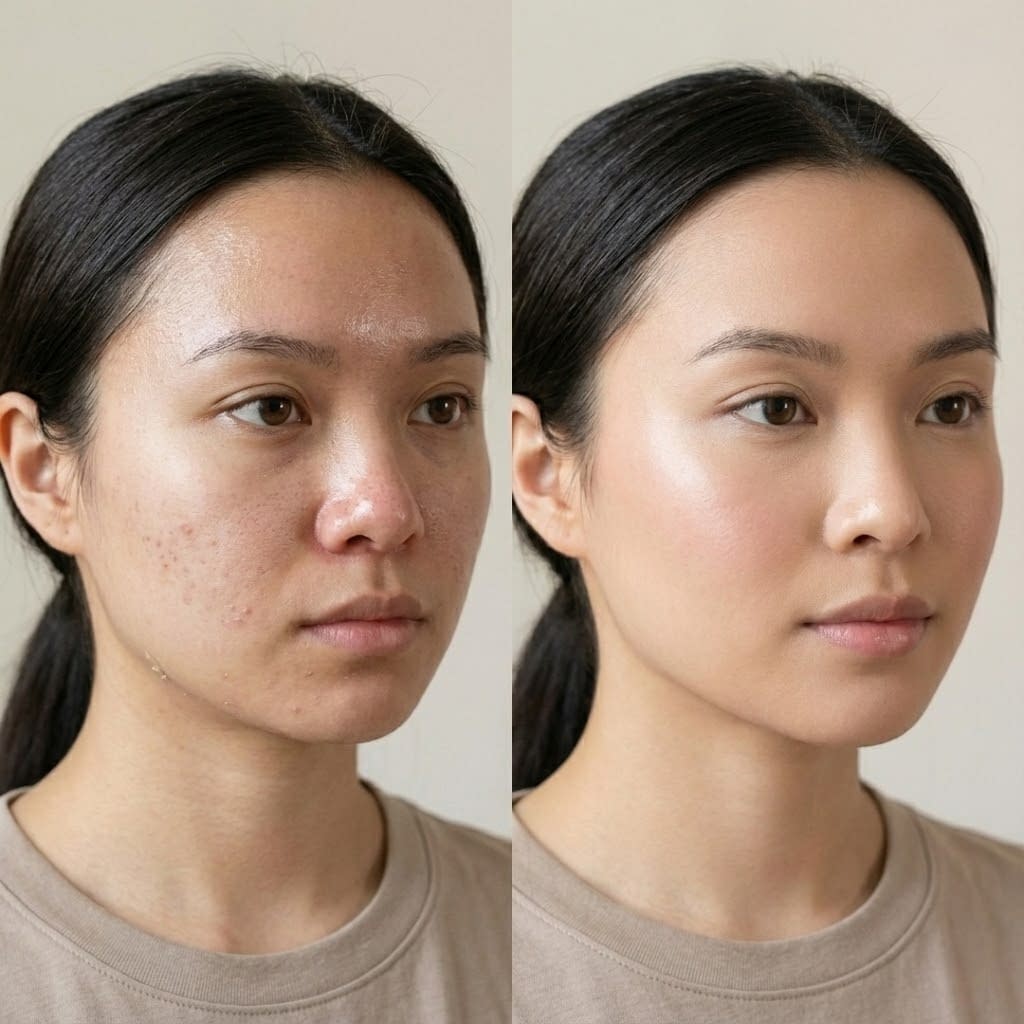
Skincare is 70% routine + 30% lifestyle. Small daily habits make a huge difference.
Quick list
- Sleep: 7–9 hours supports barrier repair and hormonal balance.
- Hydration: drink steadily, eat water-rich foods (cucumber, melon).
- Diet: reduce excessive sugar; include omega-3s (fish, flax), antioxidants (berries, leafy greens).
- Stress: short daily stress reduction (10 minutes of breathing or a walk) helps prevent hormonal breakouts.
- Exercise: boosts circulation and promotes healthy skin; cleanse post-sweat.
- Avoid smoking — it disrupts barrier health and age signs.
Other practical tips
- Wash pillowcases weekly (oil and bacteria transfer to skin while you sleep).
- Clean makeup brushes regularly; use non-comedogenic cosmetics.
- Avoid touching your face — hands transfer oil and bacteria.
Final Words
Combination skin isn’t a problem to “fix” — it’s a map to treat intelligently. The best routine is simple, zone-aware, and consistent: a gentle cleanser, a hydrating toner, targeted serums (use hyaluronic for dry areas, BHA for oily zones), strategic moisturizing, daily SPF, and controlled exfoliation. Multi-mask when you need extra help and adjust seasonally — richer creams in winter, lighter gels in summer. Track how your skin responds for 4–8 weeks before making big changes.


