


Sunglasses are one of the easiest ways to protect your eyes and delicate face skin during summer, but they can leave behind a very noticeable problem: uneven tan lines across the cheeks, nose bridge, and around the eyes. One day your skin looks even, and the next you notice darker patches where your sunglasses rested while the areas around them stayed lighter. It can make your complexion look patchy, especially in bright daylight or photos.
The good news is that sunglasses tan lines are very common, and they can usually be softened with the right care. You do not need harsh scrubs, aggressive bleaching products, or anything that irritates the skin. The safest approach is to gently encourage your skin to renew itself, support hydration and recovery, and protect your face from further sun exposure while the uneven tone fades.
In this guide, you will learn why sunglasses tan lines happen so easily, how they affect the look of your face, what causes them to become more obvious, and how to fade them safely. You will also learn which ingredients help brighten the skin, how to use makeup to blur tan lines temporarily, and how to prevent new ones from forming as summer continues. Each section includes practical, step-by-step guidance so you can even out your skin tone without damaging it.
Why Sunglasses Tan Lines Show Up So Easily in Summer
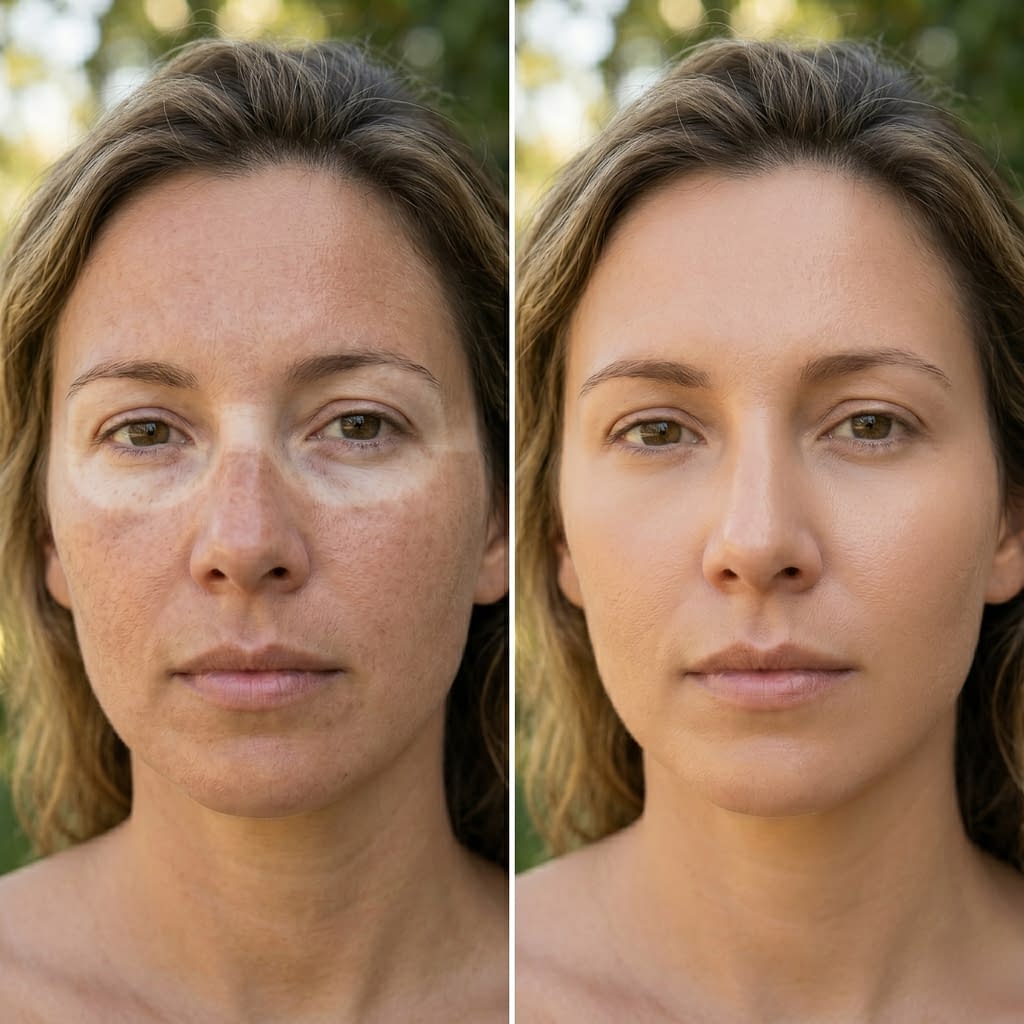
Sunglasses tan lines appear because the frames block sunlight in some areas while the rest of the face is exposed. In summer, UV exposure is stronger and more frequent, so the contrast between protected skin and unprotected skin becomes easier to see. The skin around the frames stays lighter, while the exposed areas gradually deepen in color.
The face is especially prone to this because it gets daily sun exposure even during short outings. You may wear sunglasses while walking, driving, sitting outdoors, or relaxing at the beach, and the repeated pattern creates a very predictable tan line. If your sunglasses are large, thick-framed, or worn for long hours, the lines can become even more noticeable.
Step by step: how tan lines form
- Sunglasses cover certain parts of the face.
- Other areas receive direct sunlight.
- The exposed skin produces more pigment.
- The covered skin stays lighter.
- Over time, the difference becomes visible as a tan line.
This is why tan lines are not a sign that your skin is doing something wrong. They are simply the result of uneven sun exposure.
How Uneven Face Tan Lines Affect Your Skin Tone
Uneven tan lines do not harm your appearance permanently, but they can make your face look patchy or less balanced. The contrast between lighter and darker areas can be especially noticeable on the cheeks, nose bridge, and upper face where sunglasses sit.
When the skin tone is uneven, makeup may also look less smooth. Foundation or concealer can appear mismatched if it is not blended carefully to the changing color of the skin. In bright summer light, the lines may stand out even more.
Step by step: how uneven tone affects appearance
- One area darkens from sun exposure.
- Another area stays lighter under the sunglasses.
- The difference creates a visible line.
- The skin tone looks less even overall.
- Makeup may highlight the difference instead of hiding it.
Uneven tan lines are temporary, but they can affect how polished your complexion looks until the tone evens out.
Common Reasons Sunglasses Leave Noticeable Tan Marks

Not every pair of sunglasses creates the same tan line. Some frames cover more skin, some sit higher on the nose, and some are worn for longer periods during peak UV hours. The more direct the sun exposure, the stronger the contrast becomes.
Common reasons tan lines appear
- Large or thick-framed sunglasses
- Wearing sunglasses for long hours outdoors
- Sun exposure during peak UV times
- Driving or sitting in direct sunlight
- Inconsistent sunscreen application
- Repeated daily exposure over several days or weeks
Step by step: why some lines are more visible
- Sunglasses block certain areas of the face.
- UV rays hit the uncovered skin repeatedly.
- Pigment builds up on exposed sections.
- The contrast becomes stronger over time.
- The tan line becomes easier to see in daylight.
This is why prevention is just as important as fading. Once the contrast develops, it takes time to even out.
How to Fade Tan Lines Safely Without Irritating Skin
Fading tan lines safely means working with the skin’s natural renewal process instead of trying to force it. The most effective approach is a combination of gentle exfoliation, hydration, and sun protection. Harsh scrubbing or strong bleaching ingredients can irritate the skin and sometimes make discoloration worse.
Step by step: safe fading routine
- Cleanse the skin gently.
- Use a mild exfoliating product a few times per week.
- Apply a brightening serum or treatment suited to your skin.
- Moisturize well to support recovery.
- Wear sunscreen every single day to prevent the tan line from deepening again.
The skin naturally renews itself over time. Your job is to support that process without causing inflammation.
The Best Way to Exfoliate Uneven Tanned Areas
Exfoliation helps remove dead skin cells from the surface so the skin tone can look smoother and more even. For tan lines, gentle exfoliation can help the darker areas fade more evenly as the skin renews itself.
Best exfoliation options
- Mild chemical exfoliants such as lactic acid or glycolic acid
- Gentle enzyme exfoliants
- Soft exfoliating cleansers
- Very mild physical exfoliation if your skin tolerates it
Step by step: exfoliating safely
- Choose one gentle exfoliating product.
- Use it only as often as your skin can tolerate.
- Apply it to clean skin and follow the directions carefully.
- Avoid harsh scrubs or anything that feels rough.
- Follow with moisturizer and sunscreen.
Helpful tips
- Start slowly and watch how your skin responds
- Do not exfoliate if the skin feels irritated or sunburned
- Keep the pressure light if using a physical exfoliant
Exfoliation should help fade the contrast, not create new redness or irritation.
Skincare Ingredients That Help Brighten Sun-Exposed Skin
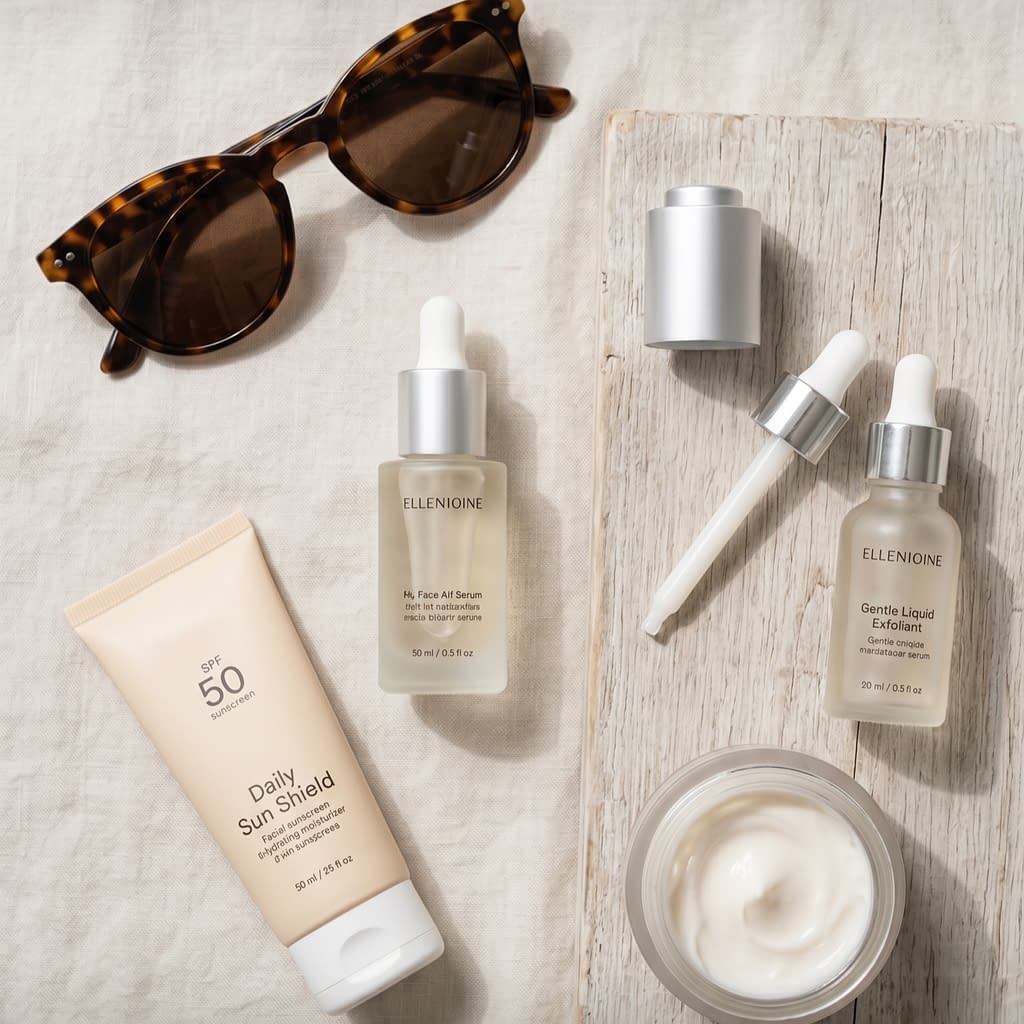
Certain ingredients can support a more even-looking complexion by encouraging skin renewal and helping reduce the appearance of discoloration. These ingredients do not erase tan lines overnight, but they can help the skin look brighter and more balanced over time.
Helpful ingredients
- Vitamin C for brightening and antioxidant support
- Niacinamide for helping even out skin tone
- Lactic acid for gentle exfoliation
- Glycolic acid for surface renewal
- Azelaic acid for skin tone concerns
- Licorice root extract for a soothing brightening effect
- Hyaluronic acid for hydration and skin comfort
- Ceramides for barrier support
Step by step: how to use them
- Pick one or two ingredients that suit your skin.
- Start with a gentle concentration.
- Use them consistently rather than piling on multiple products.
- Moisturize afterward to keep skin comfortable.
- Wear sunscreen to protect your progress.
The best brightening routine is steady, gentle, and realistic.
How to Hydrate and Support Natural Skin Recovery
Hydration is one of the most important parts of fading tan lines because healthy, moisturized skin tends to recover more smoothly. When the skin is dry, it can look rougher and the tan line may appear even more obvious.
Step by step: support recovery
- Drink enough water throughout the day.
- Use a gentle cleanser that does not strip the skin.
- Apply hydrating serums or essences if your routine includes them.
- Follow with a moisturizer that suits your skin type.
- Keep the skin barrier calm and protected.
Helpful tips
- Apply moisturizer to slightly damp skin
- Choose ingredients like glycerin, ceramides, or hyaluronic acid
- Avoid products that sting or dry the skin
Hydration will not erase the tan line alone, but it helps the skin look healthier while it evens out.
What to Avoid When Trying to Even Out Tan Lines
Some common shortcuts can make the skin more irritated and make the tan line more stubborn. If your goal is a smooth, even complexion, it is important to avoid things that cause inflammation or unnecessary damage.
Avoid these mistakes
- Harsh scrubs
- Lemon juice or other irritating DIY remedies
- Strong bleaching products
- Over-exfoliating
- Picking at the skin
- Skipping sunscreen
- Using too many active ingredients at once
Step by step: avoid damage
- Keep your routine simple.
- Stop anything that causes burning or redness.
- Allow the skin to recover between treatments.
- Protect the area from more sun exposure.
- Stay patient and consistent.
The skin fades uneven color best when it is calm and supported, not attacked.
How to Use Makeup to Blend Sunglasses Tan Lines Temporarily
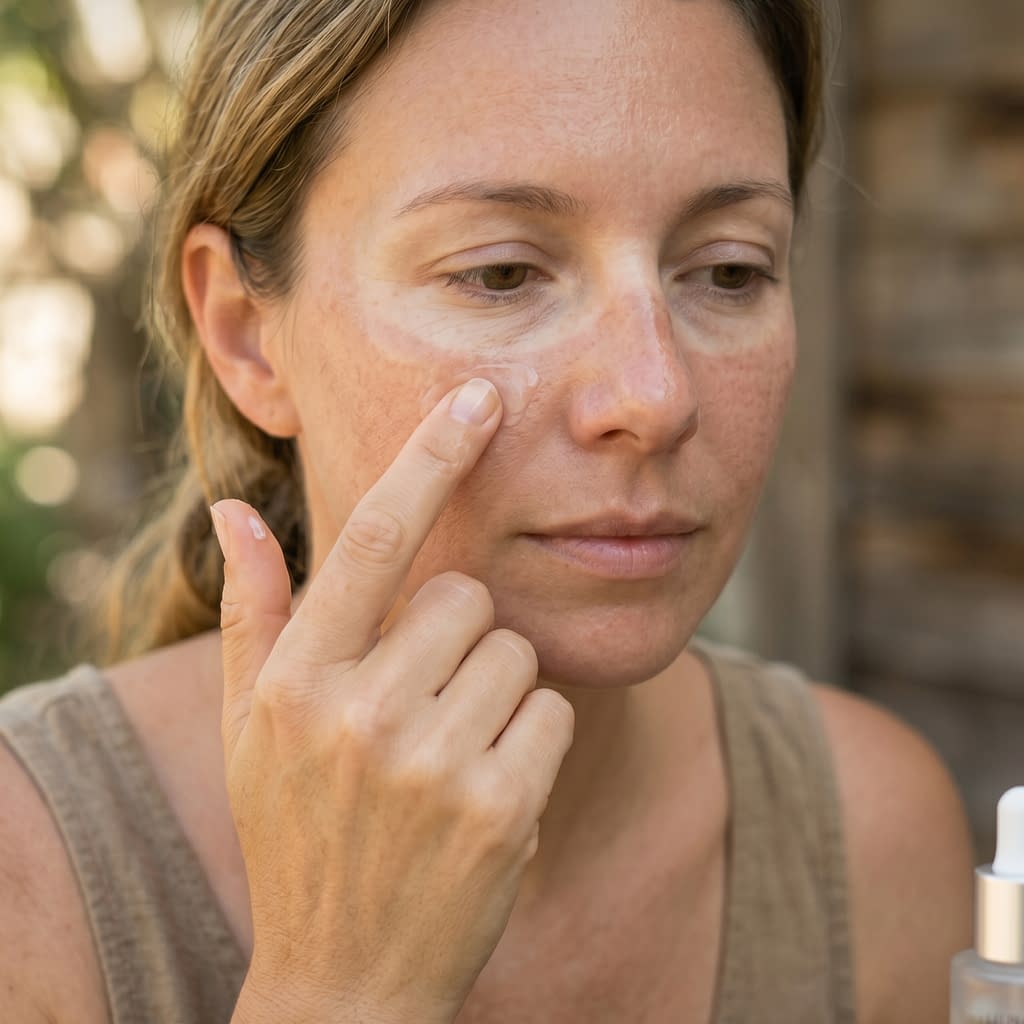
If you want to even out tan lines for the day while the skin is still fading, makeup can help. The goal is to blend the difference in tone without making the face look heavy.
Step by step: temporary makeup fix
- Start with moisturized skin.
- Apply a lightweight base or tinted product.
- Use a concealer or foundation shade that matches the deeper tan area.
- Blend carefully along the tan line.
- Set lightly if needed so the makeup lasts.
Helpful tips
- Use thin layers
- Blend into the neck and surrounding skin for a seamless finish
- Avoid heavy contouring if you want the tan line to disappear naturally
Makeup can help smooth the contrast quickly, especially for events or photos.
Sun Protection Tips to Prevent New Tan Lines
The best way to manage tan lines is to prevent new ones from forming. Sunscreen and better sun habits make a huge difference.
Step by step: prevention routine
- Apply broad-spectrum sunscreen to the face every morning.
- Reapply if you are outdoors for long periods.
- Cover the whole face evenly, including the areas under sunglasses.
- Consider sunglasses that cover more evenly or fit differently if the lines are severe.
- Limit direct exposure during peak UV hours when possible.
Helpful tips
- Use enough sunscreen to fully cover the face
- Do not rely on sunglasses alone for protection
- Reapply after sweating or swimming
- Make sure the bridge of the nose and under-eye area are protected
Consistent sun protection is the easiest way to keep new tan lines from appearing.
How to Keep Your Face Tone Even All Summer Long
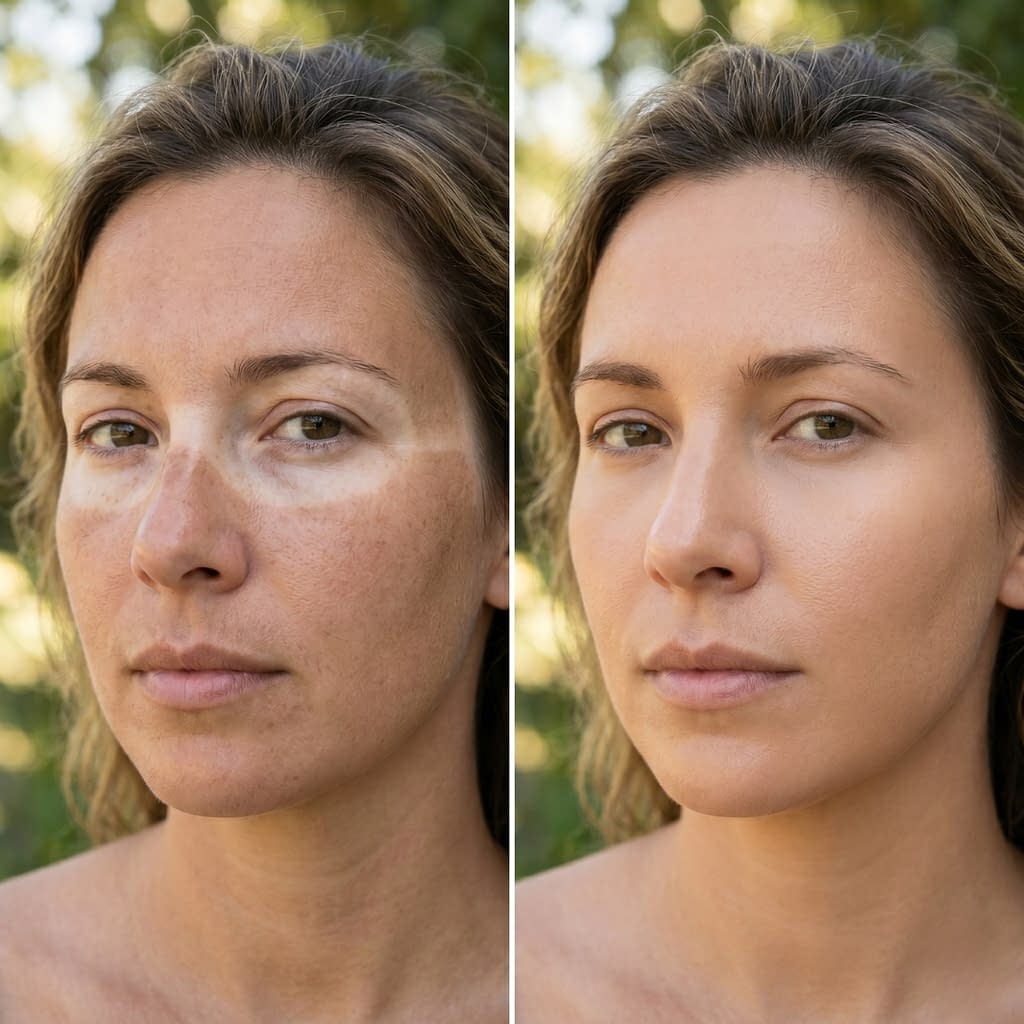
Keeping the face tone even is really about staying consistent with protection, hydration, and gentle care. Once you reduce new UV exposure and support the skin’s natural recovery, the tan lines gradually soften.
Step by step: keep tone even
- Wear sunscreen daily.
- Reapply when needed.
- Use gentle brightening ingredients consistently.
- Exfoliate lightly and carefully.
- Keep the skin hydrated and calm.
Helpful tips
- Use shade and hats in addition to sunscreen
- Be mindful of how long your face is exposed on walks, drives, or beach days
- Reassess your routine if the tan lines keep deepening
An even complexion is much easier to maintain than to repair repeatedly.
Final Words
Sunglasses tan lines are a very normal part of summer, especially when you spend a lot of time outdoors. The uneven tone can be frustrating, but it usually fades with the right mix of care and patience. The safest approach is to gently support the skin’s renewal process with mild exfoliation, hydration, and brightening ingredients while protecting the face from further UV exposure.
The most important habit is sunscreen. Without it, the tan line continues to deepen and the unevenness lasts much longer. With it, plus a calm skincare routine, your skin can slowly return to a more even and balanced tone. If you need a faster fix for an event or outing, makeup can help smooth the contrast temporarily while the skin continues to recover underneath.
Healthy summer skin is not about achieving perfect evenness overnight. It is about protecting the face, treating it gently, and letting your tone settle back into balance naturally.


