


Sunscreen and deodorant are summer essentials, but they can leave behind a stubborn layer of residue when they are not fully removed. Over time, that residue can mix with sweat, oil, and dead skin cells, making pores look congested and skin feel rough or bumpy. That is especially true in hot weather, when people reapply products more often and sweat more heavily throughout the day.
The good news is that buildup is usually manageable with a gentle routine. The goal is not to scrub harder or strip the skin. It is to loosen residue, cleanse it away thoroughly, and keep pores clear without irritating the skin barrier. That means using the right cleanser, choosing exfoliation carefully, and avoiding the habits that make clogged pores worse.
What Causes Deodorant and Sunscreen Buildup on Skin
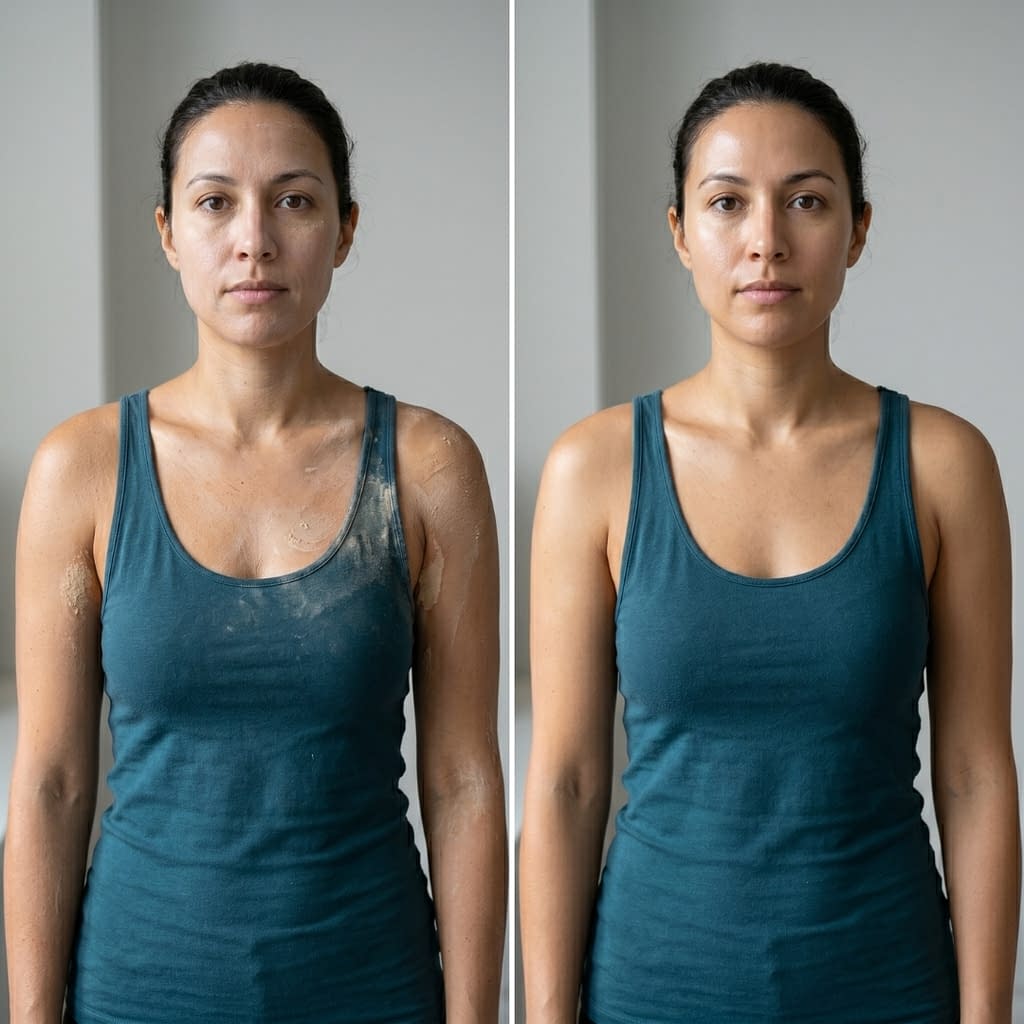
Deodorant and sunscreen can leave buildup because both are made to stay on the skin. Sunscreen is especially important to remove well because water-resistant formulas are designed to cling, and deodorant products are often formulated to remain in place through heat and sweat. When those products are layered over sweat, oil, and dead skin, residue can accumulate.
That buildup is more likely when you reapply sunscreen during the day, wear deodorant daily without thoroughly cleansing at night, or use richer body products on top of already oily or sweaty skin. If the skin is not fully cleaned, the leftover product can sit in pores and make them look more congested over time.
Step by step: how buildup starts
- You apply sunscreen or deodorant.
- The product mixes with sweat, oil, and dead skin.
- Some residue stays on the surface after washing.
- Layers build up over time.
- Pores become more visible and skin feels less smooth.
Why Product Buildup Can Lead to Clogged Pores
Pores are openings that let sebum and sweat reach the surface of the skin. When they collect oil, dead skin, and product residue, they can look larger and feel clogged. Dermatology guidance notes that pores become more visible when they are not kept clear of oil and debris, and that excess oil and sun damage can also make their appearance worse.
Heavy or occlusive products can also contribute to congestion. Cleveland Clinic notes that products that are too occlusive can plug pores and lead to acne, which is why a careful balance matters. In other words, the problem is often not sunscreen or deodorant alone, but residue plus occlusion plus incomplete cleansing.
Step by step: why clogged pores happen
- Oil and dead skin collect around the pore opening.
- Product residue adds another layer.
- The pore becomes less able to clear itself naturally.
- Bumps, roughness, or blackhead-like congestion can show up.
- Repeated buildup makes the issue more noticeable.
Signs Your Skin Is Dealing with Buildup and Congestion

Congestion from product buildup usually shows up as rough texture, tiny bumps, and areas that feel harder to clean than usual. On the body, it can be most noticeable on places where products are applied repeatedly, such as underarms, the chest, shoulders, back, or anywhere sweat and sunscreen collect.
A pore that is clogged may not always look inflamed. Sometimes it just looks dull, bumpy, or a little uneven in tone. If the area feels greasy shortly after washing, or if it seems like deodorant or sunscreen never really “comes off,” buildup may be part of the problem.
Step by step: how to check for buildup
- Wash the area gently.
- Let it dry without adding anything for a few minutes.
- Look for rough texture, tiny bumps, or dullness.
- Notice whether the area feels sticky or coated.
- Pay attention to whether the same area keeps breaking out or feeling congested.
How Sunscreen and Deodorant Can Linger on the Skin
Water-resistant sunscreen is specifically made to stay on the skin, which is helpful for protection but can make removal more difficult. Cleveland Clinic’s double-cleansing guidance explains that oil-based cleansing first is helpful for removing waterproof makeup and sunscreen, and that a water-based cleanser then removes sweat and dirt.
Deodorant can linger too, especially if it is a cream, balm, or stick designed to resist heat and sweat. When residue remains on the skin, it can mix with sebum and dead skin cells. That lingering layer is one reason body skin can start to feel dull or congested even when you are washing regularly.
Step by step: why residue sticks around
- The product is designed to resist moisture and wear.
- Sweat and oil attach to the product film.
- Regular washing may remove only part of the residue.
- Some product stays behind in skin folds or pores.
- The remaining film contributes to buildup over time.
The Best Way to Cleanse Areas Prone to Buildup

A gentle, thorough cleanse works better than harsh scrubbing. Cleveland Clinic recommends double cleansing for water-resistant sunscreen: first an oil-based cleanser to break down makeup, sebum, and sunscreen residue, then a water-based cleanser to remove sweat and dirt.
For body areas prone to buildup, the same idea applies in spirit: loosen residue first, then wash it away gently. On acne-prone or oilier skin, AAD notes that salicylic acid or benzoyl peroxide cleansers can help clean pores, and benzoyl peroxide wash can also reduce body odor after a workout.
Step by step: better cleansing
- Start with an oil-based cleanser or cleansing balm where sunscreen residue is stubborn.
- Rinse with lukewarm water, not hot water.
- Follow with a gentle water-based cleanser to remove sweat and dirt.
- Pat the skin dry with a soft towel.
- Keep the routine consistent, especially after heavy sweating or outdoor time.
Gentle Exfoliation Tips to Unclog Pores Safely
Exfoliation can help remove dead skin cells that contribute to clogged pores, but dermatology guidance favors gentle methods. The AAD explains that exfoliation removes dead skin cells from the outer layer of skin, and Cleveland Clinic advises avoiding harsh tools, salt scrubs, sugar scrubs, and charcoal-based products when choosing an exfoliant.
The safest approach is to exfoliate lightly and consistently rather than aggressively. If your skin is already irritated, over-exfoliating can make congestion and sensitivity worse. The goal is to clear the path for product and sweat to move out of the pores more easily, not to traumatize the skin.
Step by step: safe exfoliation
- Choose one gentle exfoliant.
- Use it on clean skin, following the product instructions.
- Start slowly and see how your skin responds.
- Stop if you notice irritation, stinging, or excessive dryness.
- Follow with moisturizer to keep the barrier comfortable.
Ingredients That Help Break Down Stubborn Residue

For clogged pores and buildup, ingredients that help clear excess oil and blocked pores are the most useful. AAD notes that salicylic acid is oil-soluble, so it can penetrate pores and help with deep exfoliation and excess oil control. Cleveland Clinic also notes that benzoyl peroxide helps remove excess oil from pores and can be useful for acne-prone skin.
Retinol can also support skin turnover and help clear blocked pores over time, according to Cleveland Clinic, though it is generally more of a long-term maintenance ingredient than an instant rinse-off fix. Azelaic acid is another option that Cleveland Clinic describes as milder and useful for sensitive skin.
Step by step: how to choose ingredients
- If oil and clogged pores are the issue, try salicylic acid first.
- If body odor and breakouts are both concerns, benzoyl peroxide wash may help.
- If your skin is sensitive, start with gentler options like azelaic acid.
- Use retinol cautiously and gradually if your skin can tolerate it.
- Always pair actives with gentle cleansing and hydration.
How to Keep Underarms and Body Skin Feeling Fresh
Underarms and body skin often need more than deodorant alone. AAD notes that benzoyl peroxide wash can help reduce body odor after a workout, and salicylic acid can help clean pores and fight bacteria. That makes them useful options for areas that get sweaty, sticky, or congested.
Fresh-feeling skin usually comes from a combination of cleansing, drying thoroughly, and not layering too much product at once. If you are sweating heavily, changing out of damp clothes and showering after activity can help prevent product from mixing with sweat for too long.
Step by step: body-fresh routine
- Shower or cleanse after heavy sweating.
- Use a gentle body wash or an acne-fighting wash where appropriate.
- Dry skin completely before applying deodorant or sunscreen again.
- Use only the amount of product you need.
- Reassess if a specific product seems to leave residue or clog the area.
Why Double Cleansing Can Help Remove Extra Product
Double cleansing is one of the best tools for sunscreen buildup because it uses two different kinds of cleansers for two different jobs. Cleveland Clinic explains that the oil-based first step breaks down waterproof makeup, sunscreen, and excess sebum, while the water-based second step removes sweat and dirt.
That approach is especially useful if you wear water-resistant sunscreen, reapply it often, or notice that a single wash leaves your skin feeling coated. It can also help if you have oily skin, because the first cleanse helps remove more of the oil-based residue that ordinary washing may miss.
Step by step: double cleansing
- Apply an oil-based cleanser and massage gently.
- Rinse with lukewarm water.
- Apply a water-based cleanser to damp skin.
- Rinse again and pat dry.
- Follow with your usual skincare.
Common Mistakes That Make Clogged Pores Worse
One of the biggest mistakes is trying to “scrub away” congestion. Cleveland Clinic specifically advises against specialized brushes, salt scrubs, sugar scrubs, and charcoal-based products when exfoliating, because those can be too abrasive. AAD also warns that squeezing pores or using extractor tools can cause scarring and harm the skin.
Another common mistake is using very occlusive products on already congested skin. Cleveland Clinic notes that overly occlusive products can plug pores and lead to acne. On the other end of the spectrum, harsh cleansing can strip the skin and push it toward irritation, which also makes congestion harder to calm.
Step by step: avoid these errors
- Stop scrubbing and picking at clogged areas.
- Avoid rough exfoliating tools and harsh scrubs.
- Do not overuse heavy, occlusive products.
- Cleanse thoroughly, but gently.
- Give products time to work before switching again.
How to Prevent Buildup from Coming Back
Prevention is mostly about removing product fully, using the right amount, and keeping pores clear. AAD notes that keeping pores clear of oil and debris helps minimize their appearance, and sun damage can also make pores look larger over time, so daily sun care matters too.
The most effective prevention routine is simple: cleanse well at the end of the day, use the least product necessary, and keep up with gentle exfoliation when your skin tolerates it. That way, sunscreen and deodorant can do their job without staying behind as residue.
Step by step: prevention routine
- Remove sunscreen and deodorant fully at night.
- Use a cleanser or double cleanse when residue is stubborn.
- Exfoliate gently, not aggressively.
- Choose products that suit your skin type.
- Keep the skin barrier healthy so pores stay clearer.
Best Daily Habits for Clearer, Smoother Skin
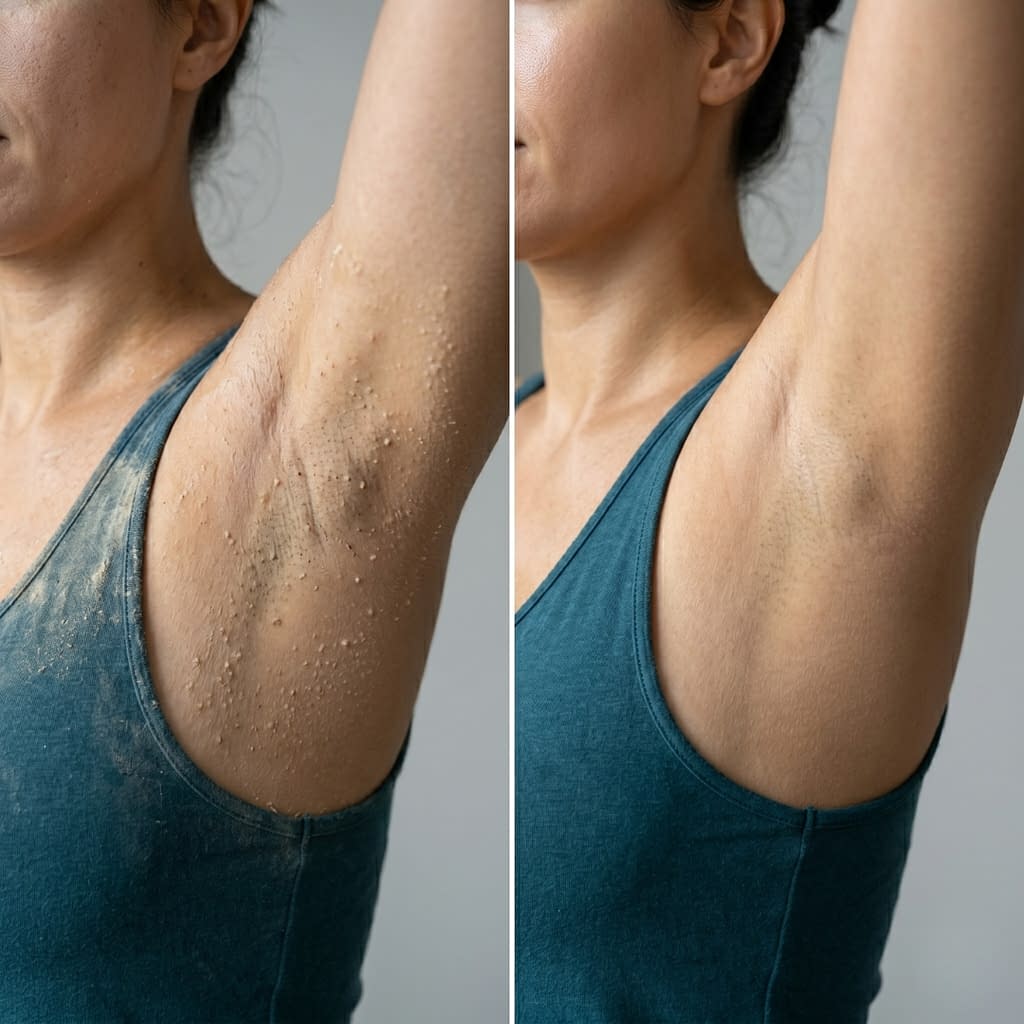
Clearer skin is usually the result of consistent, boring habits rather than dramatic fixes. Regular cleansing, gentle exfoliation, and daily sun protection all play a role in keeping pores from becoming more visible. AAD also emphasizes regular sun protection because UV exposure contributes to skin damage over time.
It also helps to shower or cleanse after sweating, change out of damp clothes quickly, and avoid reapplying product over an already coated or sweaty surface. Those small habits reduce the amount of residue that can settle into pores.
Step by step: daily habit checklist
- Cleanse after sweat and at the end of the day.
- Remove water-resistant sunscreen thoroughly.
- Use gentle exfoliation on a regular schedule.
- Keep products lightweight when possible.
- Protect skin from the sun every day.
Final Words
Deodorant and sunscreen buildup can make skin feel congested, but it usually improves when you treat the skin gently and remove residue more thoroughly. The key is not harsher scrubbing. It is smarter cleansing, gentle exfoliation, and choosing ingredients that help clear pores without irritating them. Double cleansing is especially useful for water-resistant sunscreen, and ingredients like salicylic acid or benzoyl peroxide can help keep pores cleaner and body skin fresher.
If you keep seeing stubborn bumps, roughness, or congestion, simplify your routine and remove the biggest buildup triggers first. Avoid harsh brushes and scrubs, keep occlusive products in check, and stay consistent with sun protection and cleansing. Over time, those habits do far more for smoother skin than trying to force a quick fix.


