


Swimming is one of the best parts of summer, but it is not always kind to your hair. By the time you climb out of the pool, ocean, or lake, your strands can feel dry, rough, tangled, and almost impossible to comb through. Chlorine, saltwater, sun, and wind all work together to strip moisture from the hair and cause the cuticle to lift, which makes knots form much more easily.
The worst thing you can do in that moment is rush. Wet, tangled hair is at its most fragile, and rough handling can lead to breakage, frizz, and split ends that are hard to undo later. The good news is that you can detangle swimming knots safely if you use the right order, the right products, and a little patience.
In this guide, you will learn why swimming causes knots, what to do right away, how to loosen tangles without breaking the hair, and how to keep your strands smoother the next time you swim. The process is simple, but the technique matters. When you work gently and strategically, even a very tangled head of hair can be brought back to smooth, manageable condition.
Why Hair Gets So Knotted After Swimming
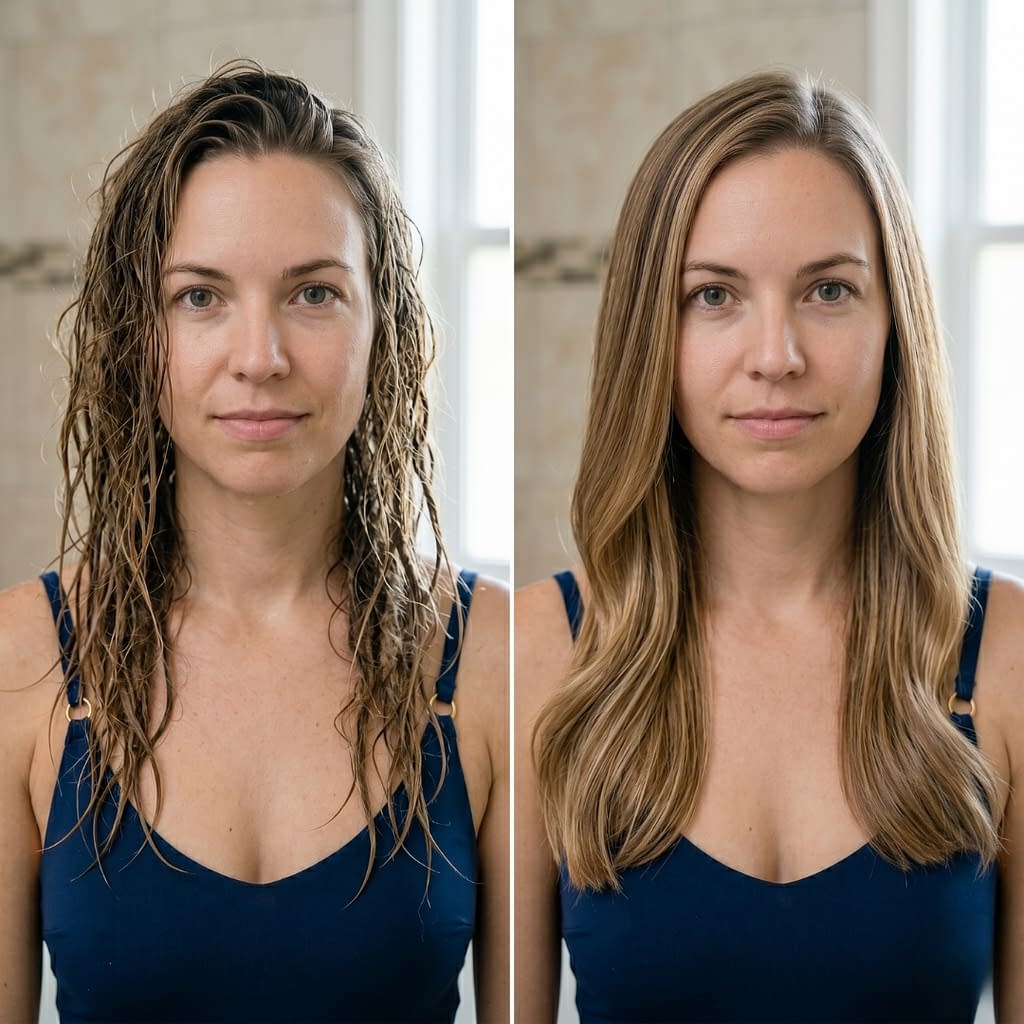
Hair gets knotted after swimming because it is exposed to water, friction, and drying elements all at once. Water makes hair swell and open up, while chlorine or salt can strip away the protective moisture that normally helps strands slide past each other. Once that smooth surface is gone, individual hairs catch on one another and form knots.
When hair is wet and moving around in the water, the strands can also rub together in every direction. Add wind, towel rubbing, or a tight hair tie, and tangles become even worse. The result is hair that feels rough, sticky, and hard to separate once you are done swimming.
Step by step: how knots form
- Hair gets wet and swells.
- Chlorine or salt removes moisture and smoothness.
- Strands rub against each other in the water.
- Wind and movement create more friction.
- The hair dries into tangles and knots.
The more dry or porous your hair already is, the faster swimming can turn it into a tangled mess.
How Chlorine, Saltwater, and Wind Cause Tangles
Different swimming conditions create different kinds of damage, but they all make hair more likely to knot.
Chlorine
Chlorine can strip natural oils from the hair and leave it feeling dry, rough, and brittle. Once that happens, the cuticle becomes less smooth, and the hair is more likely to catch and tangle.
Saltwater
Saltwater can give hair texture, but too much salt dries the strands out. Dry, salty hair is more likely to tangle because it becomes stiff and less flexible.
Wind
Wind causes loose strands to blow around, rub together, and twist into knots. If your hair is already wet and weakened from swimming, the wind can make it even more tangled before it dries.
Step by step: how these elements work together
- Chlorine or salt dries and roughs up the hair.
- Hair becomes less slippery and more fragile.
- Wind and movement add friction.
- Wet strands begin catching on each other.
- Drying hair locks the knots into place.
Understanding the cause helps you choose a gentler fix instead of fighting the hair aggressively.
What to Do Immediately After Getting Out of the Water
What you do right after swimming can make a huge difference in how hard the hair is to detangle later. The goal is to stop the damage from getting worse and start adding moisture back into the strands as soon as possible.
Step by step: immediate post-swim routine
- Rinse your hair with clean water as soon as possible.
- Do not rub the hair vigorously with a towel.
- Gently squeeze out excess water instead.
- Apply conditioner or leave-in if you have it with you.
- Separate the hair with your fingers before it starts to dry into knots.
Helpful tips
- The sooner you rinse, the less residue stays in the hair.
- Do not pile wet hair into a tight bun if it is already tangled.
- Avoid pulling a brush through the hair before adding slip.
A few minutes of careful handling right away can save you a lot of breakage later.
The Safest Way to Start Detangling Wet Hair
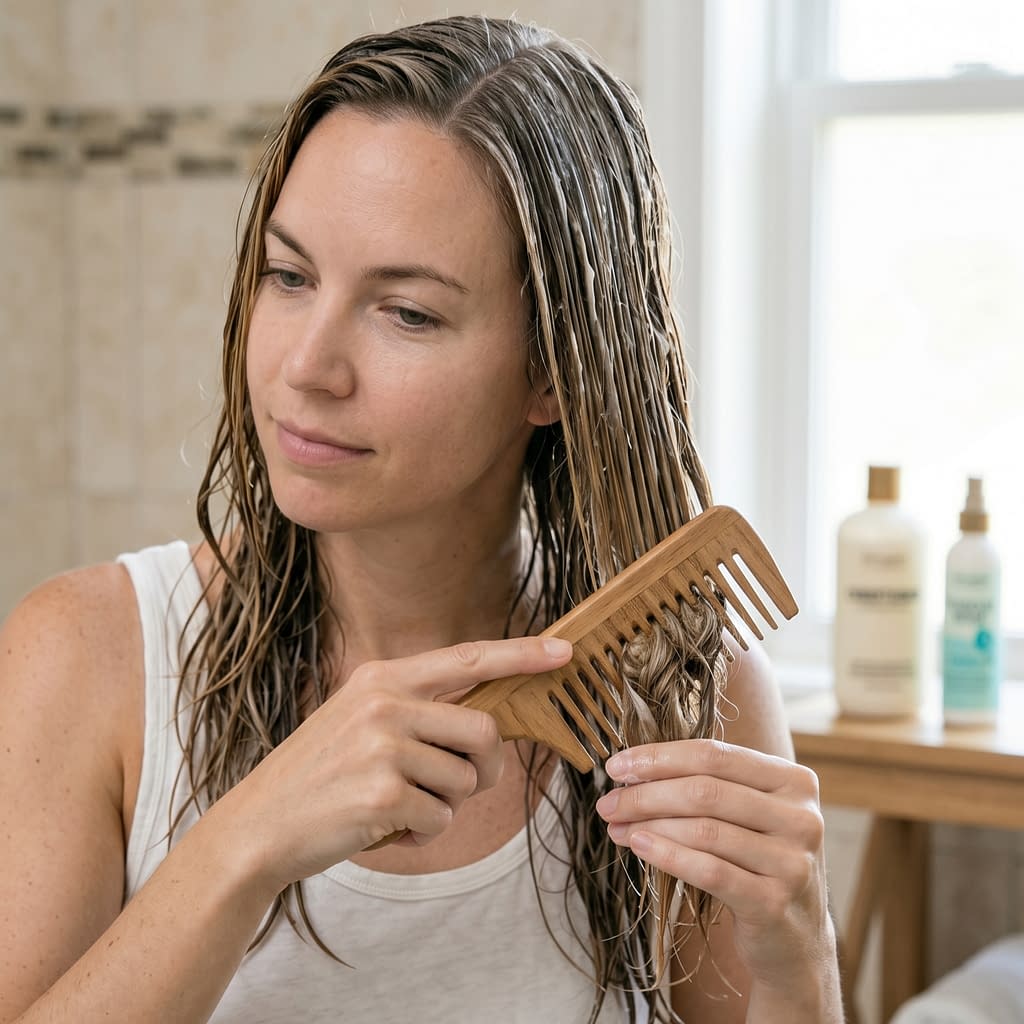
Wet hair needs a very gentle approach because it stretches more easily and breaks more quickly than dry hair. The safest way to begin is to add slip, work in sections, and start at the ends rather than the roots.
Step by step: safe detangling method
- Apply a conditioner, detangling spray, or leave-in product.
- Divide the hair into manageable sections.
- Start at the very ends of one section.
- Use your fingers or a wide-tooth comb to loosen small knots.
- Move upward slowly once the ends are smooth.
- Repeat section by section until the hair is free of tangles.
Helpful tips
- Never start combing near the scalp if the ends are knotted.
- The smaller the section, the easier the detangling.
- Patience is faster than breakage, because damaged hair often takes longer to fix.
Detangling from the bottom up keeps knots from tightening even more.
Why Conditioner or Leave-In Helps Loosen Knots
Conditioner and leave-in products are essential because they reduce friction. Knotted hair is hard to comb through when the strands are dry and rough, but much easier when they are coated with a smooth, slippery layer.
Conditioner helps soften the hair cuticle, which makes the strands more flexible. Leave-in products can keep that softness going after you finish detangling, which is especially useful for hair that dries out quickly after swimming.
Step by step: how to use conditioner for detangling
- Apply conditioner generously to the tangled sections.
- Let it sit for a minute or two if needed.
- Work the product through with your fingers.
- Start separating the easiest knots first.
- Rinse lightly or leave in, depending on the product.
Helpful tips
- Use extra conditioner on the most tangled areas.
- A leave-in spray is useful for fine hair that gets weighed down easily.
- Thick or curly hair may need a richer conditioner for enough slip.
Slip is what turns a painful detangling session into a manageable one.
Best Tools to Use for Gentle Detangling
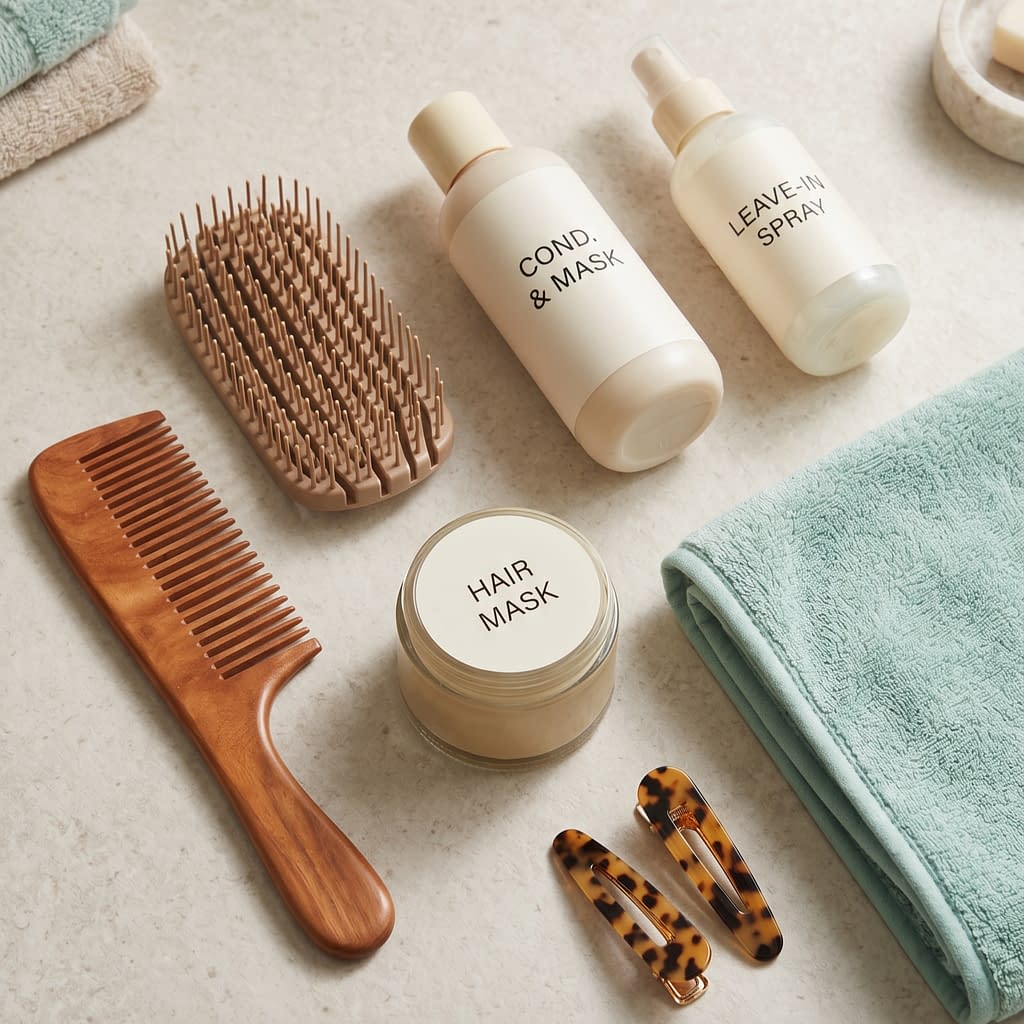
The right tool matters just as much as the right product. Using the wrong brush on tangled wet hair can cause unnecessary breakage.
Best tools
- Wide-tooth comb
- Detangling brush
- Your fingers for the first pass
- Sectioning clips if your hair is very thick
- Spray bottle with water or leave-in for extra moisture
Step by step: choosing the tool
- Start with your fingers to loosen the biggest knots.
- Use a wide-tooth comb for general detangling.
- Switch to a detangling brush only if your hair responds well to it.
- Keep the hair in sections so the tool does not snag too much at once.
- Clean your tool afterward so product and debris do not build up.
Helpful tips
- Fine hair may prefer a gentler detangling brush.
- Thick or curly hair often does better with a wide-tooth comb and fingers.
- Avoid tight bristles on hair that is already stressed.
A gentle tool will save you from a lot of pulling and snapping.
How to Detangle Hair Without Causing Breakage
Breakage happens when hair is stretched past its limit or forced apart too quickly. The key to avoiding it is to reduce tension and work slowly through each knot.
Step by step: breakage-free detangling
- Make sure the hair is lubricated with conditioner or leave-in.
- Hold the section of hair above the knot so the scalp is not being pulled.
- Work the knot loose with your fingers first.
- Use your comb or brush only after the knot begins to break apart.
- Move from the ends upward, never the other way around.
Helpful tips
- If a knot feels stuck, add more product instead of more force.
- Pulling hard often makes the knot tighter.
- Keeping the section supported near the scalp helps reduce pain and stress on the strands.
The less force you use, the less damage you create.
Tips for Working Through Severe Knots Slowly
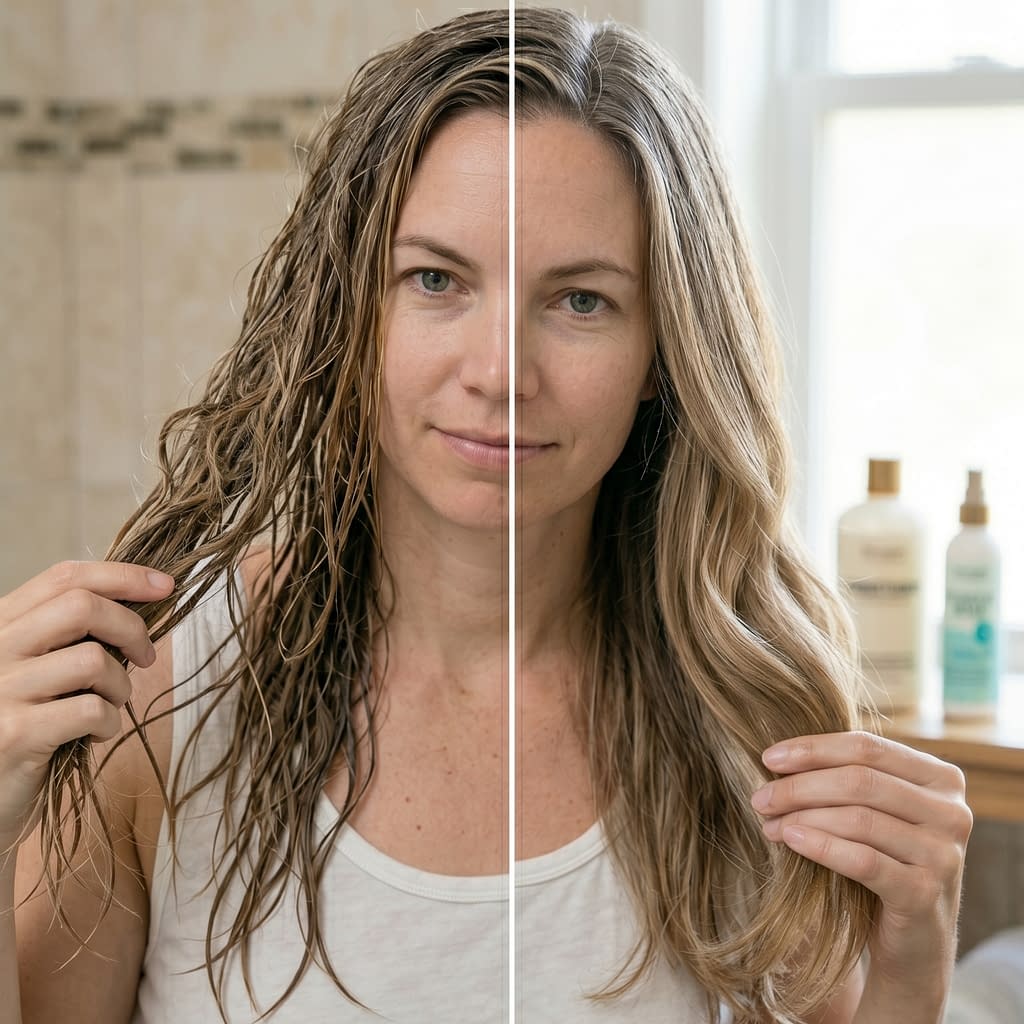
Severe knots can be frustrating, but they are much easier to handle when you break the process into tiny steps. Large knots often need more product, more patience, and a slower approach.
Step by step: severe knot rescue
- Saturate the knot with conditioner or detangler.
- Let it sit long enough to soften the area.
- Pinch the hair above the knot to steady it.
- Pick apart the outer edges of the knot with your fingers.
- Use a wide-tooth comb only after the knot loosens.
- Repeat the process instead of forcing it all at once.
Helpful tips
- Do not try to tear through a giant knot in one pass.
- If necessary, take a break and come back with fresh hands and more slip.
- Small, repeated loosening motions are better than one aggressive pull.
Severe knots usually respond well to patience and moisture.
How to Detangle Curly, Thick, or Long Hair After Swimming
Curly, thick, and long hair often needs a slightly different approach because the strands are more likely to wrap around each other and form larger knots.
Curly hair
Curly hair should usually be detangled when very wet and coated with conditioner, because curls can stretch unevenly if they are dry or only slightly damp.
Thick hair
Thick hair often needs sectioning. If you try to detangle too much hair at once, the knots become harder to manage and the process gets much rougher.
Long hair
Long hair tangles from the ends upward, so the length of the hair means you may need extra product and more time to get through the entire head.
Step by step: hair-type-specific detangling
- Divide the hair into sections.
- Add extra conditioner or leave-in to each section.
- Detangle the ends first.
- Work slowly toward the roots.
- Reapply product whenever the hair starts to snag.
Helpful tips
- Curly hair often does best with fingers first, then a comb.
- Thick hair benefits from clips and sectioning.
- Long hair may need a second round of detangling after it begins to dry.
Tailoring the process to your hair type makes it much easier and much safer.
What Not to Do When Your Hair Is a Tangled Mess
It is easy to make things worse when the hair is already frustrating. Avoiding the wrong habits is just as important as using the right ones.
Mistakes to avoid
- Brushing dry, tangled hair aggressively
- Starting at the roots instead of the ends
- Using a fine-tooth comb on severe knots
- Skipping conditioner or detangler
- Rubbing hair hard with a towel
- Pulling on one big knot repeatedly
Step by step: protect the hair
- Stop trying to rush the process.
- Add slip before trying to comb anything out.
- Work in small sections.
- Let stubborn knots soften before reworking them.
- Avoid any movement that makes the hair feel tighter.
The fastest way through a tangle is usually the gentlest one.
How to Restore Smoothness After the Knots Are Gone
Once the knots are out, the hair may still feel rough or puffed up. That is normal after swimming. The next step is to restore softness and smooth the cuticle so the hair feels manageable again.
Step by step: smooth the hair
- Rinse or lightly cleanse if the hair still feels coated.
- Apply a light conditioner or leave-in.
- Smooth the product down the lengths of the hair.
- Use a microfiber towel or soft T-shirt to dry gently.
- Let the hair air-dry or style it with minimal heat.
Helpful tips
- Do not overload the hair with heavy oil unless it is very dry.
- A light leave-in can help keep the hair soft without flattening it.
- Avoid rough towel drying, which can undo your progress.
Smoothness comes from sealing the hair gently, not from forcing it flat.
How to Prevent Hair Tangles the Next Time You Swim
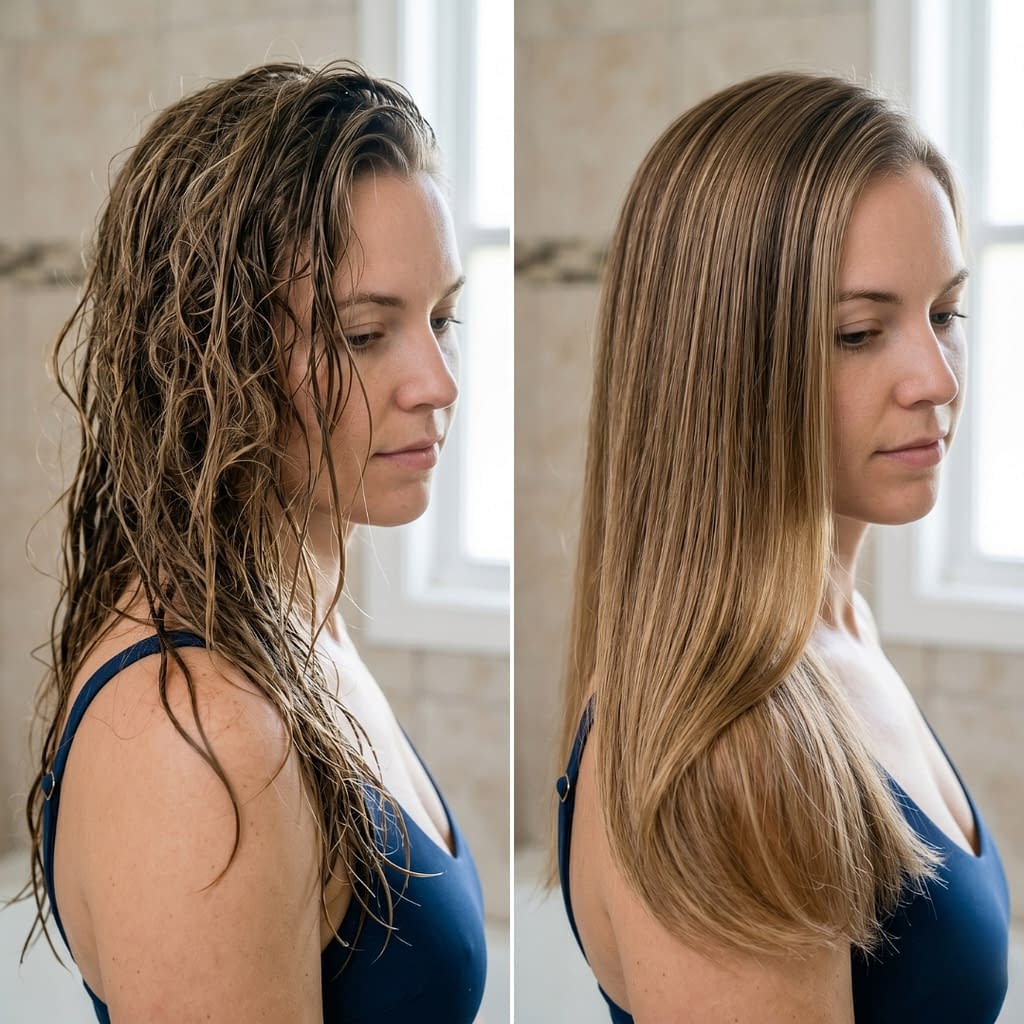
The best way to deal with swimming knots is to prevent them before they start. A few simple habits can make a huge difference.
Step by step: prevention routine
- Wet your hair with clean water before swimming if possible.
- Apply a leave-in conditioner or protective spray.
- Wear a swim cap if it works for your hair and activity.
- Braid, twist, or loosely secure the hair if appropriate.
- Rinse the hair immediately after swimming.
Helpful tips
- Pre-wetting the hair helps it absorb less chlorine or salt.
- Protective styling can reduce friction in the water.
- The faster you rinse after swimming, the easier detangling becomes later.
A little preparation can save you a long detangling session.
Final Words
Swimming should leave you refreshed, not stuck battling a head full of knots. The key to detangling hair after swimming is to stay gentle, work in sections, and give the hair plenty of slip before you try to comb through it. Whether your hair is curly, thick, long, or fine, the safest approach is always the same: start at the ends, use conditioner or leave-in product, and move slowly.
The more you protect your hair right after swimming, the easier it will be to detangle later. A quick rinse, a little moisture, and the right tool can make all the difference. And once the knots are gone, a simple smoothing routine can bring the hair back to soft, manageable, healthy-looking condition.
With a little patience and the right method, even the messiest post-swim tangles can be turned back into smooth, touchable hair.


