


Prom photos are meant to feel timeless, flattering, and special, but contour can sometimes work against that goal. What looks perfectly sculpted in your bathroom mirror may suddenly appear muddy, heavy, or too harsh once the camera flash hits. Instead of sharp definition, the face can look overly dark, flat, or slightly gray in pictures, which is frustrating when you were aiming for a polished finish.
The reason is usually not that contour itself is bad. It is that makeup behaves differently in photos than it does in person. Lighting, camera angle, flash, product choice, and blending all change the way contour shows up. A technique that looks subtle under your vanity light can turn into a strong shadow on camera. The good news is that this is fixable with the right shade, better placement, and a lighter, more photo-friendly application.
In this guide, you will learn why contour can look muddy in photos, how to choose the right product for prom lighting, where to place it for soft definition, and how to correct an over-contoured look before photos begin. Each section breaks the process into clear, easy steps so your makeup looks smooth, natural, and beautifully defined in every picture.
Why Contour Can Look Muddy in Photos
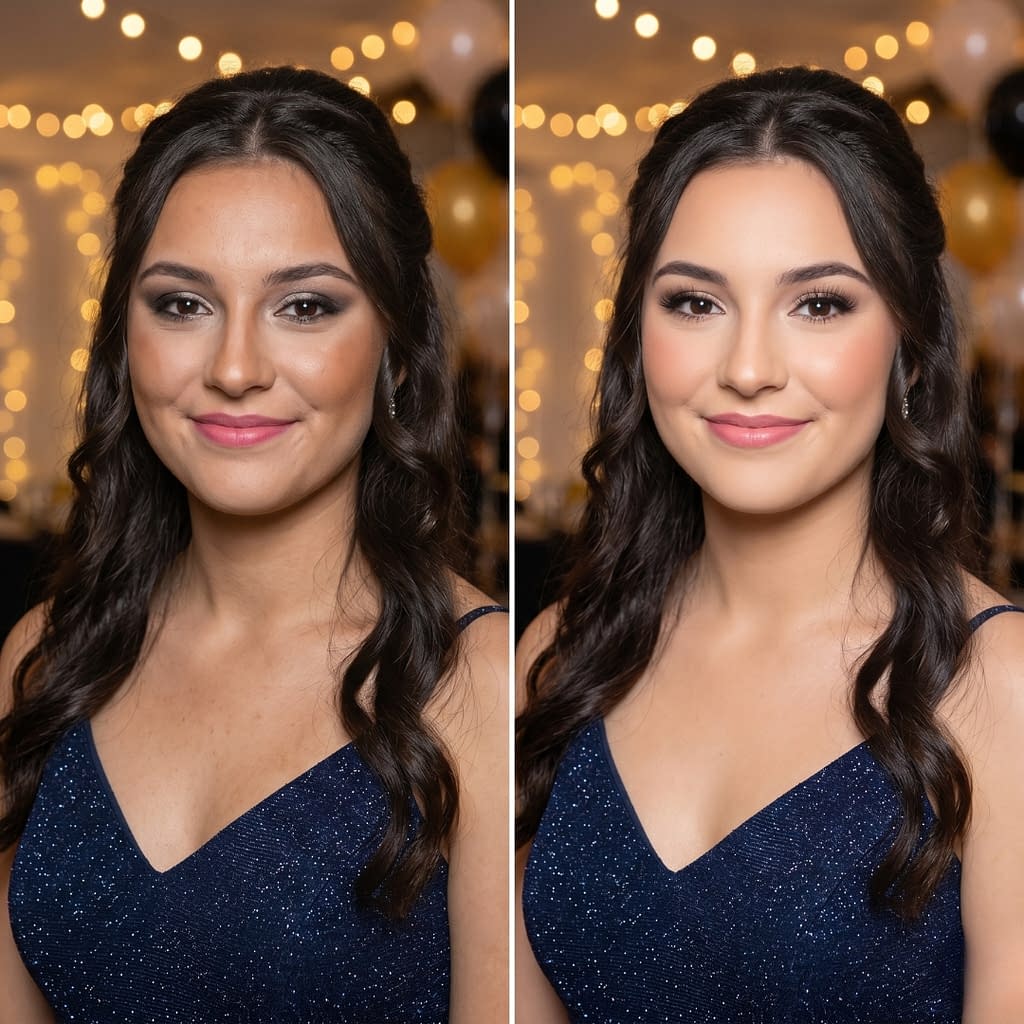
Contour can look muddy in photos when the product creates a shadow that is too strong, too warm, or too blended into the surrounding makeup in a way that loses dimension. In person, contour often looks softer because your eyes naturally interpret it along with the rest of the face. A camera, however, can flatten features and exaggerate contrast, which makes a contour shade stand out more.
When contour appears muddy, it may look like a brown smear instead of a clean shadow. This usually happens when the product is too dark, too warm, or placed too low on the face. It can also happen when too much product is applied and the face loses the balance between light and shadow.
Step by step: why contour looks muddy
- The contour shade is darker than needed.
- The product blends too broadly into the face.
- Camera lighting flattens the feature structure.
- The shadow looks heavy instead of softly defined.
- The face appears dull or dirty in photos.
Contour should create shape, not color blocks. If it looks muddy, it is usually trying to do too much.
How Lighting Makes Over-Contoured Makeup Stand Out
Lighting is one of the biggest reasons contour can look different in photos than it does in a mirror. Bright flash, overhead lighting, and direct camera light all emphasize shadows more strongly. That means contour that looked natural under normal room light may suddenly appear darker and more obvious.
If the room is dim and your contour is already strong, the shadow can read even heavier when photographed. On the other hand, bright flash can wash out lighter features and make the contour look harsh by comparison. This is why photo-ready makeup needs to be tested in lighting similar to the kind you will actually be in.
Step by step: how lighting affects contour
- Dim light can hide how strong the contour really is.
- Bright flash makes dark shadows more noticeable.
- Side lighting can exaggerate one side of the face.
- Overhead lighting can make the face appear flatter.
- Camera flash may make contour look more brown or gray.
The best contour for prom photos is one that survives bright lighting without drawing attention to itself.
Common Reasons Contour Looks Too Dark on Camera
Contour often looks too dark because the shade was chosen for everyday wear rather than photography. What looks softly sculpted in person can become much stronger under camera flash. Another common issue is applying too much product at once, especially along the cheek hollows or jawline.
Sometimes the problem is not the shade but the finish. A contour product that is too matte, too pigmented, or too warm can look heavy in photos. If the skin underneath is also not well prepped, the contour may cling to texture and appear even darker or patchier.
Step by step: common causes
- The contour shade is too deep.
- The formula is too pigmented for camera use.
- Too much product is applied in one area.
- The contour is placed too low or too wide.
- The base makeup beneath it is uneven.
A contour that is meant for photos should be soft and buildable, not dramatically visible from across the room.
Choosing the Right Contour Shade for Prom Photos
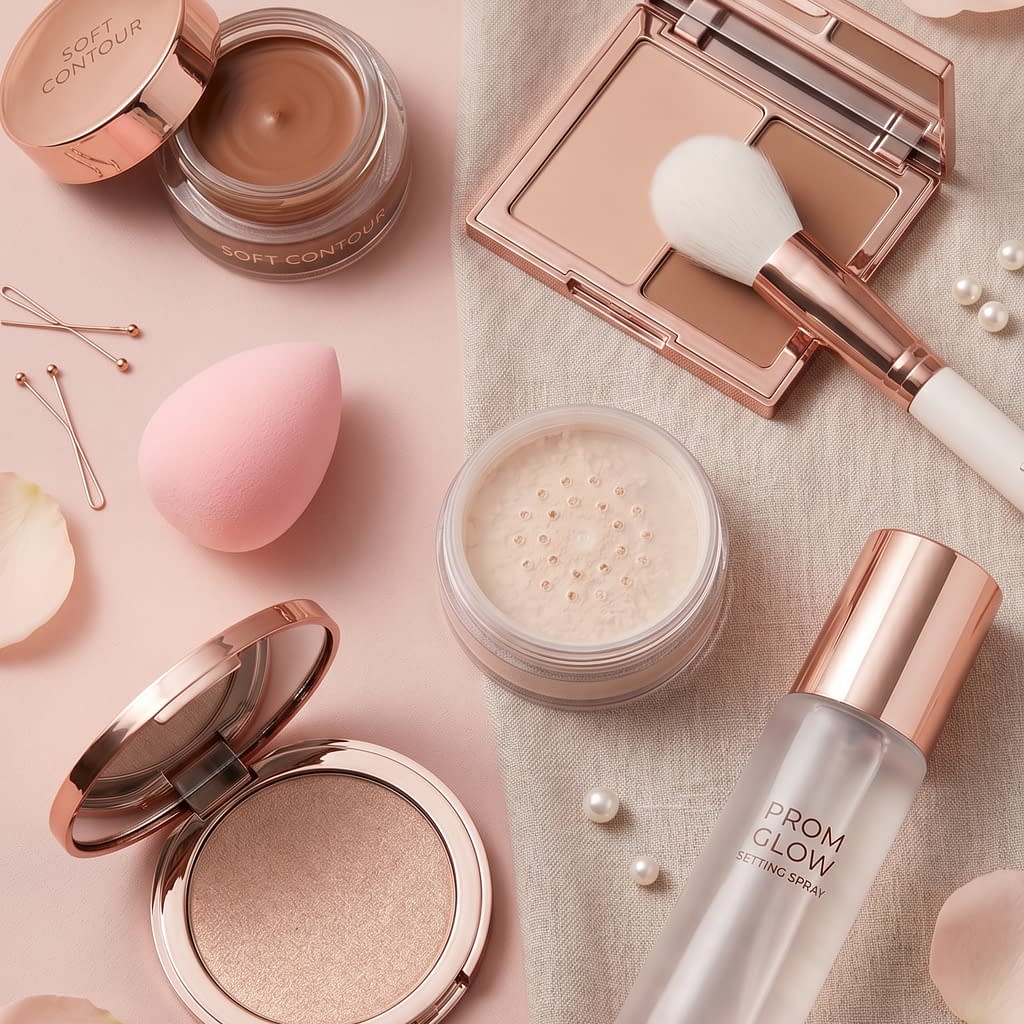
The right contour shade for prom photos is usually slightly cooler and softer than bronzer. You want a shadow tone that resembles natural depth rather than a tan or warm color. If the shade is too orange, red, or dark, it can create that muddy effect in pictures.
A good contour shade should look almost invisible when blended into the skin, but still provide gentle shape. If you are in doubt, it is usually better to go a little lighter rather than darker because camera flash tends to intensify everything.
Step by step: choosing the shade
- Test the shade in natural light, not just bathroom lighting.
- Compare it to your own natural shadow areas.
- Avoid shades with too much orange or red warmth.
- Choose a color that is only one or two steps deeper than your skin tone.
- If the product is highly pigmented, use less of it.
The goal is a believable shadow, not a visible stripe of color.
How to Prep Your Skin for a Smooth Makeup Base
A smooth makeup base helps contour blend naturally into the skin instead of sitting on top of it. If the skin is dry, patchy, or textured, contour can grab in uneven places and look darker in photos. Good prep makes the entire face look more polished and helps the contour melt into the makeup instead of floating on it.
Step by step: skin prep
- Cleanse the skin gently.
- Apply a moisturizer that suits your skin type.
- Let the moisturizer fully absorb.
- Use a primer if your makeup tends to separate or wear unevenly.
- Make sure the skin feels smooth but not greasy before foundation.
Helpful tips
- Hydrated skin usually blends makeup better
- Avoid heavy skincare layers that can make contour slide
- Let each layer settle before moving to the next step
A polished base is one of the easiest ways to prevent muddy contour later.
Where to Place Contour for a Soft, Defined Look
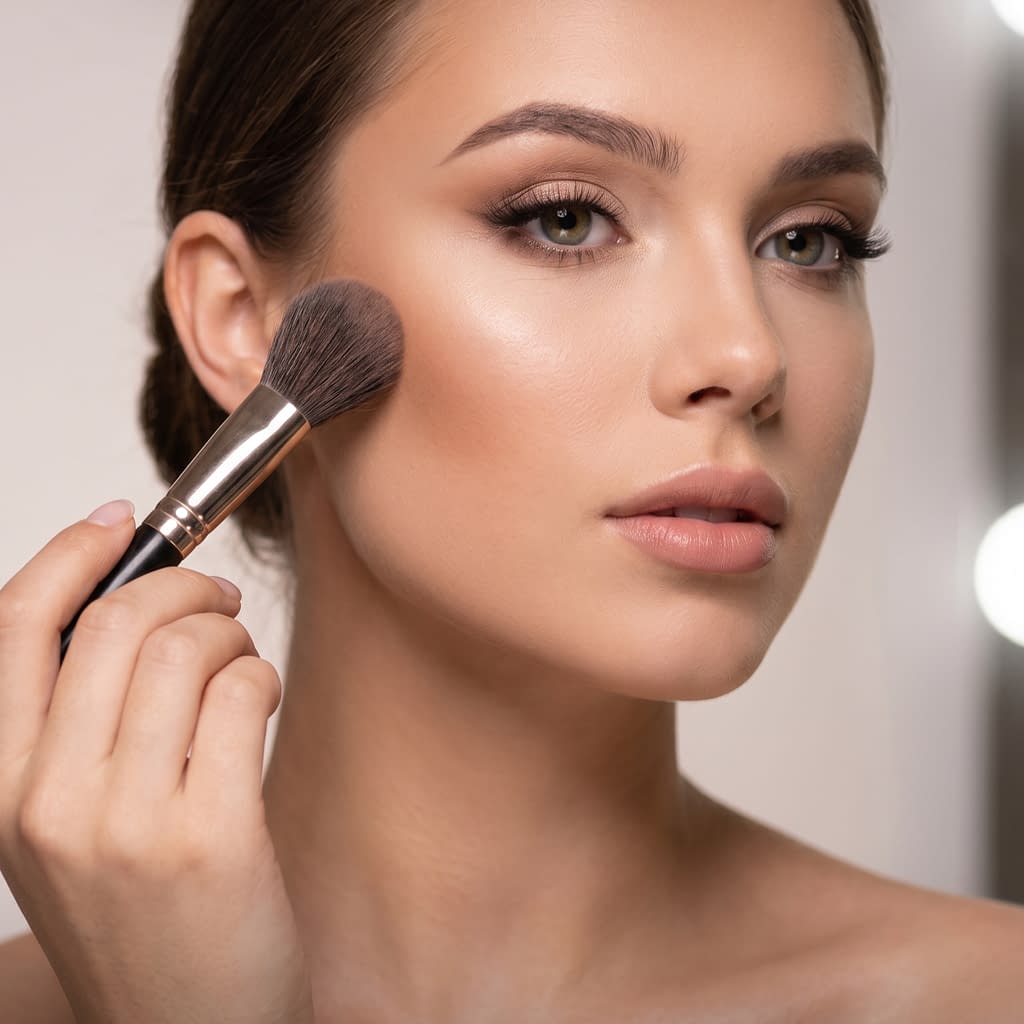
Contour placement matters just as much as the product itself. If the contour is placed too low, too wide, or too close to the mouth, it can drag the face down and make the makeup look heavy. For prom photos, the goal is soft definition that lifts the features instead of overwhelming them.
Best contour placement
- Under the cheekbones, but not too low
- Lightly along the temples
- Softly around the jawline if needed
- A small amount along the sides of the nose only if it suits your look
Step by step: placing contour well
- Find the natural hollow under your cheekbone.
- Place the contour slightly above the lowest point of the hollow.
- Keep the application light and controlled.
- Blend upward, not downward.
- Step back and check the shape before adding more.
Contour should support your features, not draw new ones that the camera then exaggerates.
How to Blend Contour So It Looks Natural in Pictures
Blending is what turns contour into a soft shadow instead of a harsh mark. The camera is much less forgiving than the mirror, so contour edges need to disappear cleanly into the skin.
Step by step: blending contour
- Apply a small amount of contour first.
- Use a brush, sponge, or fingertips depending on the formula.
- Blend with small, soft motions instead of dragging.
- Make sure the edges fade gradually into the base makeup.
- Stop once the contour is visible only as dimension.
Helpful tips
- Blend more than you think you need to for photos
- Keep the darkest point closest to the original placement
- Do not let the contour create obvious lines
A well-blended contour reads as shape in photos, not as makeup.
Cream vs Powder Contour for a Better Photo Finish
Both cream and powder contour can work for prom photos, but they create different results. Cream contour usually looks softer and more skin-like, while powder contour can look more set and structured. The best option depends on your skin type and how much dimension you want in pictures.
Cream contour
Cream contour melts into the skin more naturally and often gives a smoother, more photo-friendly finish. It is useful if you want a soft sculpted look.
Powder contour
Powder contour is easier to set and can work well if your skin gets oily or if you want the makeup to hold longer. But too much powder can make the face look dry or overly shaded in photos.
Step by step: choosing the formula
- Choose cream if you want a softer, more seamless effect.
- Choose powder if you need more staying power.
- If using both, apply cream first and powder lightly on top.
- Keep the finish smooth and controlled.
- Test the result in flash or bright light before your event.
For most prom looks, a light cream contour with a touch of powder works beautifully.
How to Add Highlight Without Making the Face Look Heavy
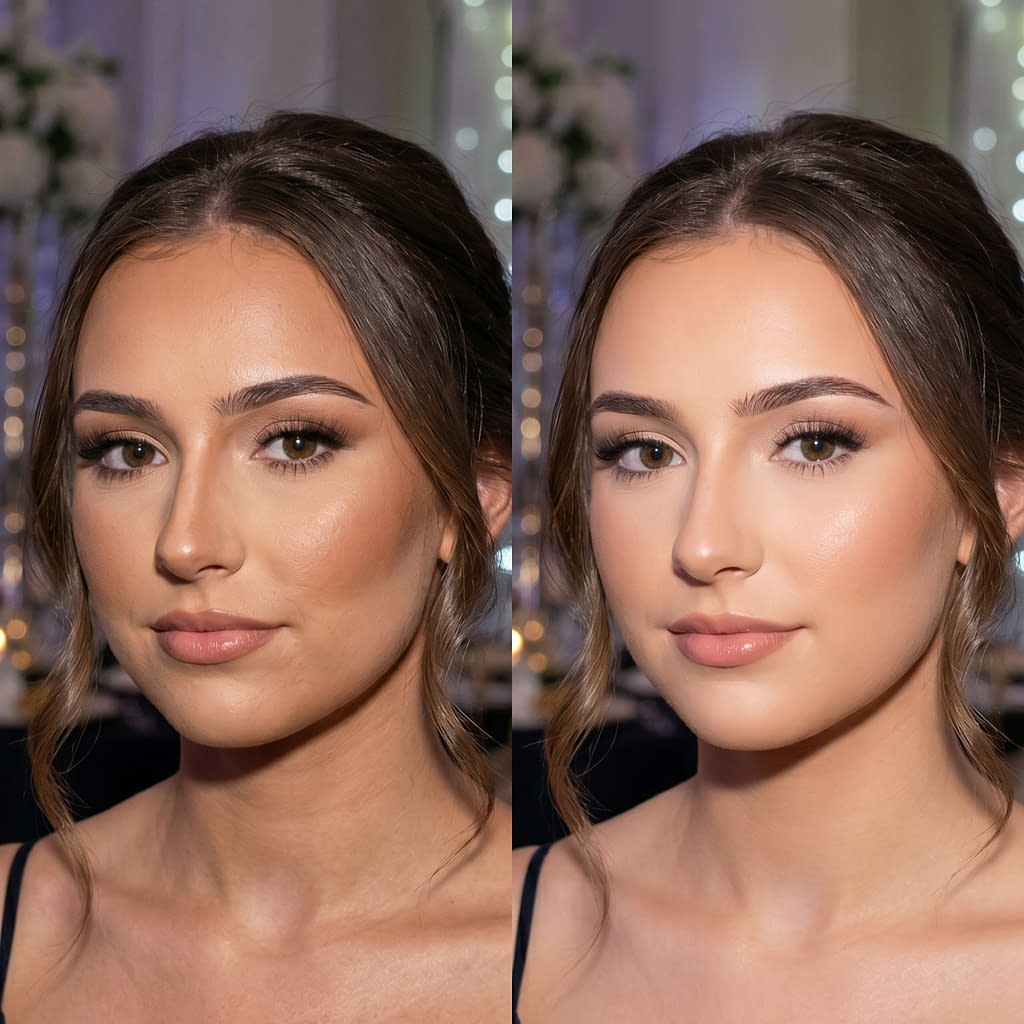
Highlight can balance contour by bringing light back to the face. But too much highlight, especially in the wrong places, can make the face look greasy, shiny, or overly done in photos. The goal is to place light where it subtly lifts the face.
Best highlight placement
- Tops of the cheekbones
- Center of the forehead
- Bridge of the nose, lightly
- Cupid’s bow if desired
- A small touch on the chin if it suits the look
Step by step: using highlight well
- Apply contour first.
- Add highlight only to the high points of the face.
- Choose a soft, refined finish instead of heavy shimmer.
- Blend the edges so the light looks intentional.
- Step back and check whether the face still looks balanced.
Helpful tips
- Too much shine can compete with contour
- A soft glow is more flattering in prom photos than a metallic stripe
- Use highlight to lift, not to overpower
The best highlight and contour pairing creates dimension without excess.
Makeup Mistakes That Make Contour Look Muddy
A few common mistakes can make contour look muddy even if the shade is decent. One of the biggest issues is applying too much product at once. Another is not blending enough, which leaves obvious patches or lines that the camera makes even more visible.
Using contour with a foundation that is too heavy or too warm can also create a muddy effect. If the products do not balance each other, the face can lose clarity and look blurred or dirty in photos.
Step by step: avoid muddy contour
- Use less product from the start.
- Blend each layer carefully before adding more.
- Make sure your foundation and contour shades work together.
- Keep the contour placement soft and controlled.
- Check the makeup in camera lighting before leaving.
Muddy contour is usually a sign of too much product or the wrong color balance.
How to Fix Over-Contoured Makeup Before Taking Photos
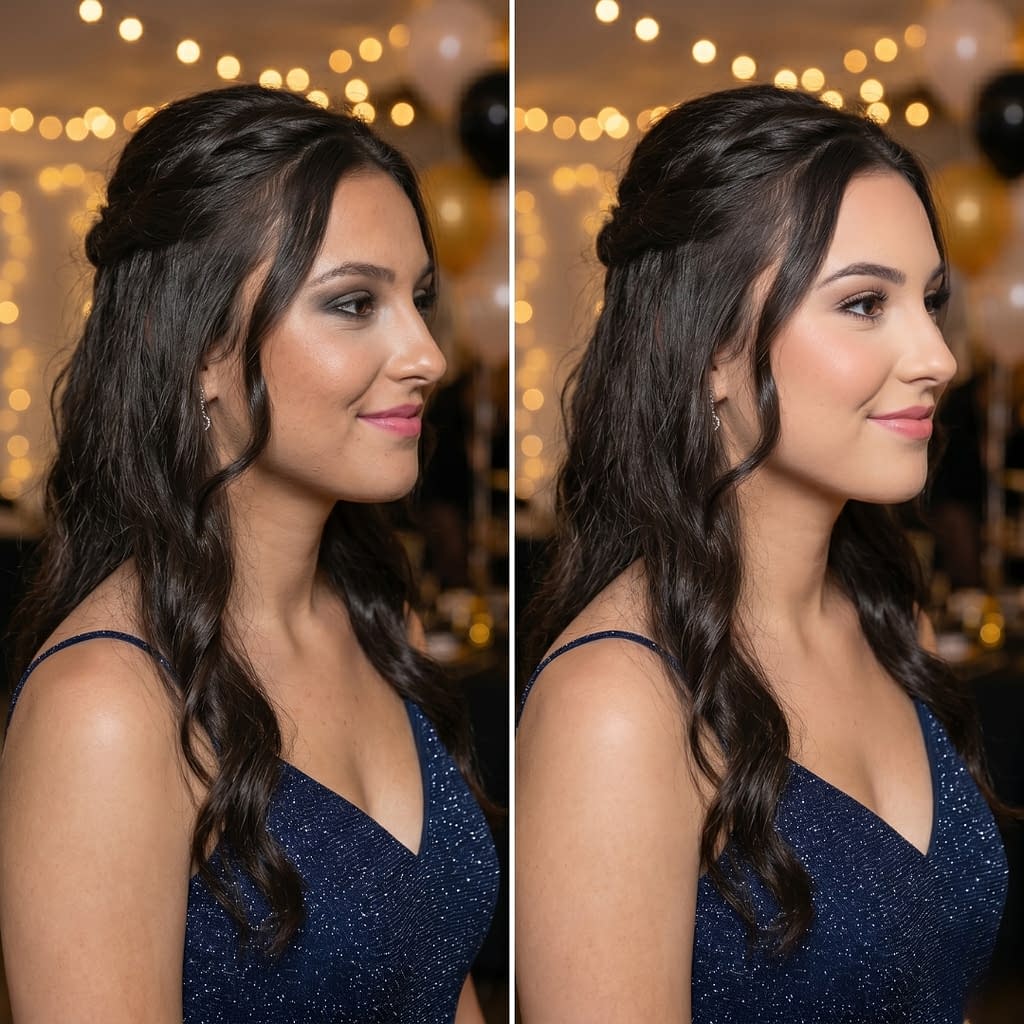
If you notice the contour looks too dark or muddy before photos start, there is still time to correct it. The easiest fix is to soften the area and bring back some brightness so the face looks more balanced again.
Step by step: quick correction
- Use a clean sponge or brush to soften the contour edges.
- Add a little foundation or concealer over the darkest areas if needed.
- Blend gently so the correction does not become patchy.
- Lightly refresh highlight on the high points.
- Recheck the face in the same lighting the photos will be taken in.
Helpful tips
- Fix the darkest areas first
- A little softening often helps more than adding more makeup
- Do not keep layering contour to “save” a muddy look
The fastest way to fix over-contouring is usually to lighten and rebalance, not to intensify.
Final Words
Contour should enhance your face, not take over your prom photos. When it looks muddy, it is usually a sign that the shade is too dark, the placement is too heavy, or the lighting is exposing too much contrast. The good news is that this is very fixable with better product choices, softer placement, and more careful blending.
The most photo-friendly contour is subtle, balanced, and easy to blend into the skin. Pair that with a smooth base, the right highlight, and a lighter hand overall, and your face will look defined without looking overdone. Prom photos should capture you at your best, and the right contour technique helps make sure your makeup looks polished, natural, and flattering from every angle.


